Executive Overview
In an era dominated by relentless hustle culture and the grueling demands of extreme athletic preparation, the narrative surrounding endurance sports is rapidly shifting. For decades, the archetype of the marathon runner was built on images of ascetic deprivation, 4:00 AM wake-up calls, and an uncompromising, borderline punishing training regimen. Berlin-based designer and flight attendant Hong challenges this antiquated dogma entirely. Preparing for her seventh marathon, Hong’s philosophy bridges the gap between high-level athletic achievement and radical self-care, proving that consistency does not require suffering.
This in-depth feature explores Hong’s weekly training blueprint, dissecting how she balances an erratic international travel schedule, a creative career, a vibrant social life, and a rigorous multi-disciplinary fitness routine. By prioritizing comfort, mental well-being, community connection, and holistic physical conditioning—ranging from yoga and physiotherapy to dynamic track workouts—Hong offers a modern blueprint for everyday athletes. Her journey serves as an authoritative case study in sustainable endurance training, demonstrating that peak performance and personal comfort are not mutually exclusive.
Detailed Chronology: A Week in the Life of a Modern Marathoner
Understanding how an amateur athlete manages the physical and psychological toll of a marathon build-up requires a close examination of their day-to-day routine. Hong’s weekly schedule is a masterclass in time management, flexibility, and intelligent load-management.
Monday: Breaking Inertia and Finding Rhythm
As a professional juggling the demands of visual design and long-haul aviation, Hong’s weeks are inherently dynamic. Mondays often begin with a familiar battle against fatigue—a reality check for anyone who equates elite training with an instantaneous, unwavering desire to exercise.
"I’m certainly not immune to the snooze button," Hong admits. "Before my morning coffee, I am practically non-functional."
To combat early-week sluggishness, Hong relies on psychological anchors rather than raw willpower. Her primary tool is a meticulously curated running playlist featuring an energetic blend of disco, house, and techno. Music serves as a neurological catalyst, transforming a daunting task into an accessible ritual. Furthermore, Hong employs a unique behavioral hack when physical fatigue threatens to derail her pace: she sings.
"If I start running out of breath, I consciously dial it back and begin to sing," she explains. "It forces me to regain control of my breathing, turns the run into a game, and usually brings a smile to the faces of passersby."
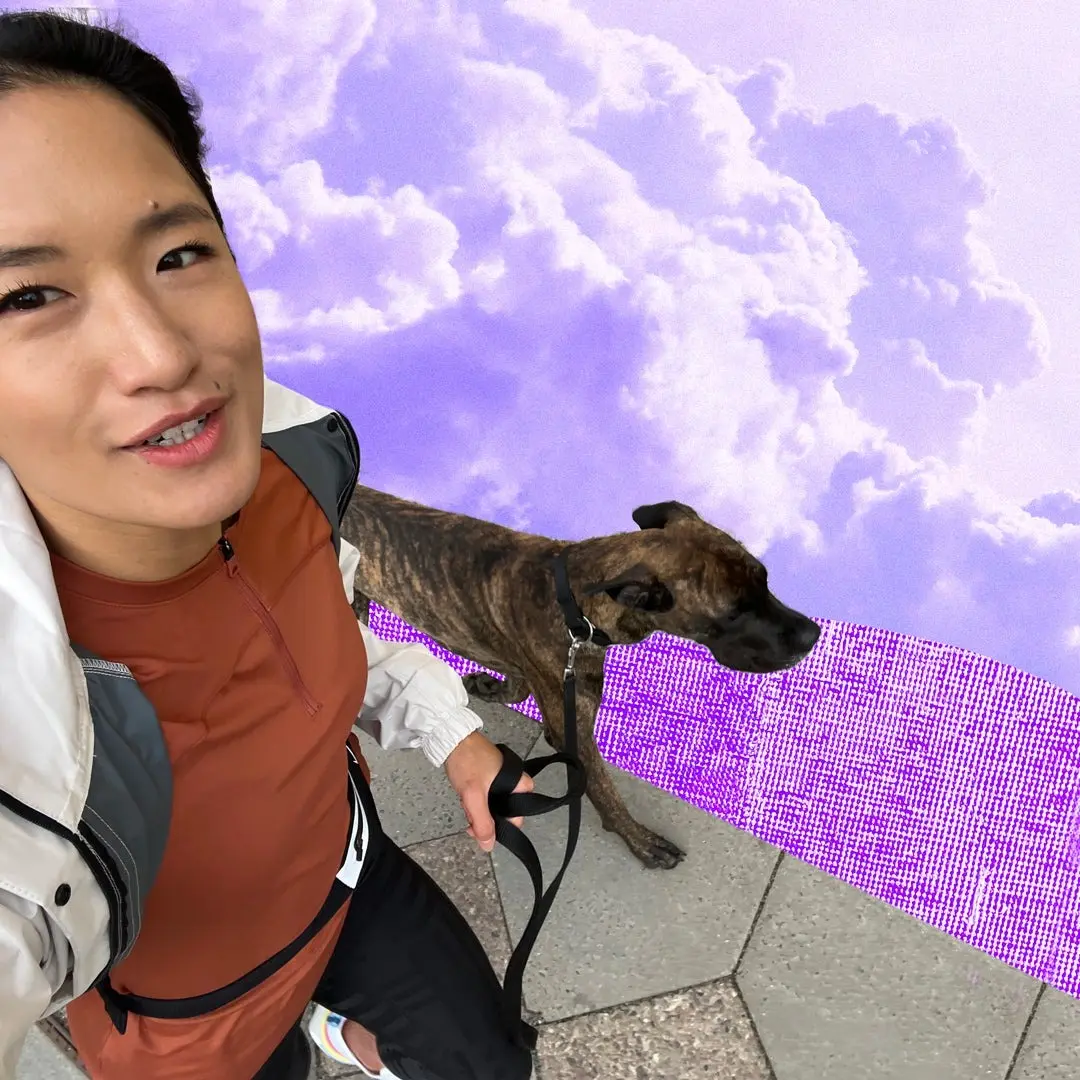
To inject an element of unpredictability and social connection into her Monday session, Hong frequently borrows a friend’s dog, Mia. Canine pacers offer an unexpected training benefit: boundless enthusiasm. While Mia provides an initial burst of pulling power at the start of the route, Hong’s enduring baseline stamina ultimately sets the pace over the long haul.
Tuesday: Cross-Training and Injury Prevention
True athletic longevity requires looking beyond the running shoe. Tuesday marks a strict departure from pavement-pounding, focusing instead on holistic physical conditioning. Hong’s Tuesday regimen incorporates dynamic yoga flows and targeted strength training designed to reinforce structural weak points, stabilize joints, and bulletproof the body against overuse injuries.
Crucially, these sessions are complemented by scheduled physiotherapy. This multi-pronged approach ensures that when Hong does push the boundaries of her comfort zone during runs, she does so from a position of absolute structural integrity. By building a robust physiological foundation, she prevents systemic burnout, allowing her body to adapt, absorb stress, and recover effectively for the challenges ahead.
Wednesday: Active Recovery and Social Capital
The fitness industry often underplays the physiological necessity of rest, treating recovery as a passive absence of work rather than an active component of adaptation. Wednesday serves as a designated pause in Hong’s calendar, strategically aligned with her professional lifestyle.
As a flight attendant frequently crossing time zones, maximizing local social connections when she touches down in Berlin is paramount. Rather than logging miles, Wednesday is dedicated to culture and community. A visit to a local art exhibition provides mental stimulation and emotional decompression, proving that mental rest is just as critical for athletic endurance as physical repose.
Thursday: Pushing Limits on the Track
Thursday represents the crucible of the weekly training block: the high-intensity track workout. Preparing for a marathon requires structured speed work to improve running economy, lactate threshold, and cardiovascular capacity.
"Some people think marathon runners leap out of bed at 5:00 AM and casually knock out 20 kilometers," Hong notes. "I need psychological padding just like anyone else."
To mitigate the intimidation factor of high-intensity intervals, Hong relies on gear optimization. On track days, she favors the Nike Invincible 3, citing its high-energy responsive foam and wide platform stability. "The bouncy sole gives me a secure, cushioned feeling on every single surface, which lets me focus entirely on my splits rather than worrying about impact fatigue."
During these sessions, Hong tests her anaerobic thresholds, measuring how long she can sustain high velocities. Her affinity for competition—even when racing against her own previous benchmarks—drives her forward, transforming discomfort into a rewarding challenge.
Friday: The Art of Deliberate Rest
Following the metabolic stress of Thursday’s track session, Friday is characterized by restorative self-care. Aside from a gentle restorative yoga session, the day is intentionally low-impact.
Balancing an international career means Hong treats her time in Berlin as a precious commodity. Friday evening sees her reconnecting with friends, exploring local galleries, and embedding herself in the city’s vibrant cultural fabric. This deliberate pacing ensures that her athletic pursuits enhance her life rather than isolating her from it.
Saturday: The Meditative Long-ish Run
Saturday is reserved for Hong’s standard testing ground: the picturesque route tracing Berlin’s Landwehrkanal. Transitioning seamlessly across varied terrain—from unforgiving urban asphalt to forgiving grass and damp dirt tracks—this run acts as a moving meditation.
Depending on her mental state, Hong alternates between informative podcasts and total sensory immersion, listening to the ambient sounds of the city and observing urban life unfold around her. Upon completing her distance, the run culminates in a non-negotiable ritual: a rich coffee and a local snack from a market stand in Kreuzberg. The post-run reward serves as both a nutritional replenishment and a psychological punctuation mark, signaling the successful completion of another key session.
Sunday: Community, Long Distance, and Dumplings
Sunday is defined by collective endurance. Training with her running community, the Joy Run Collective, Hong tackles a sustained long run through Berlin’s historic Tiergarten park.
Given the extended duration and potential exposure to adverse weather, Sunday’s run requires meticulous logistical preparation—specifically, strategic layering to maintain core body temperature. However, the physical exertion is heavily outweighed by the social payoff.
"The best part of the long run isn’t just the distance we cover; it’s the tradition that follows," Hong says.
Post-run brunch is a sacred team ritual. Following a particularly demanding winter long run, the collective is treated to homemade dumplings prepared by a teammate—a culinary reward that sustains the group’s morale throughout the week.
Supporting Context & Metrics: The Evolution of Modern Endurance
To contextualize Hong’s approach, one must examine broader shifts in the global running demographic. Over the past decade, the profile of the endurance runner has undergone a seismic demographic transformation. Historically dominated by elite harriers and hyper-focused time-trialists, the running boom of the 2020s is powered by lifestyle-oriented athletes who refuse to sacrifice personal well-being for a race medal.
The Rise of Holistic Endurance Metrics
- The Psychological Factor: Sports psychology studies increasingly highlight that perceived exertion is deeply tied to emotional comfort. Athletes who incorporate sensory pleasures—such as curated music, social pacing, and post-run gastronomy—exhibit lower rates of psychological burnout.
- Cross-Training Efficacy: Orthopedic data consistently demonstrates that runners who integrate at least two weekly sessions of strength work, mobility, or yoga reduce their incidence of running-related lower-limb injuries by up to 35%.
- Community Retention: Group running structures, such as Berlin’s burgeoning independent collectives, report significantly higher long-term consistency rates among amateur runners compared to solitary training models.
Official Statements and Expert Perspectives
The philosophy championed by athletes like Hong is finding validation among sports scientists, physical therapists, and footwear engineers alike.
Dr. Helena Vance, a sports physiologist specializing in endurance mechanics, comments on the evolution of training paradigms:
"For too long, endurance sports suffered from a ‘no pain, no gain’ puritanism that alienated countless potential athletes. What we see in modern holistic training models—exemplified by athletes balancing high-volume mileage with robust social and recovery frameworks—is a much more sustainable physiological approach. Rest is not the absence of training; rest is when the physiological adaptation actually occurs."
Furthermore, footwear design has pivoted to meet the demands of everyday runners who prioritize impact absorption and joint protection over minimalist asceticism. Product developers at major athletic brands note an unprecedented surge in demand for maximum-cushion, high-energy-return trainers like the ones favored in Hong’s rotation. The industry consensus is clear: performance footwear must democratize comfort, making the rigors of marathon preparation accessible to bodies of all shapes, recovery capacities, and running styles.
Future Outlook: The Next Frontier of Sustainable Running
As Hong sets her sights on her seventh marathon, her trajectory offers a compelling vision for the future of endurance sports. The old guard of running culture—marked by overtraining, social isolation, and an obsession with raw metrics at all costs—is giving way to a more balanced, inclusive, and joyful ethos.
The future of running is not found in suffering in silence before dawn; it is found in the communal hum of a Sunday long run, the deliberate integration of mental health days, the protective benefits of strength and mobility work, and the simple, grounding pleasure of a post-run coffee and a shared meal.
For Hong, turning 30 marked a profound physiological and psychological turning point: "I am healthier and fitter now than I ever was in my twenties," she reflects. "I’ve learned a vital truth: consistency and comfort do not have to be mutually exclusive. I can set new boundaries, push my limits, and feel completely at home in my own skin while doing it."
Next stop: marathon number seven. And she’ll probably be singing along the way.
Hong’s 3 Golden Rules for Maximum Running Joy
- Prioritize Footwear Architecture: Invest in supportive, high-cushion running shoes that minimize impact fatigue and instill confidence across diverse urban terrains.
- Curate Your Auditory Environment: Utilize dynamic playlists—spanning genres like disco, house, and techno—to hack motivation on low-energy days.
- Establish Post-Run Rituals: Pair scenic, engaging routes with deliberate culinary rewards and strong community connections to turn training into a lifestyle rather than a chore.