Executive Overview
In an era dominated by relentless hustle culture, extreme fitness regimens, and the pervasive myth that suffering is a prerequisite for athletic achievement, a quiet revolution is taking place on the pavement. Berlin-based designer and flight attendant Hong represents a new archetype in the modern endurance landscape: the comfort-first marathoner. Once firmly identifying as a non-runner, Hong is now deep into preparations for her seventh marathon, proving that high-level athletic performance does not require sacrificing joy, social connection, or the sacred morning snooze button.
This in-depth feature explores Hong’s weekly training blueprint, examining how she balances a demanding international career with the rigorous physiological demands of long-distance running. Far from the monastic, high-stress image traditionally associated with endurance sports, Hong’s approach relies on psychological ease, cross-training longevity, community integration, and a fundamental philosophy: consistency and comfort are not mutually exclusive. Through an analytical lens, we break down her weekly routines, physiological strategies, and the evolving psychology of modern recreational endurance athletes.
Detailed Chronology: A Week in the Life of a Comfort-First Marathoner
Juggling a dual career as a graphic designer and a long-haul flight attendant while training for a full marathon requires meticulous time management. However, Hong’s schedule eschews rigid military-style discipline in favor of flexible adaptation. Here is how a typical week unfolds.
Monday: Soundtracking the Struggle and Canine Pacing
Mondays present a familiar hurdle for professionals worldwide: overcoming post-weekend inertia. For Hong, the transition into the workweek begins with auditory motivation.
"I’m not always listening to music when I run, but when I feel low-energy, it’s an absolute lifesaver," she notes. Her curated running playlists—spanning disco, house, and techno—serve as an external pacemaker when internal drive falters.
When sheer speed training isn’t on the agenda and breath control begins to slip, Hong employs a unique physiological hack: she sings. By forcing herself to vocalize lyrics during a run, she naturally regulates her respiratory rate, compelling her body to downshift and recover its aerobic rhythm. Moreover, this lighthearted tactic transforms a grueling training session into a moment of shared urban amusement, drawing smiles from passersby.
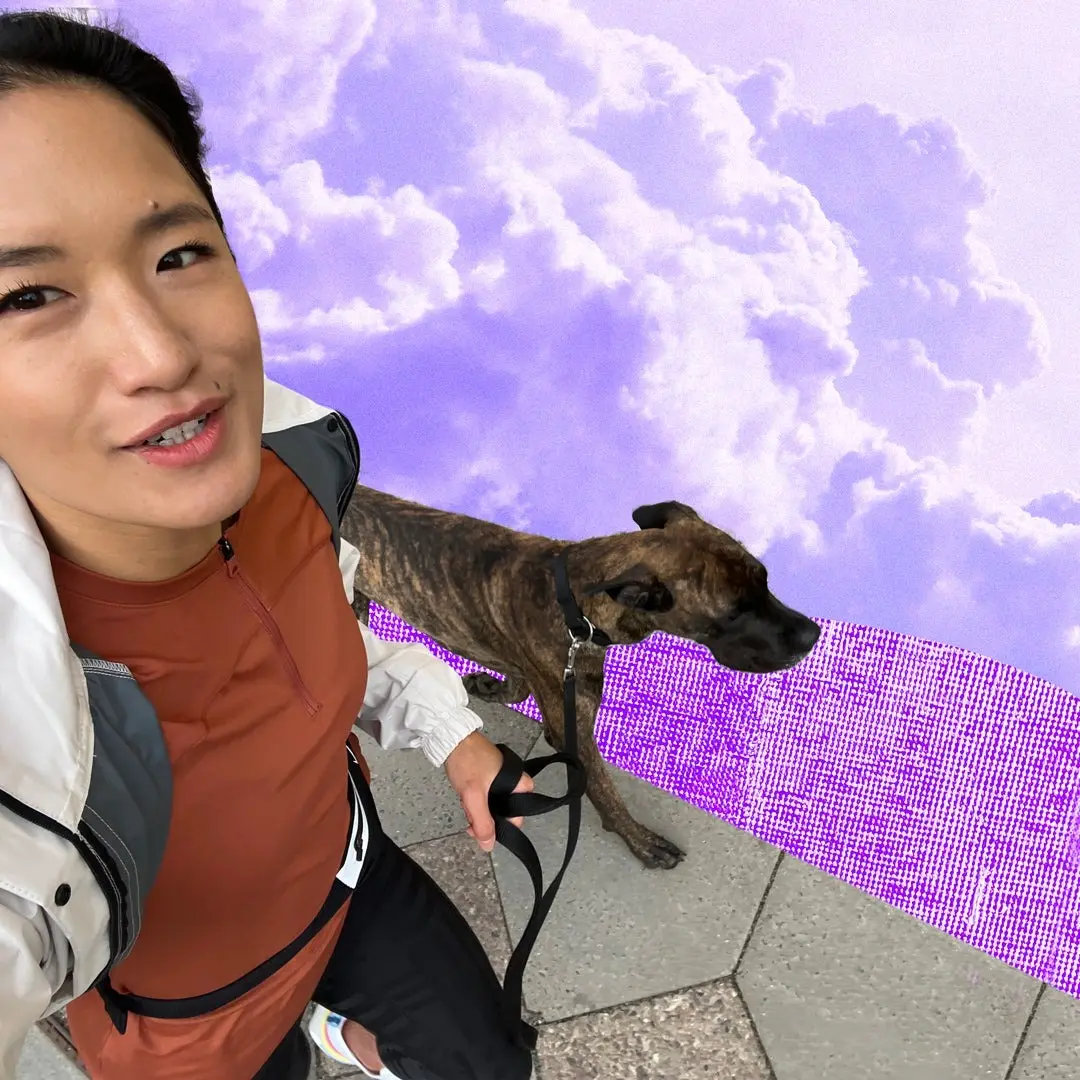
To inject an extra layer of engagement into her Monday miles, Hong frequently recruits canine companionship. Borrowing a friend’s high-energy dog, Mia, introduces a dynamic interval element to the route. "At the beginning, she pulls me; at the end, I pull her," Hong explains. While canine pacing might lack scientific predictability, it fundamentally shifts the mental burden of training from solitary endurance to shared recreation.
Tuesday: The Holistic Foundation – Yoga, Strength, and Injury Prevention
Endurance running is notoriously high-impact, frequently resulting in overuse injuries if approached as a singular discipline. Tuesday marks a strategic pivot away from the pavement. Hong dedicates this day to a robust cross-training regimen comprising targeted strength training, yoga, and physical therapy sessions.
This multidisciplinary approach is not merely supplementary; it is foundational. By building structural integrity through resistance work and enhancing mobility via yoga, Hong constructs a physiological buffer. This foundation allows her to step outside her comfort zone during high-intensity runs without compromising joint health. Crucially, it ensures that she finishes intense workouts without total physical depletion, facilitating rapid recovery.
Wednesday: Global Horizons and Forced Decompression
Balancing a globe-trotting profession with a vibrant social life demands intentional pauses. As a flight attendant, Hong’s schedule fluctuates wildly between continents and time zones. When she is grounded in Berlin, her priority shifts from mileage accumulation to human connection.
Wednesday serves as a structural buffer—a day off from structured workouts entirely. Instead of pounding asphalt, Hong engages in cultural decompression, frequenting local art galleries and exhibitions. This cognitive rest is just as vital to marathon preparation as a long run; psychological burnout can be just as debilitating as physical overtraining.
Thursday: Pushing Limits with the Right Gear
With her batteries recharged, Thursday introduces high-intensity stress to the system: the track workout. Marathon preparation necessitates threshold work, teaching the body to clear lactate efficiently and maintain a punishing pace over extended durations.
"Some people think marathon runners bounce out of bed at 5:00 AM and effortlessly knock out 20 kilometers," Hong laughs. "I definitely need that extra dose of motivation."
On high-stress track days, gear selection becomes paramount. Hong relies on the Nike Invincible 3, valuing its high-energy foam cushioning and multi-surface stability. The "bouncy" geometry of the shoe absorbs high-impact shock while returning energy, providing psychological reassurance when pushing physiological thresholds. For Hong, superior gear bridges the gap between intimidation and execution, making high-intensity interval training feel accessible rather than punishing.
Friday: Active Recovery and Berlin Integration
Following Thursday’s track session, the human body requires systematic repair. Friday is dedicated to active recovery, incorporating light yoga flows and continued social engagement. Because her profession removes her from her home city for days at a time, Hong maximizes her localized weekends in Berlin, meeting friends for gallery visits and urban exploration. This active lifestyle ensures that fitness remains integrated into her life, rather than acting as an isolationist constraint.
Saturday: The Landwehrkanal Ritual and Sensory Reset
Saturday morning belongs to the Landwehrkanal. This standard route offers a shifting tactile landscape—alternating between hard asphalt, soft grass, and unpredictable mud.
Rather than treating this run as a metrics-driven test, Hong uses it as a sensory reset. Sometimes an immersive podcast plays through her headphones; other times, she discards audio entirely to absorb the ambient acoustic ecology of the city. Observing fellow Berliners going about their weekends grounds her in the present moment. The run concludes with a non-negotiable ritual: a meticulously chosen artisan coffee and a light snack from a local market stall in Kreuzberg.
Sunday: Community Mileage and the Joy Run Collective
The apex of Hong’s training week occurs on Sunday, characterized by long-distance endurance efforts undertaken collectively. As a member of the Joy Run Collective, Hong taps into the psychological benefits of group running.
Preparing for a long run through the Tiergarten in sub-optimal weather requires logistical foresight. Layering correctly against the elements is critical for maintaining core temperature over prolonged exposure. Yet, the physical toll of the distance is heavily offset by social camaraderie. The Sunday session culminates not in solitary stretching, but in a communal brunch. This week’s menu features homemade dumplings—a culinary reward anticipated eagerly throughout the preceding miles.
Supporting Context & Metrics: The Paradigm Shift in Modern Endurance Sports
To contextualize Hong’s journey, one must examine broader cultural shifts in running demographics over the past decade. Historically dominated by elite-minded athletes obsessed with splits, heart rate zones, and ascetic deprivation, the running community has undergone a significant democratization.
The Rise of the Recreational Endurance Athlete
Market data from global athletic brands indicates a surge in female participation and younger demographics entering endurance sports. Crucially, these new runners are redefining success. According to sports psychology surveys, the primary motivators for contemporary runners are:
- Mental Health and Stress Mitigation: Using movement as a therapeutic outlet rather than a competitive yardstick.
- Community Integration: Viewing the running club as a primary social hub.
- Holistic Wellness: Balancing physical exertion with nutrition, sleep, and mental recovery.
Hong’s trajectory—transforming from a self-proclaimed non-runner in her twenties to a confident, healthy athlete in her thirties—mirrors these demographic trends. Physiologically, women in their 30s often possess optimal neuromuscular maturity and pacing patience, allowing them to excel in long-distance events when paired with proper strength and recovery protocols.
The Role of Technological and Material Comfort
The psychological barrier to entry for marathon running has historically been high due to the physical discomfort of inadequate gear. The modern running shoe market has responded with maximalist cushioning technologies, such as responsive foam compounds designed to reduce cumulative skeletal loading.
As sports scientists note, reducing perceived exertion through optimized footwear directly correlates with improved long-term training consistency. When runners experience less localized foot and joint pain, psychological resistance to lacing up decreases—a phenomenon clearly leveraged in Hong’s reliance on supportive, high-energy footwear.
Official Statements and Expert Perspectives
To further understand the physiology and psychology underpinning Hong’s comfort-first philosophy, we turn to insights from running coaches, sports psychologists, and physical therapists.
"For years, the endurance community suffered under the ‘no pain, no gain’ fallacy. What we are seeing with athletes like Hong is a much more sustainable, scientifically sound approach to longevity in sport," explains Dr. Lena Weber, a sports physiologist based in Munich.
"When an athlete prioritizes sleep, mental comfort, cross-training, and social connection, their cortisol levels remain lower. Chronically elevated cortisol inhibits muscle recovery and glycogen replenishment. By making training enjoyable, Hong is literally optimizing her biological capacity to adapt to physical stress."
Furthermore, running coaches emphasize the underrated value of community and sensory engagement.
"Running alone in silence chasing a target pace works for elite professionals whose livelihood depends on it," states endurance coach Marcus Thorne.
"For the everyday athlete juggling a career, international travel, and social obligations, strict asceticism leads directly to burnout. Singing on a run, borrowing a dog, pausing for a coffee, or anchoring your long run to a post-run dumpling brunch—these aren’t distractions from training; they are the exact mechanisms that keep an athlete consistent over months and years of marathon preparation."
Future Outlook: The Road to the 7th Marathon and Beyond
As Hong shifts her final weeks of preparation toward her seventh marathon, her journey offers a compelling blueprint for the future of recreational fitness. The antiquated dichotomy between "hardcore training" and "lifestyle enjoyment" is rapidly dissolving.
In its place is an integrative model where performance and pleasure coexist. By rejecting the misery-centric narratives of endurance sports, runners are discovering that longevity is born from sustainability.
Hong’s philosophy distills this modern movement into three actionable takeaways for any aspiring runner:
- Prioritize Foundational Comfort: Invest in supportive gear and cross-training frameworks that protect your body from injury and reduce mental friction.
- Cultivate Auditory and Environmental Engagement: Use music, podcasts, or vocal play to regulate your internal state and transform difficult miles into moments of joy.
- Anchor Training in Community and Reward: Pair your physical efforts with meaningful social connections and tangible culinary rewards.
With her health, confidence, and aerobic base stronger at 30 than they were a decade prior, Hong stands as living proof that you do not need to suffer to succeed. Next stop: the starting line of her seventh marathon—comfortably, consistently, and with a smile on her face.