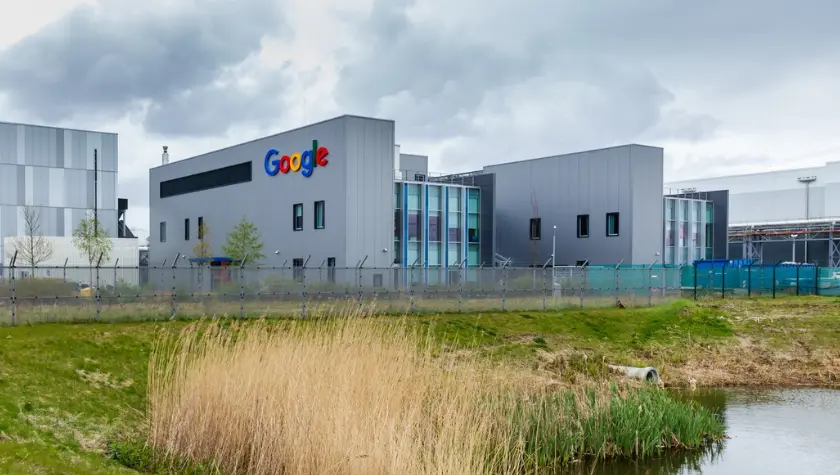
Date: September 30, 2026
Author: Catie Owen, Regional Content & Insights Lead
Reading Time: 5 minutes
Executive Overview
Following a high-stakes, long-running regulatory dispute with local authorities, tech giant Google has successfully overturned a planning refusal to expand its major data centre campus in Dublin, Ireland. An Coimisiún Pleanála, Ireland’s independent national planning body, has officially ruled in favor of Google Ireland, granting permission for the construction of a massive new facility at the Grange Castle Business Park.
The approval represents a major milestone for Google’s European digital infrastructure strategy, but it arrives against a backdrop of mounting geopolitical and environmental scrutiny regarding the energy consumption of hyperscale data centres. While the ruling allows Google to move forward with its 72,400-square-meter expansion—a project expected to generate up to 50 operational jobs by 2027—it also highlights the deepening friction between tech-driven economic growth and the severe physical limits of national energy grids.
Detailed Chronology: From Initial Ambition to Judicial Reversal
The Genesis of the Grange Castle Expansion (June 2024)
In June 2024, Google announced ambitious blueprints to scale up its Dublin infrastructure footprint. The proposal outlined the construction of a third primary building on its Grange Castle Business Park campus. Spanning an impressive 72,400 square meters, the facility was designed to bolster Google’s cloud and AI processing capabilities to meet escalating regional demands. At the time of the announcement, the company projected that the facility would become fully operational by 2027, creating approximately 50 direct, high-skilled jobs alongside countless construction roles.
The South Dublin County Council Rejection (August 2024)
The momentum behind Google’s expansion ground to a sudden halt in August 2024. South Dublin County Council officially denied planning permission for the multi-million-euro project, citing a severe misalignment between corporate digital growth and municipal sustainability thresholds.
The council’s refusal hinged on several critical factors:
- Grid Constraints: The local authority pointed to existing, insufficient capacity within the national electricity network to safely power an asset of this scale without threatening local supply stability.
- Renewable Deficits: Regulators highlighted a lack of significant on-site renewable energy generation to offset the facility’s heavy carbon footprint.
- Unresolved PPA Clarity: Questions lingered regarding the transparency and tangible local impact of Google’s Power Purchase Agreements (PPAs) within Ireland.
- District Heating Exclusion: The proposed campus design notably lacked integration with or a direct connection to local district heating networks, missing an opportunity to recycle waste heat for surrounding communities.
The Appeal to An Coimisiún Pleanála
Refusing to back down, Google escalated the dispute to An Coimisiún Pleanála (formerly operating as An Bord Pleanálá). In its defense, the tech giant fired back with data-driven counterarguments. Google maintained that it had already secured a valid grid connection agreement back in 2021 through EirGrid, Ireland’s state-owned electricity transmission operator. Furthermore, Google asserted that the local council had overstepped its jurisdiction by attempting to make determinations on national network capacity rather than localized planning criteria.
The Overturn and Conditional Approval
An Coimisiún Pleanála ultimately sided with the tech multinational, ruling that the broader economic and digital imperatives justified the expansion—albeit with strict, non-negotiable caveats.
To satisfy environmental and urban planning mandates, Google must now:
- Enforce robust sustainable mobility incentives to compel staff toward public transit, cycling, or walking.
- Execute comprehensive biodiversity and ecological enhancements across the Grange Castle campus.
- Rigorously implement all environmental mitigation measures detailed in the project’s environmental assessment reports.
Despite the favorable ruling, shovel-ready status remains elusive. Construction cannot commence immediately, as the national planning board’s decision remains vulnerable to potential challenges via a future judicial review.
Supporting Context & Metrics: The Irish Data Centre Dilemma
Google’s protracted Dublin saga is far from an isolated incident; rather, it serves as a case study for the escalating global tension surrounding digital infrastructure. Ireland—and Dublin in particular—has long positioned itself as the data capital of Europe, hosting European headquarters for nearly every major tech titan, including Google, Meta, Microsoft, and Amazon.

However, this rapid digital colonization has exacted a heavy toll on national resources. Data centres currently consume a staggering share of Ireland’s total electricity demand, prompting widespread warnings from energy regulators about potential blackouts and the country’s ability to meet its carbon emission reduction targets.
The EirGrid Moratorium and Regional Pushback
In response to these systemic strains, EirGrid instituted a de facto moratorium on new data centre grid connections in the Greater Dublin Area through 2028. This strict regulatory freeze has already claimed several high-profile casualties, resulting in rejected planning applications for operators such as Servecentric and Equinix.
Yet, the enforcement landscape remains uneven. Even under the shadow of the moratorium, Grange Castle has evolved into a dense industrial cluster of digital giants. Google sits alongside co-located titans like Microsoft, Vantage, and Cyrus One, while competitor Amazon recently secured planning approval for a major facility at its own campus in nearby Fingal County.
The Changing Global Regulatory Playbook
The friction in Dublin mirrors a global pivot in how governments approach digital infrastructure. Public pushback, environmental anxieties, and energy poverty are driving regulatory bodies worldwide to rewrite the rules of engagement:
- Scotland: Recently introduced mandatory environmental stress-tests and carbon assessments for all large-scale data centre proposals to curtail long-term ecological damage.
- India and the United States: Communities near proposed AI hubs are increasingly pushing back against the massive water and power consumption required by generative AI workloads, transforming local resistance into a standard operational cost for tech companies.
- Europe-wide Shifts: Capacity trends indicate that hyperscalers are beginning to look beyond the traditional "Big Five" European hubs (Frankfurt, London, Amsterdam, Paris, and Dublin), forcing secondary and tertiary markets to grapple with similar infrastructure dilemmas.
Official Statements
When the project faced initial rejection, Google issued stark warnings to Irish policymakers, emphasizing that choking infrastructure growth would handicap the nation’s technological competitiveness. Without new facilities, the company argued, it would be fundamentally impossible to service escalating digital demands.
Following the successful appeal, a company spokesperson released a targeted statement underscoring their commitment to the region:
"Data centres are an essential part of Ireland’s ambitious digital economy, and we want to support that. We look forward to the next steps as we continue to invest in our infrastructure in the country to meet the growing demand for our services."
Industry observers note that while Google has won this particular battle, the tone of future infrastructure projects will likely be dictated by how effectively tech companies can couple their builds with verifiable green energy solutions and community-benefit initiatives, such as waste-heat recycling.
Future Outlook
The overturning of the South Dublin County Council’s decision marks a temporary victory for Google, but it also establishes a precedent that future developments will face unprecedented scrutiny. As the digital economy accelerates—driven relentlessly by the insatiable energy demands of artificial intelligence and cloud computing—the tolerance of local communities and regulatory bodies is wearing thin.
For Ireland, the challenge lies in balancing its status as a premier tech hub with the physical realities of grid capacity and climate commitments. While the Grange Castle expansion will proceed toward its tentative 2027 operational window, pending any judicial review setbacks, the broader industry is on notice. The era of frictionless data centre approvals is definitively over; future digital infrastructure must prove not only its economic utility, but its absolute ecological harmony with the cities it inhabits.