Executive Overview
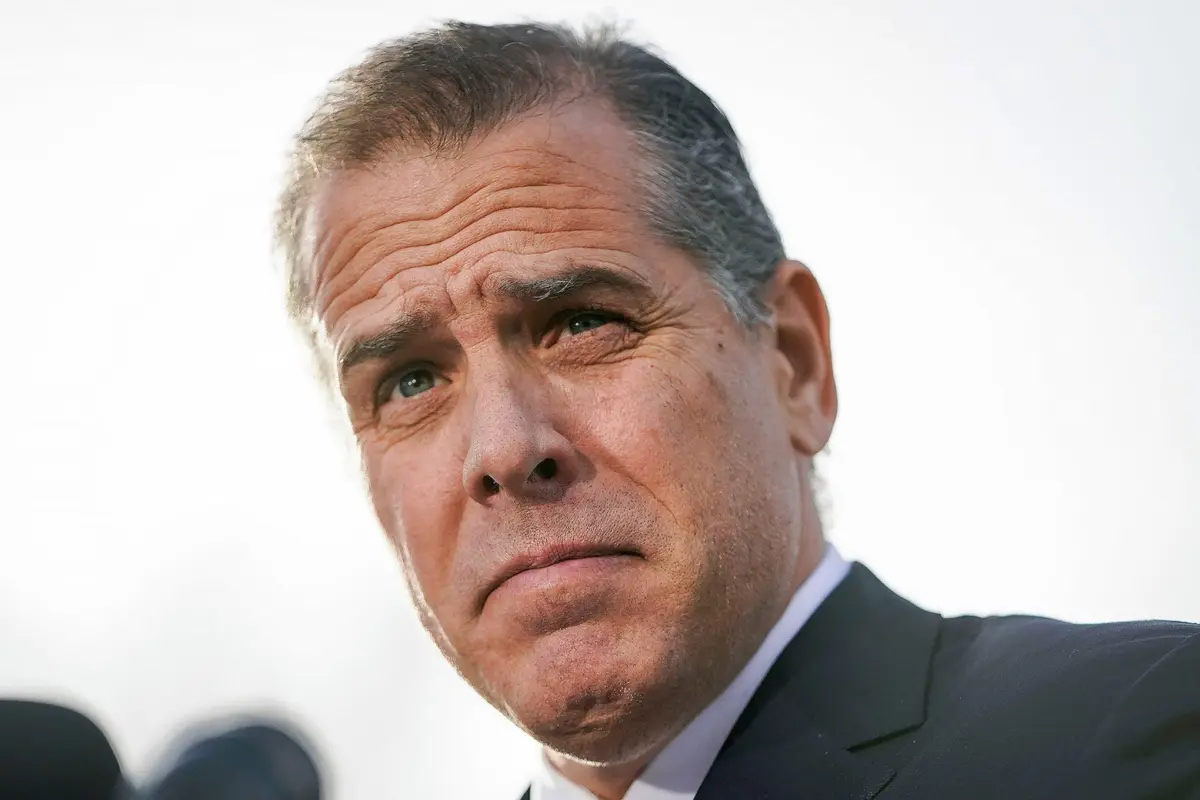
Over the past several months, Hunter Biden has occupied a ubiquitous space across social media platforms, independent podcasts, and mainstream news cycles. Engaging in unexpected dialogues with prominent figures spanning the ideological spectrum—from Tucker Carlson to figures on the farther right like Nick Fuentes—Biden has attempted to construct a public reckoning regarding his turbulent personal life, his journey through addiction, his artistic endeavors, and his father, former President Joe Biden.
Presented as an earnest effort to reclaim his narrative from years of tabloid sensationalism, legal battles, and political weaponization, this high-profile redemption tour recently reached a cynical and controversial climax. In September 2026, Biden unveiled a new cryptocurrency token named $LAPTOP, a meme coin explicitly themed around the infamous computer hardware that served as a central fixture of his legal and political notoriety.
Minted on Coinbase’s layer-two blockchain and traded across decentralized exchanges, the token was marketed under the high-minded rhetoric of "resilience, redemption, and recovery." However, the coin’s chaotic market debut, rapid valuation collapse, and obvious financial incentives exposed a stark disconnect between Biden’s stated mission of transparency and the realities of speculative digital assets. Rather than consolidating his narrative arc, the $LAPTOP venture has complicated his public image, alienating key allies and highlighting the lingering financial vulnerabilities of a political scion facing millions in mounting legal debt.
Detailed Chronology: From Podcast Circuit to Blockchain
The Pre-Launch Media Blitz
Throughout mid-2025 and into 2026, Hunter Biden embarked on an intensive media rehabilitation tour. In public appearances, Substack posts, and lengthy podcast interviews, he articulated a desire to take ownership of his life story. He spoke openly about moving past severe drug addictions, pivoting toward visual art, and utilizing his public profile to advocate for others navigating the arduous recovery process.
However, beneath the narrative of personal growth lay a persistent undercurrent of financial distress. Court depositions and legal filings from early 2025 revealed that Biden was mired in staggering debt, owing up to $17 million to former legal representation. Having exhausted his liquid assets, savings, stocks, and bonds through years of intense public scrutiny and criminal defense fees, Biden found his earning streams—primarily art sales and memoir royalties—insufficient to bridge the gap.
The Labor Day Teaser and Whitepaper Reveal
The groundwork for the cryptocurrency venture was laid over Labor Day weekend with a carefully orchestrated rollout. Biden’s team released a video montage on social media featuring historical news clips of conservative figures, including Donald Trump, incessantly referencing "the laptop." This was paired with an exclusive report in The Wall Street Journal detailing the mechanics of the impending issuance: a total supply of 1 billion $LAPTOP tokens.
According to the project’s structure, half of the total supply was designated for specific distribution channels:
- 300 million tokens were retained under the direct ownership of the project’s founders.
- 200 million tokens were earmarked for exclusive distribution across three demographics: subscribers to Hunter Biden’s Substack, members of influencer Andrew Callaghan’s Channel 5 email listserv, and investors who suffered catastrophic financial losses from the high-profile $TRUMP meme coin.
The Launch and Market Collapse
On Wednesday morning, the $LAPTOP token officially went live on Coinbase-backed infrastructure and trading platforms such as Pump and Fomo. In a statement shared on X (formerly Twitter), Biden defended the utility and symbolism of the asset:
"The symbol they used to try to end me is now a symbol of resilience, redemption, and recovery. You should not expect me or anyone else to make this token more valuable for you. $LAPTOP isn’t just about owning something, it’s about saying something."
The market’s initial reaction was swift and hyper-speculative. Within seconds of its launch, trading volume surged, causing the token’s valuation to multiply exponentially from an initial baseline of $37 to a peak exceeding $200. This parabolic movement, however, was driven largely by a handful of anonymous whales—wealthy speculative traders willing to risk hundreds of thousands of dollars on the debut.
The momentum proved ephemeral. Within hours, the coin suffered a precipitous crash, bottoming out at a valuation of approximately $1.30 per token. Amid the ensuing public backlash and plummeting prices, Biden issued a follow-up statement via X and a Medium post, attributing the wild market fluctuations to "technical difficulties."
Supporting Context & Metrics
To fully understand the economic mechanics and societal reception of the $LAPTOP token, it is necessary to examine the broader crypto-political landscape, past meme coin failures, and Biden’s personal financial balance sheet.
The $TRUMP Meme Coin Precedent
A cornerstone of Biden’s marketing strategy for $LAPTOP was the promise of restitution for victims of previous speculative bubbles, specifically those who lost capital investing in the $TRUMP meme coin. Economic analyses published in mid-2026 estimated that retail investors lost a staggering $3.81 billion when the $TRUMP token’s value collapsed following its market debut.
Even if the promised allocation of 50 million $LAPTOP tokens successfully reached former $TRUMP investors at peak valuation, the collective recovery value stood at roughly $65 million—a mere fraction of the multi-billion-dollar losses sustained across the broader market. Furthermore, because secondary buyers failed to materialize post-crash, holders attempting to liquidate their $LAPTOP tokens found themselves unable to realize meaningful gains, rendering the restitution narrative largely symbolic.
Coinbase, Political Alignments, and Fractured Alliances
The infrastructure underpinning $LAPTOP introduced notable political ironies. While Coinbase provided the technological framework for the blockchain launch, the company’s executive leadership had spent millions of dollars during the 2024 election cycle actively opposing the Biden-Harris administration, supporting Donald Trump, and lobbying for favorable crypto regulations. For Coinbase, the token represented transactional trading fee revenue rather than ideological solidarity with a recovering addict.
Furthermore, the attempted coalition building fractured almost immediately. Representatives for Andrew Callaghan’s Channel 5 explicitly distanced themselves from the project, publicly announcing that they had blocked all mailing-list members from receiving promotional materials related to $LAPTOP, refusing to let their platform be co-opted into Biden’s commercial enterprise.
Legal Indebtedness Under Oath
The underlying pressure driving the crypto venture remains rooted in Biden’s acute financial liabilities. Public court documents and deposition transcripts paint a stark picture of a former presidential scion operating entirely without traditional financial safety nets:
- Legal Debt: Up to $17 million owed to former defense teams and legal counsel.
- Liquid Assets: Zero reported stocks, bonds, or savings accounts.
- Physical Assets: No ownership of personal vehicles, real estate, or communication devices.
Faced with these insurmountable obligations, Biden’s pivot toward digital assets and non-fungible tokens (NFTs)—which he had enthusiastically championed on podcasts alongside figures like Tucker Carlson—reflects an increasingly desperate search for high-yield monetization strategies.
Official Statements & Public Discourse
The rollout of $LAPTOP triggered a polarized array of responses from political commentators, financial analysts, and digital asset advocates.
-
Hunter Biden (via X/Twitter and Medium):
"The symbol they used to try to end me is now a symbol of resilience, redemption, and recovery… $LAPTOP isn’t just about owning something, it’s about saying something."
Following the market crash, Biden doubled down, blaming unexpected "technical difficulties" for the extreme volatility observed during the token’s opening sessions. -
Financial Analysts and Crypto Observers:
Market critics pointed to the heavy concentration of early buying by anonymous accounts as classic indicators of a high-risk "pump-and-dump" cycle. Observers noted that framing a speculative meme coin around personal trauma and political grievance ultimately obscures the standard mechanics of digital asset speculation, placing retail buyers at severe financial risk. -
Political Detractors:
Conservative and progressive critics alike seized on the venture to question the sincerity of Biden’s rehabilitation tour. Opponents argued that monetizing the very artifact that came to symbolize the ethical and political controversies of the Biden family undermines the narrative of genuine contrition and personal accountability.
Future Outlook
The launch and subsequent stagnation of the $LAPTOP token mark a critical juncture in Hunter Biden’s post-white House public life. While his media tour was initially successful in generating nuanced conversations about addiction, systemic trauma, and the mental toll of political life, the integration of a speculative cryptocurrency project has fundamentally altered the calculus of his public redemption.
Moving forward, several key trajectories emerge:
- Regulatory and Legal Scrutiny: Given the immense financial losses sustained by early retail buyers and the controversial distribution mechanisms tied to political figures, regulatory bodies may take a closer look at celebrity-endorsed meme coins.
- The Limits of Narrative Monetization: The swift collapse of $LAPTOP demonstrates that public curiosity and notoriety do not automatically translate into sustained economic value within volatile digital asset markets.
- Ongoing Financial Pressures: With millions in legal debt remaining unsatisfied and traditional revenue channels (such as art and book sales) underperforming, Biden faces a narrow path toward financial stabilization that does not rely on contentious or speculative ventures.
Ultimately, Hunter Biden’s foray into the cryptosphere suggests that his rehabilitation tour would have found far greater resonance had it remained grounded in accountability rather than speculative tokenomics. By attempting to monetize his own notoriety, he invited the exact brand of cynicism he sought to escape.