Executive Overview
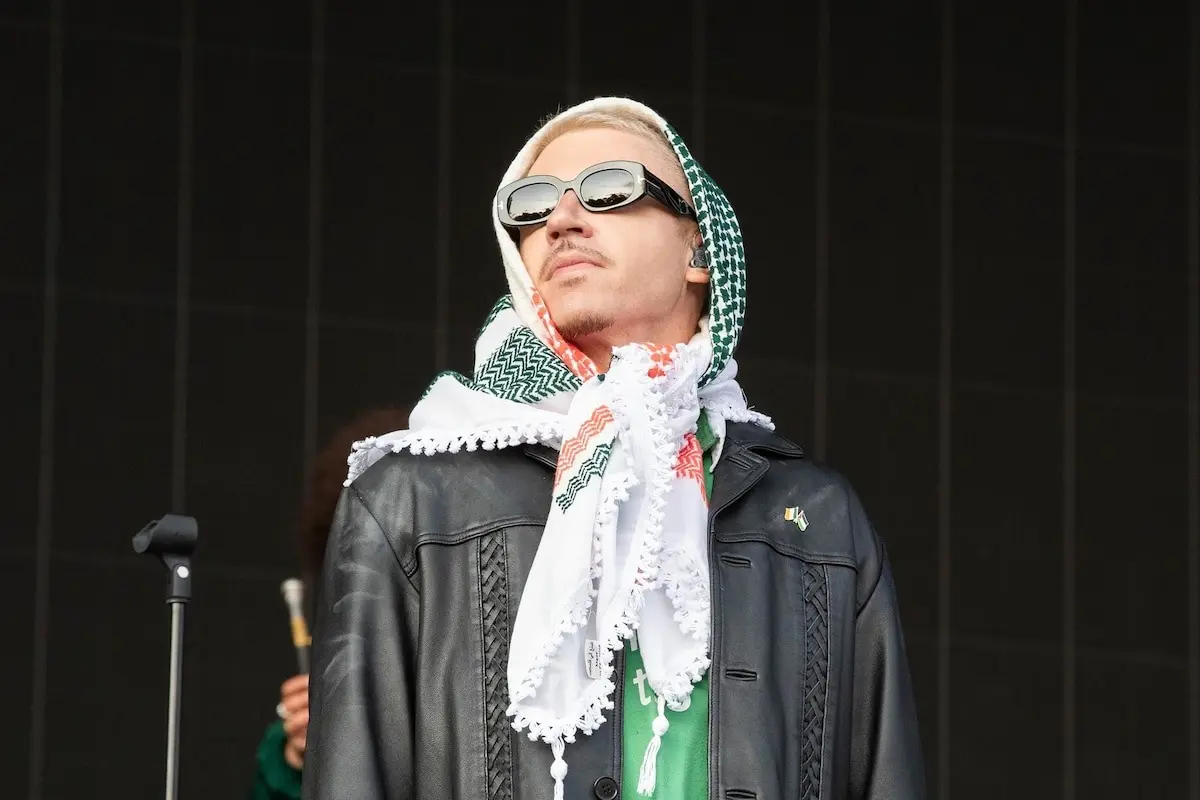
In the contemporary intersection of pop culture and geopolitics, few moments have laid bare the shifting tectonic plates of public opinion quite like the fallout from a recent Ed Sheeran stadium tour. What began as a routine performance—an artist using a global platform to voice political dissent—spiraled rapidly into a multi-act geopolitical and cultural flashpoint. When American hip-hop artist Macklemore took the stage at New Jersey’s MetLife Stadium, dropped the phrases "genocide" and "apartheid" in relation to Israel’s military campaign in Gaza, and performed his track "Hind’s Hall"—named in honor of five-year-old Hind Rajab, who was killed by Israeli fire in Gaza in 2024—he ignited a firestorm that extended far beyond the concert venue.
The immediate institutional response followed a familiar, well-trodden playbook of suppression. Pressure campaigns, spearheaded by organizations such as the Israeli-American Council and amplified by high-profile figures like billionaire Gillette Stadium owner Robert Kraft, swiftly resulted in Macklemore being dropped as a support act from Ed Sheeran’s upcoming tour dates. Venue owners balked, and promoters capitulated, seeking to insulate themselves from controversy.
Yet, what followed departed radically from historical precedent. Instead of the incident vanishing into the background noise of internet outrage, it metastasized into a sweeping display of peer solidarity. Every single supporting act on the tour—FINNEAS, Aaron Rowe, and Lukas Graham—alongside the Irish folk band Beoga, who performed directly onstage with Sheeran, precipitously withdrew from the bill. Their collective walkout transformed what was intended as a quiet silencing of dissent into a public rebuke of institutional censorship.
Simultaneously, Ed Sheeran found himself besieged by severe online criticism for issuing what critics universally condemned as a bloodless, equivocating statement attempting to walk a tightrope between "both sides." The episode illustrates a broader, profound transformation: while institutional power—wielded by venues, pro-Israel advocacy groups, and corporate promoters—remains capable of exacting professional tolls on artists, it increasingly triggers an immediate, highly damaging reputational and cultural backlash. As public opinion undergoes a seismic shift regarding the Middle East, the traditional mechanisms of silencing pro-Palestinian speech are encountering unprecedented resistance, signaling that the cultural terrain has fundamentally shifted beneath the feet of the entertainment industry.
Detailed Chronology: From MetLife Stadium to a Mass Tour Walkout
The sequence of events that stunned the music industry unfolded over the span of a single week, transforming a routine summer concert run into a headline-dominating crisis of conscience.
Act I: The MetLife Catalyst
The friction began at MetLife Stadium in New Jersey, where Macklemore delivered a politically charged set. Addressing tens of thousands of concertgoers, the rapper explicitly called for a "free Palestine," deployed the terms "genocide" and "apartheid" to characterize Israeli state actions, and performed "Hind’s Hall." The song has become an anthem of modern anti-war student and artistic movements, carrying heavy symbolic weight.
Within days, the backlash was swift and coordinated. According to subsequent statements released by Macklemore, high-level institutional leverage was applied behind the scenes. Robert Kraft, the billionaire owner of Gillette Stadium in Foxborough, Massachusetts, allegedly played a pivotal role in lobbying venue owners to lock Macklemore out of upcoming stops. Shortly after, the Messina Touring Group, the tour’s promoter, quietly confirmed that multiple venues across the country had refused to host any dates featuring Macklemore on the bill, effectively forcing his removal from the tour.
Act II: Sheeran’s Equivocation
As industry insiders anticipated how the primary headliner would navigate the brewing storm, Ed Sheeran released a statement addressing the controversy. Intended to defuse tension, the statement instead poured gasoline on the fire.
Widely panned as a masterpiece of corporate blandness, Sheeran’s message checked every box of defensive centrism: framing a devastating humanitarian catastrophe as a vague "conflict," balancing generalized statements about "both sides," and leaning heavily on platitudes about the unifying power of music. However, it was a single line—"I’m not complicit"—that sealed the statement’s fate in the court of public opinion. Lacking the polished obfuscation of a seasoned public relations team, the sentence struck critics as defensive, tone-deaf, and entirely detached from the gravity of the situation.
Act III: The Domino Effect of Solidarity
If the initial playbook relied on isolating Macklemore to deter other artists from speaking out, it suffered a catastrophic miscalculation. Rather than falling in line, the tour’s remaining support acts revolted.
FINNEAS, Aaron Rowe, and Lukas Graham announced their immediate withdrawal from the tour. They were joined by Beoga, the beloved Irish folk band whose acoustic instrumentation had long been a staple of Sheeran’s live performances. The artists did not mince words. In an accompanying statement, FINNEAS articulated the core principle driving the walkout: "Artists must not be silenced when they speak up for the oppressed."
For Sheeran, the defection of Beoga and Aaron Rowe carried an additional layer of personal and cultural irony. Sheeran has long cultivated an image deeply tied to Irish musical traditions and has frequently framed himself as "culturally Irish." Yet, both Rowe and Beoga explicitly cited their Irish identity and their nation’s history of anti-colonial struggle as the moral foundation for their refusal to remain on the tour, dealing a severe blow to the headliner’s carefully curated persona.
Supporting Context & Metrics: The Shifting Tides of Public Opinion
To understand why this controversy diverged so sharply from similar episodes in the past, one must examine the broader statistical and sociological landscape. The pushback against Macklemore and other pro-Palestinian artists does not occur in a vacuum; it collides with a rapidly evolving American and global public consciousness.
For decades, public figures expressing solidarity with Palestine faced steep professional penalties—frequently summarized as Hollywood blacklisting or career sabotage—with minimal peer-level pushback. As recently as the previous year, when Irish hip-hop group Kneecap was dropped from prominent international music festivals such as Sziget and the Eden Sessions, the reaction was largely isolated, failing to trigger a cascade of secondary boycotts.
Today, however, the cultural terrain has shifted. Institutional actors can still exert formidable pressure, but their interventions increasingly ignite powerful, counter-balancing movements. This resilience is directly tethered to a profound transformation in public opinion regarding Israel and Palestine.
According to a comprehensive 2026 Pew Research Center survey, negative views of Israel and its political leadership have continued a sharp upward trajectory among Americans, with 60 per cent of US adults now holding an unfavourable view of the nation. This sentiment is starkly generational; young adults overwhelmingly view the situation through a critical lens. Furthermore, polling data from sources like YouGov indicates that up to 40 per cent of the US public now utilizes the specific language of "genocide" and "apartheid" to describe Israel’s actions in Gaza—matching the terminology historically reserved for fringe political fringes or radical activists.
This terminology is no longer isolated to the margins. It is increasingly validated by the world’s foremost human rights organizations, international legal bodies, and criminal courts. Consequently, when an artist like Macklemore speaks from a stage, he is echoing a perspective held by a massive percentage of the American populace, particularly his core demographic. Suppressing these viewpoints through venue blacklists or corporate pressure can no longer alter public opinion; instead, it exposes the widening chasm between institutional power structures and the cultural mainstream.
Official Statements and Industry Reactions
The war of words surrounding the tour cancellation has drawn lines in the sand across the entertainment industry, prompting a reevaluation of what corporate compliance demands of modern artists.
- Macklemore’s Stand: In his post-removal statements, Macklemore did not back down from his initial platform, highlighting the systemic efforts of high-net-worth venue owners—such as Robert Kraft—to police the ideological boundaries of live entertainment spaces. His refusal to retract his statements set a tone of defiance that resonated deeply with activist networks.
- FINNEAS and the Support Acts: Framing the walkout as an ethical imperative, FINNEAS’s statement crystallized the feelings of many contemporary musicians:
"Artists must not be silenced when they speak up for the oppressed. There is a moral baseline that supersedes the logistics of a tour, and silence in the face of widespread suffering is a choice we refuse to validate."
- The Irish Contingent: Both Aaron Rowe and members of Beoga emphasized the historical weight of their cultural background. Drawing direct parallels between Ireland’s historic struggle against systemic oppression and the plight of the Palestinian people, their departure underscored how deeply personal national identities can inform international solidarity.
- Ed Sheeran’s Defensive Posture: Sheeran’s team has largely retreated into silence following the release of his heavily criticized statement. While his commercial dominance ("too big to fail") ensures his financial viability, the reputational stain of the episode has fundamentally altered how progressive and politically engaged music fans view him.
The ripple effects extend far beyond this single tour. In the wake of the incident, the Palestinian Campaign for the Academic and Cultural Boycott of Israel (PACBI) formally expanded its campaigns, calling on Sheeran to cancel the remainder of his international dates entirely, proving that the spotlight on complicity will not easily fade.
A Broader Hollywood Reckoning: Ruffalo, Sarandon, and Barrera
The Ed Sheeran tour controversy is merely a high-profile symptom of a wider industry-wide reckoning. Across Hollywood and the broader entertainment sector, prominent figures who voice support for Palestine are routinely targeted, yet the retaliatory mechanics are increasingly met with organized, institutional counter-resistance.
Consider the recent case of acclaimed actor Mark Ruffalo. Paramount Skydance publicly accused Ruffalo of invoking "antisemitic tropes" after he drew attention to the corporate ties between Oracle—founded by billionaire Larry Ellison—and the Israeli military, while simultaneously critiquing Paramount’s proposed corporate merger with Warner Bros. Discovery. Ruffalo forcefully rejected the accusations, framing them as a cynical attempt to deflect from legitimate corporate and political critiques.
Rather than isolating Ruffalo, the attack galvanized the creative community. More than 180 Jewish artists and public figures, including high-profile names like Hannah Einbinder and Wallace Shawn, signed an open letter defending Ruffalo and condemning the allegations as a coordinated "smear campaign." Thanks to his immense institutional standing, global recognition, and demographic privilege as a leading Hollywood man, Ruffalo weathered the storm largely unscathed, remaining a sought-after actor.
However, industry analysts are quick to point out that the cost of solidarity is not distributed equitably across the board:
- Susan Sarandon: The veteran actress recently revealed in interviews that her outspoken, long-term advocacy for Palestinian human rights has directly cost her prominent movie roles, as risk-averse studio executives quietly close doors.
- Melissa Barrera: Fired from the horror franchise Scream VII in late 2023 following social media posts regarding the Gaza humanitarian crisis, Barrera faced what many industry insiders characterized as an attempted Hollywood blacklist. Though she has since secured new film projects, the initial professional penalty was immediate and punishing.
- Marginalized Voices: Observers note that non-white and non-male artists—and particularly Palestinian artists themselves—face infinitely higher barriers to entry in major entertainment markets and bear the brunt of career-ending professional retaliation when they speak out.
These disparate outcomes demonstrate that while the cultural tide is turning, true parity in creative freedom remains an uphill battle.
Future Outlook: Sustaining the Momentum
As the dust settles on the Ed Sheeran tour collapse, the long-term implications for the entertainment industry are coming into focus. The episode serves as a powerful reminder that culture has historically served as a critical terrain of struggle for marginalized and oppressed populations—from the revolutionary art movements of the 1970s to contemporary global boycott campaigns.
The successful backlash against attempts to silence Macklemore proves that top-down censorship is no longer a risk-free strategy for venue owners and tour promoters. When powerful entities attempt to scrub stages clean of political dissent, they risk provoking an immediate, highly publicized crisis that can dismantle entire tour line-ups and inflict lasting reputational damage on headliners who choose neutrality over moral clarity.
Yet, complacency remains the ultimate danger. As international organizations report ongoing devastation in Gaza and an intensification of violence and displacement across the occupied West Bank, the administrative drama of a pop tour naturally pales in significance.
Nevertheless, the cultural front matters. The artists who walked away from Ed Sheeran’s tour demonstrated a model of peer solidarity that sets a new benchmark for the industry. Going forward, raising the professional and reputational cost of silence and complicity will remain a central objective for cultural workers. By throwing weight behind movements like PACBI, demanding accountability from multi-platinum artists, and supporting creators who risk their livelihoods to tell the truth, the entertainment community is slowly reshaping the boundaries of acceptable public discourse—ensuring that speaking out for the oppressed is no longer an isolated act of professional suicide, but the beginning of a collective wave.