Executive Overview
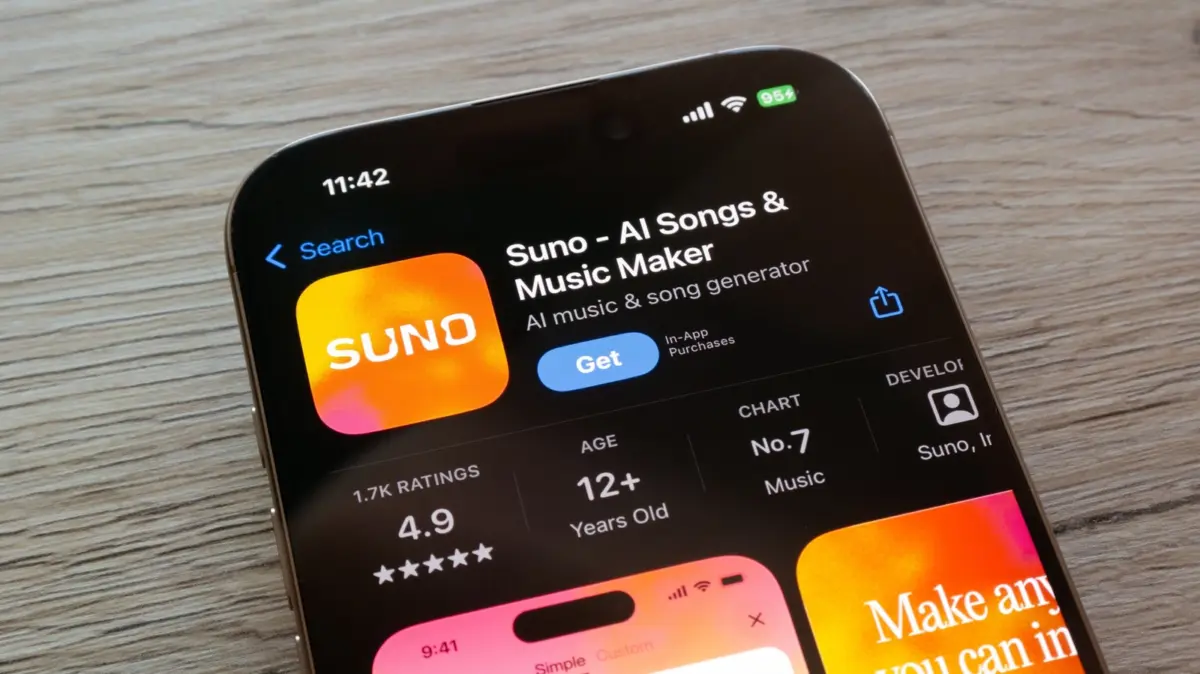
The legal battle lines between the multi-billion-dollar recorded music industry and generative artificial intelligence companies have shifted dramatically. In a high-stakes legal filing, two of the world’s largest music conglomerates—Sony Music Entertainment and Universal Music Group (UMG)—have launched a fresh copyright infringement lawsuit against AI music generation pioneer Suno. At the center of the dispute are Suno’s flagship v6 AI models, which the major labels allege were trained using a convoluted "roundabout" method designed to circumvent intellectual property laws and sanitize datasets built on unauthorized music.
This new legal challenge punctures the carefully cultivated narrative Suno has presented to the public following a series of strategic licensing deals with industry competitors Warner Music Group (WMG) and BMG. While Suno has heavily promoted its v6 lineup as a collaborative milestone achieved alongside legitimate industry partners, Sony Music and UMG argue that these latest models are the direct beneficiaries of what they term "the fruit of the same poisoned tree."
According to legal documents reviewed by Music Business Worldwide, the plaintiffs assert that Suno’s v6 models rely heavily on data derived from prior generations of AI models built on massive, unauthorized scrapings of copyrighted sound recordings. If the courts accept this reasoning, the financial implications for Suno could be catastrophic. The record labels are seeking damages that could skyrocket to an astonishing $9 billion under U.S. copyright law, alongside additional statutory penalties for alleged technological workarounds used to harvest training data from platforms like YouTube.
As the generative AI revolution continues to collide with legacy intellectual property frameworks, this lawsuit stands as a crucial bellwether case. It threatens to define the legal boundaries of how AI companies can utilize community interactions, human preference signals, and legacy datasets to refine their next-generation models.
Detailed Chronology: From Unauthorized Scraping to High-Stakes Litigation
To fully comprehend the gravity of the current lawsuit, it is essential to trace the adversarial relationship between Suno and the major record labels over the past several years. The friction point has always centered on how artificial intelligence models ingest human creativity to generate synthetic music that mimics commercial standards.
The Foundation of Conflict and Mass Scraping
Suno’s journey began with the rapid ascension of its foundational AI music generation tools, which captured the public imagination by allowing users to generate complete songs—complete with vocals and instrumentation—via simple text prompts. However, behind the user-friendly interface lay a contentious data acquisition strategy.
In previous legal filings and public disclosures, record labels pointed out that training high-fidelity audio models requires vast quantities of professionally produced music. Suno initially leaned heavily into the legal doctrine of "fair use," arguing that scraping the internet for data to train transformative AI models constituted a permissible use of copyrighted material.
The tension boiled over into open warfare when Sony Music, Universal Music Group, and Warner Music Group filed a joint lawsuit against Suno and competing AI platform Udio, alleging massive, systemic copyright infringement. The record companies accused the startups of wholesale, unauthorized copying of millions of sound recordings to train their algorithms.
The July 2026 Hack and Data Exposure
The debate over data sourcing intensified dramatically in July 2026, when a major security breach of Suno’s internal infrastructure exposed proprietary data. The hack revealed that Suno had aggressively scraped millions of copyrighted songs and lyrics from mainstream platforms, including YouTube Music, Deezer, and Genius. This leak provided concrete evidence supporting the labels’ claims that Suno’s early architectures were built on a foundation of uncompensated and unauthorized commercial music.
Recognizing the mounting legal pressure and the reputational damage associated with unauthorized scraping, Suno began pursuing a two-pronged strategy: defending its historical practices in court while simultaneously seeking legitimacy through commercial partnerships.
The Pivot to Licensing and the Release of v6
In a bid to normalize its operations and appease the industry, Suno executed a strategic pivot. The company forged global strategic alliances and licensing agreements with major entities such as Warner Music Group, BMG, and Believe. These partnerships culminated in the retirement of Suno’s older models and the rollout of its v6 architecture, which the company proudly marketed as being built on cooperative, licensed foundations.
For a brief period, it appeared Suno had successfully charted a path out of its legal quagmire. By cutting ties with its earliest iterations and partnering with heavyweights like WMG and BMG, Suno attempted to signal to the market—and to regulators—that it had turned a corner.
However, Sony Music and UMG refused to participate in this settlement path. Analyzing the architectural lineage and public disclosures surrounding the v6 release, these two music giants concluded that Suno’s new models were not nearly as clean as advertised. This realization catalyzed the current lawsuit, filed in late 2026, which challenges the very premise of Suno’s v6 redemption story.
Supporting Context & Metrics: The Anatomy of a $9 Billion Claim
The core of the new lawsuit filed by Sony Music and UMG hinges on a forensic examination of how Suno trained its v6 models. While Suno acknowledges that the v6 lineup utilized material licensed from partners like WMG, BMG, and Believe, the company’s public disclosures also revealed another crucial training component: users’ "interactions" with Suno’s service.
Decoding "Interactions" and Preference Signals
According to the complaint obtained by Music Business Worldwide, Sony Music and UMG argue that Suno’s reference to "interactions" is a carefully chosen euphemism. The labels interpret this phrase to mean the outputs of, and human preference signals derived from, prior versions of Suno’s AI models.
Under this theory, a dangerous loop is established:
- Generation Zero: Suno builds its earliest models by directly scraping and copying unauthorized copyrighted sound recordings owned by Sony, UMG, and others.
- The Feedback Loop: Users interact with these unauthorized models, generating data, preference signals, and aesthetic refinements based on the outputs.
- The Sanitization Attempt: Suno uses these preference signals and user-generated interactions—which are inextricably linked to the original unauthorized copies—to train and fine-tune its v6 models.
Legal experts note that if the court accepts the doctrine of "the fruit of the poisoned tree," Suno cannot wash its hands of its original copyright violations simply by introducing a new generation of models trained on data derived from those tainted precursors.
Financial Liabilities and Technical Violations
The financial exposure facing Suno under this legal theory is astronomical. The lawsuit outlines potential liabilities across two major fronts:
- Copyright Infringement Scale: Sony Music and UMG claim that Suno could be held directly responsible for infringing upon the copyrights of at least 60,202 distinct sound recordings. Under U.S. copyright law, statutory damages can be assessed per infringed work, leaving Suno potentially liable for up to $9 billion in damages.
- Circumvention Penalties: Beyond traditional copyright claims, the lawsuit levies technical accusations. The plaintiffs allege that Suno systematically bypassed YouTube’s advanced anti-downloading and anti-scraping technological measures to harvest audio data. Under legal frameworks governing digital rights management and anti-circumvention, Suno faces additional penalties of up to $2,500 for each individual instance a song was scraped using these methods.
These staggering figures underscore the existential threat this lawsuit poses not only to Suno, but to the broader generative AI music sector. If startups can be held financially liable for downstream models trained on user interactions derived from historical scraping, the business model of iterative AI training faces a catastrophic roadblock.
Official Statements and Industry Perspectives
The public relations battle between Suno and the major record labels reflects a fundamental philosophical divide over the future of human creativity versus machine synthesis.
Suno’s Defense: Innovation, Community, and Collaboration
In an official statement provided to Engadget, Suno forcefully rejected the allegations made by Sony Music and UMG, characterizing the lawsuit as legally and factually meritless.
"These claims remain fundamentally flawed on both the facts and the law," Suno stated, reiterating its foundational mission that "Suno exists so that more people can make new music."
The company highlighted its evolution over the preceding two years, emphasizing its cooperative efforts with the industry:
"Over the past two years, we have doubled down on this goal, launching v6 in partnership with WMG, BMG, and Believe. v6 was trained on content licensed from our partners, interactions including creations and preference signals from our community, and the accumulated learnings from our team. We are excited for a future where AI and the music industry continue to strengthen one another and build entirely new product experiences for artists, fans and the broader music community."
Suno’s defense rests on the idea that technological learning, community-driven preference signals, and transformational AI development do not constitute unlawful derivative works, and that penalizing iterative learning will stifle technological progress.
The Major Labels’ Perspective: Protecting the Value of Human Artistry
Conversely, Sony Music and Universal Music Group view companies like Suno as parasitic entities that commercialize stolen intellectual property under the guise of technological innovation. By pursuing this secondary litigation, the labels are sending an unambiguous message to Silicon Valley: partial licensing deals and architectural rebranding will not shield AI companies from accountability for historical and systemic copyright theft.
Representatives for the major labels argue that allowing AI companies to launder unauthorized data through user preference loops creates a destructive loophole that would effectively nullify copyright protections in the digital age. In their view, true partnership requires fully licensed datasets from inception to execution—not retroactive compromises designed to evade multi-billion-dollar liabilities.
Future Outlook: Implications for Generative AI and the Music Industry
As this legal showdown proceeds through the courts, its ramifications will extend far beyond Suno, Sony, and Universal. The final ruling will establish critical legal precedents for the entire generative AI ecosystem.
1. The Legal Definition of "Derivative Training Data"
The judiciary will be forced to grapple with a novel question of digital-age intellectual property law: Can a model be considered clean if its training data includes human preference signals and feedback loops derived from an earlier, allegedly unauthorized model? A ruling in favor of Sony and UMG would force AI developers to completely scrub their development pipelines, potentially requiring them to discard models built on mixed or questionable historical datasets.
2. The Polarization of the AI Music Market
The lawsuit highlights a growing schism within the music industry itself. While publishers and labels like Warner Music Group and Bmg have chosen a pragmatic path of integration and licensing, Sony Music and Universal Music Group are maintaining a fiercely litigious stance. This divergence may lead to a fragmented market where certain AI platforms operate with the explicit backing of select major labels while facing total warfare from others.
3. The Survival of Independent AI Startups
For startups operating in the generative media space, the legal and financial stakes have never been higher. Facing potential damages scaling into the billions of dollars, smaller AI companies lack the balance sheets to absorb catastrophic litigation losses. This reality may accelerate industry consolidation, pushing smaller innovators either into bankruptcy, forced acquisitions by big tech companies, or absolute compliance with legacy media conglomerates.
Conclusion
The second lawsuit brought by Sony Music and Universal Music Group against Suno is more than a mere commercial dispute; it is a defining battleground for the soul of modern music creation. As the case moves forward, it will test the limits of fair use, the definition of digital piracy, and the economic viability of artificial intelligence in an industry built on centuries of codified copyright law. Whether Suno’s v6 models represent the dawn of a collaborative future or the continuation of a tainted legacy is a question that now rests squarely in the hands of the courts.