Executive Overview
The consumer PC hardware market continues to grapple with a sweeping memory supply crisis, largely driven by the insatiable infrastructure demands of the artificial intelligence boom. For the average builder, system upgrader, or enthusiast, components that were once comfortably affordable—most notably RAM and solid-state drives (SSDs)—have experienced sustained price inflation with little immediate relief in sight. Yet, even within a constrained marketplace defined by high costs, targeted hardware deals occasionally emerge for those tracking the landscape closely.
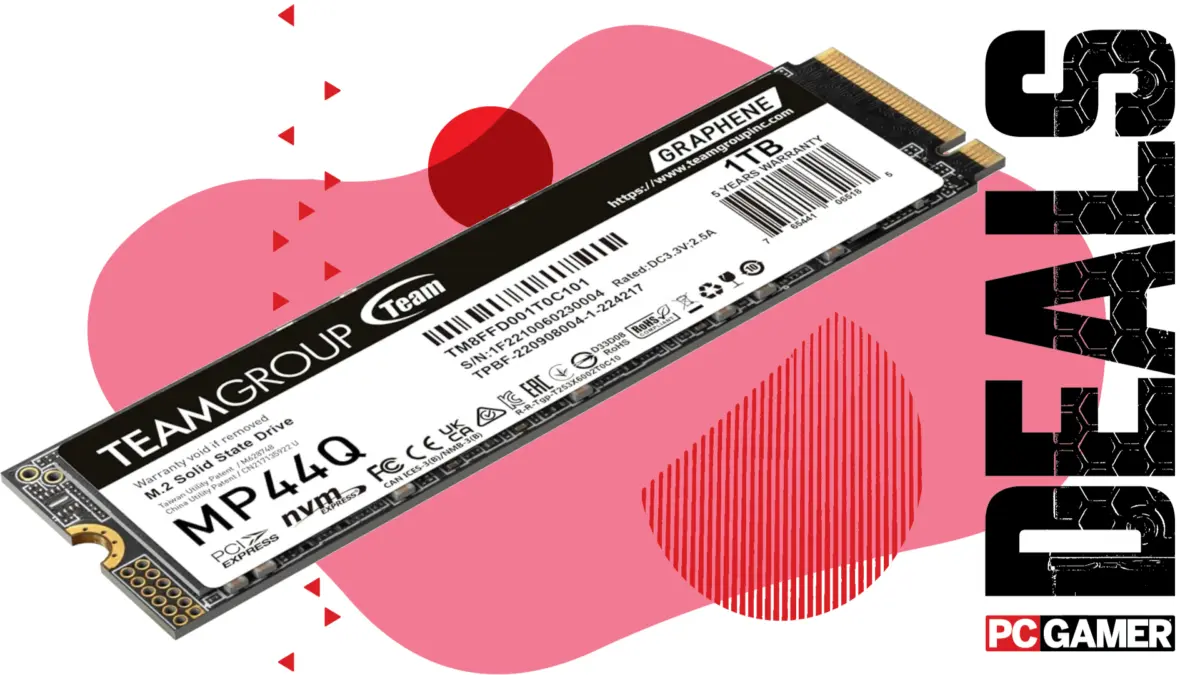
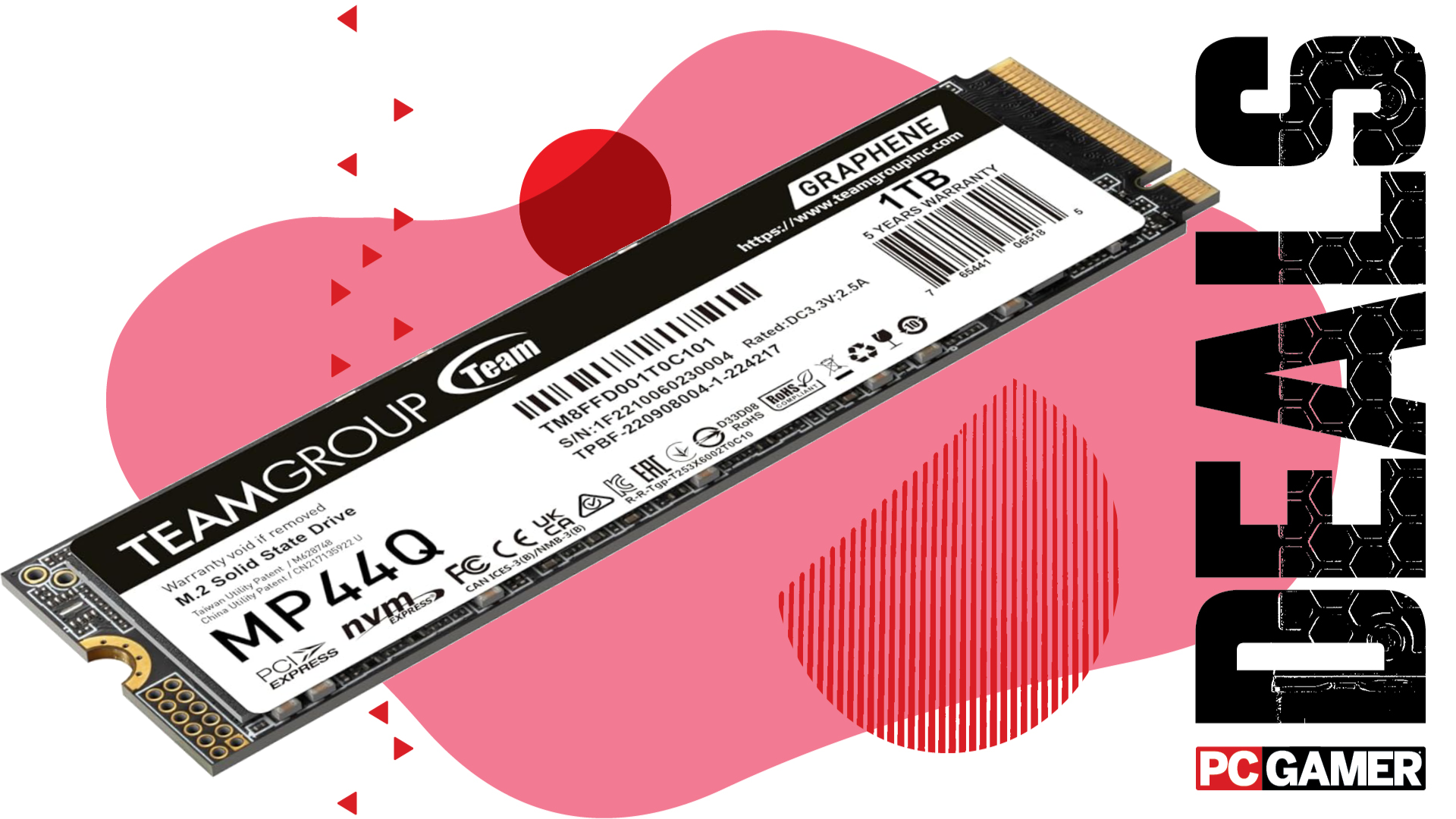
A prime example of this is the Teamgroup MP44Q 1TB NVMe PCIe 4.0 SSD, which has recently hit $167 on Amazon, matching its lowest recorded price point since June. Offering sequential read and write speeds of up to 7,000 MB/s and 5,900 MB/s respectively, this drive bridges the gap between raw performance and budget-conscious purchasing. However, like any hardware decision in the current economic climate, the purchase requires a careful weighing of specifications, benchmarks, and long-term utility. While its random 4K performance lags behind competitors like the SanDisk WD Blue SN5100 and Lexar NQ780, it compensates with an unexpectedly generous write endurance rating of 1,000 Terabytes Written (TBW) for a budget QLC (Quad-Level Cell) drive.
This comprehensive report examines the current state of storage pricing, the underlying performance metrics of the Teamgroup MP44Q 1TB, and what consumers should consider before pulling the trigger on storage upgrades in a market dominated by AI supply bottlenecks.
Detailed Chronology: The Evolution of Modern SSD Pricing and Market Pressures
To understand why a $167 price tag on a 1TB QLC drive warrants a dedicated hardware feature, one must first look at the broader historical context of the NAND flash memory market over the past several cycles.
The Era of Abundance and Subsequent Correction
Just a few short years ago, the consumer storage market was locked in a fierce price war. Overproduction by major NAND manufacturers—including Samsung, SK Hynix, Micron, and Western Digital—pushed the cost per gigabyte of NVMe SSDs down to historic lows. Consumers routinely enjoyed high-speed PCIe 4.0 drives at fractions of their original manufacturing costs, making 2TB and even 4TB upgrades remarkably accessible.
However, this unsustainable downward price spiral forced manufacturers to drastically curtail production output, close aging fabrication lines, and pivot resources toward high-margin enterprise solutions. The primary catalyst for this shift was the hyper-accelerated adoption of generative AI models, large language models (LLMs), and cloud data center expansions.
The AI Infrastructure Bottleneck
The boom in artificial intelligence has placed an unprecedented demand on global semiconductor manufacturing capacity. Enterprise-grade AI servers require staggering amounts of high-bandwidth memory (HBM) and high-capacity enterprise SSDs to process and index vast datasets. Consequently, fabrication plants have reallocated wafer starts away from standard consumer-grade TLC (Triple-Level Cell) and QLC NAND flash toward lucrative enterprise configurations.

As a direct result, retail prices for consumer RAM and storage modules climbed steadily throughout late 2023 and 2024, stabilizing at significantly higher baselines. Industry analysts and supply chain trackers indicate that consumer hardware pricing will remain elevated for the foreseeable future, as memory fabrication houses prioritize long-term enterprise contracts over retail consumer volume.
The Return of the Teamgroup MP44Q Discount
Against this challenging backdrop, tracking daily hardware price fluctuations has become an essential task for system builders. The Teamgroup MP44Q 1TB, which had drifted upward in price following its summer baseline, recently saw a welcome correction on Amazon. Dropping to $167, the drive represents a rare value proposition in a sector where discounts are increasingly fleeting and conservative.
Supporting Context & Metrics: Performance, Endurance, and Comparative Analysis
When evaluating a budget-oriented PCIe 4.0 SSD, prospective buyers must look beyond the marketing banner speeds and examine real-world performance benchmarks. The Teamgroup MP44Q presents an interesting technical profile that suits specific use cases while falling short in others.
Raw Sequential Speeds vs. Real-World Workloads
On paper, the MP44Q 1TB boasts impressive peak performance figures:
- Sequential Read Speed: Up to 7,000 MB/s
- Sequential Write Speed: Up to 5,900 MB/s
These metrics ensure that the drive easily saturates standard desktop file-transfer operations, making it more than capable as a primary boot drive for operating systems or a swift secondary repository for media and application files. Boot times are snappy, and massive file transfers execute without the dramatic throttling associated with older PCIe 3.0 or legacy SATA architectures.
The QLC Compromise: Random 4K Performance
Where the MP44Q reveals its budget-oriented nature is in its random 4K input/output operations per second (IOPS) and smaller file-handling efficiency—metrics critical for high-end gaming and heavy workstation tasks.
In rigorous benchmark evaluations, the MP44Q struggles with random 4K performance:
- Random Read: ~70 MB/s
- Random Write: ~288 MB/s
For comparison, alternative budget-friendly drives in the same market segment demonstrate superior handling of these metrics. For instance, Lexar’s QLC-based NQ780 series manages better consistency in fragmented file operations, while Western Digital’s SanDisk WD Blue SN5100 pushes further ahead with roughly 107 MB/s random read and 308 MB/s random write speeds.
What This Means for Gamers and General Users
For enthusiasts aiming to play the absolute newest AAA titles featuring dense streaming assets, complex geometry, and heavy texture loading pipelines (such as modern Unreal Engine 5 games), the lower random 4K performance of the MP44Q means it may not deliver the instantaneous load times of high-end, DRAM-cached TLC drives like the Samsung 990 Pro or WD Black SN850X.
However, for a vast segment of the PC gaming population—particularly those enjoying indie titles, strategy games, esports staples, or general productivity tasks—these performance deltas are virtually imperceptible in day-to-day use. As many hobbyists note, sinking dozens or hundreds of hours into slower-paced titles, simulation games, or expansive indie libraries makes the minor fractional differences in asset streaming negligible when weighed against the financial savings of the hardware.
Endurance and Warranty: A Pleasant Surprise
One of the most frequent criticisms lobbied against QLC (Quad-Level Cell) NAND technology is its inherent write endurance limitation compared to TLC or SLC counterparts. Because QLC stores four bits of data per memory cell, the cells degrade faster under intensive write cycles.
To offset this consumer concern, manufacturers typically rate standard 1TB drives at around 600 TBW (Terabytes Written). Teamgroup, however, has exceeded industry standards with the MP44Q line:
- Rated Endurance: 1,000 TBW for the 1TB model.
- Warranty Support: Backed by a standard 5-year manufacturer warranty.
This 1,000 TBW rating is notably robust for an entry-level QLC drive, providing an extra layer of reassurance for users worried about longevity in heavy-write environments.
Official Statements and Industry Insights
Hardware analysts and manufacturers have been vocal regarding the structural shifts in the global supply chain that dictate current pricing models.

Industry representatives from major flash producers have consistently highlighted that consumer demand fluctuations are currently secondary to enterprise commitments. As hyperscalers—companies operating massive cloud networks and AI server farms—continue to absorb the vast majority of semiconductor output, retail component pricing is insulated from normal seasonal drops.
In a recent market commentary, hardware researchers noted:
"The convergence of enterprise AI deployments and disciplined capital expenditure by memory fabricators has fundamentally altered how consumer storage is priced. We are no longer seeing the volatile, deep-discount clearance cycles that defined 2022 and early 2023. Instead, supply is carefully metered, making stable, mid-tier price points like the MP44Q’s current Amazon listing the new benchmark for ‘good deals’."
Reviewers who have tested the Teamgroup MP44Q emphasize its dual personality. While technical benchmarks underscore its limitations in random workloads, consensus opinion aligns on its viability as a cost-effective utility drive. Reviewers point out that while it cannot compete with top-tier performance flagships, its combination of high sequential throughput, exceptional TBW endurance for a QLC drive, and a 5-year warranty makes it a pragmatic purchase for budget-conscious builders navigating an inflated marketplace.
Future Outlook: What to Expect from the SSD Market Moving Forward
Looking ahead, consumers should temper expectations regarding any rapid return to historic lows in SSD and RAM pricing. The structural integration of artificial intelligence into enterprise infrastructure is a multi-year secular trend, meaning fab capacity will remain heavily tilted toward enterprise-class architecture well into the foreseeable future.
Key Trends to Watch:
- Prolonged Price Plateaus: Major price crashes driven by oversupply are unlikely in the near term. Manufacturers have adopted a much more conservative approach to inventory management, avoiding the catastrophic oversupply cycles of the past.
- Rise of QLC Adoption: As manufacturing processes mature, QLC and even emerging PLC (Penta-Level Cell) technologies will become increasingly common in budget and mid-tier drives. Innovations in controller efficiency and error-correction code (ECC) will be vital in narrowing the performance gap between QLC and TLC drives.
- Strategic Purchasing: For system builders and upgraders, waiting for a "massive crash" may mean sitting on outdated hardware for extended periods. Instead, identifying well-specced budget options that offer above-average endurance—such as the Teamgroup MP44Q with its 1,000 TBW rating—represents the most prudent purchasing strategy.
Conclusion
The Teamgroup MP44Q 1TB NVMe SSD at $167 is not a revolutionary piece of silicon, nor is it designed to shatter records in hardcore enthusiast benchmarks. However, within the harsh economic reality of today’s AI-inflated storage market, it represents a sensible, reliable compromise. Backed by solid sequential speeds, an unexpectedly high endurance rating for a QLC drive, and a comforting 5-year warranty, it remains a smart pickup for anyone looking to expand their system’s storage without breaking the bank.