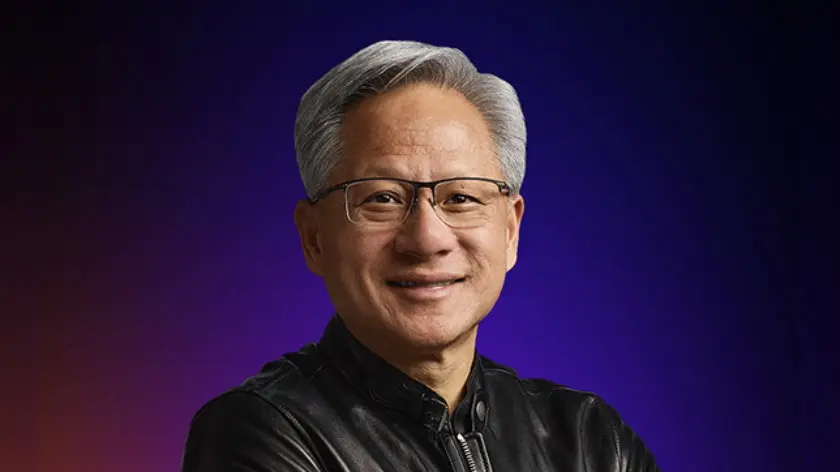
BERLIN — In a keynote address that underscored the shifting tectonic plates of global technology infrastructure, Nvidia founder and CEO Jensen Huang took the stage at the Tempodrom during GTC Berlin on October 21, 2026. Delivering a wide-ranging, forward-looking presentation, Huang introduced breakthrough modular data center architectures, outlined aggressive telecommunications partnerships across Europe, detailed sweeping supply chain expansions, and issued a stark industrial challenge to the continent: Europe must transition from a passive consumer of artificial intelligence to an active, sovereign producer.
The announcements made in the German capital arrive at a critical inflection point for the global digital economy. As enterprise demand for high-performance compute reaches unprecedented heights, traditional data center deployment models—often bogged down by multi-month construction timelines, complex on-site cabling, and ballooning energy footprints—are proving inadequate. By tackling these bottlenecks head-on, Nvidia’s latest suite of innovations aims to redefine how the world builds, scales, and operates the infrastructure underpinning the next generation of intelligence.
Executive Overview
The sweeping array of announcements at GTC Berlin mapped out a comprehensive blueprint for the future of enterprise compute, telecommunications, and industrial automation. At the heart of Nvidia’s strategy are three foundational pillars: speed of deployment, energy efficiency, and the transformation of existing telecom assets into distributed intelligence hubs.
- The DSX POD Modular Revolution: Nvidia unveiled a containerized reference design for complete Vera Rubin AI factories, slashing on-site deployment timelines from six months to a mere 14 days.
- The Telecom-to-AI Shift: Highlighting the convergence of mobile networks and artificial intelligence, Nvidia showcased monumental advancements in AI-RAN (Artificial Intelligence Radio Access Network) technology, punctuated by live trials with global operators including T-Mobile, BT, Deutsche Telekom, and Elisa.
- A Strategic Call to Action for Europe: Following a tour of tech ecosystems in Paris, London, Stockholm, and Dublin—bolstered by nearly $10 billion in recent commitments—Huang warned European policymakers and industry leaders against complacency, arguing that infrastructure must precede models to guarantee digital sovereignty.
These announcements signal a decisive shift in how Nvidia operates. No longer solely a chip designer, the company is orchestrating an entire end-to-end industrial ecosystem, spanning raw semiconductor substrates, closed-loop thermal cooling, facility-level containerization, and network-edge intelligence.
Detailed Chronology of Announcements
1. The DSX POD: Redefining Data Center Deployment
The centerpiece of Huang’s hardware announcements was the DSX POD, a revolutionary reference design tailored for complete Vera Rubin AI factories. Built inside modular containers, these units are fully integrated, wired, and validated off-site by manufacturing partners before ever reaching their final destination.
Traditionally, constructing an enterprise-grade AI data center is a tortuous six-month engineering feat involving intricate on-site liquid-cooling installations, complex rack-level power distribution, and miles of cabling. Under Nvidia’s new paradigm, these processes are completed at the factory level. Upon arrival at a prepared site, the DSX POD units simply plug directly into pre-established power, cooling, and networking infrastructures.
Nvidia has partnered with an elite roster of global infrastructure and hardware giants—including Bull, Dell Technologies, HPE, Lenovo, Schneider Electric, and Vertiv—to manufacture and roll out these modular AI factories worldwide by early 2027.
Addressing the audience at the Tempodrom, Huang emphasized the economic imperative driving this speed:
"An AI factory creates value when it starts producing tokens."
By cutting deployment times to just 14 days, enterprises can drastically shorten their time-to-market and accelerate return on investment in the hyper-competitive generative AI landscape.
2. Radical Efficiency: Closed-Loop Cooling and Software Optimization
Alongside hardware acceleration, Nvidia took direct aim at the formidable energy and water consumption challenges plaguing modern data centers. The broader DSX platform introduces advanced thermal management configurations that pair closed-loop liquid cooling systems with dry coolers.
According to Nvidia’s engineering specifications, this architecture brings facility cooling water use perilously close to zero. For a massive 2-gigawatt (2GW) deployment, this configuration could save an astonishing 54 million liters of water daily—roughly equivalent to the daily water consumption of 180,000 households. Depending on geographic location and peak seasonal temperatures, local climates will dictate whether supplemental mechanical cooling is required during the hottest periods of the year.
Beyond physical cooling, Nvidia introduced DSX MaxLPS, a sophisticated software suite designed to squeeze maximum computational output out of restricted power budgets. Nvidia claims MaxLPS can generate an identical volume of tokens while consuming up to 30% less power. Early-adopter cloud providers and specialized infrastructure firms—such as CoreWeave, Firmus, Google Cloud, IREN, Lambda, Nebius, Nscale, and Sharon AI—are already exploring the technology. Notably, during an evaluation at its Icelandic AI facility, Nscale reported a staggering 49% increase in inference throughput while operating within the exact same 264kW power envelope.
3. Telecom Networks as Distributed AI Infrastructure
Perhaps the most forward-looking strategic revelation of the keynote was Nvidia’s push to transform traditional mobile networks into distributed AI computing grids. Huang pointed out that global telecommunications operators collectively maintain roughly 100,000 cell sites and control approximately 100GW of distributed data center capacity—infrastructure perfectly positioned to host edge-AI workloads.
A major milestone was achieved as T-Mobile completed the world’s first live-network AI-RAN call in Bellevue, Washington, in collaboration with Nvidia and Nokia. Culminating nearly eight years of intensive research and development, Huang celebrated the achievement with a signature declaration: "Now CUDA makes phone calls."
European carriers are moving rapidly to replicate and expand upon this momentum:

- Elisa successfully executed what Nvidia terms Europe’s first AI-RAN field trial, simultaneously running voice, mobile data, and vision AI workloads on a single accelerated computing platform over a live 5G network.
- BT announced concrete plans to launch live AI-RAN trials in Birmingham, leveraging technology from Nokia and Nvidia by 2027.
- Deutsche Telekom has already validated the commercial platform within its advanced labs in Bonn and Oulu, setting the stage for wide-scale field trials in 2027. Furthermore, Deutsche Telekom announced plans to expand its Nvidia-powered Industrial AI Cloud, which currently hosts open-source models and serves cutting-edge robotics enterprises like Agile Robots.
Globally, nearly 20 telecommunications operators have publicly embraced AI-RAN collaborations utilizing Nokia’s anyRAN software alongside Nvidia’s Aerial RAN Computer architecture. Across Europe, the Middle East, and Africa (EMEA), nine major operators are actively building or expanding Nvidia-powered infrastructure. Regional players such as CRA, etisalat, Silknet, and TIM are actively deploying brand-new infrastructure, while Cassava, Deutsche Telekom, Fastweb combined with Vodafone, Kazakhtelecom, and Orion Telecom are expanding existing footprints.
Huang summarized this paradigm shift succinctly, noting that telecom networks of the future "will also carry the world’s intelligence." To facilitate this, Nokia is integrating Nvidia’s Nemotron open models into its Autonomous Networks Suite, while Cisco has fine-tuned Nemotron to enhance its Crosswork AI network automation software.
4. Supply Chain Fortification to Overcome Bottlenecks
Acknowledging that explosive global demand has placed immense strain on physical manufacturing ecosystems, Huang detailed a series of multi-billion-dollar supply chain capacity agreements designed to bulletproof Nvidia’s production lines over the coming years:
- Strategic packaging and substrate partnerships with IBIDEN, Samsung Electro-Mechanics, and Unimicron will scale substrate capacity by 2.5 times over a three-year horizon.
- Amkor has committed to expanding advanced packaging capacity by more than 300% by the close of 2028.
- SPIL is aggressively targeting a 15-fold increase in optical-engine manufacturing capacity dedicated to co-packaged optics by mid-2027.
"Demand is extraordinary," Huang remarked, emphasizing the core operational reality of the current technological cycle. "Capacity is the constraint."
5. Securing the Agentic and Physical AI Frontier
The keynote also touched heavily upon the emerging domains of autonomous software agents and physical robotics. Nvidia introduced the OpenShell Reference Architecture for Safe AI Agents, addressing growing enterprise security concerns surrounding autonomous agent workflows.
In the realm of physical AI and robotics, automotive innovator Volvo Cars announced it is adopting Nvidia’s comprehensive Hyperion platform. Additionally, Nvidia highlighted the upcoming launch of Agile ONE SN, a cutting-edge reference humanoid robot slated for commercial introduction next year.
Supporting Context & Metrics
To fully understand the gravity of Nvidia’s GTC Berlin announcements, one must examine the macroeconomic and geopolitical backdrop against which they are set. For months, European regulators and industry executives have wrestled with questions of digital dependency. While the continent boasts world-class academic institutions and robust regulatory frameworks, its enterprise sector has historically lagged behind the United States and East Asia in domestic foundational model training and large-scale AI infrastructure deployment.
Nvidia’s recent European tour—spanning stops in Paris, London, Stockholm, and Dublin—culminated in close to $10 billion in total capital commitments to Europe’s regional technology ecosystems. This sustained investment strategy is designed to ensure that European enterprises do not merely buy finished software applications from foreign tech giants, but instead build native engineering capabilities from the silicon layer upward.
Official Statements and Industry Perspective
Jensen Huang’s overarching message in Berlin was framed squarely around industrial strategy and sovereign capability. Positioning artificial intelligence as a complex, five-layer technology stack rooted firmly in foundational energy supplies, Huang argued that physical infrastructure must be laid down before advanced cognitive models can emerge organically.
"You don’t want to just be consuming the AI," Huang cautioned the packed auditorium at the Tempodrom.
This sentiment resonated deeply with telecom executives and enterprise leaders in attendance. By positioning local telecom towers as distributed micro-datacenters and introducing prefabricated, modular AI factories that bypass lengthy civil engineering delays, Nvidia is actively lowering the barrier to entry for regional players.
Industry analysts note that by decentralizing AI compute through AI-RAN initiatives and containerizing heavy-duty infrastructure via the DSX POD, Nvidia is effectively decentralizing the entire AI economy, ensuring that utilities, telecom operators, and regional cloud providers maintain a seat at the table.
Future Outlook
As the industry looks ahead to early 2027—the targeted global rollout window for the Vera Rubin-powered DSX POD factories—the implications of GTC Berlin will reverberate across multiple sectors.
For telecommunications providers, the successful validation and impending field trials of AI-RAN systems by carriers like BT, Deutsche Telekom, and Elisa signal a definitive evolution from simple connectivity pipes to active cognitive utilities. Cell towers will no longer merely transmit voice and data packets; they will host localized inference engines capable of driving autonomous vehicles, smart manufacturing floors, and real-time enterprise automation.
For Europe, Jensen Huang’s challenge serves as both a warning and an invitation. With nearly $10 billion injected into the continent’s tech ecosystem and modular deployment times slashed to a fortnight, the friction holding back European enterprise AI adoption is rapidly dissolving. Whether European industries seize this infrastructural windfall to build sovereign AI production capabilities will define the continent’s economic competitiveness for decades to come.