Executive Overview
The path to the ultimate action-role-playing game experience is reaching a monumental milestone. Following a rigorous and deeply iterative two-year early access
period, Grinding Gear Games (GGG) has officially locked in the release date for Path of Exile 2‘s Version 1.0 full launch. Scheduled to arrive on December 11, this landmark update represents far more than a simple transition out of early access; it is an exhaustive, content-stuffed overhaul that redefines nearly every pillar of the game’s systemic architecture.
For veterans who have spent thousands of hours optimizing build architectures in both the original Path of Exile and the early access iterations of its successor, Version 1.0 promises a radically altered endgame loop, vastly streamlined talent frameworks, and an entirely fresh strategic layer built around faction warfare and base-building. Simultaneously, for newcomers eagerly waiting for the complete campaign narrative to finalize, the arrival of Acts 5 and 6 marks the definitive conclusion of the sprawling saga to hunt down the Beast across Wraeclast and beyond.
From the introduction of two long-awaited character classes—the Shadow and the Duelist—to a dramatically compressed atlas tree, reworked support gems, and a fresh league mechanic dubbed Conquerors of Wraeclast, GGG is leaving virtually no stone unturned. This comprehensive report breaks down every critical component of the upcoming December 11 launch, examining how these sweeping changes will permanently alter the landscape of the genre.
Detailed Chronology & Content Breakdown
1. The New Vanguard: The Shadow and The Duelist Classes
The 1.0 release introduces the final two baseline additions to the character roster: the Shadow and the Duelist. Each brings distinct mechanical identities, weapon types, and playstyles that fundamentally expand the game’s tactical combat sandbox.
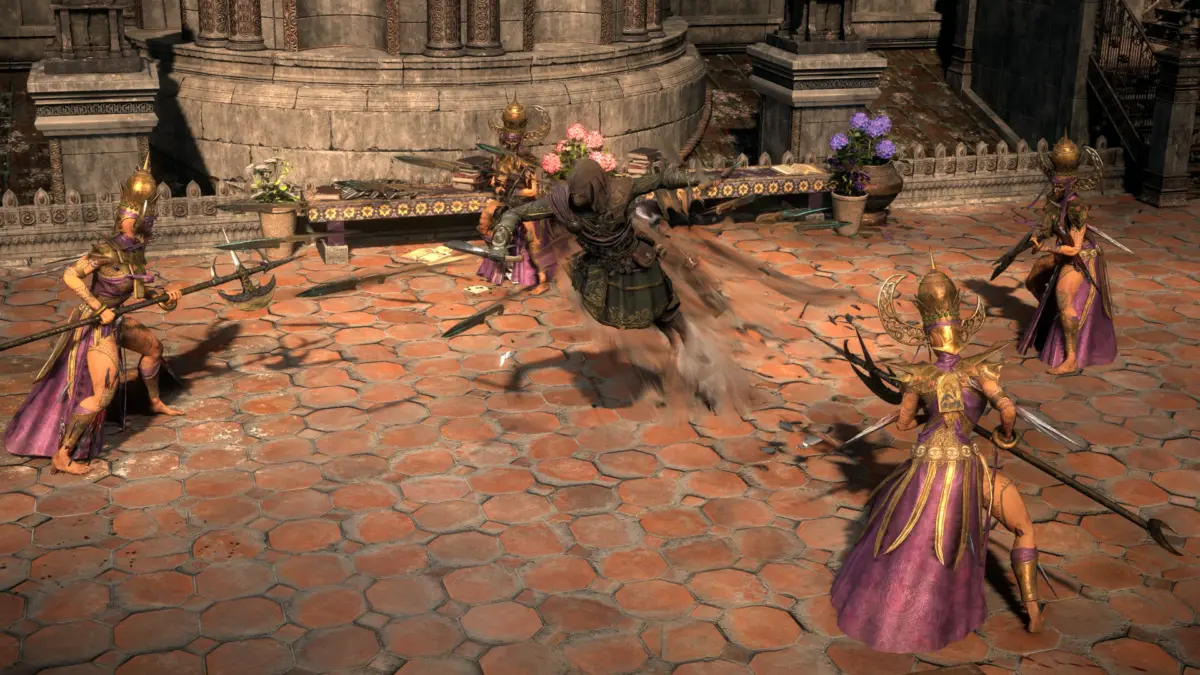
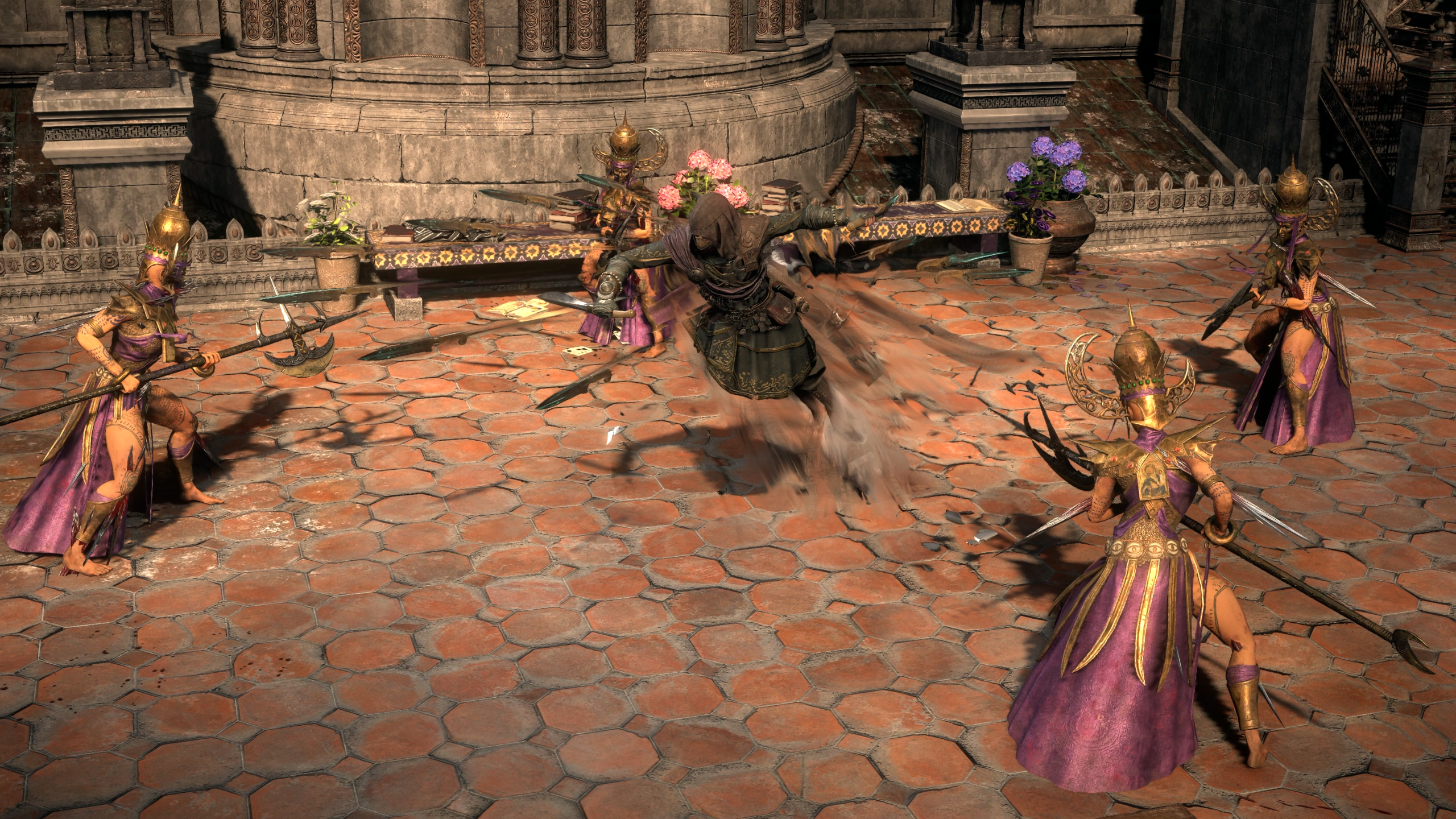
- The Shadow & Daggers: The Shadow class introduces high-mobility, cunning gameplay centered primarily around daggers. This weapon class debuts sophisticated new mechanics, including stealth frameworks, deployable traps, and shadow skills that spawn holographic clones to execute coordinated attacks alongside the player. Classic favorites like Blade Vortex and Fire Trap have also been meticulously redesigned to fit Path of Exile 2‘s modern engine and combat tempo.
- The Duelist & Swords: Emphasizing martial prowess and tactical stance management, the Duelist brings swords to the forefront. Players wielding swords can seamlessly toggle between distinct combat postures, such as the classic Blood and Sand or the newly introduced Ready stance. Supporting dual-wielding, two-handed grips, and traditional sword-and-board setups, swords inject an immense amount of mechanical depth into melee configurations. Fan-favorite abilities like Cyclone and Hemorrhage return with modernized visual effects and impact feedback.
2. Campaign Completion: Acts 5 and 6
After years of traversing the early segments of the world, players will finally experience the narrative climax of the campaign. Acts 5 and 6 wrap up the crusade to track the Beast, taking players back to the corrupted soil of Oriath and far beyond into uncharted territories.
To ensure the journey feels dangerous from start to finish, these final acts introduce bespoke rare monsters equipped with unique visual designs, exclusive modifiers, and terrifying combat AI. Furthermore, the campaign serves as an organic onboarding mechanism for the 1.0 league mechanic, Conquerors of Wraeclast.
3. League Mechanic: Conquerors of Wraeclast and Base Building
Drawing heavy inspiration from the beloved Kingsmarch system in the original Path of Exile, Version 1.0 introduces a robust base-building and territory-control league mechanic.
- Castle Management: As players progress through the campaign, they will unlock a customizable castle. Using gold acquired during expeditions, players can upgrade various structures—much like the strategic depth found in classic titles such as Heroes of Might and Magic.
- Recruitment and Commanders: Throughout the campaign, players will discover over 70 distinct points of interest where they can recruit specialized soldiers. These troops can be organized into armies and assigned to commanders. Much like automated map-runners, these commanders can run maps independently, effectively converting surplus gold and resources directly into Atlas progression and high-tier loot.
- Faction Warfare and Territory Control: Once the campaign and pinnacle bosses are conquered, the league shifts into a competitive multiplayer layer. Players align with one of three primary factions—the Karui, the Ezomyte, or the Marraketh—to battle for territorial supremacy. Capturing castles across the Atlas grants factions strategic fast-travel networks, global item-rarity buffs, and access to exclusive nearby hunting grounds teeming with high-yield rare monsters.
Supporting Context & Metrics
The Endgame Overhaul: Maps and the Trimmed Atlas
The endgame experience of Path of Exile 2 has undergone radical surgical adjustments to combat structural bloat and encourage meaningful player choice.
| System Feature | Early Access / Previous Iteration | Version 1.0 (December 11 Launch) |
|---|---|---|
| Campaign Status | Partial (Acts 1–4) | Fully Complete (Acts 1–6) |
| New Classes | Various | Shadow, Duelist |
| Atlas Skill Tree Nodes | 300+ nodes | ~70 streamlined nodes (~50 accessible by Arbiter of Divinity) |
| Endgame Maps | Base selection | 25+ entirely new maps featuring campaign bosses |
| Unique Item Overhaul | Standard balancing | 70+ reworked uniques, ~40 brand-new unique items |
The downsizing of the Atlas skill tree from over 300 sprawling nodes down to a focused 70 is arguably the most impactful systemic shift for endgame runners. GGG notes that by the time players reach the formidable Arbiter of Divinity pinnacle boss, they will typically have allocated roughly 50 of those 70 points. This intentional compression eliminates filler nodes and ensures every passive point investment yields a palpable shift in gameplay.
Gem Overhauls and Passive Tree Evolution
Skill and support gems have received comprehensive passes to eliminate redundant math and encourage build diversity:
- Support Gem Streamlining: Fragmented elemental penetration support gems have been unified into a single, cohesive Elemental Penetration support. Meanwhile, penalties on support gems like Brutality have been reduced regarding chaos damage, and Chain Support now acts as a pure damage upgrade without penalizing the initial hit.
- Jewel Socket Rework: Jewel slots have been decoupled from the outer perimeter travel nodes of the passive skill tree. Instead, they are now embedded directly into specific skill clusters. This structural change aims to eradicate homogenized end-game builds where every player’s tree looked identical—a circular dash maximizing isolated jewel slots with little regard for core pathing.
- Loot and Crafting Economy: Over 70 legacy unique items have been systematically buffed or redesigned, accompanied by roughly 40 brand-new unique introductions. High-end base types—such as body armors that grant complete immunity to curses—will redefine chase items. Additionally, new battle-currency allows players to precisely target mods for removal, transforming fractured items into newly rolled powerhouses.
Official Statements & Developer Insights
Grinding Gear Games has continually emphasized that Path of Exile 2 is designed to coexist alongside the original game while carving out its own distinct identity through slower, more deliberate, and mechanically profound combat.
In recent community updates leading up to the Version 1.0 announcement, lead developers noted the invaluable contribution of the community during the two-year early access window: "We built Path of Exile 2 with the vision of setting a new gold standard for the action-RPG genre. The feedback from our early access players has allowed us to refine not just the mechanical edge-cases, but the very soul of our progression loops. Version 1.0 is the fulfillment of that promise—a massive, cohesive world where every system, from our new castle-building factions down to the smallest passive tree node, serves to respect the player’s time and reward their mastery."
Furthermore, the integration of strategic faction warfare via the Conquerors of Wraeclast league demonstrates GGG’s ongoing commitment to blending solo progression depth with massive, asynchronous multiplayer engagement systems.
Future Outlook
As the countdown to December 11 ticks away, the ARPG community stands on the precipice of what could be the defining gaming release of the winter season. The sheer density of content arriving in Version 1.0—spanning dual character classes, two complete narrative acts, a fully realized base-building and faction war endgame, and foundational reworks to passive trees and itemization—signals that GGG is treating this launch not as a finish line, but as a robust foundation for years of future expansions.
Whether players choose to lurk in the shadows as a trap-laying assassin, dominate the front lines as a stance-shifting Duelist, or command vast armies to conquer castles across the Atlas, Pathof Exile 2 Version 1.0 is shaping up to be an unmissable crucible for both franchise veterans and genre newcomers alike.