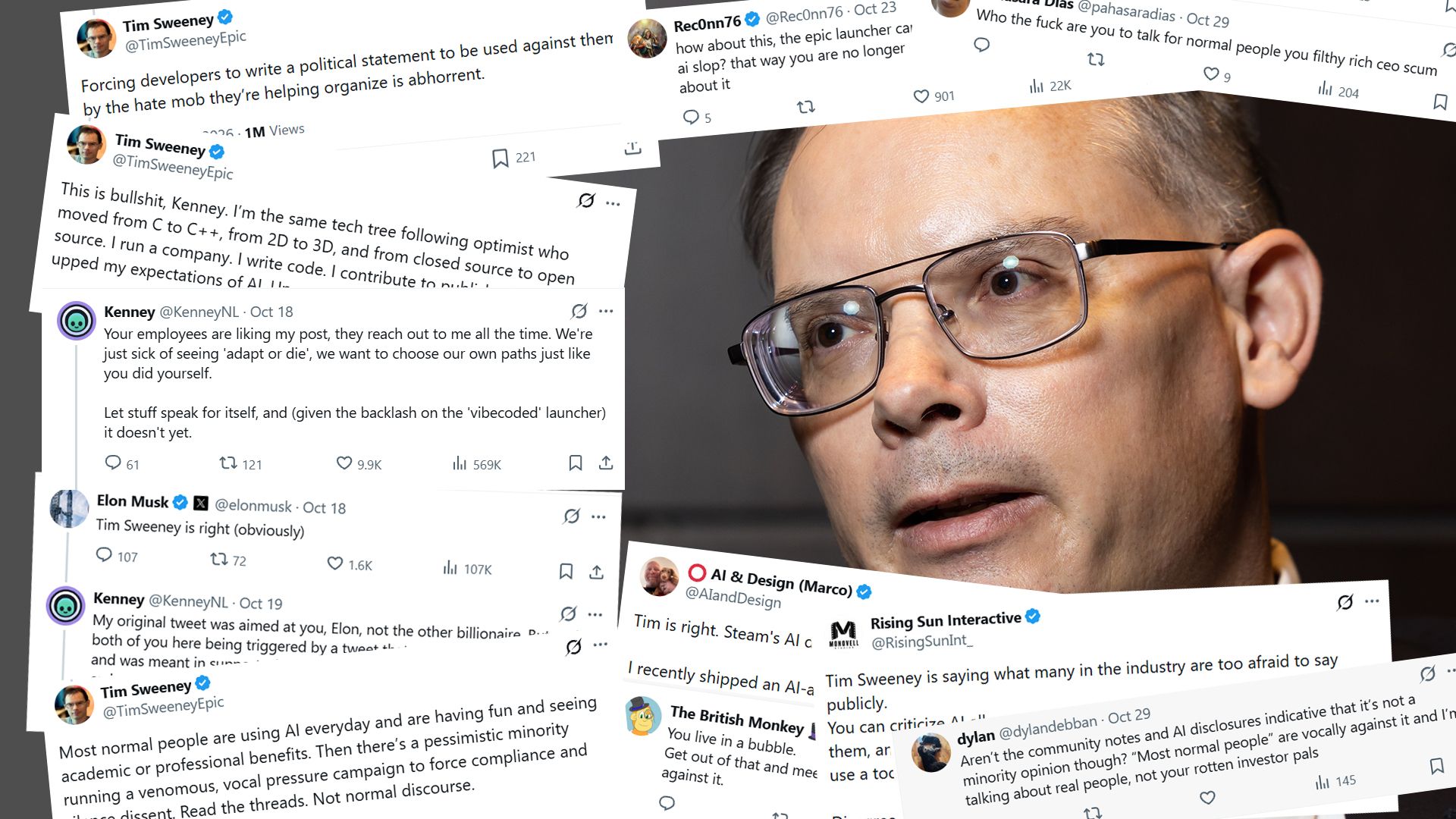
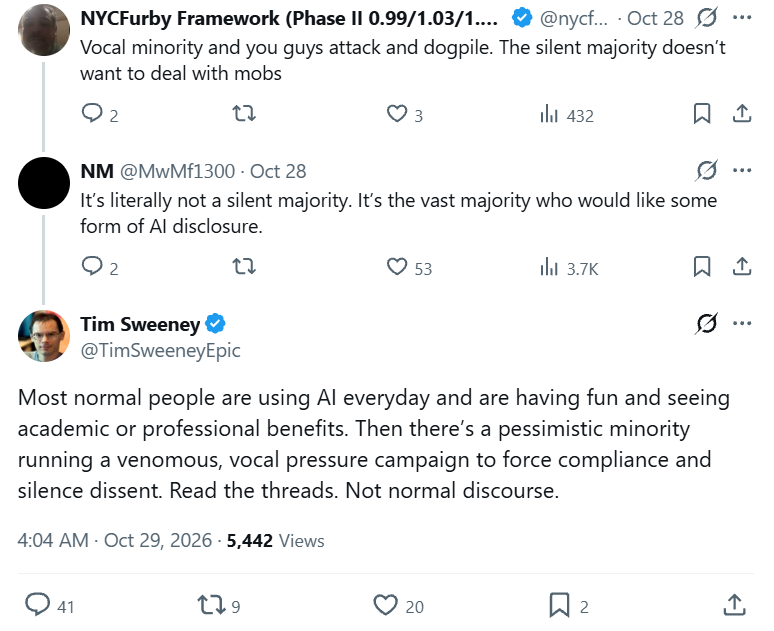
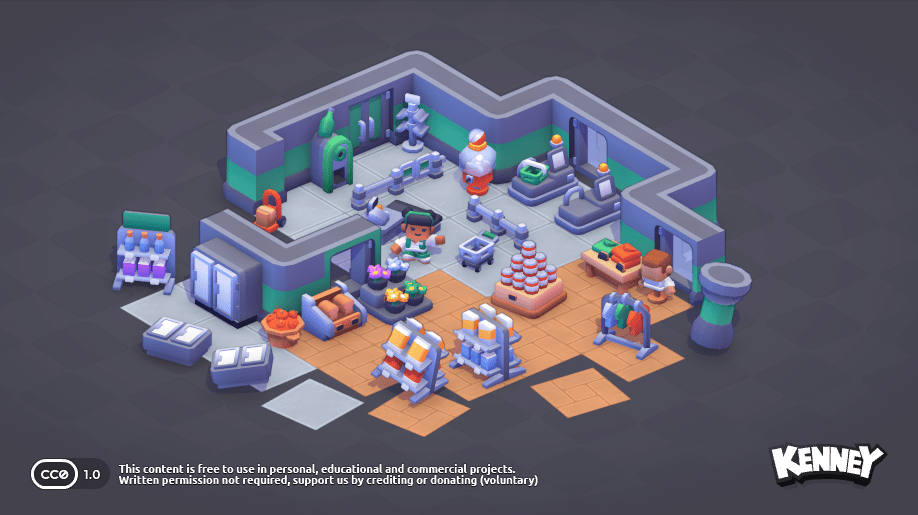
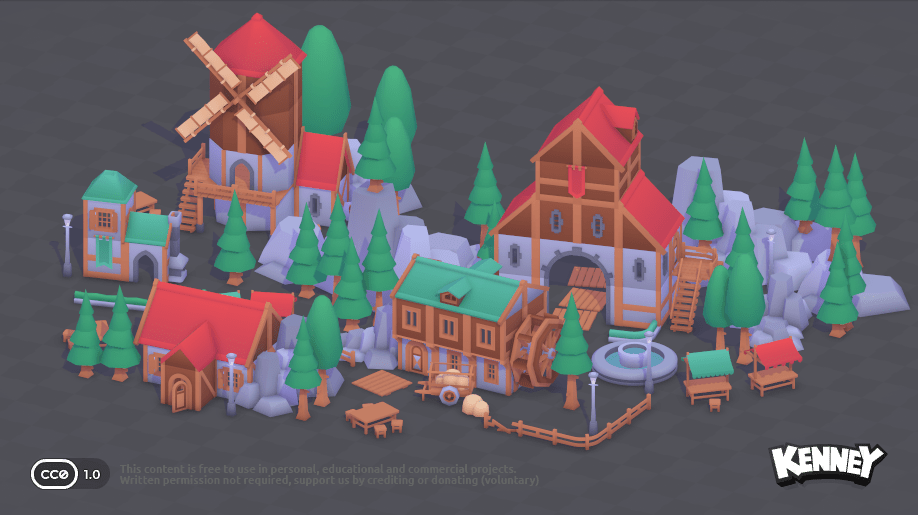
The video game industry finds itself at a profound cultural and economic crossroads, and the fault lines have never been more visible. What began as a decentralized rumble over digital art platforms recently exploded into a direct confrontation on social media between indie creator Kenney—famed for distributing thousands of free game development assets—and Epic Games CEO Tim Sweeney, backed by tech billionaire Elon Musk.
The public clash encapsulates a massive ideological war gripping the interactive entertainment sector. On one side stand corporate executives, technological evangelists, and platform holders who argue that generative artificial intelligence is an economic imperative. They contend that soaring development budgets, ballooning team sizes, and elongated production cycles demand efficiency tools capable of delivering two- to four-fold productivity gains. Without them, industry leaders warn, studios risk falling behind a ruthlessly competitive global market.
On the other side stands a vocal, deeply committed coalition of independent developers, traditional artists, and players. They view generative AI not as a neutral productivity enhancer, but as an existential threat built on intellectual property theft, environmental degradation, and the systematic erosion of human artistry. For these creators, the widespread adoption of AI represents a betrayal of the passion, craft, and communal spirit that defines indie game development. As major corporations push aggressively to normalize these tools, the industry faces an unprecedented impasse: a battle over whether the future of video games will be defined by human-crafted passion or automated scale.
Detailed Chronology: From a General Critique to a Billionaire Brawl
The flashpoint that ignited this latest industry-wide debate began innocuously enough on X (formerly Twitter). Kenney, who has spent over a decade supporting the independent game development community by providing massive libraries of free 3D models, textures, and sprites, published a post aimed at encouraging struggling artists.
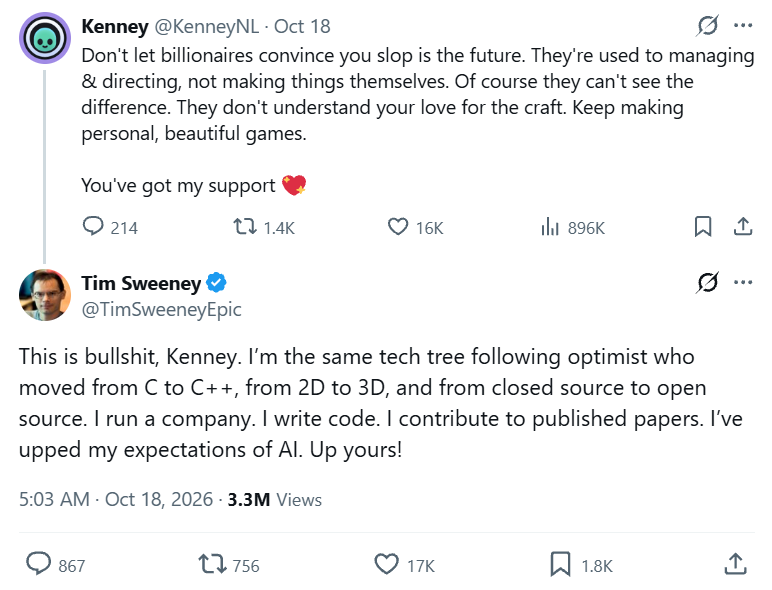
"Don’t let billionaires convince you slop is the future," Kenney wrote. "They’re used to managing & directing, not making things themselves. Of course they can’t see the difference. They don’t understand your love for the craft. Keep making personal, beautiful games. You’ve got my support."
According to Kenney, the message was intended for fellow digital creators who felt immense social and professional pressure to integrate generative AI tools into their pipelines despite deep moral reservations. He had not anticipated that the post would summon the architecture’s most powerful corporate beneficiaries.
Hours later, Epic Games CEO Tim Sweeney entered the replies. Known for his outspoken nature and active presence on social media, Sweeney took direct aim at the indie artist. "This is bullshit, Kenney," Sweeney wrote, punctuating his rebuttal with a pointed double entendre: "I’ve upped my expectations of AI. Up yours!"
Shortly thereafter, Elon Musk—the world’s wealthiest individual and head of xAI—chimed in to bolster Sweeney’s stance. Within hours, the thread attracted hundreds of thousands of views and thousands of comments, transforming a supportive pep talk into a polarized battleground representing the broader cultural war over generative technology.
The fallout was swift. While Sweeney doubled down on his defense of AI tools, independent developers began evaluating their ties to major platforms. In a striking act of solidarity, indie studio Dead Teapot publicly cancelled the upcoming release of their game on the Epic Games Store. "We just don’t wanna be associated with such an embarrassing platform," the studio announced, signaling that the friction between corporate tech leadership and grassroots developers is beginning to impact commercial distribution.
Supporting Context & Metrics: The Reality of AI Adoption in Gaming
To understand why figures like Sweeney are so fiercely advocating for generative AI, one must examine the macroeconomic pressures suffocating modern game development. Budgets for AAA blockbusters frequently exceed hundreds of millions of years in development, often requiring half a decade or more to complete. Studios face unprecedented financial vulnerability, where a single underperforming title can trigger massive layoffs or studio closures.
Industry proponents argue that generative tools can alleviate these bottlenecks by automating repetitive tasks, generating placeholder assets, and accelerating prototyping phases. Yet, consumer sentiment and developer alignment remain deeply fractured.
What the Data Says About Gamers and Developers
Developer Resistance: According to the most recent Game Developers Conference (GDC) state of the industry surveys, over 50% of game developers now believe that generative AI is fundamentally bad for the industry—a sharp, dramatic escalation from data gathered just two years prior.
Consumer Acceptance vs. Indifference: A comprehensive survey conducted by GameDiscoverCo regarding Steam users revealed a nuanced picture. Approximately 69% of respondents reported being "neutral," "fine with," or having "no problem" purchasing games that officially disclose the use of generative AI in their production pipeline.
The Demand for Transparency: Despite general indifference toward the technology itself, the survey highlighted an overwhelming appetite for disclosure. Over 55% of Steam users actively check AI disclosures before making a purchase, and a majority believe platform holders like Valve should enforce even stricter reporting mandates.
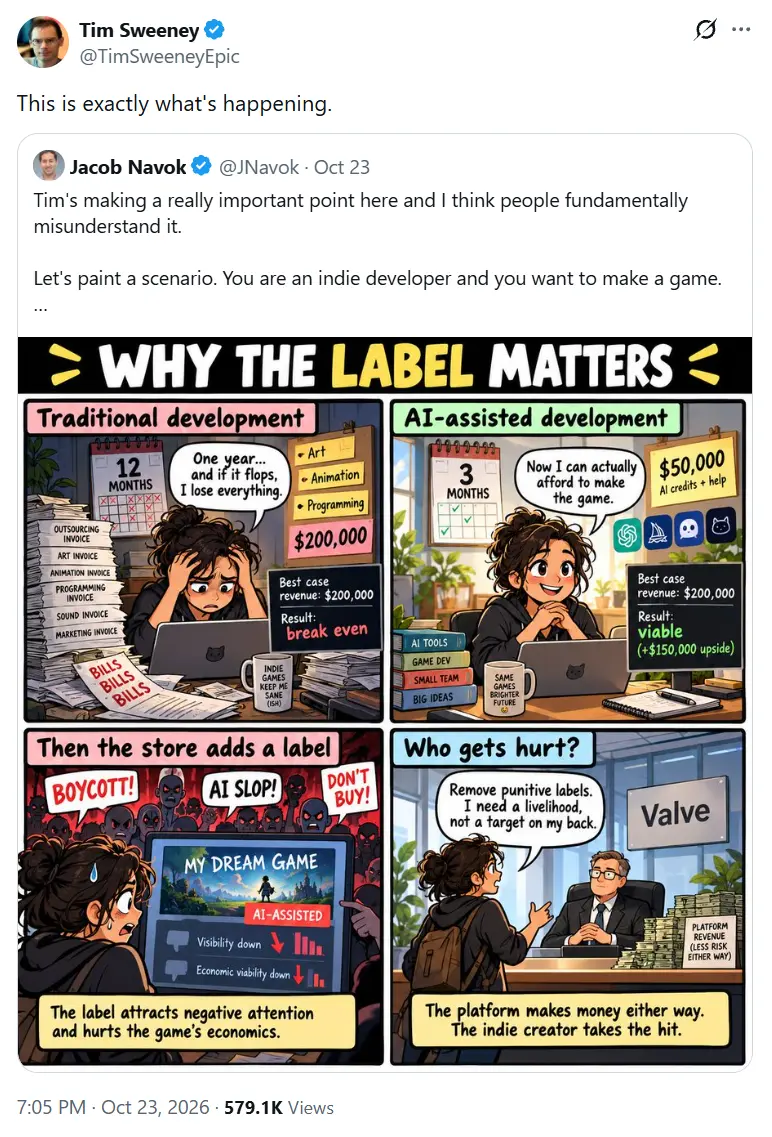
This stance on transparency has become another major point of contention. Valve requires developers utilizing generative AI to disclose its application upon submission to Steam. Sweeney has vociferously condemned this policy, labeling it "abhorrent" and arguing that mandatory disclosures weaponize public sentiment, inviting "cancel campaigns and public struggle sessions" against independent creators trying to survive economically.
Commercial realities further complicate the narrative. Games utilizing some form of generative AI—ranging from extraction shooters like Arc Raiders to indie breakouts like Moon Sweepers—have continued to achieve massive commercial success despite varying degrees of critical pushback or social media controversy. For corporate publishers, these sales figures serve as validation that the broader consumer market ultimately prioritizes gameplay and entertainment over ideological purity regarding production tools.
Official Statements and Perspectives
The chasm between corporate leadership and independent creators is defined by fundamentally incompatible worldviews regarding the purpose of game development.
The Corporate Vision: Tim Sweeney and Epic Games
Tim Sweeney has positioned himself and Epic Games firmly at the vanguard of the AI transition. With Epic going "all-in" on AI-assisted features for upcoming Unreal Engine releases, introducing AI-focused game jams, and redesigning the Epic Games Store launcher with AI integration, Sweeney views advocacy as a professional obligation.
"As a provider of technology to the whole industry, I see it as Epic’s job and my job to make the positive case for it," Sweeney explained in an interview.
Sweeney views the resistance against AI not as an organic artistic movement, but as a vocal minority engaging in aggressive suppression. He has characterized anti-AI critics as "a pessimistic minority running a venomous, vocal pressure campaign to force compliance and silence dissent," further suggesting that much of the organized opposition stems from "astroturfed anti-AI influence campaigns."
Furthermore, Sweeney warns that studios refusing to adapt will face fatal economic consequences. "I’m concerned that development studios swept up in these anti-AI campaigns will make decisions that render themselves uncompetitive in the global market for games," he noted, projecting standard productivity gains of two to four times for studios willing to embrace the technology.
The Grassroots Resistance: Kenney and Indie Creators
In stark contrast, Kenney and his supporters argue that the push for generative AI represents a hollow quest for infinite growth driven by individuals who fundamentally do not understand the creative process.
For over a decade, Kenney has sustained his work by distributing massive asset packs—now numbering over 60,000 items—funded primarily by voluntary donations and a unified $20 download bundle. His motivation is rooted in legacy and community rather than margin maximization.
"I’d rather leave the industry someday when I’m old(er) and have everyone remember me for the good stuff I did and the many people I’ve helped, rather than for lining my own pockets," Kenney stated.
Addressing the corporate narrative that artists who reject AI will inevitably be left behind, Kenney offered a definitive retort: "Please, leave me behind. I’m pretty happy here." He fears that an industry fully co-opted by generative systems will lose its emotional core, shifting power away from passionate artisans and into the hands of opportunists seeking quick financial extraction.
Future Outlook: Where Does the Industry Go From Here?
The clash between Kenney and Tim Sweeney is much more than a petty squabble on social media; it is a preview of the ideological battles that will shape the next decade of interactive media.
As generative AI models become more sophisticated, integrated into game engines, and normalized by platform policies, the pressure on studios of all sizes will only intensify. Corporate executives will continue to champion efficiency, cost reduction, and scale to combat rising development costs. Meanwhile, independent creators, traditional artists, and players protective of human expression will likely double down on demands for transparency, ethical sourcing, and artistic authenticity.
The ultimate arbiter of this war will be the consumer market. If players continue to purchase and support games regardless of their production methods, the economic incentive for corporate adoption will prove irresistible. However, if grassroots boycotts, platform fragmentation, and a renewed appreciation for human-made "soul" gain traction, the industry may find itself permanently divided into two distinct ecosystems: hyper-optimized, automated corporate blockbusters on one side, and fiercely independent, human-crafted artisan games on the other.
One thing remains certain: the peace that once defined the intersection of technology and art in video games is gone, replaced by a permanent state of ideological contestation where every pixel is loaded with political and economic meaning.