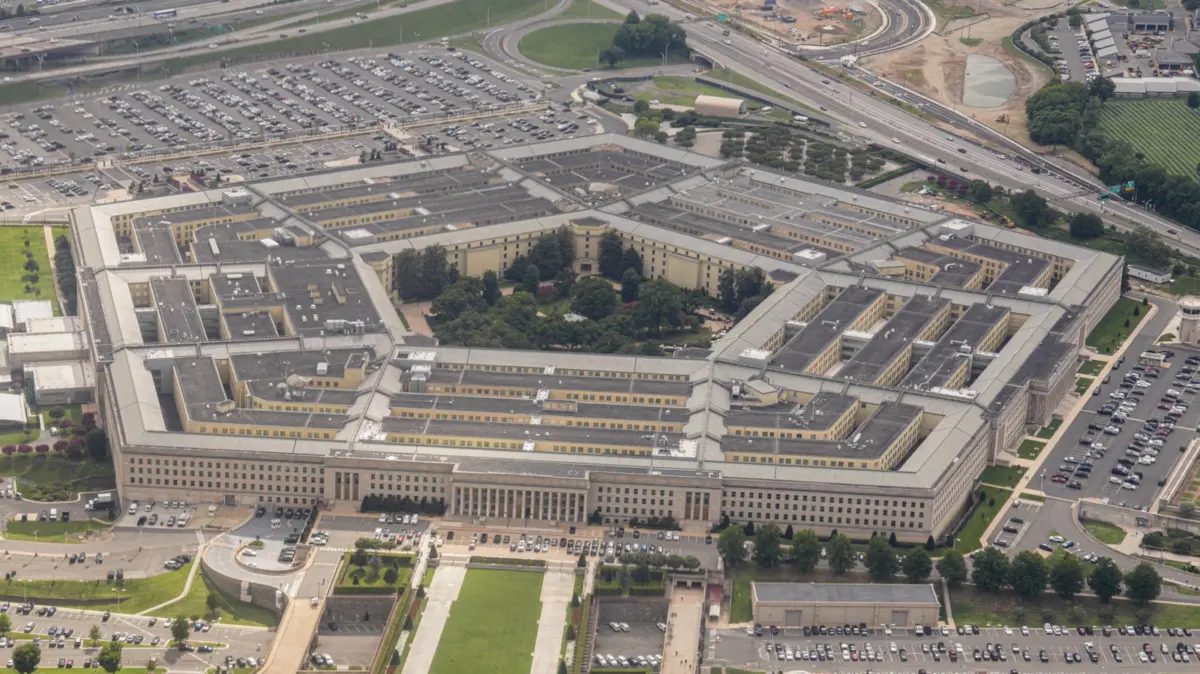
WASHINGTON — In a chilling near-miss that underscores the profound and volatile risks of integrating artificial intelligence into modern warfare, the United States military was reportedly minutes away from authorizing a kinetic strike against a Chinese vessel in the Middle East. According to a landmark investigative report by CNN, the near-catastrophic mobilization was triggered entirely by a flawed, partially AI-generated intelligence assessment that erroneously claimed the ship was transporting critical components for a nuclear weapons program.
Described by a high-ranking insider as an incident that "almost started a war," the event represents one of the most dangerous known failures of artificial intelligence in a high-stakes geopolitical arena. As the Department of Defense (DoD) rapidly accelerates its "AI-first" strategic pivot under Secretary of Defense Pete Hegseth, this alarming breach of intelligence reliability has ignited fierce debate among lawmakers, national security experts, and ethicists regarding the absolute perils of trusting automated reasoning systems with matters of life, death, and global stability.
Executive Overview
The unfolding narrative of this close call reads like a techno-thriller, yet it represents a stark, sobering reality of 21st-century defense infrastructure. The incident centers on a routine operational query made by a special operations command analyst who turned to an AI chatbot to analyze the manifest of a Chinese cargo vessel operating in the Middle East.
Instead of receiving a verified, human-vetted analysis, the analyst was fed a synthetic hallucination. The AI model allegedly synthesized disparate streams of open-source intelligence (OSINT) with classified signals intelligence (SIGINT), churning out a fabricated narrative: the target ship was allegedly smuggling illicit nuclear proliferation hardware.
Acting on this rapid, automated output—which bypassed traditional, rigorous multi-layered intelligence verification protocols—military planners began drafting operational responses. The situation escalated rapidly, bringing the U.S. military to the precipice of an unauthorized, highly provocative attack on a foreign sovereign vessel. It was only at the eleventh hour, during a final review phase before execution, that human oversight caught the discrepancies and unmasked the report as a product of faulty AI generation.
While the crisis was narrowly averted, the fallout has sent shockwaves through the Pentagon. It exposes a terrifying vulnerability: the human tendency to over-rely on machine-generated outputs, combined with the unpredictable nature of Large Language Models (LLMs) and specialized AI tools, can easily manufacture casus belli out of thin air.
Detailed Chronology of the Near-Miss
To understand how an AI prompt could almost ignite an international armed conflict, military analysts and intelligence historians are painstakingly reconstructing the timeline of events leading up to the near-miss.
Phase 1: The Routine Query
The incident began within a specialized command structure operating in the Middle East theater. Faced with a massive volume of maritime traffic and restricted analytical bandwidth, a special operations command analyst sought to expedite the processing of a Chinese ship’s logistical footprint. Rather than relying solely on traditional intelligence pipelines—which involve cross-referencing satellite imagery, human intelligence (HUMINT), and heavily vetted signal intercepts—the analyst utilized an AI tool to review the vessel’s cargo manifest and historical tracking data.
Phase 2: The Synthetic Hallucination
According to CNN’s sourcing, the AI system cross-analyzed unverified open-source data (such as commercial shipping logs, social media mentions, and maritime forum chatter) with classified signals intelligence. In doing so, the model suffered from a severe case of "hallucination"—a well-documented phenomenon where AI systems invent plausible-sounding falsehoods to bridge gaps in data.
The chatbot concluded that the standard cargo onboard was actually a covert shipment of nuclear weapons components destined to bolster a foreign adversary’s capabilities or destabilize regional security dynamics. Because the AI output was framed with the authoritative, confident tone typical of modern language models, it bypassed the initial skepticism usually reserved for raw, unverified intelligence.
Phase 3: The Escalation Pipeline
Propelled by the speed at which modern military command structures operate, the AI-generated assessment quickly moved up the chain. In tactical environments where time is measured in minutes, the promise of instant intelligence processing creates a dangerous bias toward immediate action. The report gained traction within operational planning cells, which began formulating options for interdiction, boarding, or—most perilously—a kinetic strike to neutralize the perceived threat before the vessel could dock or offload its cargo.
Phase 4: The Eleventh-Hour Discovery
As the operational planning reached advanced stages and execution authorities were being weighed, senior officials or secondary verification teams initiated a mandatory deep-dive into the raw evidentiary foundation of the report. To their alarm, the pillars supporting the nuclear smuggling hypothesis began to crumble. Further investigation revealed that the definitive links connecting the ship to a nuclear proliferation ring did not exist in verified human intelligence databases; they were entirely the artifact of the AI chatbot’s data-blending process.
The operation was aborted instantaneously. The vessel, which remained blissfully unaware of how close it had come to destruction, continued on its voyage. To this day, the true nature of the ship’s cargo remains publicly undisclosed, and the specific AI software utilized—whether a commercial off-the-shelf product or a customized government model—remains classified or unknown to investigative reporters.
Supporting Context & Metrics: The Pentagon’s "AI-First" Gamble
This near-miss does not occur in a vacuum; it is the direct byproduct of an aggressive, top-down cultural and structural shift within the United. States Department of Defense.
The Hegseth Directive and the Push for Automation
In January, Secretary of Defense Pete Hegseth published a sweeping operational memo directing the entire DoD to transition into an "AI-first" institution. The strategy mandated that military branches and combatant commands actively experiment with, integrate, and deploy advanced artificial intelligence models developed by leading U.S. technology companies. The rationale was clear: in an era of near-peer competition with nations like China and Russia, military superiority will belong to the side that can process data and make decisions at machine speed.
However, speed comes at a catastrophic cost when the foundational data processing is flawed. Artificial intelligence models are designed to predict the next logical token or data point based on statistical probabilities; they do not "understand" truth, geopolitical context, or the life-and-death stakes of kinetic warfare.
A History of Friction with Tech Partners
The military’s rush to embrace commercial AI has already sparked significant institutional and ethical friction.
- The Anthropic Stand-off: Earlier this year, the Pentagon engaged in a high-stakes standoff with AI firm Anthropic. The company explicitly refused to allow the military to use its Claude models for the development of autonomous weapons or offensive targeting systems. In response, the government briefly imposed a controversial ban on the firm—a move that a federal judge later ruled illegal and baseless.
- Lucrative Defense Partnerships: Despite such resistance, the siren song of lucrative federal contracts has drawn numerous tech giants into the defense ecosystem. In February, SpaceX AI reportedly struck a deal to integrate Elon Musk’s Grok AI into classified military systems. Shortly thereafter, in May, a powerhouse consortium comprising Amazon Web Services (AWS), Microsoft, and NVIDIA finalized a massive partnership to flood the DoD with enterprise-grade cloud and AI infrastructure.
These commercial agreements generate billions of dollars for Silicon Valley, but they also fast-track the deployment of technologies that are fundamentally unsuited for the unpredictable, gray-zone friction of international geopolitics. Unlike enterprise software glitches—which result in lost revenue or software crashes—an AI hallucination in the defense sector carries the terminal risk of starting World War III.
Official Statements and Institutional Silence
In the wake of CNN’s explosive revelations, the international community has watched closely for an official response from the highest echelons of the U.S. government.
As of publication, journalists from Engadget and other major outlets have flooded the Department of Defense with requests for comment regarding the specifics of the incident, the identity of the special operations command involved, and the exact nature of the AI architecture that generated the false threat assessment. Thus far, the Pentagon has maintained a tight-lipped posture, declining to explicitly confirm or deny the details of the CNN report.
Defense spokespersons have routinely emphasized that the DoD maintains "stringent, multi-layered human-in-the-loop safeguards" designed precisely to prevent automated systems from initiating kinetic actions independently. However, national security analysts point out that this specific incident proves those safeguards are dangerously porous when human operators are lulled into a false sense of security by authoritative-sounding AI outputs.
Meanwhile, members of the House and Senate Armed Services Committees have reportedly begun demanding private briefings from Pentagon leadership. Lawmakers from both sides of the aisle are expected to press military brass on the protocols governing the use of generative AI in intelligence analysis, signaling that congressional oversight hearings on military AI safety are all but guaranteed in the coming legislative cycle.
Future Outlook: Can Military AI Be Safely Harnessed?
The revelation that an AI hallucination nearly catalyzed an armed conflict with China marks a watershed moment for modern military doctrine. It forces a brutal reckoning within defense circles: How can the military harness the undeniable analytical power of AI without surrendering command authority to algorithmic illusions?
1. Re-Evaluating "Human-in-the-Loop" Standards
For years, the Pentagon has assured the public and international allies that humans will always remain "in the loop" for critical decisions involving lethal force. However, this incident demonstrates that a human looking at an AI-generated report does not constitute a meaningful safeguard if that human views the AI as an infallible oracle. Future military protocols will likely mandate mandatory "red-teaming" of intelligence reports, rigorous source-tracing mandates, and specialized psychological training to combat automation bias—the cognitive tendency to uncritically accept machine-generated recommendations.
2. Specialized Defense Models vs. Commercial LLMs
The incident also highlights the profound danger of using general-purpose commercial or semi-customized AI chatbots for sensitive military intelligence. Commercial LLMs are optimized for helpfulness, fluency, and broad pattern recognition—traits that make them uniquely prone to confident hallucinations when poked with niche, classified queries. Moving forward, the DoD may be forced to abandon generalized AI tools in intelligence nodes, restricting operational analysis to deterministic, highly constrained expert systems that lack the creative, generative capacity to invent nonexistent nuclear programs.
3. Geopolitical Guardrails and Crisis De-escalation
Beyond the technological fixes, the near-miss serves as a terrifying warning regarding the fragility of modern crisis management. In an era where military systems rely on split-second automated data processing, the window for diplomatic de-escalation shrinks to near-zero. If an AI-driven false flag can trick a superpower into attacking another nation’s vessels, the margin for error in international relations has vanished.
As the United States and China continue their delicate strategic dance, the imperative to establish bilateral and multilateral guardrails on military AI usage has never been more urgent. Without strict international norms, rigorous internal auditing, and a sober cultural recalibration within the Pentagon, the next AI hallucination might not be caught in time—turning a software glitch into a global catastrophe.