Beyond the Tresses: Inside the Global Subculture of Ultra-Long Hair and Photographer Francesca Allen’s Lens
Executive Overview
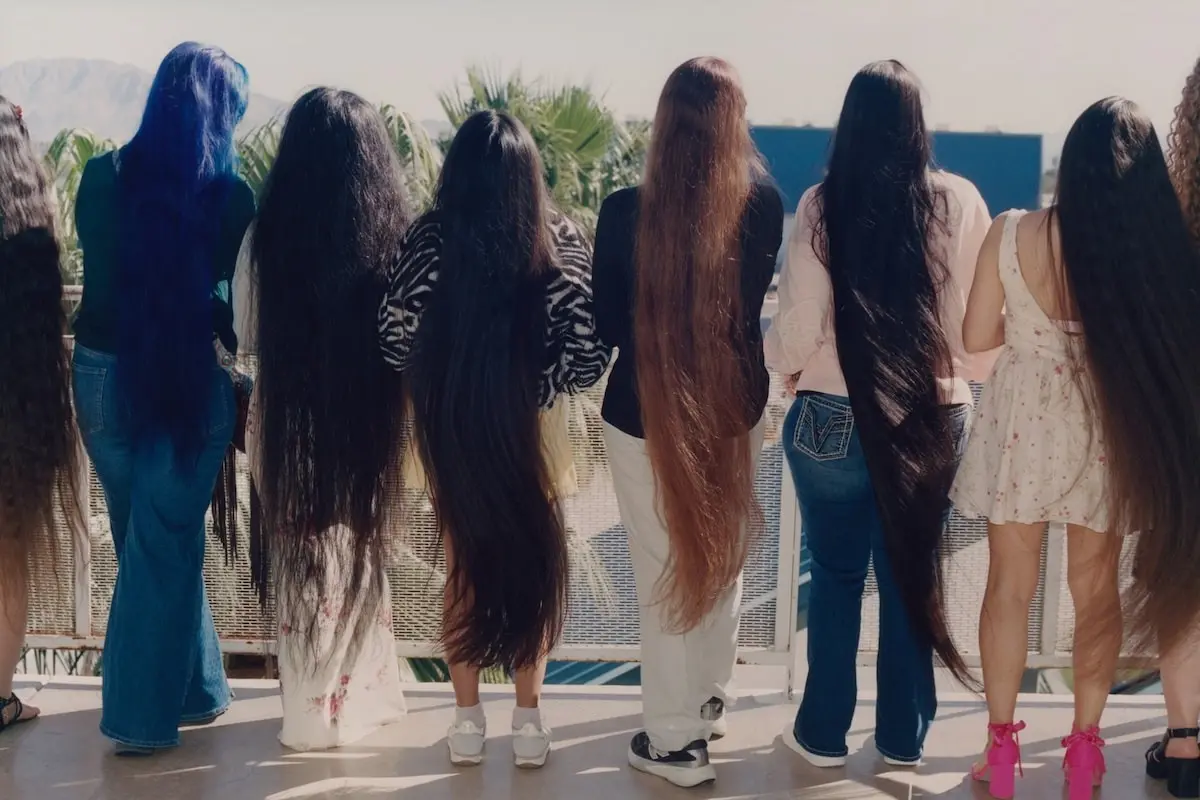
Earlier this year, the neon-drenched corridors of Las Vegas’s Sahara Hotel casino bore witness to a spectacle rarely seen outside of folklore: 26 women from every corner of the globe gathered for the inaugural “Miss Rapunzel” hair competition. Draping thigh-length tresses over leather-lined banquettes and carefully winding thick strands around their wrists while awaiting their moment before the judges, these contestants represented the pinnacle of a dedicated, highly specialized global subculture.
Among those documenting this rare convergence was British photographer Francesca Allen. Having developed an enduring fascination with impossibly long hair while documenting Lithuania’s legendary annual hair competition—a project immortalized in her book Plaukai—Allen traveled to Nevada to capture the women just moments before they took the stage. Her latest publication, Hair, continues this deep visual and anthropological exploration into the intensely personal nature of growing ultra-long locks and the transformative psychological shift that occurs when private bodily maintenance is converted into public spectacle.
This extended journalistic report explores the cultural, psychological, and physical dimensions of extreme hair cultivation. By examining the contrasting atmospheres of traditional European gatherings and high-octane American pageantry, we unpack how length, identity, power, and community intersect. Supported by firsthand accounts from Allen, critical insights from essayist Claire Marie Healy, and a detailed chronicle of the events shaping this niche world, this piece offers an authoritative look at why human hair continues to command our collective fascination.
Detailed Chronology
The Genesis of an Obsession: Lithuania and Plaukai
Francesca Allen’s journey into the world of extreme hair cultivation began in Eastern Europe. Last year, the photographer ventured to Lithuania to document the nation’s legendary annual hair competition, the Konkursas Pasaulio Ilgaplaukės. The resulting book, Plaukai (meaning “hair” in Lithuanian), captured a deeply traditional, communal ritual.
In Plaukai, Allen photographed women and girls dressed in ruffled gowns and puffer coats waiting patiently in line to have their hair measured.
“Everybody was brushing their hair, keeping it in braids until the last moment,” Allen described in a previous interview.
Rather than a glitzy commercial beauty pageant, the Lithuanian event felt like a shared cultural rite of passage. Rooted deeply in local folklore and tradition, the contest was judged purely on objective metrics: raw length. The atmosphere was characterized by an air of innocence and quiet reverence for a centuries-old aesthetic standard.
Transition to the Desert: The Inaugural Las Vegas "Miss Rapunzel" Contest
Fast-forward to earlier this year: the locale shifted dramatically from the understated cultural halls of Eastern Europe to the sensory overload of Las Vegas, Nevada. The occasion was the inaugural “Miss Rapunzel” hair contest, hosted at the Sahara Hotel casino.
Because this was the first iteration of the Las Vegas event, neither the organizers nor the 26 international entrants knew entirely what to expect. The resulting mood backstage was a complex mixture of palpable excitement and underlying uncertainty. Allen spent three intensive days in Nevada, embedding herself in the rehearsals, the main event, and the private sanctuary of hotel rooms—quieter, more intimate spaces far removed from the surrounding chaos of the Las Vegas Strip.
This intimate access allowed Allen to capture moments of vulnerability and connection.
“I loved spending time with the women; it’s my favourite part of what I do. I don’t know what other job allows you to spend time with someone in such a way,” Allen reflects. “A camera really is a gateway to a fast-paced relationship and intimacy.”
Unlike the purely metric-driven Lithuanian competition, the Las Vegas event embraced a distinctly theatrical, American sensibility. Contestants were evaluated across a multifaceted rubric that extended well beyond raw inches. Judges assessed participants on "life achievements, contributions to the long-hair community, style, presentation, and scalp health." Furthermore, each contestant was required to deliver a live speech articulating what her long hair meant to her personally, alongside her broader values in life.
Supporting Context & Metrics: The Anatomy of Extreme Hair
Psychology, Power, and Protection
Growing and maintaining hair that reaches the thighs, knees, or floor is not merely a matter of benign neglect; it represents a lifestyle choice requiring immense discipline, physical labor, and psychological investment. Allen observed that many of the women forged profound, protective emotional attachments to their tresses. For these individuals, ultra-long hair functions as a physical armor, instilling a profound sense of personal power and security.
The maintenance routines required to sustain such lengths border on the athletic. Contestants were seen employing ingenious preservation techniques. For example, a contestant named April kept her hair meticulously braided and wrapped around a pool noodle to safeguard the strands from breakage during travel and downtime.
“There’s something special about watching women physically carry their hair in their arms,” notes Allen. “There was such a sense of care among all the women. I loved watching them brush their hair so gently and exchange hair care tips with one another.”
Comparative Metrics: Tradition vs. Theatricality
The juxtaposition between Allen’s two publication subjects—Plaukai and Hair (both exquisitely designed by Adam Ridgeway)—highlights how cultural frameworks alter the meaning of physical traits:
- The Lithuanian Model (Plaukai):
- Core Focus: Objective length and regional tradition.
- Atmosphere: Innocent, communal, understated, and ritualistic.
- Judging Criteria: Strict physical measurements.
- Public Presentation: Minimal commercial pageantry; participants dressed in practical or traditional garments like puffer coats and simple gowns.
- The American Model (Hair / Las Vegas Contest):
- Core Focus: Personal achievement, community leadership, and showmanship.
- Atmosphere: Theatrical, high-energy, uncertain, and spectacular.
- Judging Criteria: Holistic evaluation encompassing scalp health, personal style, life contributions, and spoken-word presentations.
- Public Presentation: Glamorous, public-facing spectacle set against the surreal backdrop of a Las Vegas casino.
Accompanying essayist Claire Marie Healy expands upon these themes in Hair, analyzing the duality of growing ultra-long tresses: the deeply private, meditative rituals of washing, oiling, and detangling versus the unavoidable public gaze when those tresses are unleashed as a public spectacle.
Official Statements & Perspectives
The cultural resonance of the events is best understood through the words of those who documented and experienced them. Francesca Allen’s artistic philosophy centers on human presentation and interaction:
“More than anything, I’m fascinated by people in general: how they choose to present themselves, how they interact with the world and how they change over time,” Allen explains. “Hair just happens to be a huge part of this.”
Reflecting on the public reaction to the contestants as they moved through Las Vegas, Allen noted the universal magnetism of extreme hair. Heads turned effortlessly, drawing stares of disbelief, admiration, and curiosity from casual onlookers.
“Hair means such different things across different cultures, but it always plays a significant part in how we are perceived,” Allen observes. “Perhaps it’s because it’s such a human thing. People are truly obsessed with it. I suppose I am too.”
Future Outlook
As subcultures surrounding body modification, extreme aesthetics, and niche hobbies continue to find amplified platforms through digital media and specialized publishing, events like the Miss Rapunzel contest signal a growing appetite for community-driven celebrations of uniqueness.
The trajectory of Francesca Allen’s work suggests an expanding documentary archive of human idiosyncrasy. By bridging the gap between quiet, private domestic care and loud, public performance, Hair and Plaukai challenge viewers to reconsider the boundaries of personal identity. Whether viewed through the lens of Eastern European folklore or American theatrical pageantry, the dedication required to cultivate floor-length hair remains a testament to the enduring power of human self-expression. As long as humanity remains obsessed with the markers of identity, photographers like Allen will continue to find profound narratives written in the strands we leave behind.