Executive Overview
For nearly three decades, Lara Croft has remained the undisputed queen of digital archaeology, high-stakes acrobatics, and pixel-precise peril. From her polygonal origins on the original PlayStation in 1996 to the cinematic survivalism of modern trilogies, the Tomb Raider franchise has consistently redefined what it means to explore the unknown.
With the recent reveal of Tomb Raider: Legacy of Atlantis—which offers a fresh, modernized look at the classic St. Francis’ Folly, including a completely overhauled Sword of Damocles room that transforms an instant-death trap into a brilliant traversal puzzle—interest in the franchise’s legendary level design has surged. Over 30 years, the fundamental formula of a Tomb Raider level has remained remarkably disciplined: a complex puzzle to decode, relentless environmental hazards, aggressive fauna or foes, and at least one high-stakes leap that players will invariably botch on their first attempt.
This comprehensive retrospective examines the ten most defining, beloved, and notoriously difficult levels across the franchise’s history. From Grecian monasteries and sci-fi military compounds to snowy Soviet installations and hidden Incan-Maya metropolises, these are the proving grounds that forged gaming’s most resilient icon.
Detailed Chronology: Ten Definitive Levels That Shaped a Franchise
10. St. Francis’ Folly — Tomb Raider (1996)
- The Obstacle: A six-story vertical shrine dedicated to four distinct ancient figures.
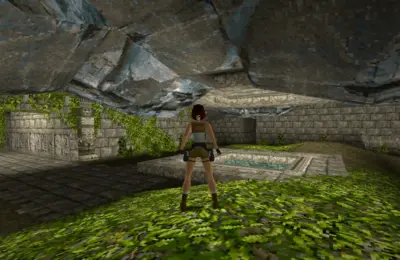
If the opening Peruvian mountains served as an extended tutorial and atmospheric mood-setter, St. Francis’ Folly is where Tomb Raider truly began. Dropped into a cavernous, sepia-toned Grecian monastery swarming with hungry lions and rival treasure hunter Pierre—who loves nothing more than to pepper Lara with lead mid-air—players faced a towering vertical puzzle.
The level hinges on four themed doors named after Atlas, Damocles, Neptune, and Thor. Behind each door lay a uniquely sadistic test: a crushing rolling boulder, descending swords suspended from the ceiling, a menacingly poised hammer, and a deep underwater basin. Clearing all four didn’t grant riches; it simply bought you safe passage out before Pierre could take another shot at your spine.
9. The Great Wall — Tomb Raider II (1997)
- The Obstacle: Zero ramp-up time, falling platforms, and a pair of fully grown T-Rexes.
Core Design wasted no time setting the stakes for Tomb Raider II. Abandoning any notions of a gentle learning curve, the game drops players directly onto the Great Wall of China, immediately escalating the difficulty ceiling. Lara must navigate a gauntlet of tiger attacks, bloodthirsty spiders, and a comically dense layout of spike walls and vanishing floor tiles.

The coup de grâce arrives in a hidden pit containing not one, but potentially two fully grown Tyrannosaurus Rexes. It was a clear, aggressive statement to the player base: the rules had changed, and survival demanded instantaneous mastery of the game’s movement systems.
8. Venice and Bartoli’s Hideout — Tomb Raider II (1997)
- The Obstacle: High-speed canal navigation and a sprawling, booby-trapped Italian villa.
Shifting from ancient ruins to urban escapades, the Venice sequence offers some of the most memorable cinematic pacing in franchise history. Players are handed the keys to a high-speed motorboat, with the natural, chaotic urge to ram headfirst into a canal full of parked gondolas rewarded with glorious physics and explosive satisfaction.
Once inside villain Marco Bartoli’s hideout, the level transforms into an atmospheric mansion exploration featuring sunken basements, a magnificent library, and a grand ballroom complete with three treacherous chandeliers to swing from. Naturally, the level concludes with a trademark explosion that blows the hideout sky-high.
7. Area 51 — Tomb Raider III (1998)
- The Obstacle: Laser tripwires, heavily armed military guards, and extraterrestrial conspiracies.
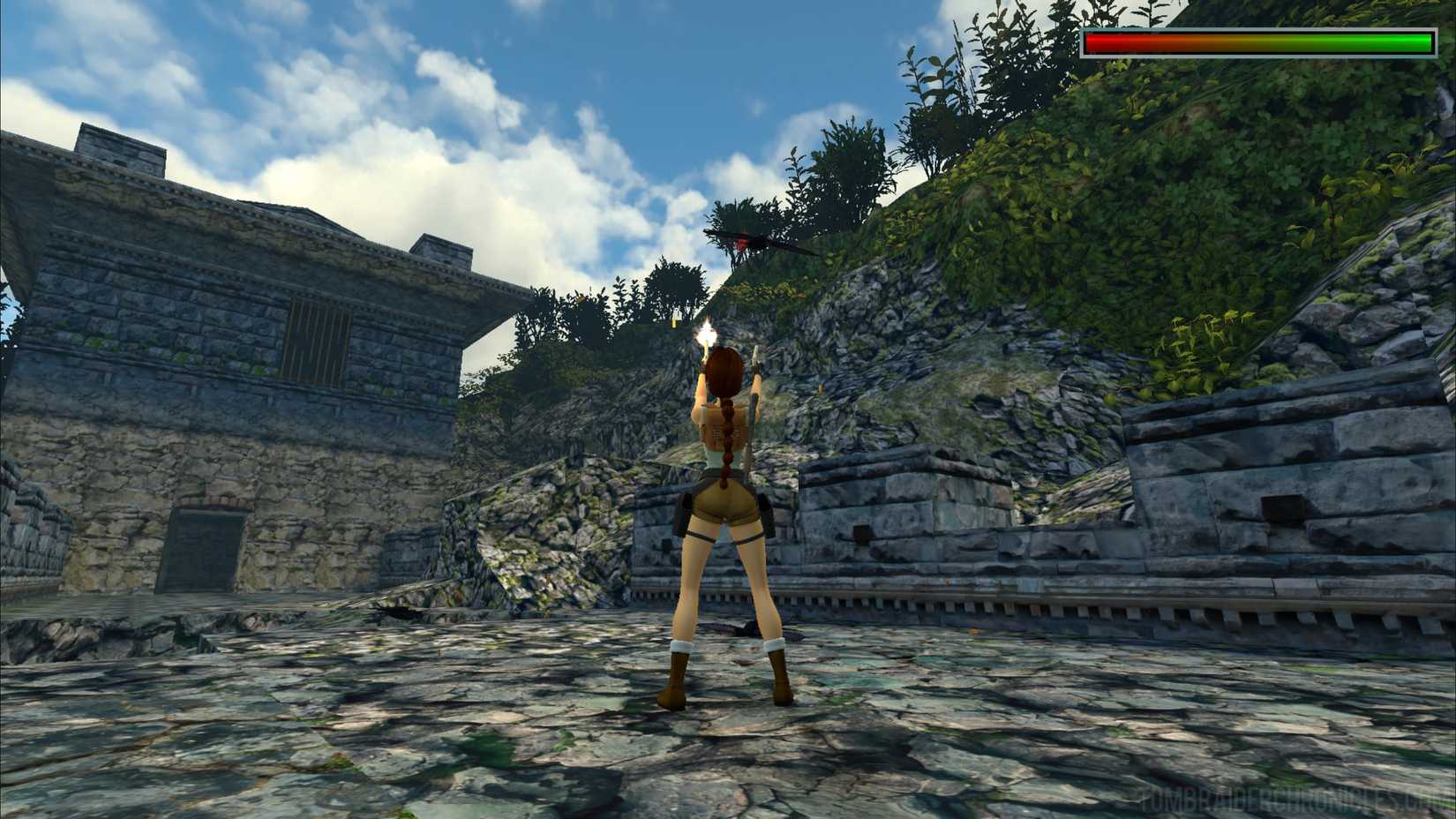
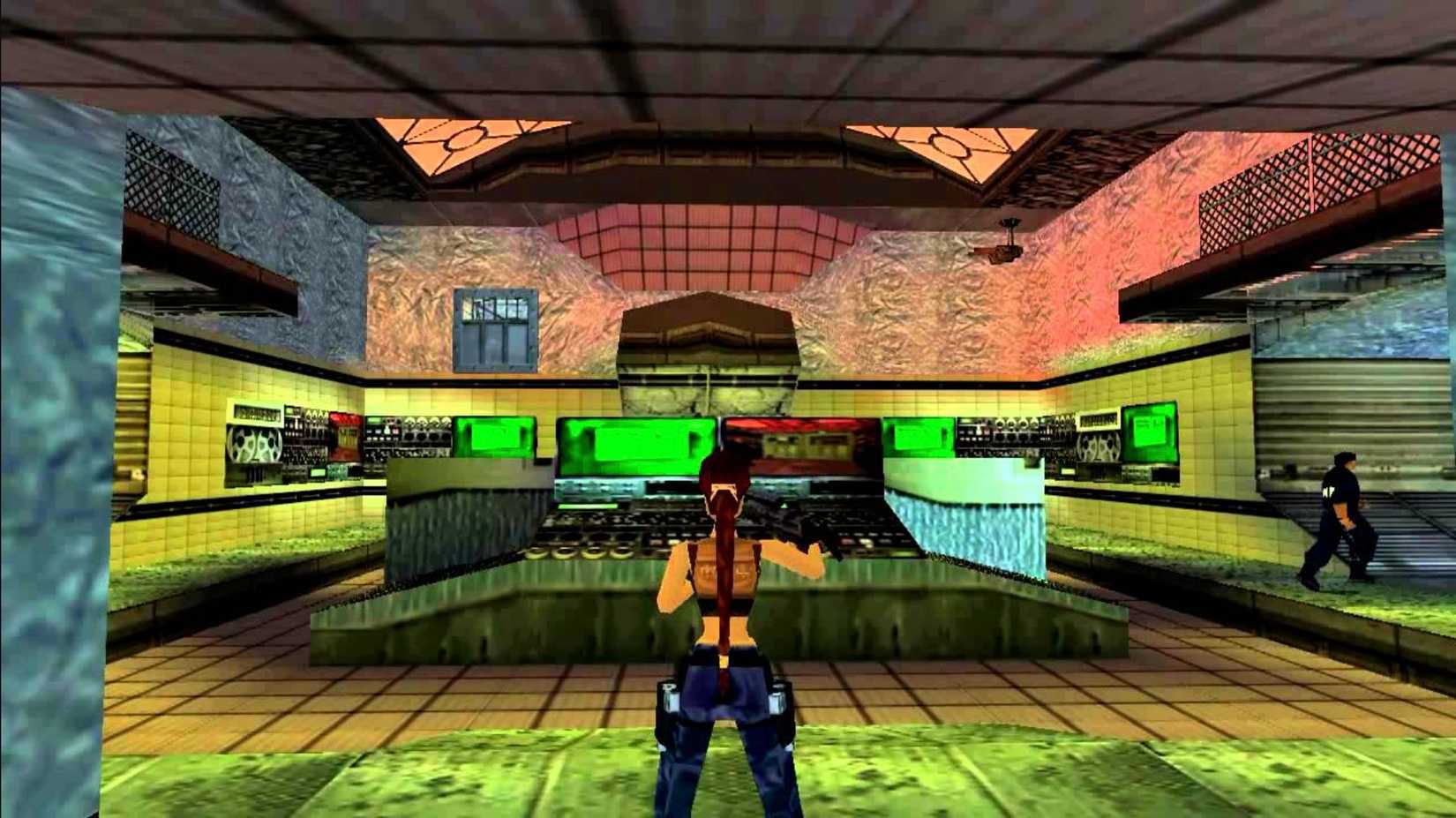
Tomb Raider III injected a heavy dose of pulp sci-fi into the series by dropping Lara into a heavily fictionalized, highly classified military base in Nevada. Players had to sneak past laser security grids and gun turrets before transitioning directly into an authentic alien autopsy room and an underground UFO hangar.
Complete with crates bearing references to the Majestic 12 conspiracy, the level delivered severe tonal whiplash that divided the fanbase upon release—while prompting generations of players to wonder why there were live orcas swimming in the desert facility’s subterranean tanks.
6. Temple of Karnak — Tomb Raider: The Last Revelation (1999)
- The Obstacle: The introduction of rope-swinging mechanics and a massive interconnected loop.
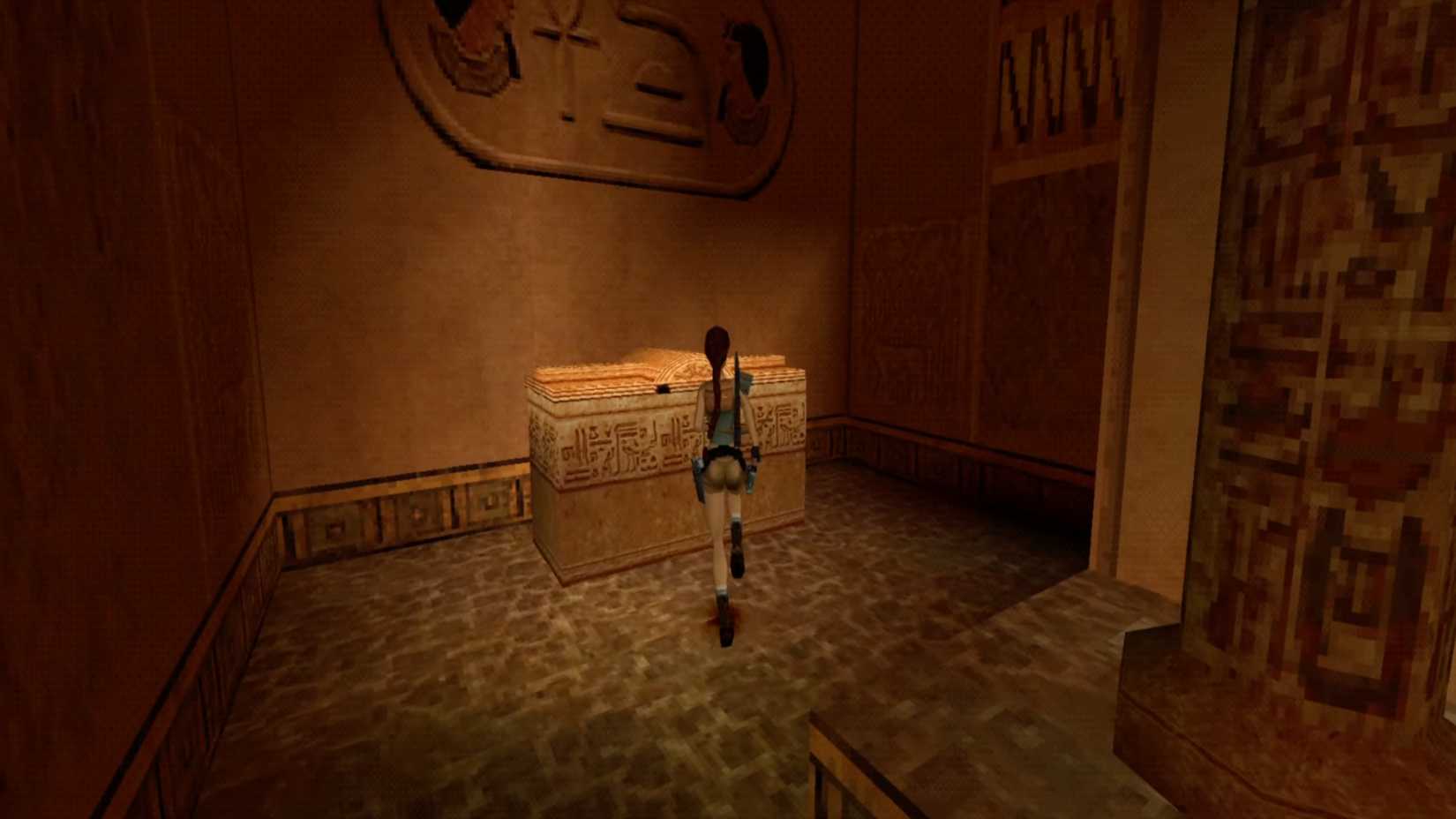
By the fourth entry, Core Design introduced a mechanic that would become a staple of modern action-adventure games: the rope swing. Set against the sun-baked backdrop of ancient Egyptian ruins, the Temple of Karnak is an architectural masterclass in level design, structured as a massive loop encompassing the temple itself, the Great Hypostyle Hall, and the Sacred Lake.
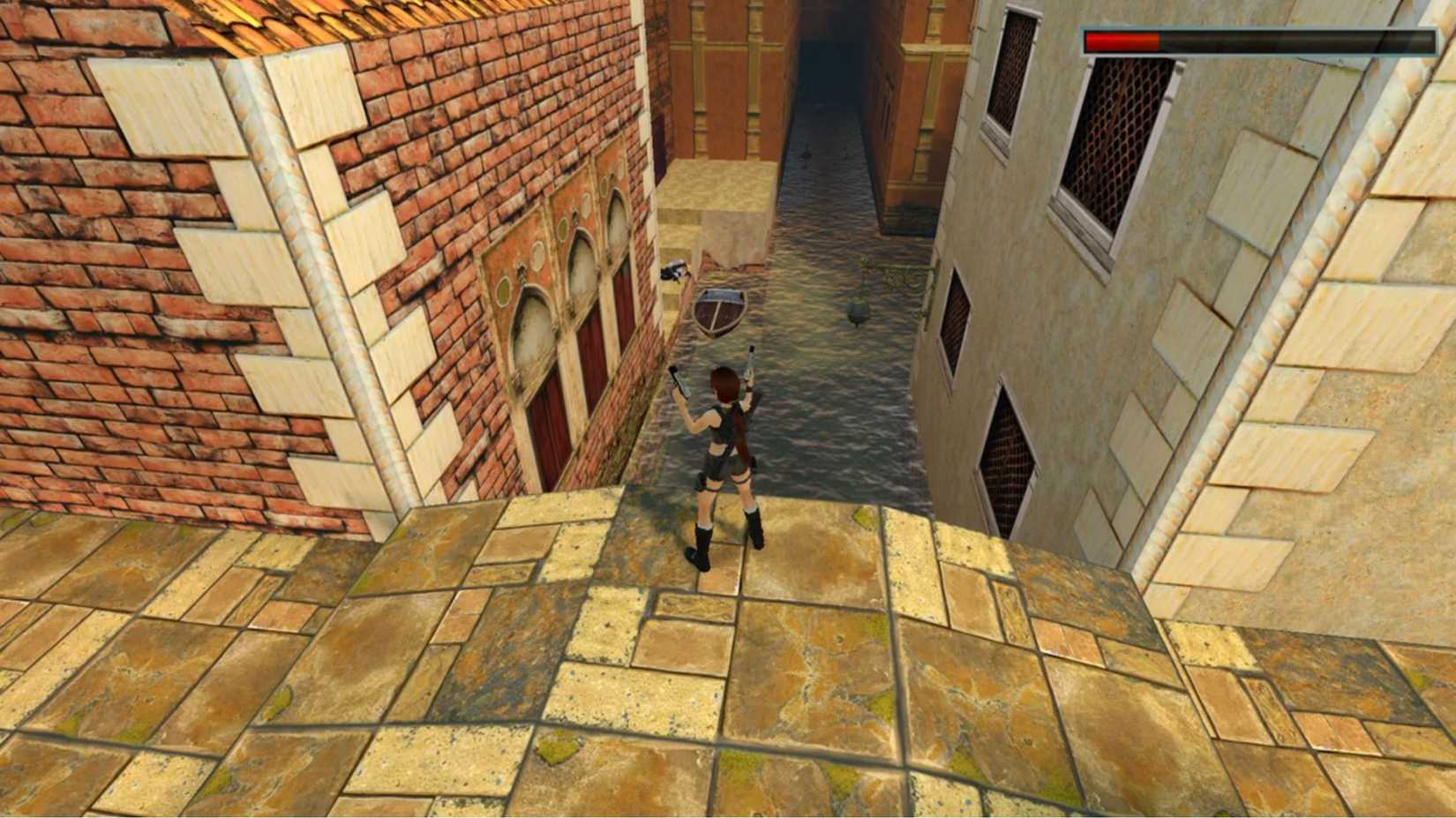
After hunting down scattered canopic jars while dodging poisonous black scorpions, players unlocked a legendary reward: the ability to walk across water for the remainder of the game, making the hours spent looping through the desert corridors entirely worthwhile.
5. Tokyo — Tomb Raider: Legend (2006)
- The Obstacle: Skyscraper facades, neon signage, and high-speed rooftop motorcycle chases.
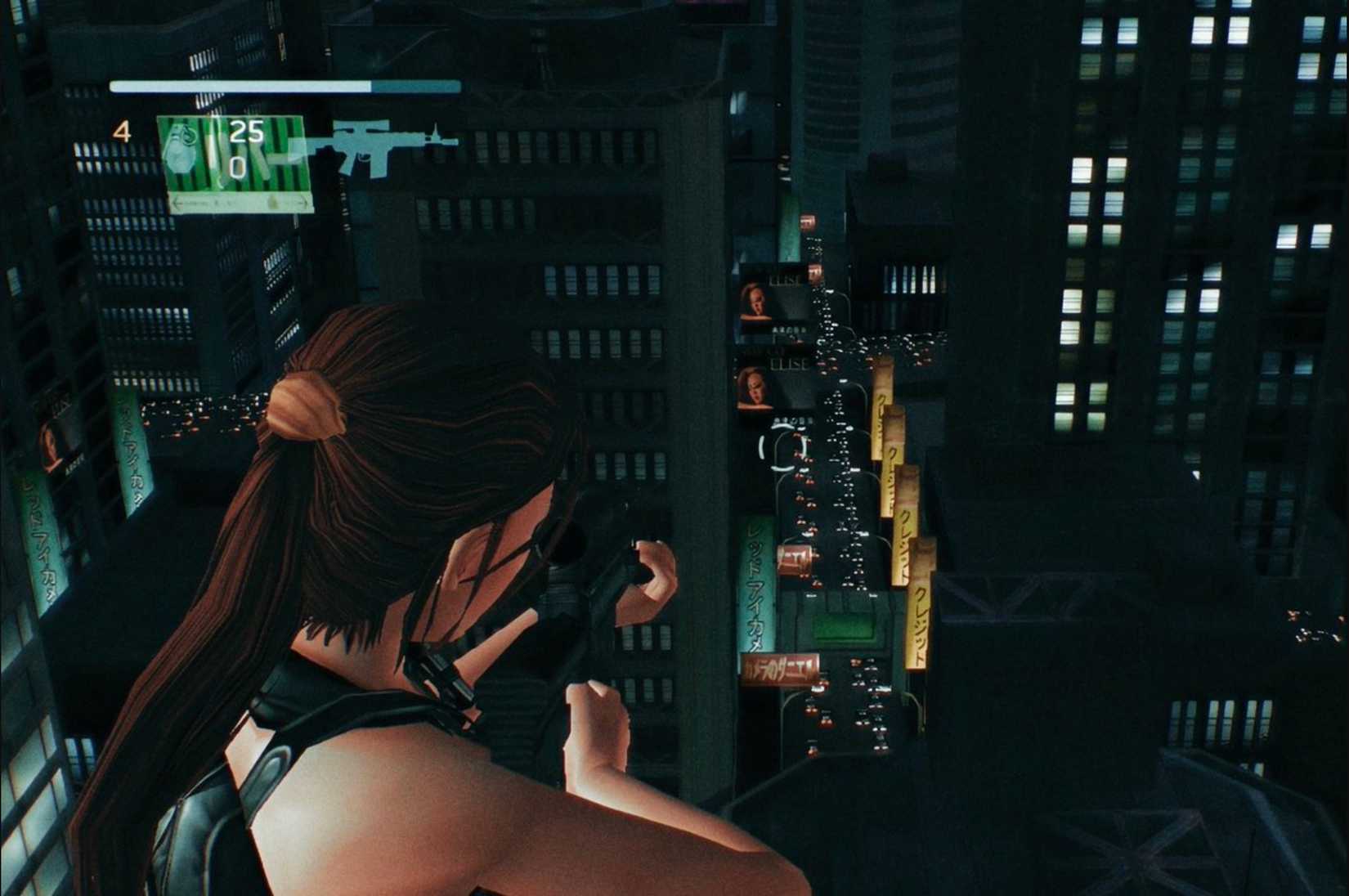
Following the rocky critical reception of The Angel of Darkness, Crystal Dynamics successfully relaunched the franchise with Tomb Raider: Legend. The Tokyo level completely discarded ancient temples in favor of a rain-slicked modern metropolis. Lara’s trademark climbing skills translated seamlessly to corporate skyscrapers and glowing neon billboards. The level reaches its unforgettable climax when Lara tears across Tokyo’s rooftops on a motorcycle before launching herself off one building and shattering through a glass window into another—cementing itself as one of the coolest set-pieces in gaming history.
4. Croft Manor — Tomb Raider: Underworld (2008)
- The Obstacle: A devastating home invasion and an inside job.
Serving as the emotional midpoint of the Legend-Anniversary-Underworld trilogy, Underworld brought Lara home under duress. Tasked with exploring her family estate to unearth a hidden chapel and her father’s subterranean study, Lara barely has time to process her discoveries before a deadly doppelganger infiltrates the manor, slaughters her loyal companion Alister, steals a critical artifact, and sets the entire mansion ablaze. It stands out as a rare level driven purely by deeply personal stakes rather than environmental puzzle-solving.

3. Mountain Temple and Shipwreck Beach — Tomb Raider (2013)
- The Obstacle: Escaping execution and surviving your own rescue.
Crystal Dynamics’ 2013 gritty series reboot reimagined Lara as a vulnerable, terrified young archaeologist forced to evolve into a survivor. Before she ever fires a bow or decodes an inscription, she must escape a cultist ritual by cutting herself down from a sacrificial ceiling stake, catching fire, and tumbling into a cavernous abyss. The ensuing gauntlet of collapsing scaffolding, hostile wildlife, and corpse-strewn tunnels established a brutal, cinematic benchmark for survival gaming.
2. Geothermal Valley and Soviet Installation — Rise of the Tomb Raider (2015)
- The Obstacle: Managing cross-map exploration, harsh wilderness, and demanding challenge tombs.
Connecting a sprawling, idyllic valley to a brutal, abandoned Soviet research base via a single dilapidated bridge, Rise of the Tomb Raider tasked players with rigorous exploration. Home to the Remnant survivalist community, this massive double-level pushed players through challenging puzzle spaces like the House of the Afflicted and the Pit of Judgment. Beyond the tomb raiding, it achieved infamy and internet adoration for featuring an achievement explicitly tied to shooting a flying chicken out of the sky with a flaming arrow.
1. Paititi — Shadow of the Tomb Raider (2018)
- The Obstacle: Navigating the largest hub city in franchise history with zero hand-holding.
Paititi represents the absolute peak of environmental scale in the modern survivor era. Conceptualized as an alternate-history Mesoamerican city where Mayan and Incan civilizations coexisted, Paititi abandoned linear corridors for a sprawling, layered mountain metropolis. The developers committed fully to immersion: NPCs conversed exclusively in native languages, a functioning barter economy operated in the shadows, and unpredictable flash floods transformed scenic canals into lethal navigational hazards.
Supporting Context & Metrics: The Evolution of Level Scale
To understand how Tomb Raider has evolved, one must look at the sheer technical leap in level geometry and player freedom across three decades.
| Era | Primary Engine / Tech | Average Level Playtime | Core Traversal Focus |
|---|---|---|---|
| Classic Era (1996–1999) | Proprietary Core Design Engine | 45 – 90 Minutes | Grid-based platforming, switch-hunting, precise timing. |
| Transition Era (2006–2008) | Crystal Dynamics Engine | 30 – 60 Minutes | Cinematic fluidity, grapple hooks, acrobatic momentum. |
| Survivor Era (2013–2018) | Foundation Engine | 2 – 4 Hours (Hubs) | Open-world exploration, crafting, climbing axes, stealth mechanics. |
While classic levels relied on rigid, grid-based puzzle boxes where every tile jump was a mathematical calculation, modern entries have shifted toward sprawling open hubs that blend combat arenas, narrative side-quests, and modular challenge tombs.
Official Statements and Industry Insights
Speaking on the design philosophy behind modernizing classic spaces like St. Francis’ Folly for upcoming releases like Tomb Raider: Legacy of Atlantis, development leads have frequently emphasized the delicate balance between preserving nostalgic dread and removing archaic frustration.
"When you revisit a space that players hold in such high nostalgic regard, your goal isn’t to erase the memory of what made it terrifying, but to translate that terror into modern player agency," noted a representative close to Crystal Dynamics’ ongoing archival projects. "The Sword of Damocles room shouldn’t just be an instant-death tile you memorize through trial and error; it needs to be a physical dialogue between the player’s reflexes and the environment’s architecture."
Industry analysts have noted that the enduring appeal of these levels lies in their refusal to coddle the player. Whether dodging a T-Rex in 1997 or navigating a flash flood in 2018, the franchise has continually trusted its audience to rise to the challenge of its environments.
Future Outlook: What Lies Ahead for Lara Croft
As the franchise prepares for the launch of Tomb Raider: Legacy of Atlantis, the horizon looks exceptionally bright for virtual archaeology. With Amazon MGM Studios also investing heavily in a cross-media cinematic universe helmed by Phoebe Waller-Bridge, Lara Croft is once again poised to dominate both interactive and narrative spaces.
The lessons learned from decades of designing death-trapped monasteries, sunken urban waterways, and hidden mountain cities will undoubtedly inform whatever ancient horrors await Lara next. Whether the next iteration requires a well-timed rope swing, a functioning chandelier, or—if the development gods are feeling merciful—yet another unexpected encounter with a prehistoric predator, one immutable truth remains: Lara Croft will always find a way out.