Executive Overview
The landscape of personal micro-mobility has undergone a profound democratization over the past half-decade. Once considered a luxury investment requiring a commitment of upwards of $1,500 to $3,000, reliable electric bicycles are increasingly accessible to a broader socioeconomic demographic. Yet, a persistent barrier to entry has remained the quality-to-price ratio at the absolute bottom of the market. Historically, sub-$500 e-bikes have been characterized by underpowered 250-watt motors, fragile 36-volt electrical architectures, lackluster range, and compromises in structural integrity that often left consumers wary.
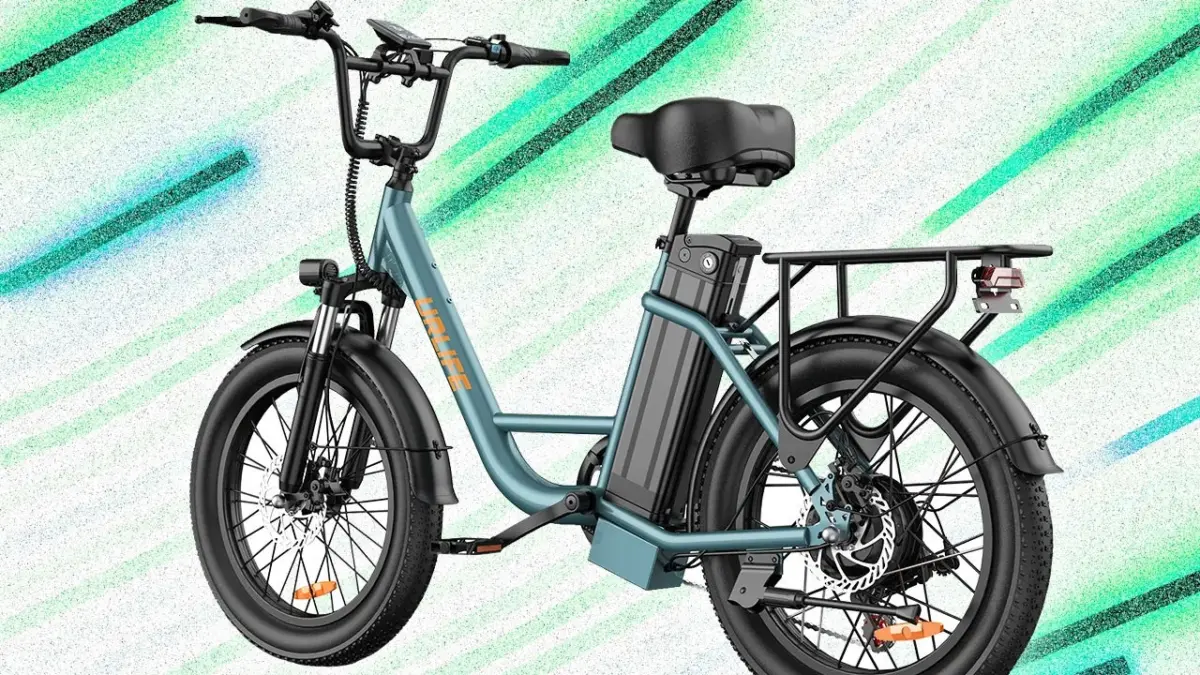
A seismic shift is underway, spearheaded by aggressive direct-to-consumer manufacturing models and global supply chain optimizations. A prime illustration of this market disruption is unfolding on international e-commerce platforms, where the UrLife E20—a robust, 750-watt fat-tire electric bike—is currently retailing for an unprecedented price point as low as $245.72.
This investigative report examines the mechanics of this pricing phenomenon, analyzes the engineering specifications of the UrLife E20, and weighs the broader economic and logistical implications of procuring high-wattage personal transit hardware via direct-import platforms like AliExpress. By leveraging specialized promotional vouchers such as DBDEAL60 ($60 off) or the fallback code USAFF55 ($55 off), budget-conscious commuters and outdoor enthusiasts can secure a machine featuring performance metrics traditionally reserved for vehicles twice its cost.
However, purchasing heavy machinery through international digital marketplaces requires a nuanced understanding of logistics, warranty limitations, structural trade-offs, and localized infrastructure regulations. This article provides a comprehensive evaluation of whether the UrLife E20 represents a genuine paradigm shift in affordability or a calculated compromise for the everyday rider.
Detailed Chronology: The Evolution of Ultra-Budget Micro-Mobility
To contextualize the emergence of the UrLife E20 at the $245 threshold, it is critical to trace the historical timeline of budget e-bike engineering and pricing strategies over the last ten years.
Phase One: The Proprietary Era (2014–2018)
In the early days of the modern e-bike boom, legacy cycling brands dominated the discourse. Companies utilizing mid-drive motors from Bosch, Yamaha, and Shimano commanded prices averaging $3,500 and above. Direct-to-consumer alternatives were virtually nonexistent outside of niche hobbyist forums where enthusiasts converted acoustic bicycles using DIY kits powered by lead-acid or early-generation lithium-ion batteries. Quality control was erratic, and the concept of an out-of-the-box motorized bicycle for under $1,000 was widely considered a manufacturing impossibility.
Phase Two: The Amazon Marketplace Expansion (2018–2022)
As lithium-ion cell production scaled globally—largely driven by the burgeoning electric vehicle (EV) automotive sector—component costs plummeted. This period saw the proliferation of generic Chinese manufacturing entities establishing storefronts on major Western platforms like Amazon. Prices dropped steadily from $1,000 to the $600–$800 range.
However, these models were frequently bottlenecked by strict import markups, warehousing fees, and third-party vendor margins. A typical e-bike sold for $700 on Amazon often carried a raw factory gate cost closer to $250. Consumers paid a substantial premium for domestic warehousing, localized return policies, and faster shipping times.
Phase Three: The Direct-to-Factory Disruption (2022–Present)
The current era is defined by manufacturers bypassing traditional domestic warehousing layers entirely. Official manufacturing entities—such as "urlifeglobal," the factory behind the E20—are utilizing global logistics hubs (often pre-positioned in overseas bonded zones or regional ports) to ship directly to the end consumer.
By cutting out regional distributors, domestic brick-and-mortar middlemen, and traditional retail overhead, factories can pass the marginal savings directly to the buyer. The rollout of dynamic platform-wide promotional codes (such as DBDEAL60 and USAFF55) acts as a promotional lever to stimulate volume sales, clean out seasonal inventory, and capture market share from competitors. This structural shift explains how a 750W adult e-bike can be retailed for less than the cost of a high-end acoustic bicycle tire set.
Supporting Context & Metrics: Engineering the UrLife E20
A low price point is irrelevant if the underlying hardware fails to deliver functional utility. A detailed examination of the UrLife E20’s technical specifications reveals a surprisingly competent build sheet that defies its sub-$250 price tag.
Power Plant and Electrical Architecture
At the heart of the UrLife E20 is a rear-hub brushless motor rated at a continuous 750 watts, with a peak output capability reaching 1,000 watts. This is a stark departure from the typical 250W to 350W motors found in entry-level commuter bikes. A 750W motor delivers substantial torque, enabling the vehicle to conquer inclines and accelerate rapidly from a dead stop.
Crucially, while the vast majority of budget e-bikes rely on a 36-volt electrical system—which struggles with voltage sag under heavy loads and steep climbs—the UrLife E20 utilizes a 48-volt architecture. The higher voltage allows the system to draw lower current for equivalent power output, resulting in improved thermal efficiency, reduced heat generation in the controller, and vastly superior torque delivery when tackling steep terrain.
Battery Capacity and Range Dynamics
Powering this 48V system is a removable 13Ah lithium-ion battery pack. On paper, the manufacturer advertises an optimistic maximum range of up to 80 miles under ideal laboratory conditions. In practical, real-world application, range is governed by a multiplicity of variables:
- Rider Weight and Cargo: Higher payload demands increased energy output from the motor.
- Terrain and Elevation: Frequent climbing of steep grades drains amp-hours significantly faster than flat-surface cruising.
- Throttle vs. Pedal Assist (PAS): Operating purely on a throttle draws continuous current, whereas utilizing intelligent pedal-assist levels extends range substantially.
Real-world testing of comparable 48V 13Ah configurations typically yields a practical range of 30 to 45 miles under mixed throttle and pedal-assist usage—a more than adequate radius for daily urban commuting, recreational trail riding, or running local errands. Furthermore, the inclusion of a removable battery design allows riders to detach the power source and charge it indoors, away from the bicycle frame—a vital security and convenience feature.
Chassis, Suspension, and Ergonomics
The structural framework of the UrLife E20 is constructed from carbon steel. While steel offers exceptional durability, fatigue resistance, and ease of repair, it comes with an inherent trade-off: weight. Tipping the scales at approximately 60 pounds, the E20 is undeniably on the heavier side. This weight must be factored in by riders who live in walk-up apartments without elevator access or those who frequently need to mount their bikes onto vehicle hitch racks.
Despite its weight penalty, the frame supports a maximum payload capacity of 265 pounds. To mitigate the rigidity of a steel frame and absorb road imperfections, the E20 is outfitted with 20-inch fat tires paired with a front fork shock-absorbing suspension system. The high-volume pneumatic tires act as secondary shock absorbers, allowing the bicycle to transition smoothly from paved asphalt to gravel paths, light sand, and unpaved park trails—terrains where skinny-tire commuter bikes would falter.
Official Statements & Marketplace Logistics
Navigating international e-commerce platforms requires an understanding of how logistics and consumer guarantees operate, particularly when purchasing high-value items directly from overseas manufacturers.
The Manufacturer-Direct Advantage
Marketplace analytics confirm that the storefront managing the sale ("urlifeglobal") functions as the primary manufacturing entity for these units. This direct pipeline eliminates the communication latency often experienced when dealing with dropshippers or third-party resellers.
According to logistics updates associated with the listing, the units intended for this promotion have already been shipped and positioned in regional distribution centers. This detail is paramount for two reasons:
- Tariff Compliance: Because the inventory has already cleared customs and entered regional logistics pipelines, all applicable tariffs and import duties have been settled. Buyers do not face the unpleasant surprise of unexpected customs brokerage fees upon delivery.
- Expedited Fulfillment: Traditional overseas shipping from foreign factories can take anywhere from four to eight weeks. Pre-positioned regional inventory drastically curtails shipping times, bringing delivery windows closer to domestic e-commerce standards.
Purchasing Protocols and Coupon Mechanics
Securing the lowest possible price requires strict adherence to checkout protocols on platforms like AliExpress:
- First-Time vs. Returning Status: First-time buyers leveraging the primary $60 coupon code DBDEAL60 unlock the baseline promotional price of $245.72. Returning customers utilizing the identical code see a slightly adjusted tier of $257.72.
- Contingency Vouchers: In the event of high digital traffic exhausting the allocation for the primary code, the secondary manufacturer-backed code USAFF55 provides a reliable fallback discount of $55.
- Account Verification: Buyers are advised to remain actively logged into their platform accounts during the checkout process and occasionally refresh the page interface to ensure regional shipping calculations and coupon applications register correctly.
Future Outlook: The Trajectory of Ultra-Affordable Personal Transit
The appearance of high-performance, 750W 48V fat-tire electric bikes at the $250 price point signals a profound maturation of the global micro-mobility supply chain. As we look toward the remainder of the decade, several key trends are likely to emerge, heavily influenced by this pricing disruption.
1. Downward Pressure on Legacy Brands
Traditional bicycle manufacturers and legacy e-bike brands that rely on high profit margins and extensive domestic marketing budgets will face mounting pressure to innovate or reevaluate their pricing strategies. While premium brands will continue to command loyalty through localized customer service networks, proprietary motor development, and dealer-supported warranties, the sheer economic disparity between a $2,500 bike and a $245 bike will force a market polarization. Consumers will increasingly ask whether domestic support is worth a 900% markup.
2. Regulatory Scrutiny and Infrastructure Adaptations
As the density of high-powered e-bikes like the UrLife E20 increases in urban and suburban environments, municipal governments will likely intensify their focus on micro-mobility regulations. With a top speed of 28 mph and a 750W/1000W peak motor, the E20 borders the legal definition of a Class 3 electric bicycle in many jurisdictions. Future municipal planning will need to account for heavier, faster micro-mobility vehicles sharing bike lanes with traditional pedestrians and acoustic cyclists.
3. Iterative Hardware Refinements
The success of direct-import models will incentivize competing factories to continuously upgrade their baseline specifications. We can anticipate that within the next few cycle generations, features currently considered premium in the budget tier—such as hydraulic disc brakes, integrated torque sensors (replacing cadence sensors), and smart battery management systems (BMS)—will become standard expectations even at the sub-$300 level.
Conclusion
The UrLife E20 e-bike represents an extraordinary intersection of economic disruption and engineering pragmatism. While it does not replace the bespoke craftsmanship, high-end componentry, or white-glove customer service of a luxury e-bike, it shatters the financial barriers that have long kept personal electric mobility out of reach for countless budget-conscious consumers.
By offering a 750W motor, a robust 48V electrical system, fat tires, and respectable range for a fraction of the traditional cost—further reduced via coupons like DBDEAL60 and USAFF55—manufacturers are proving that clean, efficient personal transit can be universally accessible. For the savvy buyer willing to navigate direct-import platforms, the UrLife E20 is not merely a budget purchase; it is a front-row seat to the transformation of global transportation.