Executive Overview
The venture landscape of 2026 demands an evolution in how early-stage technology founders, corporate operators, and institutional investors interface. Traditional industrial conferences have long relied on passive audience listening and unstructured, serendipitous networking—an approach that frequently fails to deliver measurable return on investment for venture-backed entrepreneurs. As capital deployment criteria grow increasingly stringent, the imperative for highly curated, intentional business matching has become central to ecosystem events.
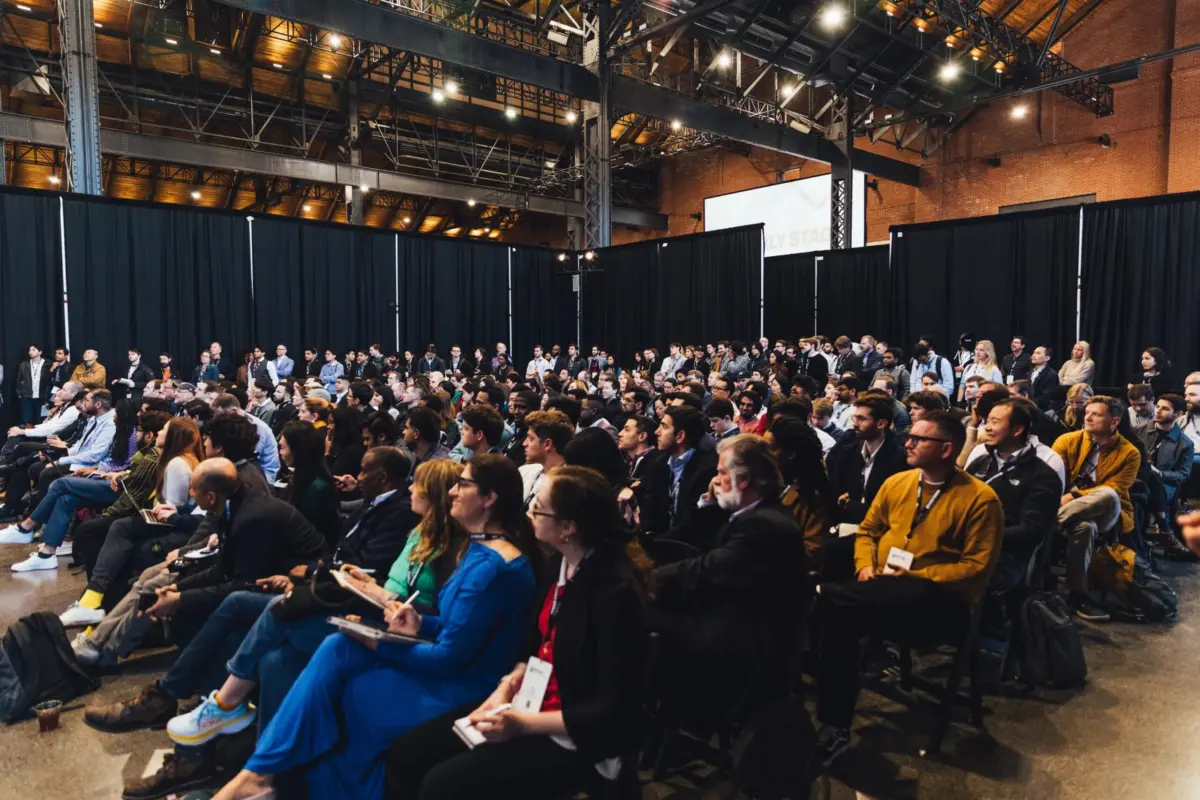
Against this backdrop, the upcoming TechCrunch Founder Summit 2026, presented in partnership with Fidelity Private Shares, is engineered to replace random chance with algorithmic and topic-driven matchmaking. Set to convene on November 4 at Boston’s historic SoWa Power Station, the summit serves as a dedicated platform for early- and growth-stage founders navigating product-market fit, capital allocation, and operational scaling.
By integrating structured networking frameworks alongside high-signal keynotes and breakout sessions, the event aims to bridge the gap between mainstage insights and actionable business relationships. With the conference just days away, this analysis examines the architectural shift in founder-investor connectivity, the strategic profile of the Boston technology ecosystem, and the core operational pillars of the 2026 summit.
Detailed Blueprint: Re-Engineering the Conference Floor
Beyond Passive Serendipity: The Braindate Framework
For decades, conference networking was defined by crowded expo halls and unstructured happy hours—environments that often proved inefficient for founders seeking hyper-specific expertise or tailored venture capital partnerships. The TechCrunch Founder Summit addresses this systemic inefficiency through the integration of Braindate, a specialized knowledge-sharing and networking architecture developed by e-180.
The Founder Summit Networking Lounge powered by Braindate allows attendees to bypass informal small talk in favor of structured, outcome-oriented conversations. Through the platform, participants can curate peer-to-peer discussions based on immediate strategic challenges, offering two distinct interaction formats:
- One-on-One Braindates: 30-minute targeted conversations between two attendees designed to address specific operational bottlenecks, pitch deck critiques, or domain-specific queries.
- Small-Group Braindates: 45-minute collaborative roundtable sessions restricted to small cohorts to foster deep technical or strategic problem-solving around a shared topic.
By requiring attendees to post specific discussion topics prior to the event—ranging from AI model unit economics to cross-border go-to-market strategies—the summit converts passive event participation into a targeted advisory and deal-sourcing ecosystem.
Bridging On-Stage Insights and Operational Reality
A central vulnerability of modern business conferences is the "drop-off" between listening to an executive keynote and applying those lessons to a startup’s operational workflow. The summit’s structural design creates direct connective tissue between stage programming and interactive lounge discussions.

+-------------------------------------------------------+
|                 MAINSTAGE / BREAKOUTS                 |
|   Keynotes & Panels (e.g., Product-Market Fit, VC)    |
+---------------------------+---------------------------+
                            |
                            v
+-------------------------------------------------------+
|               BRAINDATE LOUNGE & TABLES               |
|      Targeted 1-on-1 & Small-Group Knowledge Exchange |
+---------------------------+---------------------------+
                            |
                            v
+-------------------------------------------------------+
|             EXPO HALL & CLOSING RECEPTION             |
|   Relationship Consolidation & Capital Partnership    |
+-------------------------------------------------------+
Attendees are encouraged to use mainstage discussions as catalytic entry points for subsequent Braindate sessions. For instance, after listening to venture sessions on capital allocation, founders can immediately transition to the lounge to benchmark their metrics against peers facing identical fundraising environments.
Supporting Context & Ecosystem Metrics
The 2026 Venture Capital Landscape
The summit takes place during a pivotal period for venture capital. Following years of market calibration, early-stage capital deployment has shifted toward rigorous fundamentals, clear unit economics, and demonstrated paths to profitability.
       [Macro Dynamics Shaping the 2026 Founder Environment]

      +---------------------------------------------------+
      |              Disciplined Valuation                |
      |   Focus on capital efficiency over raw growth     |
      +-------------------------+-------------------------+
                                |
                                v
      +---------------------------------------------------+
      |               Deep-Tech & AI Scale                |
      |   High infrastructural & compute overhead costs   |
      +-------------------------+-------------------------+
                                |
                                v
      +---------------------------------------------------+
      |              High-Signal Networks                 |
      | Premia placed on direct warm-intro capital channels|
      +---------------------------------------------------+
Recent venture capital data underscores why structured networking events are critical for early-stage companies:
- Seed-to-Series-A Transition: Less than 25% of seed-stage startups successfully transition to Series A within 24 months without direct warm introductions to lead institutional investors.
- Capital Efficiency Primacy: Investors are evaluating startups based on burn-multiple benchmarks, making access to peer operational benchmarks essential for seed-stage founders.
- Geographic Consolidation: While remote work remains prevalent, physical innovation hubs—specifically Boston, the Bay Area, and New York—continue to capture over 60% of total U.S. venture funding.
Boston as a Strategic Innovation Anchor
Hosting the summit at Boston’s SoWa Power Station highlights the city’s role as a major hub for global technology and industrial innovation. Beyond its traditional leadership in biotechnology and life sciences, the Greater Boston ecosystem has expanded into enterprise software, deep tech, robotics, and climate technologies.
Supported by world-class academic institutions—including MIT and Harvard—the Boston venture market offers a distinct ecosystem where technical talent intersects with institutional asset management. The involvement of Fidelity Private Shares as the presenting sponsor reflects the region’s strong financial architecture, providing founders with equity management, cap-table governance, and scaling solutions required for venture-grade growth.
Keynote Perspectives & Core Program Pillars
The educational curriculum at the TechCrunch Founder Summit 2026 is organized around core operational disciplines required to build scalable enterprise and consumer technologies. Prominent venture capitalists and experienced founders will lead targeted discussions across the program.
1. Mastering Product-Market Fit
Navigating the transition from early customer validation to repeatable growth remains the single largest point of failure for early-stage ventures.

- Featured Expert: Kent Bennett, General Partner at Bessemer Venture Partners.
- Focus Area: Bennett’s sessions focus on quantifying true product-market fit in hyper-competitive markets, analyzing retention curves, and determining the precise timing for scaling go-to-market spending versus iterating on product mechanics.
- Braindate Application: Post-session roundtables allow founders to review retention data and user-acquisition costs alongside investors actively evaluating Series A candidates.
2. Regional Ecosystem Dynamics & Scaling
Building an enterprise outside of Silicon Valley requires leveraging regional advantages, local talent pools, and hyper-dense networks.
- Featured Expert: Chase Garbarino, co-founder and CEO of HqO.
- Focus Area: Garbarino provides strategic blueprints for scaling companies within Boston, navigating regional talent acquisition, tapping into local corporate innovation budgets, and securing cross-regional syndicate backing.
- Braindate Application: Local and visiting founders gather in small-group pods to discuss hiring strategies, regional tax/regulatory environments, and commercial real estate footprints.
3. Investor Mechanics & Real-Time Pitch Evaluation
Understanding how venture capitalists evaluate risk during live pitch presentations is critical for founders preparing for upcoming capital raises.
- Featured Expert: Charles Hudson, Founder and Managing Partner at Precursor Ventures.
- Focus Area: Hudson leads interactive teardown sessions, evaluating live pitch presentations in real time to deconstruct investor decision-making, fund model dynamics, and valuation frameworks.
- Breakout Mechanics: Attendees gain direct exposure to how pre-seed and seed funds evaluate founding teams, market sizing (TAM), and defensibility moats before entering formal partner meetings.
Operational Structure of the Summit
To maximize tactical takeaways and professional engagement over the course of the single-day event, the summit utilizes a multi-tiered structural format spread across the venue:
+-----------------------------------------------------------------------------------+
|                        SO W A  POWER  STATION  LAYOUT                             |
+-----------------------------------------------------------------------------------+
|  [ MAIN STAGE ]        |  [ BRAINDATE LOUNGE ]     |  [ EXPO HALL & PARTNERS ]    |
|  Keynote Speakers &    |  1-on-1 & Small Group     |  Fidelity Private Shares &   |
|  Fireside Chats        |  Curated Sessions         |  Emerging Tech Vendors       |
|                        |                           |                              |
|  [ BREAKOUT STAGES ]   |  [ ROUNDTABLE ROOMS ]     |  [ RECEPTION AREA ]          |
|  Interactive Panels &  |  Topic-Driven Group       |  End-of-Day Networking &      |
|  Live Pitch Teardowns  |  Discussions              |  Closing Events              |
+-----------------------------------------------------------------------------------+
Mainstage Keynotes
High-level strategic addresses delivered by globally recognized venture partners, successful founders, and policy experts. These sessions provide macro market context and directional industry forecasts.
Breakout Sessions & Audience Q&A
Smaller, audience-driven panel sessions focused on operational tactical playbooks—ranging from technical debt management to equity compensation structuring. Speakers field live questions directly from attendees.
Interactive Roundtables
Moderated, small-group deep dives designed for peer-to-peer knowledge exchange. Topics are strictly categorized by industry vertical (e.g., SaaS, Bio-IT, FinTech, Hardware) and company stage (Pre-Seed, Seed, Series A).
The Expo Hall
A centralized hub bringing together foundational technology partners, enterprise software vendors, and institutional service providers. Attendees can interface directly with ecosystem enablers like Fidelity Private Shares to address back-office capitalization, legal compliance, and governance workflows.

City-Wide Side Events
Extending the impact of the core conference day, official TechCrunch Founder Summit Side Events will run throughout Boston across the entire week. Hosted by venture funds, law firms, accelerators, and ecosystem partners, these peripheral gatherings offer specialized, intimate settings for industry-specific networking.
Strategic Outlook & Registration Directives
As early-stage companies face a complex macro environment, the ability to rapidly access targeted insights, secure top-tier investor access, and exchange operational best practices with peers serves as a key operational advantage. The TechCrunch Founder Summit 2026 provides a deliberate alternative to legacy conferences by embedding structured networking into every layer of its programming.
Countdown and Registration Details
With four days remaining before the conference opens at Boston’s SoWa Power Station on November 4, registration is entering its final window.
- Venue: SoWa Power Station, Boston, MA
- Presenting Sponsor: Fidelity Private Shares
- Final Promotion Offer: Attendees who register before the deadline can save up to $100 on standard passes and receive a complimentary second pass under a limited-time buy-one-get-one initiative.
For founders, investors, and startup operators looking to sharpen their capital strategies and build high-value professional networks, the summit provides the blueprint, tools, and connections required to advance their ventures in 2026 and beyond.