
Executive Overview
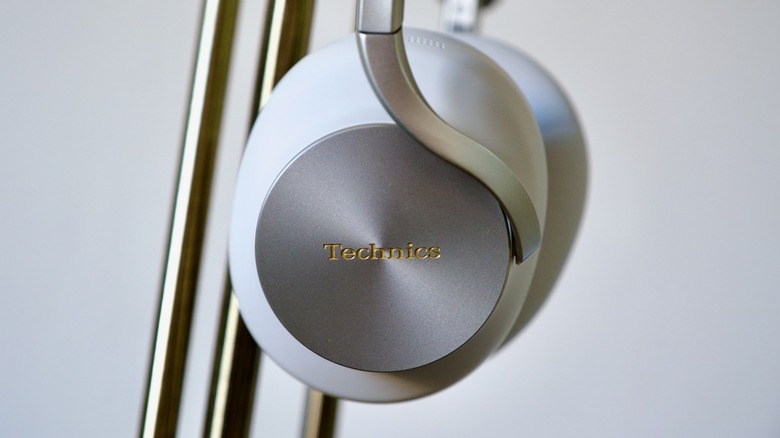
The high-end wireless headphone market is a treacherous landscape, dominated by legacy giants and fiercely contested by nimble innovators. Into this cutthroat arena steps Technics with its flagship over-ear wireless headphones, the EAH-A1000. Priced at $449, these cans do not shy away from heavy competition, aiming directly at industry kingpins like Sony’s WH-1000XM6 and nudging uncomfortably close to audiophile darlings such as the Sennheiser HDB 630.
Carrying a solid 8.9/10 rating from extensive real-world testing, the EAH-A1000 seeks to prove that Technics is more than just a historical name in hi-fi audio; it is a serious contender in the modern consumer market. By introducing proprietary technologies—such as magnetic fluid drivers previously reserved for true wireless earbuds—alongside adaptive active noise cancellation (ANC), robust battery life, and high-resolution lossless playback options, Technics has crafted an exceptionally well-rounded package.
While minor quirks in physical control layouts and the notoriously finicky nature of multi-device Bluetooth pairings prevent perfection, the EAH-A1000 delivers superior sound and phenomenal noise cancellation. For listeners weighing their options in the $450 price bracket, the Technics EAH-A1000 demands serious consideration.

Detailed Chronology
The Evolution Toward Flagship Over-Ears
Technics’ journey into the consumer wireless space has been methodical rather than rushed. While other brands flooded the market with iterative updates year after year, Technics took its time refining core acoustic technologies. The pivotal turning point for the brand’s modern consumer audio lineup came with the release of the AZ100 true wireless earbuds, which introduced the industry to Technics’ proprietary "Magnetic Fluid" driver architecture.
Following the positive reception of the AZ100, engineers set their sights on a much harder engineering challenge: scaling that technology up to a full-sized over-ear headphone chassis without sacrificing comfort, battery efficiency, or structural integrity.
When Technics officially announced the EAH-A1000, industry observers initially viewed it as just another expensive pair of headphones entering an oversaturated sector. However, after two weeks of rigorous, real-world evaluation on the testing bench, it became clear that dismissing the A1000 as ordinary was a miscalculation.

Supporting Context & Metrics
Engineering Specifications and Under-the-Hood Innovation
To truly understand the value proposition of the EAH-A1000, one must look closely at the hardware choices Technics made.
- Magnetic Fluid Drivers: Borrowed from the AZ100 earbuds, this technology uses specialized magnetic fluid to dampen unwanted vibrations within the 40mm drivers. The result is a drastic reduction in harmonic distortion, translating to cleaner sound reproduction across demanding dynamic ranges.
- Connectivity & Multipoint: The A1000 steps up the industry standard by supporting three-device multipoint Bluetooth connectivity. Users can seamlessly pair their headphones with a smartphone, a PC, and a third device such as a television or a gaming console. (Note: Utilizing the high-bandwidth LDAC codec limits active connections to two devices).
- Battery Performance: With Active Noise Cancellation (ANC) enabled, users can expect an impressive 45 hours of continuous playback, putting it near the front of the pack for endurance.
- Wired Versatility: For purists who prefer zero compression, Technics includes both USB-C and traditional 3.5mm analog cables in the box, facilitating true lossless playback.
- Immersive Audio & Smart Features: The headset features Dolby Atmos support complete with dynamic head-tracking, wear-detection sensors for automatic pausing, and full app-based equalization controls.
Audio Performance: The Acid Test
Marketing materials for high-end audio gear are often filled with hyperbolic descriptions of standard acoustic components. Yet, the moment music begins to play on the EAH-A1000, the engineering claims manifest in tangible ways.
For electronic music and bass-heavy genres, the low frequencies delivered by the A1000 are among the tightest in the industry. Rather than creating a muddy rumble that overpowers the eardrum, the bass feels anchored and controlled. Kick drums in dance tracks punch cleanly through the mix, offering a wide soundstage and dynamic range that rivals open-back wired monitors.
Pop and rock tracks highlight the balanced mid and high frequencies. Listening to dense vocal mixes reveals harmonic layers that often get lost on consumer-grade gear. While high-end electric guitars on tracks by AC/DC or the Arctic Monkeys sound authentic, critical listeners might yearn for just a fraction more "sizzle" at the extreme upper edge. Overall, the soundstage feels remarkably expansive—surpassing even the Sennheiser HDB 630 in spatial width.
ANC and Call Quality
Adaptive Active Noise Cancellation is often a make-or-break feature for frequent travelers and remote workers. Technics has implemented a system that handles steady ambient droning (such as airplane engines and household fans) with ease while remaining dynamic enough to block out erratic sounds, like human speech in a busy home office.
The beamforming microphone array does an admirable job of isolating the user’s voice for phone calls, effectively neutralizing background disturbances. While the microphone hardware itself is fundamentally standard, its software implementation makes background noise mitigation feel almost magical.

Official Statements & Industry Perspectives
Industry analysts and reviewers have noted that pricing a pair of headphones at $449 places them in direct crosshairs with Sony’s legendary WH-1000XM6. While Sony commands immense brand loyalty and features an exceptionally feature-rich companion app, audio reviewers argue that Technics wins ground where it matters most: pure acoustic performance, robust build quality, and physical comfort.
When compared against the $500 Sennheiser HDB 630, the Technics EAH-A1000 holds its own. Although Sennheiser retains a slight edge in absolute high-frequency detail, Technics counters with superior active noise cancellation, a more comfortable clamping force, and a more refined luxury aesthetic. Furthermore, competing with Sonos’s high-end Ace Ultra headphones ($449)—which rely heavily on ecosystem integration with Sonos soundbars—the Technics approach relies purely on standalone acoustic excellence.
App Ecosystem and Controls
The Technics Connect app avoids the graveyard of bloated, uninstalled headphone utilities by offering a clean, utilitarian interface. Users can easily toggle LDAC settings, adjust the multi-device priority, reconfigure the auto-off timer, and fine-tune the multi-band EQ.

However, physical controls present a minor learning curve. Eschewing modern touch panels in favor of tactile inputs, Technics places two physical buttons and a clickable volume rocker on the right earcup. While the components do not feel cramped, the volume rocker utilizes a counter-intuitive layout where clicking "back" increases the volume. Additionally, media skipping relies on multi-clicking the same rocker, which can occasionally result in missed inputs if a button experiences slight physical sticking.
Future Outlook
The launch of the EAH-A1000 marks a crucial milestone for Technics as it aggressively re-establishes itself in the consumer lifestyle audio sphere. While companies like Sony and Sennheiser have decades of uninterrupted momentum in the over-ear wireless category, Technics proves that historical pedigree combined with relentless acoustic innovation can level the playing field.
Moving forward, the challenge for Technics will not be convincing audiophiles of the hardware’s competence, but rather breaking through the consumer inertia that favors more familiar household names. If future software updates can refine multi-device Bluetooth handshakes and streamline physical control schemes, the brand’s next iterations could easily capture the crown. For now, the EAH-A1000 stands tall as a bold, beautifully tuned, and uncompromising flagship that signals a bright future for Technics in the modern audio era.