Executive Overview
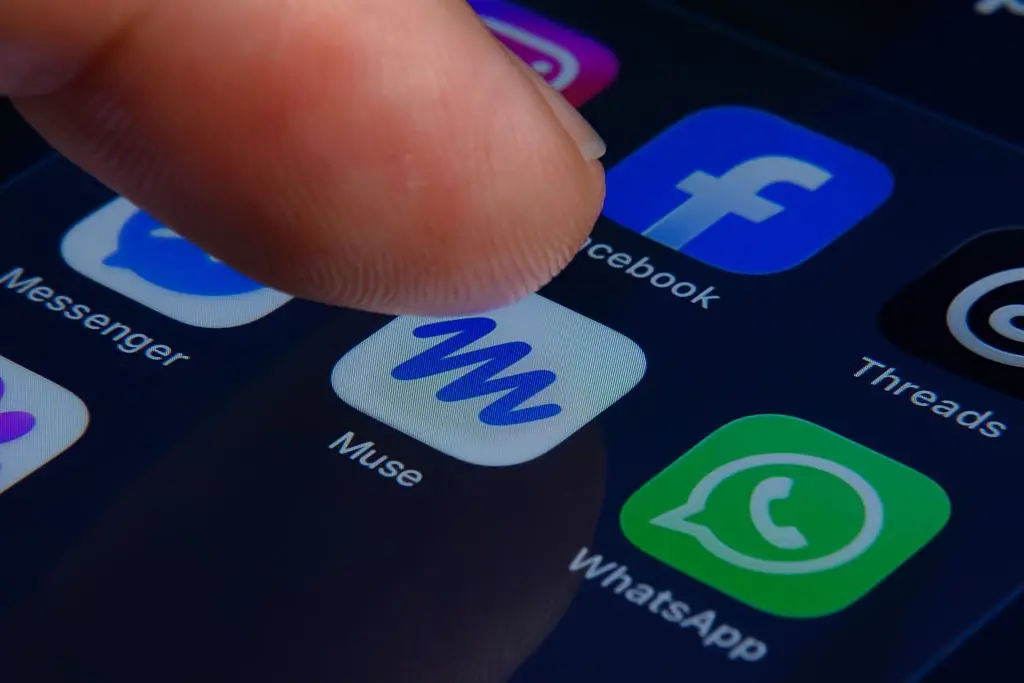
In the rapidly escalating battle for artificial intelligence supremacy, the transition from passive conversational chatbots to active, autonomous "agents" has become the primary battleground of late 2026. Following a series of landmark announcements at its Connect 2026 developer conference, Meta Platforms Inc. has officially opened the gates to the next phase of its consumer AI strategy. On September 25, 2026, the social media and technology giant launched an early access registration program for its flagship AI agent, Muse, inviting users to test a suite of highly anticipated, agentic features before a wider public release.
Rather than relying on traditional, quiet backend updates or randomized A/B testing cohorts, Meta is taking a highly targeted approach. The company has introduced an interactive, conversational opt-in mechanism, actively courting AI enthusiasts and power users to stress-test its new ecosystem. This ecosystem includes a lifelike digital avatar for real-time video conversations, deep retail and e-commerce integrations, system-level task execution via an expanded macOS application, and seamless integration into Meta’s newly unveiled, camera-free AI smart glasses.
This strategic rollout highlights Meta’s ambition to bypass traditional operating system gatekeepers like Apple and Google by embedding an omnipresent, action-oriented assistant across both desktop environments and wearable hardware.
Detailed Chronology: From Connect 2026 to the Early Access Launch
The pathway to the Muse early access announcement represents a coordinated, multi-stage product launch designed to capture maximum developer mindshare and consumer anticipation.
[Sept 23, 2026: Connect Keynote] ──> [Sept 25, 2026: Early Access Opens] ──> [Q4 2026: Phased Developer Beta]
  * Muse Digital Avatar Introduced     * Conversational Sign-up on X        * Hardware-Software Integration
  * Mac OS-Level Agency Revealed       * Power-User Cohort Selection        * Third-Party API Deployments
  * Camera-Free Glasses Debuted        * Feedback Loops Activated           * Retail Connector Audits
September 23, 2026: The Connect Keynote Revelations
At Meta’s annual Connect developer conference, CEO Mark Zuckerberg showcased a major paradigm shift for Meta’s AI initiatives. Muse, initially conceptualized as a multimodal assistant, was repositioned as a fully realized "autonomous agent." The company demonstrated Muse’s ability to execute complex, multi-step workflows across desktop environments, interact with users via expressive visual avatars, and act as an ambient audio companion through wearable hardware.
September 25, 2026: The Conversational Sign-Up Campaign
Just two days after the keynote, Meta’s official product teams took to social media to initiate the early access onboarding process. In a departure from traditional web-form registrations, Meta published a call-to-action on X (formerly Twitter) containing a deep link that redirects users directly into the Muse application.
Upon clicking, the application pre-populates a natural language request:
"Can you let the Muse team know I want to be part of the Muse early access program?"
By sending this prompt, users authorize the Muse backend to flag their accounts for early feature flagging. This self-referential signup method serves as an immediate test of the agent’s intent-classification and account-provisioning systems, transforming the registration process itself into an interactive product demonstration.
Analyzing the Feature Set: The Leap to Agentic Computing
The features slated for testing in the Muse early access program point to a clear product strategy: transforming AI from a text-box utility into an omnipresent, cross-platform companion capable of taking real-world actions.
┌─────────────────────────────────────────────────────────────────┐
│                    THE MUSE AGENTIC ECOSYSTEM                   │
├───────────────────┬────────────────────────┬────────────────────┤
│   VISUAL INTERFACE│   SYSTEM CONTROL       │ HARDWARE INTEGRATION│
│   Digital Avatar  │   Muse Mac App         │ Camera-Free Glasses│
│   (Video Chat)    │   (OS Task Execution)  │ (Voice Wake Word)  │
└───────────────────┴────────────────────────┴────────────────────┘
1. Interactive Digital Avatars and Video Chat
While voice-based AI has matured significantly, Meta is pushing into real-time visual engagement. The upcoming iteration of Muse introduces a dynamic digital avatar. Users can initiate a video call with Muse, interacting with a visually rendered character that exhibits realistic facial expressions, lip-syncing, and non-verbal cues. This move is designed to lower the friction of human-computer interaction, making conversations with an AI feel as natural as a standard FaceTime or Zoom call.
2. OS-Level Agency: The Expanded Muse Mac App
Perhaps the most technically significant upgrade is the expansion of the Muse macOS application. Moving beyond sandboxed text generation, the Mac app is being granted system-level permissions to execute tasks on behalf of the user.
- Cross-App Workflows: Muse will be able to navigate the file system, interact with web browsers, copy-paste data across applications, and manage local files.
- Complex Task Resolution: Users can issue high-level commands, such as: "Find the invoice PDF from my downloads, extract the line items, put them into a spreadsheet, and draft an email to accounting." Muse will then execute these steps autonomously.
3. Ambient Audio: Camera-Free AI Glasses
Meta’s hardware division is simultaneously paving the way for screen-free interaction. At Connect, Meta introduced its new camera-free AI glasses—a hardware design focused entirely on audio-driven, ambient computing. By removing the camera, Meta addresses significant consumer privacy concerns and extends battery life, creating a lightweight frame designed for all-day wear.

Through the early access program, users will be able to summon Muse on these glasses using a local wake word, allowing them to ask questions, manage schedules, and control smart home devices completely hands-free.
4. The E-Commerce Engine: Retail Connectors and Partnerships
Meta is also building a commercial foundation for Muse by integrating shopping partnerships and "connectors." These APIs allow Muse to pull real-time inventory, compare prices, and execute purchases across partner retail networks. By acting as an autonomous personal shopper, Muse can handle the transactional legwork of online shopping—from finding a specific pair of running shoes in the user’s size to applying discount codes and completing the checkout process.
Supporting Context: The Competitive AI Landscape in 2026
Meta’s aggressive rollout of Muse comes at a critical juncture in the tech industry. The year 2026 has seen a distinct shift away from static large language models (LLMs) toward action-oriented AI agents. Meta’s primary competitors are all racing to establish their own proprietary agent ecosystems:
| Company | Flagship AI Agent / System | Primary Interface & Strategy | Current Market Position |
|---|---|---|---|
| Meta | Muse | Multi-platform (Mac, iOS, Android, Smart Glasses) with heavy focus on social integration and open-access hardware. | Aggressively capturing consumer mindshare via hardware integration and interactive beta programs. |
| Apple | Apple Intelligence / Siri | Deep, native iOS/macOS integration with on-device processing and strict privacy controls. | Strong hardware lock-in, but limited by slower cross-platform deployment and conservative API access. |
| Gemini Live / Project Astra | Android-first integration, leveraging Google’s vast search and workspace ecosystem. | Deeply integrated into productivity tools, but facing challenges in hardware-first consumer adoption. | |
| OpenAI | Operator / Advanced Voice | Web-first and desktop-client interfaces, focusing on pure developer APIs and raw model intelligence. | Leading in raw reasoning and developer mindshare, but lacks proprietary consumer hardware. |
The Power-User Feedback Loop
Meta’s decision to target "AI enthusiasts" for its early access program is a calculated operational choice. Standard A/B testing with randomized consumer cohorts often yields high churn rates and low-quality feedback, as average users may not know how to push the limits of agentic workflows.
By recruiting power users who already utilize multiple AI tools, Meta can gather high-fidelity data on complex prompt behaviors, API failures, and edge-case system errors. This feedback loop is essential for refining agentic systems, where non-deterministic outputs can occasionally lead to unexpected behaviors when interacting with local files or executing online transactions.
Strategic Intent: Why Meta is Bypassing the App Store Paradigm
Meta’s deployment of Muse across desktop environments and wearable tech is more than just a feature upgrade; it is a calculated effort to bypass the mobile operating system duopoly of Apple and Google.
For over a decade, Meta’s consumer software footprint has been subject to the rules, fees, and privacy restrictions imposed by iOS and Android. By building a cross-platform AI agent that lives on the desktop, inside web browsers, and natively on wearable hardware like smart glasses, Meta is establishing a direct, unmediated relationship with the consumer.
                 TRADITIONAL MOBILE PARADIGM
   [User] ──> [Apple iOS / Google Android] ──> [Meta Apps]
   * Subject to App Store fees, tracking blocks, and API limits.

                   META'S AMBIENT AI PARADIGM
   [User] ──> [Muse Agent / Wearable Glasses] ──> [Direct Services]
   * Direct connection, OS-agnostic, voice-first, no platform toll.
If Muse becomes the primary interface through which a user searches the web, shops online, and manages their daily tasks, the underlying operating system is effectively relegated to a silent background utility. The value shifts entirely from the hardware platform to the AI agent layer—a transition that Meta is eager to lead.
Future Outlook: Security, Privacy, and the Era of Autonomous Agents
As Meta prepares to scale the Muse early access program throughout the final quarter of 2026, several critical challenges remain on the horizon.
Security and the "Prompt Injection" Threat
Granting an AI agent the ability to read local files, interact with web browsers, and execute system commands introduces significant security risks. If Muse is reading an email that contains a malicious "prompt injection" script, the agent could theoretically be tricked into uploading sensitive local files to an external server or executing unauthorized financial transactions. Meta will need to demonstrate robust sandboxing and permission-control frameworks to win the trust of security-conscious enterprise and consumer users.
Ambient Privacy and Wearables
The launch of camera-free AI glasses addresses visual privacy concerns, but continuous audio monitoring remains a sensitive topic. Meta must clearly communicate how audio data is processed, whether wake-word detection happens entirely on-device, and how voice transcripts are utilized for model training.
Conclusion: The Convergence of Software and Hardware
The Muse early access program represents a major step toward a world where software adapts to human intent, rather than humans adapting to software interfaces. By integrating natural voice commands, expressive digital avatars, OS-level task execution, and lightweight wearable hardware, Meta is building a cohesive, ambient computing platform.
For tech enthusiasts eager to experience this shift firsthand, the door is now open. By simply asking Muse to join the early access program, users can step onto the front lines of the agentic computing era, helping to shape the future of how we interact with the digital world.