Executive Overview
In the hyper-accelerated ecosystem of modern social media, digital folklore can be generated, amplified, and globally disseminated within a matter of hours. On September 14, 2026, the internet witnessed a textbook masterclass in viral fabrication with the sudden emergence of the "Jack Schlossberg Cheating Allegations." Originating from a now-deleted TikTok account, a fabricated narrative claimed that Schlossberg—the political media personality, author, and grandson of former U.S. President John F. Kennedy—was simultaneously maintaining relationships with roughly 200 women across New York City.
Despite the claim’s transparently absurd metrics and immediate debunking by sharp-eyed digital sleuths, the narrative exploded across X (formerly Twitter), Instagram, and Reddit. Rather than halting the story, the manifest falsity of the claim served as rocket fuel for a broader cultural conversation. Users swiftly weaponized the rumor to lean into historic, well-documented tropes surrounding the Kennedy family legacy.
This deep-dive investigative report examines the chronology of the September 2026 hoax, the mechanics of its digital spread, the role of community notes and fact-checking on social platforms, and the sociological implications of how internet culture consumes celebrity gossip, political legacy, and modern myth-making.
Detailed Chronology: From Obscurity to Viral Ubiquity
Genesis on TikTok (September 13–14, 2026)
The lifecycle of the hoax began quietly before achieving explosive velocity. On or around September 13, 2026, a TikTok creator operating under the handle Aurelia Ramirez published a video designed to mimic the confessional, dramatic storytelling common in influencer gossip spaces.
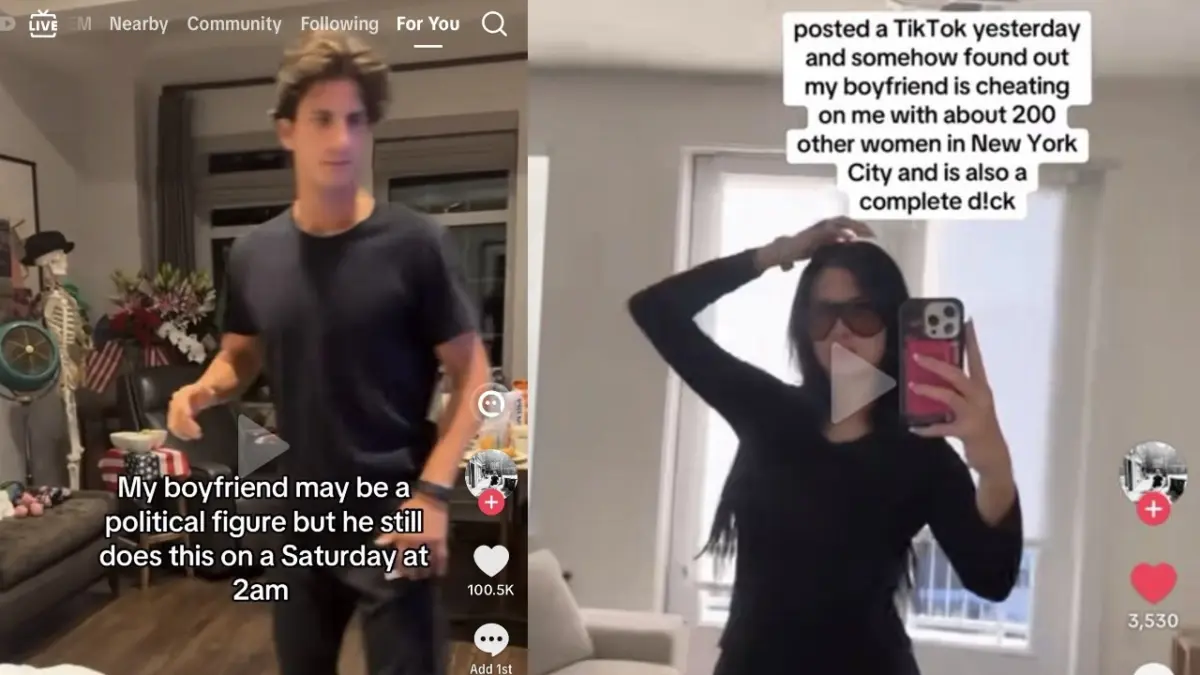
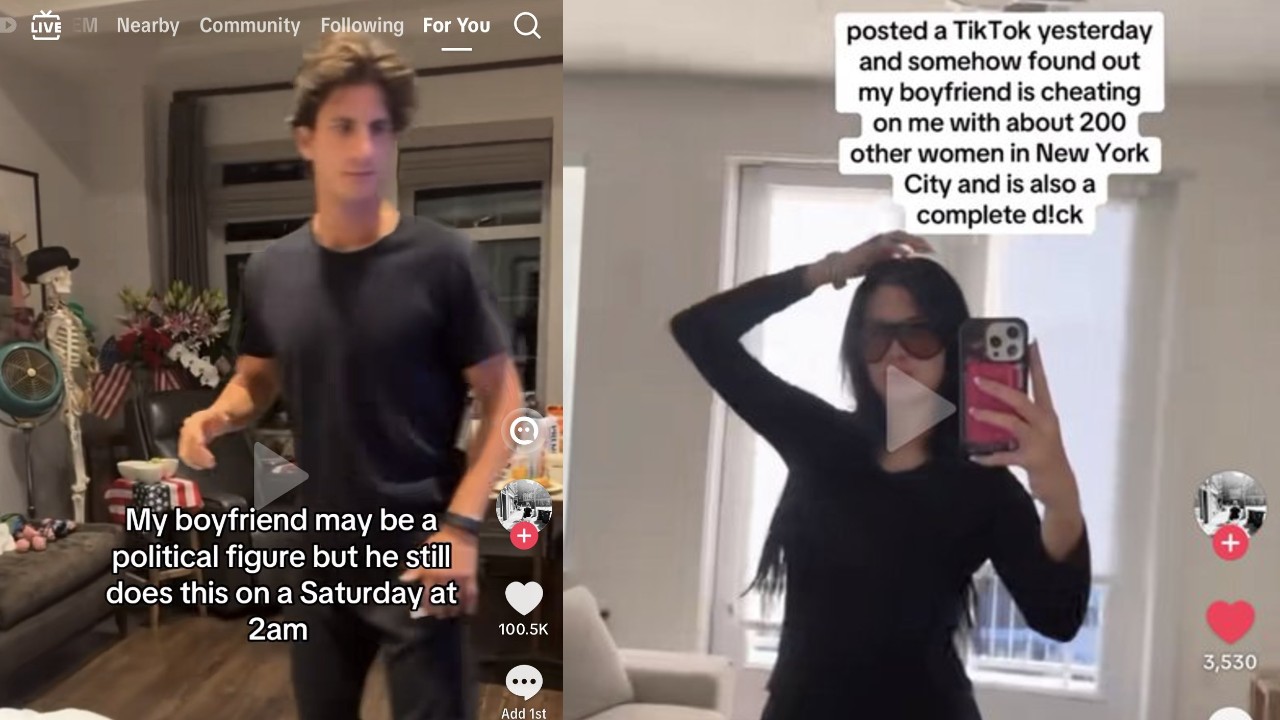
The initial broadcast utilized a recycled piece of media featuring Jack Schlossberg riding a hoverboard—footage originally pulled from Schlossberg’s own historical Instagram stories. Ramirez captioned the video with a seemingly domestic, lighthearted observation: "My boyfriend may be a political figure but he still does this on a Saturday at 2am."
Shortly thereafter, Ramirez posted a secondary component: a mirror selfie paired with a dramatically escalating caption asserting that, through the very act of posting him on TikTok, she had miraculously discovered her supposed partner was "cheating on me with about 200 other women in New York City and is also a complete d!ck."
Sensing the volatility of her creation—or perhaps realizing the hoax had overstepped acceptable boundaries—Ramirez quickly scrubbed her presence from TikTok, deleting her account entirely. However, digital content is rarely erased before it is harvested. Screenshots had already been captured, preserved, and prepared for systemic syndication.
Cross-Platform Migration and Amplification (September 14, 2026)
The transition from a niche TikTok corner to mainstream social media dominance occurred on X. On September 14, 2026, X user @raqisright published dual screenshots of Ramirez’s vanished posts. The post immediately struck a chord with the platform’s algorithm, capturing over 47,000 likes within a 48-hour window.
Simultaneously, the narrative bled into Reddit communities dedicated to metropolitan gossip, notably the /r/NYCinfluencersnark and /r/cooladam subreddits. Within hours, the story transformed from a localized accusation into a universal meme template. Users across multiple platforms began dissecting the absurd logistics of maintaining concurrent clandestine romances with two hundred individuals within the confines of Manhattan and its surrounding boroughs.
The Immediate Pushback and Exposure
As the screenshots racked up tens of thousands of engagements, digital investigators quickly moved to dismantle the narrative. Commenters pointed out glaring chronological errors that rendered the TikToker’s claims physically impossible.
For instance, X user @ArcticCartel dissected the source material, writing: "It isn’t real. That’s an older video of Jack, posted by one of those accounts who pretends they’re dating celebrities. How you’ve all fallen for internet slop on face value is remarkable."
Another user, @Lptyuu, provided a definitive smoking gun by analyzing the background elements of the recycled video: "can confirm its an old video from his insta stories lol also the 2024 presidential debate is on the tv in the background. Still cant believe people fell for that."
Despite these rapid corrections, the narrative had already broken free of factual constraints. The truth was sidelined in favor of the comedic goldmine the hoax provided.
Supporting Context & Metrics: Cultural Resonance and Memetic Anatomy
The longevity of the Jack Schlossberg cheating hoax highlights a fundamental truth of contemporary internet sociology: once a narrative achieves memetic critical mass, objective reality becomes secondary to cultural utility.
The Kennedy Family Trope
The primary engine driving the discourse was not the credibility of Aurelia Ramirez, but rather the deeply embedded cultural mythology surrounding the Kennedy family name. For decades, the private lives, marital indiscretions, and romantic escapades of various Kennedy men have been fixtures of American political folklore, tabloids, and historical retrospectives.
When users encountered the claim that a young male Kennedy was allegedly engaging in systemic infidelity, it did not read as an anomaly; instead, it was processed through a pre-existing cultural lens. This dynamic inspired an avalanche of high-engagement reactions:
- The "Culture" Defense: Users like @prncessdianavar quipped, "When a Kennedy cheats on you, it’s a sign of great respect in their culture," racking up over 36,000 likes. Another user echoed this sentiment, framing it as a proud "family tradition."
- Historical Parallels: Satirical mashups immediately flooded timelines. One viral image featured a calendar comparison juxtaposing January 1961 (the dawn of the Kennedy administration) with September 2026, dryly noting historic continuities in romantic scandals.
- Ghostly Interventions: X user @jaketropolis generated over 8,300 likes with a speculative dialogue imagining the ghost of John F. Kennedy peering over Jack’s shoulder, advising him to open unread Instagram direct messages from "broads."
- Industrial Satire: Adapting the popular "Long Day Factory" meme format, user @EpoLabyrinth posted a satirical illustration of the "Cheated On Factory," pulling in more than 16,000 likes.
Quantifying the Digital Footprint
While exact impressions across all decentralized platforms are difficult to fully aggregate, the metrics from primary catalyst posts illustrate the scale of the viral wave:
- Initial X Screenshot (@raqisright): >47,000 likes within 48 hours.
- Satirical Commentary Posts (e.g., @prncessdianavar, @TwinkTheory): Averaged between 30,000 and 36,000 likes per post.
- Community Notes Engagement: Fact-checking context boxes attached to viral reposts accumulated hundreds of thousands of views, demonstrating a dual track where users simultaneously engaged with the joke while acknowledging the factual debunking.
Official Statements and Institutional Silence
In modern digital ecosystems, minor viral hoaxes involving public personalities frequently elicit absolute silence from the subjects involved. True to form, Jack Schlossberg—known for his eccentric, highly ironic, and unfiltered social media presence—did not issue a formal press release or direct statement addressing the TikTok fabrication.
Media analysts note that engaging with low-tier internet hoaxes often grants them unwarranted legitimacy, transforming a fleeting joke into a multi-day news cycle. By ignoring the Ramirez fabrication, Schlossberg allowed the internet’s rapid-fire cycle to consume, digest, and discard the narrative within days. Representatives for the Schlossberg family declined to comment, treating the incident as standard digital noise rather than a credible reputational threat.
Future Outlook: The New Frontier of Parasocial Hoaxes
The Jack Schlossberg cheating hoax serves as a vital case study for understanding the vulnerabilities of modern information systems. As generative AI, deepfakes, and clout-chasing incentives continue to evolve, the ease with which fabricated narratives can be deployed across social media platforms will only increase.
Several key takeaways emerge from the September 2026 incident:
- The Rise of "Delusional" Parasocial Content: A growing subgenre of social media content involves creators fabricating entirely fictional relationships with public figures, political personalities, and celebrities for shock value or algorithmic growth.
- The Immunity of Memes to Facts: Fact-checking mechanisms—such as X’s Community Notes—are remarkably swift at establishing the truth, yet they routinely fail to halt the spread of entertaining misinformation. Users frequently prioritize humorous engagement over factual accuracy.
- Legacy as Armor and Anchor: Public figures tied to multi-generational political dynasties carry heavy symbolic baggage. Their personal actions are routinely viewed not as isolated incidents, but as extensions of historical narratives written long before they were born.
As we look toward the future of digital discourse, the Schlossberg hoax reminds us that the internet remains a collective theater of the absurd—where a nonexistent relationship with two hundred New York women can materialize out of thin air, entertain millions for a weekend, and vanish just as quickly as it arrived.