In the fast-paced ecosystem of Software-as-a-Service (SaaS), founders and product leaders frequently fall prey to the temptation of reinvention. Driven by a desire to disrupt every facet of their business model, many startups expend immense time and capital attempting to engineer novel pricing mechanics. However, according to industry veterans and foundational insights from platforms like Saastr, this approach is fundamentally flawed.
While product innovation remains the primary engine of competitive advantage and market capture, pricing innovation is frequently a path to friction, customer confusion, and stalled growth. The most successful SaaS companies do not reinvent the wheel when it comes to monetization; instead, they lean into established patterns that buyers already understand, trust, and expect.
At the heart of this strategy is the tiered pricing model—a tried-and-true framework that aligns perceived value with customer willingness to pay. This article explores the mechanics of SaaS pricing psychology, examines why tiered structures remain overwhelmingly effective, and provides an authoritative roadmap for founders seeking to optimize their monetization strategy without alienating their target audience.
Detailed Chronology: The Evolution of SaaS Pricing and Packaging
To understand why modern tiered pricing is so effective, one must trace its evolution from the early days of enterprise software to the agile, cloud-based SaaS landscape of the 2020s.
Phase One: The Perpetual License Era (Pre-2000s)
In the legacy software era, pricing was notoriously opaque. Enterprise buyers purchased perpetual licenses upfront, supplemented by mandatory annual maintenance fees (typically 15% to 20% of the initial license cost). This model demanded massive capital expenditures and shifted nearly all financial risk onto the buyer. Pricing tiers, if they existed, were rigid and negotiated exclusively through enterprise sales cycles involving lengthy procurement processes and custom discounting.
Phase Two: The Birth of Subscription and the Flat-Rate Illusion (Early 2000s)
As cloud computing began to take shape, early SaaS pioneers recognized that lowering the barrier to entry was critical for adoption. Companies experimented with flat-rate subscriptions—charging a single monthly fee for access to the entire application. While this democratized software access, it quickly exposed critical business flaws. Flat-rate pricing left substantial revenue on the table when selling to large enterprises that derived immense value from the platform, while simultaneously pricing out bootstrapped startups and small businesses.
Phase Three: The Rise of Tiered Packaging (2010s to Present)
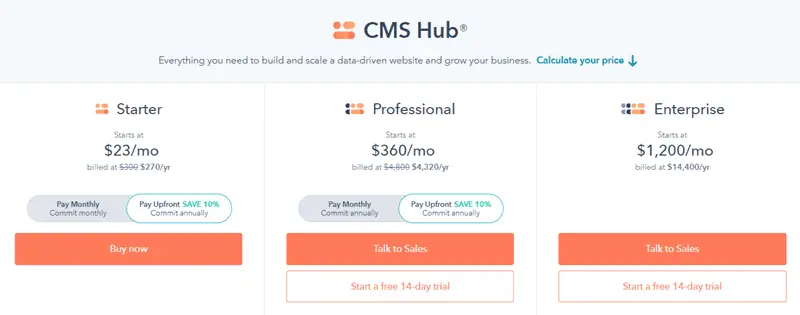
Recognizing the limitations of both extremes, the SaaS industry converged on tiered packaging. Influenced by consumer psychology and microeconomics, companies began segmenting their target markets into distinct cohorts—typically categorized as Starter, Professional, and Enterprise. By gating features, usage limits, and support levels across these tiers, companies unlocked the ability to extract maximum value from diverse customer segments under a single, unified pricing page.
Today, tiered pricing is the undisputed gold standard of SaaS monetization, anchoring consumer expectations and streamlining the sales motion from self-serve acquisition to high-touch enterprise expansion.
Supporting Context & Metrics: The Psychology of the Pricing Page
Why do buyers gravitate toward tiered pricing models, and why do these structures consistently outperform novel, usage-only, or hyper-customized alternatives? The answer lies in cognitive load, behavioral economics, and risk mitigation.
1. Reducing Cognitive Friction
Human beings are wired to seek cognitive shortcuts. When a potential customer lands on a SaaS pricing page, they are evaluating whether the software solves their problem and whether it fits within their budgetary constraints.
The Paralysis of Choice: If presented with an infinite slider or an overly complex menu of a la carte add-ons, decision fatigue sets in.
The Power of Three: Tiered pricing—typically structured as a three-tier model—simplifies decision-making. It offers a low-risk entry point (the anchor tier), a high-value recommended option (the sweet spot), and an expansive enterprise tier for heavy users. Behavioral economists note that buyers naturally gravitate toward the middle option, viewing it as the safest and most balanced choice.
2. Aligning with Established Buyer Mental Models
Buyers do not want to spend mental energy learning a new pricing philosophy. When a B2B buyer encounters standard tiers (e.g., Basic, Pro, Enterprise), their brain instantly maps those categories to their own organizational structure. They immediately know whether they belong in the "team" bucket or the "company-wide" bucket. By adopting patterns that buyers are already comfortable with, SaaS companies eliminate onboarding friction.
3. Monetizing Value Metrics Effectively
Effective pricing tiers are built around underlying value metrics—such as active users, data volume, API calls, or specific feature sets. When structured correctly, tiers ensure that as a customer derives more value from the platform, their spend scales naturally alongside their business success. This transforms the vendor-client relationship from an adversarial negotiation into a symbiotic partnership.
Key Takeaway: Innovate relentlessly on the product experience, the user interface, and the underlying utility of your software. But when it comes to the checkout page, defer to familiarity. Let your product be the surprise; let your pricing be the predictable constant.
Expert Perspectives and Industry Insights
Venture capitalists and seasoned SaaS operators frequently emphasize the danger of over-engineering monetization. Industry leaders point out that startups often spend months debating pricing matrices when their core issue is actually product-market fit or poor value communication.
According to prominent advisory networks like Saastr, the consensus among successful founders is clear:
Simplicity Wins: A clear, easily digestible pricing page converts at significantly higher rates than an intricate, mathematically optimized pricing calculator.
Avoid Premature Optimization: Early-stage companies often try to extract every last dollar from their first few customers by creating complex tier boundaries. In reality, speed to market and rapid feedback loops matter infinitely more than squeezing an extra 5% margin out of initial contracts.
The Danger of Custom Pricing: While custom enterprise quotes are necessary for large-scale deployments, forcing self-serve or mid-market buyers through custom sales conversations destroys conversion velocity. Tiers allow buyers to self-qualify and purchase instantly.
Future Outlook: The Next Frontier of SaaS Monetization
As the SaaS landscape matures, how will tiered pricing adapt to emerging technological paradigms, such as artificial intelligence and consumption-based components?
The Hybrid Tiered-Consumption Model
While traditional SaaS relied strictly on per-seat pricing, the proliferation of AI agents, automated workflows, and compute-heavy features is pushing companies toward hybrid models. Future pricing tiers will likely combine a predictable base subscription (guaranteeing access and core features) with consumption-based add-ons (charging for AI token generation, automated tasks, or data processing volume).
However, industry analysts stress that even within these hybrid models, the overarching presentation must remain tiered. Customers will accept paying for consumption within a familiar framework, but entirely opaque or unpredictable billing structures will continue to drive churn.
Conclusion
The enduring effectiveness of SaaS pricing tiers boils down to a fundamental truth of human psychology: trust and simplicity drive conversion. While product innovation remains the ultimate differentiator in a crowded software market, packaging that innovation into comfortable, time-tested pricing patterns is what ultimately unlocks scalable, predictable revenue growth. For founders and product leaders, the directive is clear—build a revolutionary product, but keep your pricing boringly brilliant.