Executive Overview
For decades, the foundational playbook for early-stage tech companies was largely static: raise initial capital, define core functions, and rapidly recruit human talent to fill operational gaps. The early team—typically the first 10 to 20 hires—dictated a company’s execution velocity, organizational culture, and long-term trajectory. Today, that classical venture-backed formula is undergoing its most profound structural disruption since the advent of cloud computing.
As autonomous AI agents evolve from task-bound co-pilots into multi-step operational entities capable of executing complex software engineering, go-to-market (GTM) strategy, customer support, and market research, founders face a fundamental strategic question before opening any job requisition: Is this capability best delivered by a human employee, or should it be delegated to an autonomous AI agent?
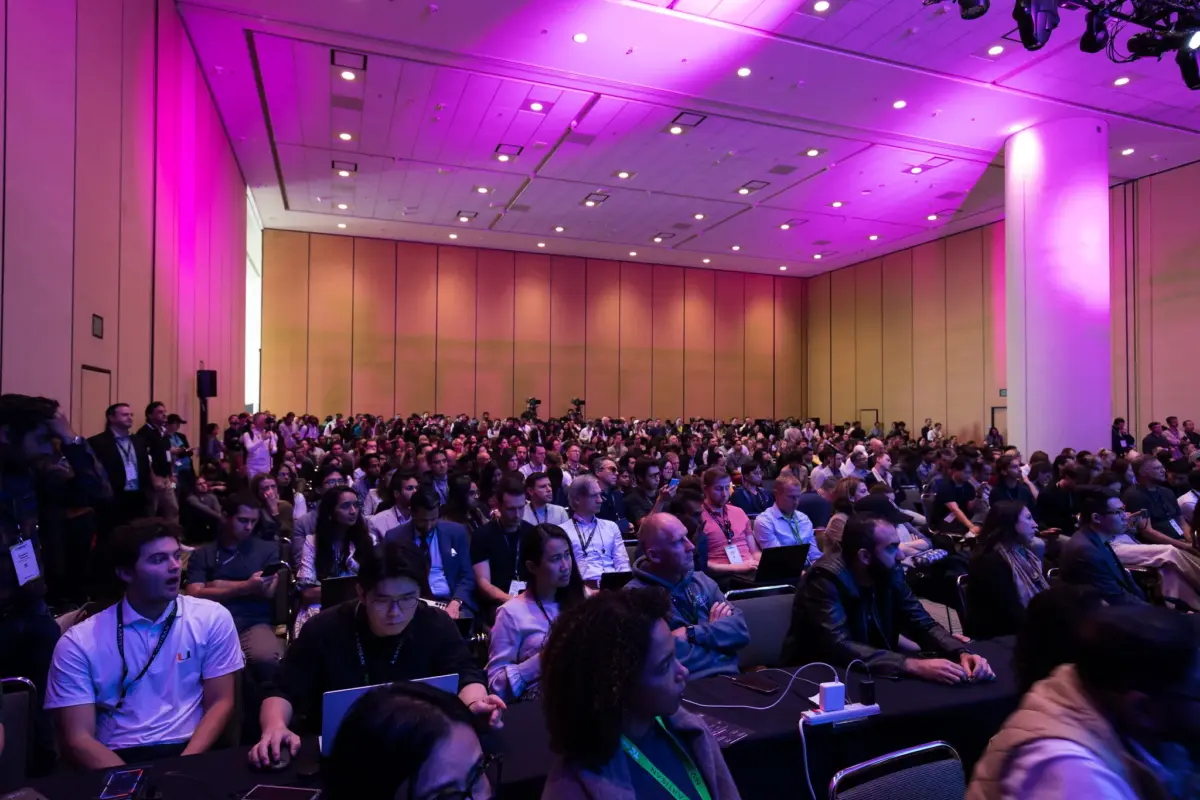
This fundamental shift in early-stage organizational design forms the centerpiece of an upcoming feature session at TechCrunch Disrupt 2026 titled "Hiring When AI Is a Co-Founder." Taking place at San Francisco’s Moscone West from October 13–15, 2026, on the Builders Stage, the discussion brings together prominent figures from enterprise SaaS, venture capital, and talent platforms: Josh Reeves, CEO and co-founder of Gusto; Michelle Johnson, Senior Vice President at Insight Partners; and John Koelliker, CEO and co-founder of Leland.
Together, these industry leaders will dissect the practical, financial, and cultural realities of building hybrid human-AI teams, challenging traditional metrics around headcount scaling, labor efficiency, and corporate governance.
Detailed Chronology: The Evolution of Startup Workforce Architecture
To understand the magnitude of this shift, one must examine the rapid acceleration of startup operational models over the past decade. The venture ecosystem has transitioned through three distinct operational epochs, culminating in the current agentic paradigm.
+-----------------------------------------------------------------------------------+
|                            STARTUP OPERATIONAL EPOCHS                             |
+-----------------------------------------------------------------------------------+
|  1. The Expansion Era (2010–2021)                                                 |
|     • High headcount equaled high valuation.                                      |
|     • Linear growth model: Revenue scaled alongside human headcount.              |
|                                                                                   |
|  2. The Copilot Integration Era (2022–2024)                                       |
|     • Generative AI tools deployed as human augmentations (e.g., coding assistance|
|       drafting sales emails, basic task assistance).                              |
|     • Human workers maintained end-to-end task ownership.                         |
|                                                                                   |
|  3. The Autonomous Agentic Era (2025–Present & Beyond)                            |
|     • AI agents assume multi-step workflow execution and cross-functional roles.  |
|     • Non-linear growth: Startups achieve massive ARR with ultra-lean teams.      |
|     • Shift from "Who do we hire next?" to "What system executes this task?"     |
+-----------------------------------------------------------------------------------+
1. The Expansion Era (2010–2021)
During the era of low interest rates and hyper-growth venture investments, headcount served as a primary proxy for startup valuation and operational health. Early-stage founders routinely measured progress by the speed at which they scaled their human organizations. Roles were specialized early: a seed-stage business would hire dedicated software engineers, sales development representatives (SDRs), customer success specialists, and operational managers within its first 18 months.
2. The Copilot Integration Era (2022–2024)
The commercialization of large language models (LLMs) gave rise to the "copilot" framework. Generative AI tools were introduced to assist human workers—speeding up code generation, drafting sales copy, or summarizing customer support tickets. However, ownership remained entirely human. The employee directed the tool, reviewed the output, and bore full operational responsibility for execution.

3. The Autonomous Agentic Era (2025–Present)
The market is now entering a structural transition where AI systems are no longer passive instruments. Powered by advanced reasoning engines, enterprise tool integration, and context-aware agentic architectures, AI software can autonomously execute end-to-end workflows. An agent can independently pull lead lists, craft individualized outreach sequences, process incoming client requests, update CRM data, and write regression tests for new code deployments.
This timeline leads directly to the gathering at TechCrunch Disrupt 2026 this October, where over 10,000 founders, investors, and technology decision-makers will converge to establish new standards for building, scaling, and managing startups where software functions alongside human talent.
Supporting Context & Metrics: The Economics of Lean Scaling
The financial drivers behind the agentic transformation are rooted in capital efficiency and revenue-per-employee metrics. Historically, early-stage technology companies operated on a linear relationship between ARR (Annual Recurring Revenue) and human headcount. Scaling to $10 million in ARR typically required dozens, if not hundreds, of full-time employees across engineering, product, sales, marketing, and GTM operations.
However, modern capital environments and macroeconomic realities have drastically elevated the bar for capital efficiency. Investors increasingly evaluate startups on hyper-lean metrics:
- ARR Per Employee Compression: Where traditional Series A startups aimed for $100,000 to $150,000 in ARR per employee, AI-native enterprises are reaching $500,000 to $1,000,000+ in ARR per team member by deploying autonomous agents across back-office, sales outreach, and code maintenance workflows.
- Customer Support ticket resolution: Early customer support operations, which previously required dedicated tier-1 support agents, now rely on context-aware agents capable of resolving up to 70% of routine technical queries without human intervention, escalating only high-friction or edge-case disputes to human operators.
- Engineering Velocity: Agentic code assistants and automated QA agents perform continuous integration, bug hunting, and routine feature implementation, allowing small engineering teams (3–5 developers) to maintain codebases that previously required 20+ software engineers.
+-----------------------------------------------------------------------------------+
|               HISTORICAL VS. AI-NATIVE EARLY-STAGE METRICS (SERIES A)             |
+-----------------------------------------------------------------------------------+
| Metric                        | Traditional Model       | AI-Native Agentic Model |
+-------------------------------+-------------------------+-------------------------+
| Avg. Headcount at $10M ARR    | 60 – 100 Employees      | 10 – 20 Employees       |
| ARR Per Employee              | $100,000 – $150,000     | $500,000 – $1,000,000+  |
| Tier-1 Support Automation     | 10% – 20% (Basic bots)  | 60% – 80% (Autonomous)  |
| Codebase Maintenance Efficiency| High human overhead    | Automated QA & triage   |
+-------------------------------+-------------------------+-------------------------+
Data from platforms like Gusto, which processes payroll, benefits, and HR data for more than 500,000 small and mid-sized businesses, offers macro-level visibility into these workforce adjustments. Gusto’s operational insights reveal a clear shift: small businesses are reallocating capital away from traditional administrative support and baseline operational hiring, directing capital instead toward technical infrastructure, specialized talent, and high-leverage growth drivers.
Similarly, historical data from breakout growth companies highlights this changing trajectory. When scaling Flock Safety, early sales and revenue operations leadership helped drive the company’s expansion from under $1 million to $90 million in ARR—a feat historically requiring massive, expanding sales floors. In today’s landscape, enterprise sales organizations are achieving comparable growth trajectories with significantly leaner revenue organizations by utilizing AI agents for prospect research, automated data enrichment, and preliminary meeting prep.
Official Statements & Expert Perspectives
The upcoming session at TechCrunch Disrupt 2026 brings together three complementary viewpoints across HR infrastructure, venture capital, and career development.

1. The Human Resources & SMB Operational Viewpoint
Josh Reeves, CEO and Co-Founder of Gusto:
"Every small business and early-stage founder reaches a point where capital constraints clash with growth ambitions. What we are seeing across the business landscape is a complete re-evaluation of what constitutes a ‘role.’ The administrative and operational baseline of starting a company is changing. When routine compliance, payroll setup, benefits management, and baseline workflows can be automated or handled by intelligent platforms, founders can spend their limited human capital on vision, culture, and high-impact innovation."
Reeves emphasizes that while AI agents streamline execution, human capital infrastructure—compensation, organizational design, legal compliance, and employee equity—becomes more sensitive, requiring precise strategy from day one.
2. The Venture Capital & Go-To-Market Execution Viewpoint
Michelle Johnson, Senior Vice President at Insight Partners:
"In scaling go-to-market organizations, the goal has always been to optimize revenue per rep and reduce customer acquisition costs. With AI agents capable of pre-qualifying leads, summarizing pipeline interactions, and executing preliminary research, the traditional sales funnel is compressed. The fundamental profile of a early sales hire is changing: we no longer just look for high-volume execution; we look for strategic judgment, high emotional intelligence, domain authority, and the ability to manage AI-driven revenue engines."
Johnson’s work across North American and European growth-stage tech companies reinforces that venture firms are adjusting their diligence frameworks. Founders who build lean, agent-augmented teams are demonstrating superior capital management and faster paths to profitability.
3. The Talent Development & Career Architecture Viewpoint
John Koelliker, CEO and Co-Founder of Leland:

"The career development model is being completely rewritten. Historically, junior employees entered startups to perform execution-heavy, entry-level tasks—data analysis, basic coding, cold outreach—and gradually learned strategic thinking along the way. If AI agents take over those entry-level operational tasks from day one, we must ask: How do we train the next generation of leaders? Early employees must now operate as managers of systems and agents almost immediately, elevating the demand for high-level problem-solving, critical evaluation, and cross-functional judgment."
Koelliker, drawing on his experience across LinkedIn, Curated, and Uber, stresses that early-stage talent platforms must help professionals develop skills that complement autonomous systems rather than compete against them.
Future Outlook: Re-Architecting the Startup Org Chart
As AI agents assume operational responsibilities historically held by early team members, founders face a complex landscape of legal, cultural, and governance challenges. Building a company with AI as a functional co-founder demands a refined set of management principles.
+-----------------------------------------------------------------------------------+
|               THE DUAL-ENGINE STARTUP ORGANIZATIONAL STRUCTURE                   |
+-----------------------------------------------------------------------------------+
|                                                                                   |
|                           FOUNDERS & LEADERSHIP TEAM                              |
|                   (Strategic Vision, Capital Allocation, Values)                  |
|                                        |                                          |
|                  +---------------------+---------------------+                    |
|                  |                                           |                    |
|                  v                                           v                    |
|        HUMAN CAPITAL ENGINE                        AI AGENTIC ENGINE              |
|  • High-context decision making            • Automated software engineering       |
|  • High-touch client relationships         • Prospecting, lead enrichment & SDR   |
|  • Creative direction & strategy           • Tier-1 support & automated triage    |
|  • Team mentorship & company culture       • Continuous compliance monitoring    |
|                                                                                   |
|                  +---------------------+---------------------+                    |
|                                        |                                          |
|                                        v                                          |
|                              SYSTEM OVERSEERS                             |
|              (Human employees validating accuracy, alignment & risk)              |
+-----------------------------------------------------------------------------------+
1. Redefining Accountability and Governance
When an autonomous agent executes a task incorrectly—whether writing buggy code that breaches security protocols, generating inaccurate legal language, or committing a GTM error—the ultimate responsibility remains entirely human. Startup governance structures must clearly assign human oversight for every deployed agent. The role of the human employee transitions from primary executor to system director and quality validator.
2. The Human Core: Judgment, Empathy, and Culture
Certain dimensions of early-stage company building cannot be offloaded to algorithmic architectures:
- Customer Empathy: Uncovering subtle, unarticulated customer pain points requires deep human interaction, emotional intelligence, and qualitative trust-building.
- Strategic Pivot Execution: When a startup’s underlying assumptions fail, deciding to pivot product strategy demands raw human intuition, market insight, and risk-taking.
- Organizational Culture: Building cohesive, resilient teams capable of navigating early-stage uncertainty requires shared vision, moral alignment, and interpersonal trust—qualities unique to human leadership.
3. Strategic Considerations for Founders
As the industry prepares for the panels and working sessions at TechCrunch Disrupt 2026, early-stage founders should adopt three tactical frameworks when designing their initial organizations:
- Conduct Capability Audits Before Hiring: Prior to opening a new job role, analyze the workflow to isolate deterministic tasks from subjective judgments. Assign deterministic, high-volume workflows to software and agentic stacks; reserve human headcount for roles requiring high contextual reasoning and creative strategy.
- Hire for "System Oversight" Capabilities: Evaluate early job candidates not merely on their ability to perform manual tasks, but on their ability to configure, prompt, manage, and audit AI workflows effectively.
- Establish Clear Fail-Safe Mechanisms: Build strict review checkpoints and operational guardrails around agentic actions, particularly those involving financial transactions, live customer communications, and core code repositories.
Summary
The rise of AI agents as functional team members does not render human talent obsolete; rather, it elevates the importance of distinctly human qualities. The first 10 members of a startup will no longer be defined solely by their capacity to process tasks, but by their ability to lead, judge, innovate, and direct both human and synthetic capabilities. Early-stage founders who master this dynamic will scale faster, conserve capital, and lead the next generation of tech enterprises.