Executive Overview
In a significant regulatory about-face, the Federal Communications Commission (FCC) has announced that it will hold a pivotal vote next month to reevaluate and potentially dismantle its decades-long, hardline stance against the deployment of signal-jamming technology within correctional facilities. Scheduled for the agency’s open meeting on November 19, the vote will determine whether state and local prisons and jails should be granted the legal authority to employ cellular jamming devices to combat the pervasive and dangerous issue of contraband mobile phones.
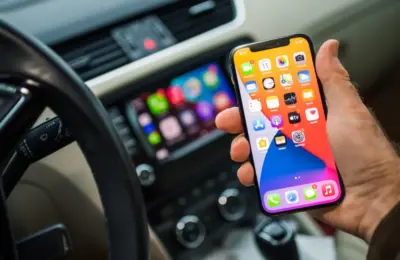
For generations, the unauthorized introduction of smartphones and basic cellular devices into correctional institutions has represented one of the most formidable challenges facing modern law enforcement and corrections officials. Inmates leveraging illicit devices have been documented orchestrating criminal enterprises from behind bars, coordinating violent attacks, intimidating witnesses, and managing sophisticated drug-trafficking rings. Despite these acute security threats, the FCC has historically maintained a strict prohibition against non-federal entities using signal-blocking technology, citing severe risks to public safety communications, emergency services, and the integrity of commercial wireless networks.
The forthcoming regulatory shift proposes a measured opt-in framework. Under the contemplated rules, state and local incarceration facilities would not be mandated to install jammers, but those choosing to do so would be provided a formal pathway for deployment. Furthermore, the policy change would establish formal regulatory avenues for federal correctional institutions to utilize similar technology—expanding upon limited, highly controlled tests that began under the Federal Bureau of Prisons years ago.
However, this potential policy reversal is not without its controversies. Telecommunications giants, public safety advocates, and technical experts have long warned that poorly managed cellular jammers can spill over facility boundaries, inadvertently cutting off emergency services, blocking nearby residents’ communications, and creating vulnerabilities that malicious actors could exploit. Consequently, if the new rules are adopted, correctional facilities will face stringent regulatory hurdles, including the burden of proof to demonstrate that their chosen jamming infrastructure will not cause harmful interference outside of strictly designated geographic perimeters.
Detailed Chronology
To understand the weight of the FCC’s upcoming November vote, one must examine the historical friction between telecommunications regulation and correctional facility security—a tension that has spanned decades.
The Origins of the Communications Act of 1934
The foundational barrier to prison cell-jamming technology traces back to Section 333 of the Communications Act of 1934, as amended. This statute broadly prohibits anyone—with very few exceptions granted to specific federal agencies—from willfully or maliciously interfering with the radio communications of any station licensed or authorized by the federal government or operated under the laws of the United States.
For the better part of a century, this statute was interpreted by the FCC as an absolute bar against signal jammers. The rationale was clear: the airwaves are a finite, publicly managed resource vital to national security, aviation, emergency medical services, and everyday commerce. Allowing localized entities to unilaterally block radio frequencies was viewed as a slippery slope toward widespread radio chaos.
The Rise of the Contraband Cellphone Crisis
As cellular technology transitioned from bulky analog bricks to ubiquitous, pocket-sized smartphones with internet capabilities in the late 2000s and 2010s, the nature of prison contraband shifted dramatically. While traditional contraband focused on weapons, drugs, and cash, the smartphone became the ultimate underground commodity inside correctional facilities.
Inmates utilized illicit devices to bypass monitored institutional landlines, communicating via encrypted messaging applications, managing external bank accounts, and directing criminal syndicates on the outside. State departments of corrections across the country launched aggressive counter-measures, deploying contraband interdiction systems, mobile device detection k-9 units, and body scanners. Yet, the supply chain remained resilient, fueled by corrupt staff, drone deliveries, and perimeter drops.
Correctional administrators increasingly turned their attention to signal-jamming technology—which physically blocks cellular transmissions within a specified radius—as the only foolproof method to neutralize the threat. Yet, every attempt by state legislatures or corrections departments to pilot jammers was swiftly blocked by the FCC under the authority of the 1934 Communications Act.
The Federal Bureau of Prisons and "Micro-Jamming"
Recognizing the escalating national security threat posed by inmate-run criminal syndicates, pressure mounted on the federal government to explore exceptions to the blanket ban. In 2018, the Federal Bureau of Prisons (BOP) initiated controlled tests of "micro-jamming" technology within select federal facilities.
Unlike broad-spectrum legacy jammers that could potentially silence wide swaths of commercial cellular traffic, micro-jammers were designed to operate on a highly localized, targeted scale—focusing strictly on unauthorized devices while leaving authorized staff communications untouched. While these federal trials offered a glimmer of hope for state and local wardens, federal facilities operated under a different legal umbrella, leaving state and local institutions legally barred from utilizing comparable technology.
The Path to the November 19 Vote
The announcement made today represents the culmination of years of lobbying by state corrections directors, law enforcement associations, and lawmakers who argued that the federal government was prioritizing commercial wireless integrity over the lives of correctional officers and the public. By scheduling an official vote for November 19, FCC leadership has signaled a willingness to balance national telecommunications policy with the harsh realities of 21st-century prison management.
Notably, this shift occurs alongside other recent adjustments in the agency’s approach to correctional oversight. In July 2025, the FCC made headlines by delaying the implementation of long-awaited caps on the exorbitant rates charged to families for prison telephone calls—a decision that drew fierce debate regarding the commercial exploitation of incarcerated individuals and their loved ones. The convergence of these policies underscores a broader period of administrative reevaluation regarding how correctional telecommunications are regulated in the United States.
Supporting Context & Metrics
The debate surrounding prison cell phone jamming is underpinned by striking statistics and complex engineering challenges that illustrate why the FCC has maintained its cautious posture for so long.
The Scale of the Contraband Epidemic
According to data compiled by various state departments of corrections and federal oversight bodies, tens of thousands of illicit mobile devices are confiscated annually across American prisons. However, corrections officials frequently note that for every contraband phone seized, multiple others remain hidden and operational.
- The High-Profile Case Studies: Law enforcement agencies have repeatedly exposed high-profile criminal conspiracies coordinated entirely via contraband phones. In several notorious instances, incarcerated gang leaders ordered murders, orchestrated prison riots, and directed multi-state drug smuggling operations using smuggled smartphones.
- The Economic Impact: The illicit trade of contraband cell phones commands staggering prices inside correctional facilities, where a single smartphone can sell for thousands of dollars. This lucrative black market incentivizes corruption and introduces severe safety hazards for correctional staff.
The Technical Dilemma: Interference vs. Security
From an engineering perspective, deploying a cell jammer is vastly different from installing a physical fence. Cellular signals operate on radio frequency (RF) spectrums that do not respect institutional property lines.
- Spillover Effects: A poorly calibrated or overly aggressive jamming device installed in a downtown urban jail can easily bleed its signal onto public streets, highways, or neighboring residential and commercial properties.
- Public Safety Risks: If a jammer accidentally blocks legitimate emergency calls—such as a nearby citizen dialing 911—the consequences can be catastrophic. Furthermore, interference with first responder radio networks or commercial emergency alert systems presents an unacceptable operational hazard.
- The Burden of Compliance: To mitigate these risks, the proposed FCC rules will require facilities to implement rigorous technical safeguards. Correctional institutions will bear the legal and financial responsibility of proving—via extensive pre-installation testing and ongoing monitoring—that their jamming solutions do not cause harmful interference outside designated geographic boundaries.
Official Statements
The impending FCC vote has drawn intense reactions from stakeholders across the public safety, correctional, and telecommunications sectors.
In its official bulletin released today, the agency emphasized the protective intent behind the proposed framework while acknowledging the stringent technical parameters required to safeguard public communications:
"If the new rules are adopted, correctional facilities would need to meet some standards, including proving that the jamming solution does not cause harmful interference outside of the designated geographic areas."
State and local corrections officials have long voiced profound frustration over federal regulatory roadblocks. Speaking on background, representatives from several state departments of corrections hailed the announcement as a long-overdue acknowledgment of the realities on the ground. For years, wardens have argued that the federal government’s refusal to permit jamming forced them to fight a high-tech war with one hand tied behind their backs.
Conversely, representatives from the wireless telecommunications industry and consumer advocacy groups have historically approached the subject with deep skepticism. Major wireless carriers have consistently expressed concern over network degradation, customer service disruptions, and the potential for unauthorized third-party interference with commercial infrastructure. While the industry has not yet released its comprehensive response to the newly structured opt-in proposal, historical precedent suggests that telecommunications stakeholders will lobby heavily for ironclad technical guarantees, mandatory shutdown mechanisms in the event of failure, and strict liability frameworks for institutions whose systems malfunction.
Future Outlook
As the November 19 open meeting approaches, the national conversation surrounding prison contraband management stands at a historic crossroads. If the FCC’s proposed rules are officially adopted, the regulatory landscape for state and local correctional facilities will undergo a radical transformation.
Immediate Implementation Challenges
Should the vote pass, state departments of corrections will not immediately flip a switch to turn on blanket jamming across all facilities. The financial and logistical hurdles are substantial:
- Capital Expenditure: Acquiring, testing, and maintaining advanced, targeted micro-jamming infrastructure requires significant budgetary allocations from state legislatures that are already strapped for cash.
- Rigorous Testing Phases: Facilities will be forced to undergo extensive trial periods to satisfy the FCC’s strict "no harmful interference" mandate. Engineering firms specializing in specialized radio-frequency containment will likely experience a surge in demand as state prisons audit their perimeters.
- Legal and Operational Oversight: Correctional agencies will need to establish specialized technical teams to monitor jamming operations in real-time, ensuring that localized containment failsafes function without interruption.
Long-Term Implications for Correctional Security
Over the long term, the successful deployment of legal, targeted cellular jammers could fundamentally alter the power dynamics within the American prison system. By severing the digital lifeline that enables incarcerated individuals to operate outside criminal syndicates, law enforcement hopes to drastically reduce institutional violence, curb insider corruption, and restore a greater measure of safety to correctional officers who face unprecedented daily risks.
At the same time, the broader regulatory ecosystem will be closely monitoring whether state facilities can operate this technology without triggering public safety failures in surrounding communities. If the implementation proves successful and interference-free, it could pave the way for an even broader expansion of advanced signal-management tools in correctional facilities nationwide. Conversely, any technical missteps or high-profile interference incidents following the November vote would undoubtedly re-ignite fierce regulatory scrutiny and threaten the hard-won compromise between federal communications oversight and state correctional necessity.