Executive Overview
The foldable smartphone landscape is undergoing a tectonic shift. For years, the category was pioneered and largely dominated by Android heavyweights such as Samsung and Huawei, which experimented with flexible displays, hinges, and book-style multitasking form factors. While these early entries cultivated a dedicated enthusiast base, foldable devices remained a niche segment within the broader global smartphone market.
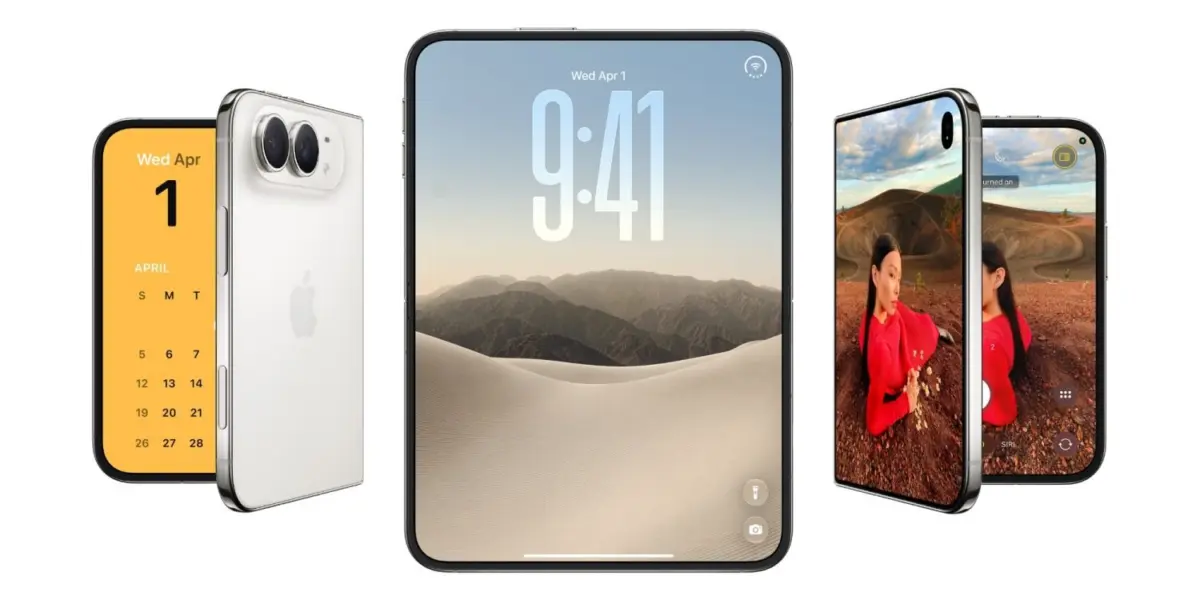
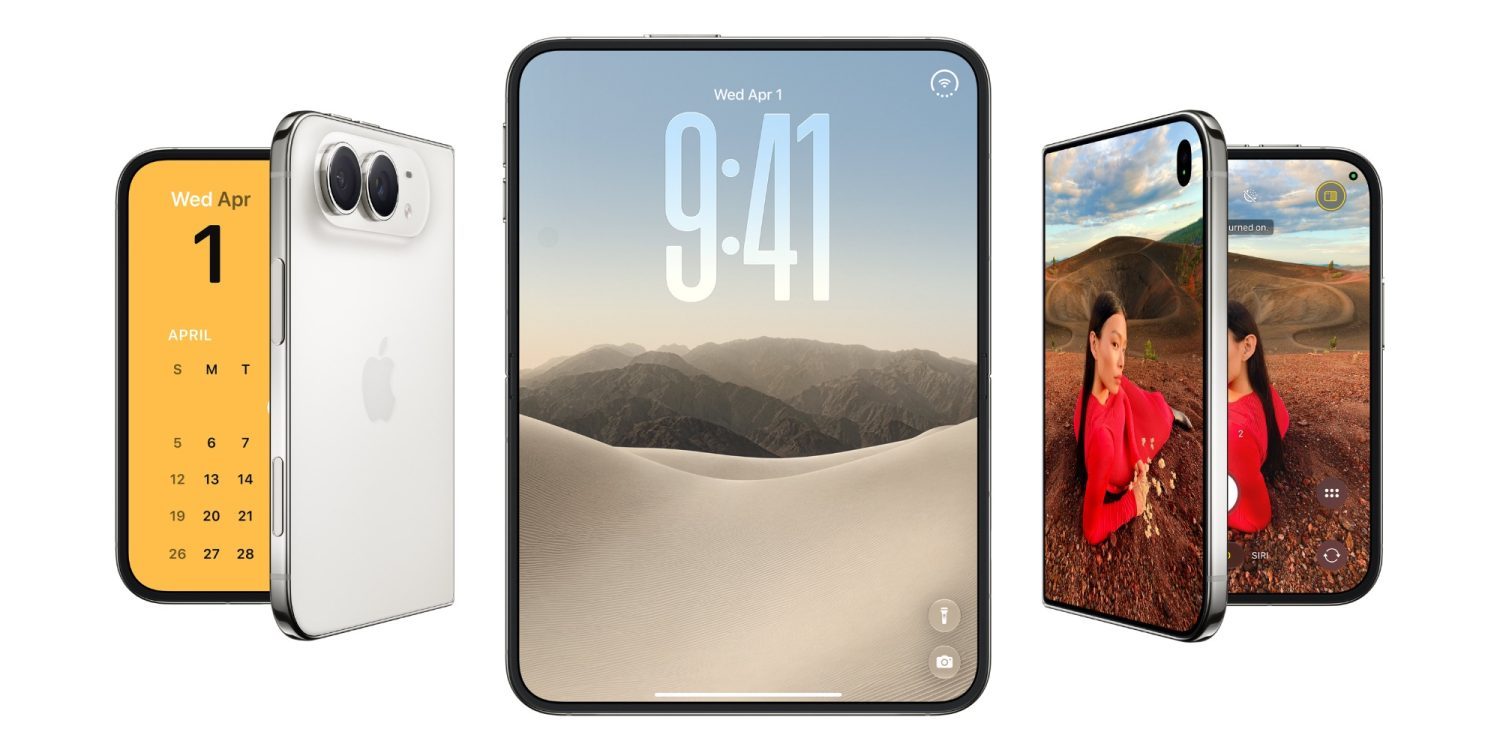
That narrative changed fundamentally with the arrival of Apple’s long-anticipated entry into the foldable space: the iPhone Duo.
According to newly released market intelligence data from TrendForce, robust initial consumer demand and strong early adoption figures out of the gate position Apple to capture nearly 30% of the global foldable smartphone market by 2027. This aggressive trajectory highlights not only the immense pull of the Apple ecosystem, but also a broader industry transition. Competition in the foldable sector is rapidly shifting away from novelty hardware form factors toward software integration, multitasking efficiency, and cohesive developer ecosystems.
This in-depth report examines the timeline of Apple’s entry into the foldable market, analyzes critical shipment metrics and market share projections, explores the distinct competitive advantages that are driving Apple’s success, and forecasts what this means for incumbent market leaders like Samsung and Huawei.
Detailed Chronology: From Rumor to Reality
To understand the magnitude of Apple’s market penetration, it is essential to retrace the timeline of the iPhone Duo’s launch and the immediate industry response.
September 2026: The Announcement and Initial Forecasts
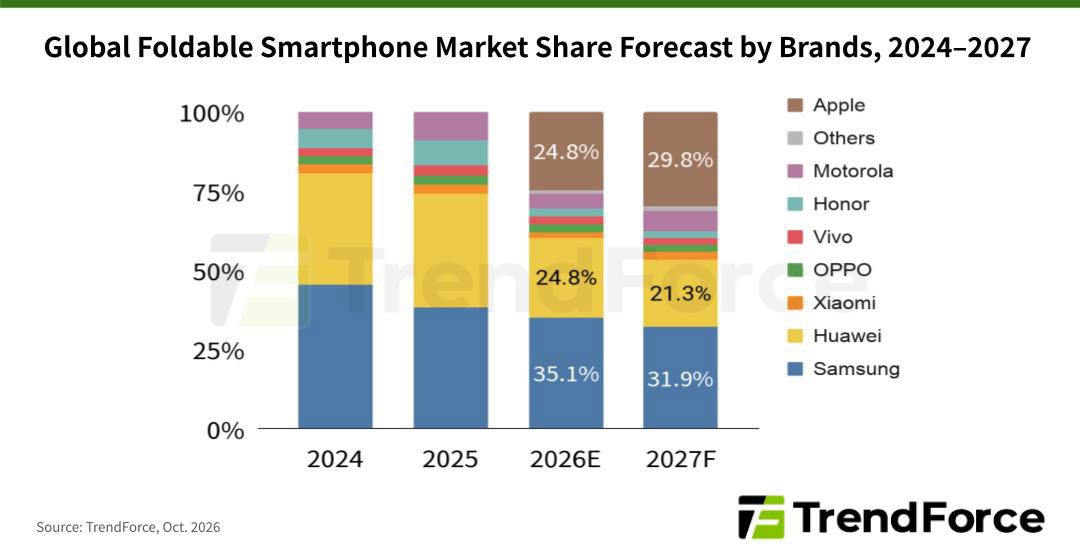
Just one day after Apple officially unveiled the iPhone Duo to the public last month, research firm TrendForce published its initial industry outlook. At the time, analysts predicted that Apple would comfortably ship approximately 5 million units of its maiden foldable device by the close of 2026, commanding an impressive 24.8% market share right out of the starting blocks.
Remarkably, this surge in Apple-driven momentum was projected to occur during a period of otherwise stagnant or declining growth for rival foldable manufacturers. TrendForce’s initial modeling indicated that the broader foldable smartphone market would grow by a meager 0.5% in 2026, hampered by a year-over-year contraction of more than 20% across competing Android brands. Apple’s entry acted as an immediate market stabilizer and catalyst, proving that consumer hesitation was less about the concept of foldable displays and more about the execution, ecosystem reliability, and software optimization.
October 2026: Post-Launch Reality and Upgraded Projections
Fast forward nearly a week after the iPhone Duo officially hit retail shelves and began arriving in the hands of consumers. With early sales figures, supply chain tracking, and consumer reception data now accessible, TrendForce issued an updated, comprehensive market report.
Reiterating and strengthening its previous forecasts, the research firm revised its 2027 outlook upward. TrendForce now projects that Apple will capture an astonishing 29.8% of the global foldable smartphone market by the end of 2027, solidifying its position as an instant powerhouse in a category that Android manufacturers spent nearly half a decade cultivating.
Supporting Context & Market Metrics
To fully appreciate Apple’s upward trajectory, one must examine the macroeconomic numbers governing the foldable sector as forecasted by TrendForce through 2027.
Global Foldable Shipment Projections
- 2026 Market Dynamics: Driven largely by the launch window of the iPhone Duo, overall foldable shipments are stabilizing despite a contraction in Android-exclusive foldable sales (which fell over 20% year-over-year). Apple is expected to account for 5 million units within this initial phase.
- 2027 Growth Surge: The overall foldable market is projected to reach 23.5 million total shipments in 2027, representing a robust 16.3% year-over-year increase.
- The Apple Catalyst: TrendForce attributes this broader market expansion directly to Apple’s market entry. By validating the form factor, Apple is driving accelerated advancements in display durability, hinge engineering, and device-level artificial intelligence (AI) use cases that collectively stimulate mainstream consumer demand.
Competitive Landscape Shift (2026 vs. 2027)
The influx of the iPhone Duo is actively redrawing the competitive lines among the top three foldable vendors:
- Samsung: Long-standing market leader Samsung is expected to see its dominant market share contract. While holding approximately 35.1% of the market in 2026, Samsung’s share is projected to slide to 31.9% by 2027 as consumers diversify their choices and explore Apple’s alternative hardware.
- Apple: Rising meteorically from its 2026 introduction, Apple is projected to capture 29.8% of the market in 2027, securing a formidable second-place position globally within just its second year in the category.
- Huawei: Facing increased pressure on multiple fronts, Huawei’s market share is anticipated to drop from 24.8% in 2026 to 21.3% in 2027, as the competitive squeeze from both Samsung and Apple impacts its regional and international footprint.
Official Industry Analysis & Expert Insights
What is the secret behind Apple’s rapid ascent in a complex product category where many competitors struggled for years to find mainstream traction? According to market analysts and industry reports, the answer lies in holistic vertical integration.
TrendForce highlighted Apple’s core competitive moat in its latest briefing:
"Apple’s greatest advantage lies in its ability to integrate chips, operating systems, and its developer ecosystem. As app compatibility and hardware reliability improve, the Duo is expected to further expand the practical value of foldable displays, helping shift competition in the foldable smartphone market from form-factor innovation toward multitasking efficiency."
The Hardware-Software Synergy
Unlike many Android OEMs that historically rushed experimental foldable hardware to market before their respective operating systems or third-party app ecosystems were fully optimized, Apple took a measured, deliberate approach.
By the time the iPhone Duo was released, Apple had already equipped developers with robust software development kits (SDKs), layout adjustment tools, and dynamic window-management APIs. This ensured that popular iOS applications scaled seamlessly between the compact outer cover display and the expansive inner canvas.
Furthermore, integration with Apple’s custom silicon architecture ensures that split-screen multitasking, graphics-heavy continuous workflows, and on-device machine learning tasks execute with optimal energy efficiency and thermal management—areas where early Android foldables frequently encountered user-experience friction.
Future Outlook: The Road Ahead for Foldables
As the industry looks past the initial launch window of the iPhone Duo and toward the close of the decade, several key takeaways define the future of the foldable market:

1. The Death of the "Gimmick" Era
For years, marketing departments relied heavily on the novelty of folding glass and unique physical dimensions to sell foldable devices. Apple’s entry signals a definitive pivot toward utility. When a company of Apple’s scale enters a market and emphasizes multitasking efficiency, developer adaptation, and practical daily workflows, the entire industry is forced to follow suit. Competitors will no longer be able to rely on hardware flexing alone; they must match Apple’s level of software polish.
2. Mainstream Consumer Adoption
By normalizing the foldable form factor for millions of loyal iPhone users, the iPhone Duo is effectively breaking down the psychological and financial barriers that previously kept mainstream consumers tethered to traditional slab smartphones. As prices optimize over subsequent generations and supply chains mature, foldable devices are poised to transition from ultra-premium luxury items into mainstream staples of the modern mobile upgrade cycle.
3. Increased R&D Pressure on Android OEMs
Samsung, Google, and Chinese manufacturers now face an intensely pressurized competitive environment. To defend their market share against Apple’s nearly 30% projected dominance by 2027, Android brands will need to double down on hardware durability, push the boundaries of on-device AI integration, and foster deeper developer partnerships to ensure their software ecosystems remain competitive.
Conclusion
The release of the iPhone Duo was more than just the introduction of a new Apple product line—it was an inflection point for the entire mobile industry. By combining sophisticated hardware engineering with unmatched software and ecosystem integration, Apple is successfully transforming the foldable smartphone from a speculative niche into a dominant commercial category. If current trends and TrendForce projections hold true, the mobile landscape of 2027 will look remarkably different, with Apple positioned shoulder-to-shoulder at the very top of the foldable empire.