Executive Overview
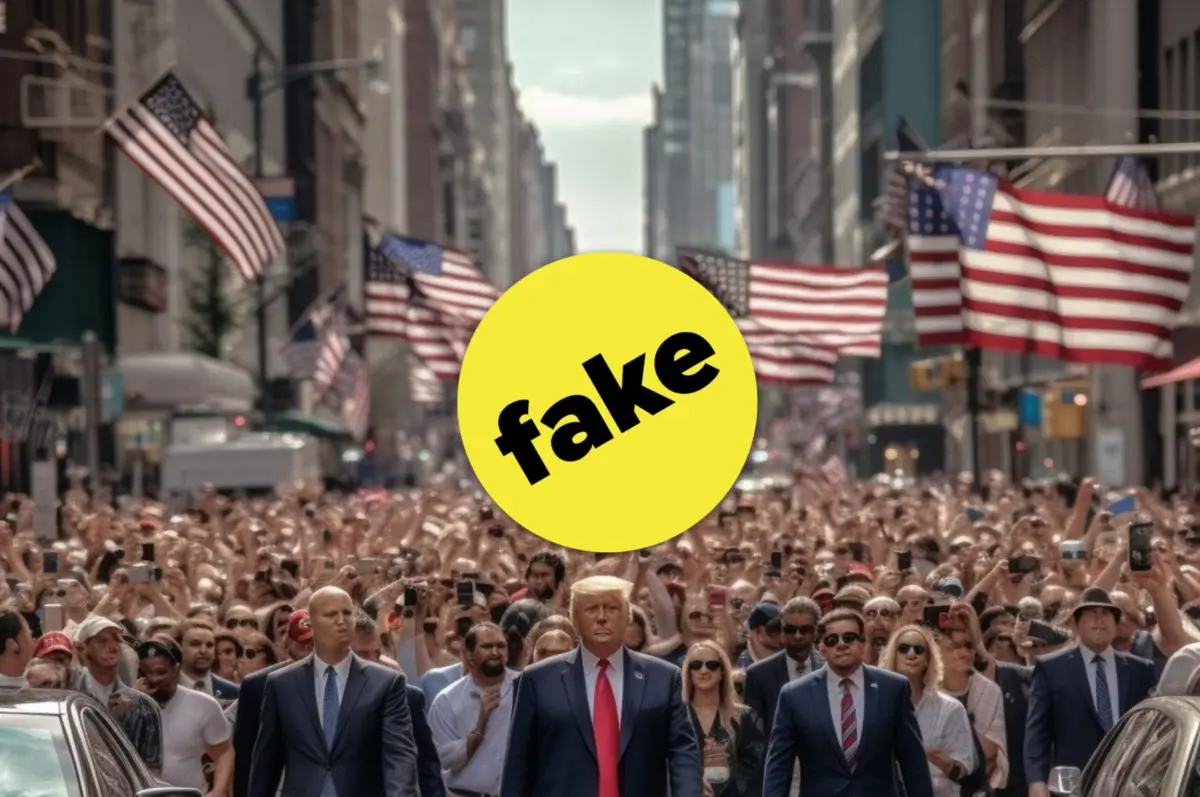
The rapid, unchecked proliferation of hyper-realistic generative artificial intelligence has fundamentally altered the modern information ecosystem. No longer confined to academic laboratories or niche technology forums, sophisticated text-to-image models—such as Midjourney, Stable Diffusion, and DALL-E—are now accessible to anyone with an internet connection. Within seconds, these systems can fabricate photorealistic images depicting events that never happened, public figures engaging in actions they never took, and disasters that exist only in the latent space of a neural network.
This technological leap has created a profound crisis of authenticity. As the average human eye can no longer reliably distinguish between authentic photography and synthetic fabrication, society faces an unprecedented wave of visual disinformation. Experts warn that this "infodemic" has the potential to actively manipulate public opinion, undermine the institutional credibility of independent journalism, and destabilize democratic processes on a global scale.
Compounding this crisis is the stark inadequacy of the current digital infrastructure designed to counter it. Emerging detection tools, while valuable, remain inconsistent and easily bypassed. Simultaneously, major social media platforms—once viewed as the primary arbiters of digital safety—are rolling back content moderation teams, dismantling trust-and-safety initiatives, and adopting erratic verification frameworks. This report investigates the multifaceted challenges posed by AI-generated imagery, exploring the technological arms race between generation and detection, the systemic failures of social media governance, and the urgent imperative for societal resilience.
Detailed Chronology: The Evolution of Synthetic Media and Detection
To understand the current vulnerability of our information ecosystem, it is necessary to examine how generative adversarial networks (GANs) and diffusion models evolved from crude, uncanny-valley experiments into engines of hyper-realistic deception.
Phase 1: The Era of the Uncanny Valley (2018–2021)
In the early days of deep learning-based image generation, synthetic media was easy to spot. Generative Adversarial Networks (GANs) dominated the landscape, producing images that often featured surreal distortions, melting backgrounds, and telltale artifacts. Faces possessed asymmetric eyes, teeth were rendered as amorphous white blobs, and hands—notoriously difficult for early neural networks to model—frequently featured six or seven fingers, fused digits, or impossible anatomical bends. During this period, synthetic media was largely treated as a technological novelty, amusing to experiment with but rarely convincing enough to fool the public or cause systemic harm.
Phase 2: The Diffusion Revolution and Mass Accessibility (2022–Early 2023)
The paradigm shifted dramatically with the advent of diffusion models. Unlike GANs, which generate an image in a single forward pass, diffusion models start with random noise and iteratively "denoise" it over dozens of steps, guided by complex text prompts. This mathematical approach allowed for unprecedented semantic understanding and textural fidelity.
By late 2022 and early 2023, platforms like Midjourney (v5) and Stability AI’s Stable Diffusion became publicly available. Suddenly, generating a cinematic photograph of a historical event, a political leader in a compromising position, or a breaking news disaster required nothing more than typing a descriptive sentence into a chat box. The barrier to entry collapsed, sparking a massive influx of user-generated synthetic content across the open web.
Phase 3: The Detection Arms Race and the Verification Crisis (Present)
In direct response to the flood of synthetic media, a cottage industry of AI detection startups emerged. Platforms such as Optic.xyz were developed to analyze pixel-level anomalies, metadata traces, and compression signatures to help users determine whether an image was human-made or machine-generated.
However, this sparked a classic technological arms race. As detection algorithms grew more sophisticated, generative models adapted, learning to eliminate standard forensic watermarks and smooth out the structural errors that algorithms look for. Today, detection tools are locked in a perpetual game of catch-up, leaving a dangerous window of vulnerability where viral misinformation can circulate, deceive millions, and shape geopolitical narratives long before any forensic analysis can be performed.
Supporting Context & Metrics: The Anatomy of a Visual Crisis
The threat of AI-generated imagery is not merely theoretical; it is underpinned by stark technological realities, psychological vulnerabilities, and institutional shortcomings.
The Mechanics of Deception
Why are humans so easily fooled by modern synthetic images? Evolutionary psychology plays a significant role. Humans are hardwired to process visual data rapidly, relying on heuristic shortcuts to assess credibility. Historically, photographic media carried an implicit social contract: the camera does not lie. Seeing was believing.
Generative AI exploits this deep-seated cognitive bias. Because diffusion models are trained on billions of real photographs scraped from the internet, they instinctively replicate the lighting nuances, lens flares, film grain, and compositional framing of professional photojournalism. When a viewer scrolls rapidly through a social media feed, their brain registers these familiar visual cues and accepts the image as authentic without applying critical scrutiny.
The Limits of Forensics
While automated detection tools provide a vital line of defense, they are far from infallible. Andrey Doronichev, CEO and cofounder of Optic.xyz, highlights the core dilemma: "It has become increasingly challenging for the average human eye to distinguish between AI-generated and real photos. This has the potential to manipulate public opinion, undermine the credibility of news sources, and ultimately threaten the democratic process by promoting disinformation."
Doronichev emphasizes that even specialized detection platforms struggle with edge cases. When users upscale low-resolution images, apply filters, or screenshot synthetic media, the underlying forensic data that detectors rely on is frequently degraded or destroyed.
Consequently, digital literacy campaigns still rely on teaching internet users basic manual inspection heuristics:
- Anatomical Anomalies: Scrutinizing hands, ears, teeth, and asymmetrical facial features, which AI models still occasionally botch.
- Background Inconsistencies: Looking for illogical lighting sources, warped background text, floating objects, or blurring that defies the depth-of-field physics of real camera lenses.
- The "Too Good to Be True" Rule: Exercising extreme skepticism toward emotionally charged, perfectly composed viral images that align too neatly with prevailing political or cultural narratives.
Official Statements and Industry Perspectives
The failure of digital ecosystems to handle the surge of synthetic media has sparked severe criticism from media watchdogs, civil society organizations, and cybersecurity experts. Central to this criticism is the abandonment of robust governance frameworks by major social media conglomerates.
The Regulatory Void on Social Media
Most major social platforms—including Meta, TikTok, and Twitter (now rebranded as X)—officially maintain terms of service prohibiting the spread of manipulated media intended to deceive users or cause real-world harm. However, experts point out a glaring chasm between policy formulation and practical enforcement.
Kayla Gogarty, deputy research director at Media Matters for America, a prominent nonprofit media watchdog, articulated this systemic vulnerability in an interview with journalists:
"As there has been a recent rise of AI-generated media, it has become clear that platforms are unprepared for this moment in which fake images and misinformation could lead to real-world harm. Particularly concerning is Twitter, as Elon Musk has abandoned much of the platform’s content moderation and it has become difficult to determine account credibility under the new checkmark policy."
Gogarty’s assessment underscores how corporate restructuring and cost-cutting measures within tech firms have dismantled the human infrastructure necessary to combat sophisticated disinformation campaigns. Automated moderation systems alone are routinely outmatched by bad actors who use prompt engineering to bypass keyword filters and contextual guardrails.
The Breakdown of Platform Trust
Compounding the moderation crisis is the degradation of traditional account verification systems. Under legacy models, the blue checkmark served as an indicator of identity and institutional authority, helping users quickly separate verified journalists and organizations from impostors.
The transition to paid subscription-based verification models across major platforms has effectively commodified credibility. When any user can purchase a verified badge, malicious actors can easily impersonate news outlets, government agencies, or public figures, amplifying AI-generated hoaxes with a veneer of institutional legitimacy. This erosion of trust forces consumers into a state of generalized cynicism, where all media—both real and fake—is treated with suspicion.
Future Outlook: Navigating the Post-Truth Digital Frontier
As generative AI models continue to advance—moving rapidly from static 2D images toward real-time synthetic video and audio generation (deepfakes)—the challenges outlined in this report will only compound. Addressing this crisis will require a coordinated, multi-layered approach involving technological innovation, regulatory oversight, and cultural shifts in how society consumes media.
1. Technological Solutions: Cryptographic Provenance and Watermarking
Silicon Valley and standards bodies are increasingly turning to cryptographic content provenance as a long-term solution. Initiatives like the Coalition for Content Provenance and Authenticity (C2PA) are developing open technical standards that embed tamper-evident metadata directly into digital files at the point of capture (in smart cameras) or generation (in AI software).
When a photo is taken by a certified hardware camera or generated by a participating AI model, it carries a cryptographically signed digital passport detailing its origin history. If the image is edited, the audit trail updates. While promising, this system relies on universal industry adoption—a hurdle in an open-source AI ecosystem where bad actors can easily strip metadata or run unconstrained, locally hosted open-source models that ignore provenance protocols.
2. Regulatory Pressures and Legal Frameworks
Governments worldwide are beginning to grapple with the legal implications of unmitigated synthetic media. Lawmakers in the European Union, the United States, and Asia are debating legislative frameworks that would mandate clear watermarking for AI-generated political advertisements, impose strict liability on platforms that fail to curb viral disinformation campaigns, and criminalize malicious deepfakes used for harassment, fraud, or election interference.
However, writing enforceable laws that respect free expression while protecting the public from computational deception remains a formidable legislative tightrope walk.
3. The Re-Valuation of Verified Journalism
Ultimately, the rise of generative AI reinforces the vital necessity of trusted, independent journalism. In an internet flooded with synthetic noise and algorithmic fabrication, the value of human reporting—grounded in rigorous verification, on-the-ground eyewitness testimony, and ethical editorial standards—has never been higher.
Until technology catches up with the demands of truth verification, digital citizens must adopt a heightened posture of critical media literacy. As the adage goes in the age of the visual infodemic: if an image on your social media feed looks too impactful to be true, run it through an AI detector, verify it against a trusted news source, and refuse to let algorithms weaponize your curiosity against reality.