Executive Overview
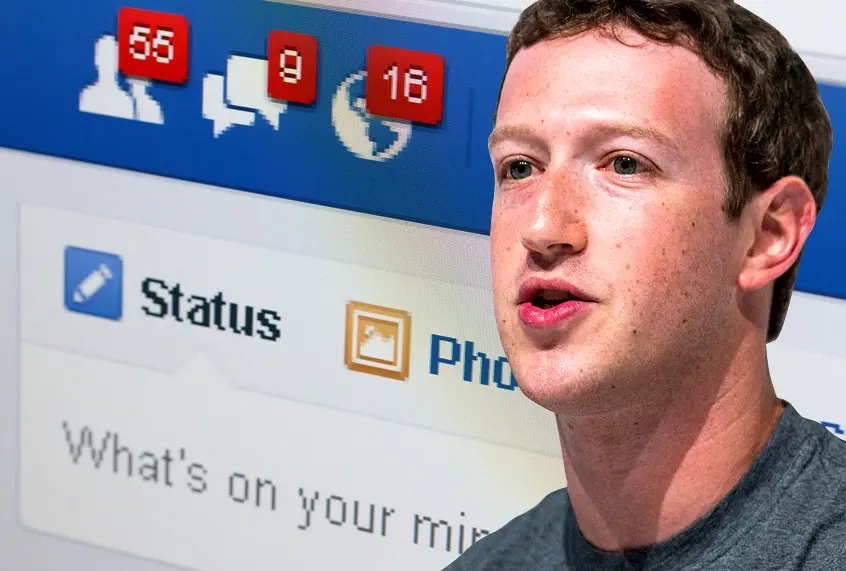
In a sweeping algorithmic pivot announced at the start of 2018, Facebook co-founder and Chief Executive Officer Mark Zuckerberg declared his intention to fundamentally reshape the core architecture of the world’s largest social network. Promising to "fix" the platform, Zuckerberg unveiled a massive overhaul of the ubiquitous News Feed. The primary mandate of this redesign was to pivot away from public content generated by publishers, brands, businesses, and political organizations, steering the platform back toward its foundational social roots: connecting friends and family.
While framed as a high-minded public health initiative designed to combat feelings of depression, information overload, and social isolation associated with passive scrolling, the real-world implications of this algorithmic shift tell a more complex story. Legitimate news outlets, already struggling to monetize their digital footprints in an ecosystem heavily dominated by tech monopolies, now face existential threats as their organic reach plummets.
Paradoxically, the ecosystem’s most insidious actors—fake news mills, hyper-partisan clickbait operations, and spam publishers—appear remarkably insulated from the worst impacts of the changes. By exploiting loopholes in ad-buying protocols, weaponizing community engagement tactics, and leveraging the insular nature of hyper-partisan media consumption, bad actors are poised to weather the storm. This investigative deep dive explores how Facebook’s well-intentioned restructuring inadvertently threatens the foundation of professional journalism while leaving the door wide open for disinformation.
Detailed Chronology of the Overhaul
The sequence of events leading up to and immediately following Zuckerberg’s announcement highlights a frantic period of adjustment for the global media ecosystem.
- Early January 2018: Following a reflective New Year’s social media post, Mark Zuckerberg formally declares 2018 the year he will "fix" Facebook. He points to rising concerns over user well-being and platform integrity.
- January 11, 2018: Zuckerberg drops a bombshell announcement detailing structural changes to the News Feed. Public content from brands and media entities will be actively demoted to favor personal updates, photos, and milestones from friends and family.
- January 12, 2018: Campbell Brown, Facebook’s head of news partnerships and a former NBC reporter, holds an emergency virtual briefing with digital publishers. She attempts to soothe panicked media executives, admitting that the company itself does not yet fully understand the long-term ramifications of the rollout.
- January 13, 2018: Adam Mosseri, Facebook’s Vice President running the News Feed feature, expands on the changes in an interview with Wired. He outlines that passive video consumption will be deprioritized, and comment sections featuring deep, winding discourse will be favored over simple "likes."
- Mid-January 2018: Panic ripples through the digital publishing industry. Trade publications like Digiday and Business Insider publish dispatches from anonymous media executives warning that years of capital investment in building Facebook audiences have been rendered virtually worthless overnight.
- Late January 2018: Facing mounting pressure regarding systemic disinformation, Zuckerberg issues a follow-up statement lamenting online polarization. He introduces a novel, crowd-sourced "news quality" survey designed to bypass traditional editorial gatekeepers and allow everyday users to rate the credibility of news sources.
Supporting Context & Metrics: The Human Cost and Economic Realities
To understand the friction caused by Facebook’s pivot, one must examine the metrics underpinning user psychology and platform dependency. Facebook occupies an unprecedented, quasi-monopolistic position in the global media landscape. According to Pew Research Center data, approximately 47 percent of all Americans rely on Facebook as a primary news source, with half of that demographic utilizing no other social media alternative.
This immense leverage gives Zuckerberg’s company the unilateral power to rewrite the economic fortunes of publishing houses worldwide. However, the justification for the change was rooted heavily in psychological research. Zuckerberg explicitly cited academic studies demonstrating that passive consumption of social media feeds induces negative emotional states. Users scrolling endlessly through sanitized, hyper-positive narratives posted by peers frequently report heightened anxiety, symptoms of depression, and a damaging impulse to measure their personal lives against unrealistic standards.
Conversely, research indicated that active, direct communication with friends fosters psychological well-being. Hence, the algorithmic pivot prioritized content that "sparks conversations and meaningful interactions."
For legitimate newsrooms, however, this psychological pivot translates into financial ruin. Publishers who spent millions of dollars over the preceding decade building dedicated social media teams, pivoting to video (at Facebook’s explicit behest), and optimizing content for viral distribution found their traffic pipelines abruptly choked off.
- The Video Pivot Fallacy: Publishers spent years abandoning written journalism to invest heavily in video production because Facebook artificially inflated the reach of native video. When Mosseri admitted that video is a "passive" medium destined for demotion, those capital investments instantly depreciated.
- The Advertising Exception: While organic reach for news articles plummeted, paid advertisements remained completely exempt from the new algorithm. Critics were quick to point out the underlying economic incentive: by crushing organic publisher reach, Facebook effectively forced cash-strapped media outlets to purchase sponsored posts simply to reach the audiences they had previously cultivated for free.
Official Statements and Industry Backlash
The media industry’s reaction to the changes ranged from quiet resignation to outright fury. Industry veterans expressed profound betrayal by a platform that had spent years aggressively courting publishers, only to pull the rug out from under them.
"It’s kind of strange, this mass de-prioritization," an anonymous media executive told Business Insider. "We’ve been very much encouraged to build audiences here. People spend lots of money to build these operations. At some point, it grows tiresome. You start thinking, over time, is this really worth it?"
Another digital publishing executive, speaking to Salon on the condition of anonymity, was far more blunt regarding the company’s true motivations:
"The goal of Facebook for a very long time has been to keep users on its pages as long as humanly possible. These changes are really about forcing publishers to pony up."
In stark contrast, Zuckerberg maintained a philosophical defense of the strategy, acknowledging short-term friction while championing long-term health:
"Now, I want to be clear: by making these changes, I expect the time people spend on Facebook and some measures of engagement will go down. But I also expect the time you do spend on Facebook will be more valuable. And if we do the right thing, I believe that will be good for our community and our business over the long term too."
Despite these high-minded assurances, industry advocacy groups were quick to point out the immense structural power wielded by a single corporate entity. David Chavern, CEO of the News Media Alliance, noted:
"This change does highlight, however, the power of Facebook to decide (and alter) the kinds of information that people are exposed to. It is an incredible power that carries incredible responsibilities."
The Fake News Blind Spot: Why Bad Actors Will Survive
Perhaps the most glaring flaw in Zuckerberg’s 2018 roadmap was its failure to meaningfully address the proliferation of junk websites, hyper-partisan clickbait, and deliberate disinformation networks. While Google had made significant strides in starving spam publishers of programmatic ad revenue, Facebook’s platform architecture continued to serve as a fertile breeding ground for malicious actors.
During the 2016 U.S. presidential election, multiple studies—including landmark research from Harvard University’s Media Cloud project—revealed that low-quality, right-wing "fake news" sites wielded far more structural influence on Facebook than legacy institutions like Fox News. These operations shared several distinct advantages:
- Near-Zero Overhead: Operating out of makeshift offices or international content farms, these sites produced fabricated outrage at minimal cost.
- Lucrative Ad Margins: By weaponizing sensationalism, anger, and polarization, these networks generated millions of dollars annually through programmatic ads and merchandise sales.
- Ad Policy Loopholes: While Facebook cracked down on individual fact-checked URLs, it placed virtually no restrictions on general account advertising. Junk publishers could effortlessly purchase ad space to funnel traffic to alternative landing pages.
Under the new algorithm rewarding deep comment sections and high conversational engagement, bad actors simply adapted their tactics. Rather than relying solely on organic viral distribution, these networks realized they could afford to pay human operatives or automated bot rings to foster the exact type of long-form, argumentative engagement the algorithm craved.
As one industry insider familiar with spam network tactics bluntly assessed:
"Expect to see a lot more profiles featuring boobalicious 50-year-old women who love Jesus and Donald Trump to be sharing the same sort of stuff you see now. The margins will be smaller, but ultimately, nothing will change."
The Flawed "News Quality" Survey Solution
Recognizing the brewing storm surrounding misinformation, Zuckerberg attempted a workaround in late January 2018 by introducing a user-based "news quality" survey. Rather than relying on professional fact-checkers or editorial boards—steps that would expose Facebook to accusations of political bias—the company decided to poll everyday users to determine which sources possessed broad societal trust versus niche, partisan trust.
This approach immediately ran headlong into the stark reality of media polarization in America. Data from organizations like the Pew Research Center has long demonstrated that audiences on the political right consume news through insular networks with shockingly low mainstream name recognition.
For instance, a 2014 Pew study revealed that:
- Only 45 percent of respondents recognized Sean Hannity, despite a two-decade primetime run on Fox News.
- Only 35 percent recognized the conservative aggregator Drudge Report.
- A minuscule 15 percent had ever heard of Breitbart News.
When Facebook attempts to evaluate news source credibility by surveying users who may have never encountered prominent alternative outlets, the system breaks down. It creates an untenable binary choice: either flood user feeds with unvetted, hyper-partisan fabrications because niche readers vouch for them, or penalize conservative networks and invite immediate backlash regarding perceived anti-conservative censorship.
Future Outlook
The 2018 Facebook algorithm overhaul marked a watershed moment in the relationship between technology platforms and the Fourth Estate. By prioritizing interpersonal connection over public discourse, Zuckerberg sought to alleviate the psychological toll of his creation. However, the execution exposed the dangerous fragility of an informational ecosystem governed by opaque algorithms rather than democratic or journalistic standards.
In the years following this pivotal shift, the core dilemma remains unresolved. Legitimate news outlets, stripped of reliable organic distribution, have been forced into an aggressive consolidation cycle, forced to erect paywalls or beg for reader subscriptions to survive. Meanwhile, purveyors of disinformation have continuously evolved, proving remarkably resilient against policy tweaks designed to protect user well-being.
Ultimately, Facebook’s 2018 experiment proved that sweeping algorithmic engineering cannot substitute for accountable editorial stewardship. As digital platforms continue to dictate what billions of people read, watch, and believe, the unchecked power of corporate tech gatekeepers remains one of the most pressing democratic challenges of the modern era.