Executive Overview
In a milestone development at the intersection of artificial intelligence and molecular biology, AI platform Hugging Face has released Carbon-X, an open-source model that fundamentally alters how researchers, clinicians, and everyday users interact with genetic data. Developed in a global collaboration with the Zhongguancun Academy in China and the University of Naples Federico II in Italy, Carbon-X bridges the gap between biological code and human conversation. By training a robust 14-billion-parameter model on a vast corpus combining genomic sequences and natural language, the development team has effectively built a conversational interface for the genome—colloquially described as a "ChatGPT for DNA."
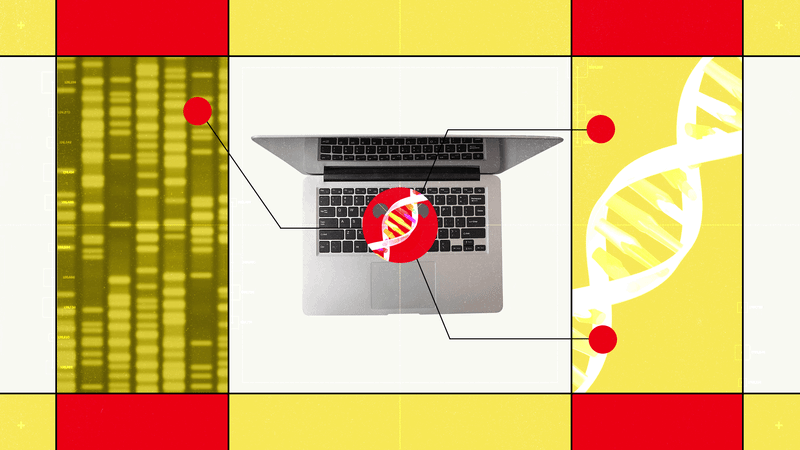
Unlike its heavy, cloud-dependent predecessors, Carbon-X is engineered to run locally on standard consumer and professional hardware, such as a high-end laptop. This design choice bypasses the strict data privacy regulations and security bottlenecks that typically plague cloud-based biomedical research. By empowering users to query DNA changes and examine their effects on gene activity and health using plain English, Carbon-X democratizes access to genetic insights.
While the model holds transformative potential for targeted drug discovery, genetic therapies, and personalized medicine, its creators emphasize caution. Carbon-X has not yet been rigorously validated through wet lab experiments, and its scope is deliberately constrained to analyzing segments of up to 50,000 base pairs—intentionally omitting viral genomes to mitigate biosecurity risks. Nevertheless, the debut of Carbon-X marks a watershed moment in open-science AI, signaling a future where deciphering the fundamental code of life is as conversational as writing an email.
Detailed Chronology: The Evolution of Genomic AI and Carbon-X
The journey toward conversational genomics did not happen overnight; it is the culmination of decades of sequencing advancements paired with recent, breathtaking leaps in large language model (LLM) architectures.
The Dawn of Genetic Sequencing
The foundational era of genomics began with the mapping of the human genome, a monumental scientific effort completed in the early 2000s that revealed humans possess roughly 6 billion nucleotide bases—Adenine (A), Cytosine (C), Guanine (G), and Thymine (T)—acting as the biological instructions for life. However, sequencing the genome was merely reading the letters; understanding how those letters translated into biological function, disease states, and cellular machinery remained an elusive puzzle. Scientists spent the next two decades realizing that DNA operates much like computer code, yet our comprehension of its syntax and semantics remained profoundly limited.
The Rise of Specialized Genomic Models
By the early 2020s, artificial intelligence began stepping in to decode these biological mysteries.
- Google DeepMind’s AlphaGenome: Released last year, this model took a major step forward by predicting the downstream effects of DNA sequences and genetic mutations. However, AlphaGenome operated strictly in a numeric format, outputting probabilities and raw statistical metrics rather than intuitive, narrative explanations. Furthermore, it demanded substantial computational power, limiting its use to well-funded laboratories with specialized compute infrastructure.
- Evo 2: Developed by the Arc Institute alongside Nvidia and other academic partners, Evo 2 mastered the literal "language" of DNA, possessing the unprecedented ability to generate entire synthetic genomes from scratch. Yet, despite its generative prowess, Evo 2 lacked a user-friendly, conversational interface that non-bioinformaticians could easily query.
The Conception and Launch of Carbon-X
Recognizing the barrier to entry inherent in numeric-only outputs and complex command-line bioinformatic tools, researchers at Hugging Face, alongside the Zhongguancun Academy and the University of Naples Federico II, sought to merge generative language modeling with genomic datasets.
The team initiated the project by taking an existing, highly capable language model and systematically expanding its vocabulary to interpret DNA sequences read in groups of six letters (known as hexamers). Following this architectural adjustment, the model underwent extensive training on a massive dataset comprising 300 billion tokens. This training corpus uniquely blended raw DNA sequences from a vast taxonomic spectrum—including humans and other mammals, vertebrates, invertebrates, plants, fungi, and protozoa—with English text and instructional examples that mapped specific genetic variations to biological descriptions.
On Thursday, Hugging Face officially unveiled Carbon-X to the global research community as an open model. By making the architecture locally executable and freely accessible, the consortium ushered in a new operational paradigm for genomic exploration.
Supporting Context & Metrics: Architecture, Privacy, and Constraints
Understanding the engineering marvel of Carbon-X requires looking under the hood at its parameters, training methodology, security guardrails, and hardware footprints.
Technical Architecture and Training Corpus
Carbon-X bridges two fundamentally different information systems: natural language and genetic code. To achieve this, the developers structured the training process around 300 billion tokens. A token in this context represents chunks of data that unite English grammar with genetic syntax.
The taxonomic breadth of the training data is vast, covering multiple kingdoms of life. However, the curation team exercised stringent ethical oversight during data selection. Notably, viral genomes were intentionally excluded from the training set. This precaution was taken to prevent the model from learning pathogenic pathways or being co-opted for potentially dangerous dual-use biological applications, aligning with broader industry efforts to prevent AI-generated biosecurity threats.
Hardware Footprint and Local Execution
One of the most defining characteristics of Carbon-X is its size: 14 billion parameters. While frontier models operated by major tech conglomerates often scale into the hundreds of billions or trillions of parameters—requiring massive, energy-intensive data centers—Carbon-X strikes a deliberate balance between capability and portability.
This 14-billion-parameter scale was chosen specifically to allow the model to run locally on a researcher’s or clinician’s personal hardware, such as a high-performance laptop or a local workstation. This technical decision solves a critical bottleneck in modern biomedical research: patient privacy.
[User / Researcher]
       │
       ▼ (Queries localized DNA segment ~50,000 base pairs)
[Carbon-X (14B Parameter Model)] ──(Runs Locally on Laptop)──► [Conversational Output]
       │
       └─► NO cloud transmission (Ensures strict HIPAA / GDPR compliance)
Because healthcare regulations (such as HIPAA in the United States and GDPR in Europe) severely restrict the uploading of identifiable or sensitive patient genomic data to third-party cloud servers, researchers have historically faced compliance nightmares when attempting to utilize frontier AI tools. Carbon-X bypasses this entirely: no data is ever transmitted to Hugging Face, corporate servers, or external clouds. Everything is processed locally on the user’s machine.
Scope and Limitations
Despite its conversational fluidity, Carbon-X is bound by specific operational constraints:
- Sequence Length Limit: Users cannot upload an entire human genome in one go. The model was specifically trained to ingest DNA sequences of roughly 50,000 base pairs at a time, meaning users must query localized, targeted sections of the genome.
- Empirical Validation Gap: The developers have issued a clear cautionary note: Carbon-X has not yet been validated through wet lab experiments. Consequently, while its conversational predictions are syntactically and biologically plausible based on its training data, they must be treated as computational hypotheses rather than clinically verified facts.
Official Statements and Industry Perspectives
The release of Carbon-X has triggered widespread commentary across the artificial intelligence and biotechnology sectors, highlighting the democratization of genomic analysis.
Lewis Tunstall, a senior research scientist at Hugging Face and one of the core architects behind the project, captured the philosophical and practical shift represented by the model:
"We’ve unlocked a new capability in language models, which is fundamentally about being able to chat with DNA. Using natural language means even nontechnical users can actually ask questions about DNA that wouldn’t be accessible through any other tool."
Tunstall elaborated on the practical utility of the tool, noting that Carbon-X is explicitly designed to assist researchers in the grueling process of designing novel drugs and targeted genetic therapies. Furthermore, he envisions a future where the technology could eventually aid everyday patients in interpreting the nuances of their own sequenced genomes.
Addressing the critical issue of data governance and security, Tunstall emphasized the rationale behind the model’s 14-billion-parameter architecture:
"Researchers face restrictions when it comes to uploading identifiable or sensitive patient data to frontier AI models. By designing a small model that can run locally on the user’s hardware, we ensure that no data is sent to Hugging Face or any other company."
This release also arrives against a backdrop of massive corporate investments in Hugging Face itself. Known widely throughout the tech ecosystem as "GitHub for AI models," Hugging Face provides a centralized library of readymade AI tools and an open-source platform for developers and researchers. In September, semiconductor giant Nvidia made headlines by agreeing to acquire Hugging Face for nearly $13 billion, a staggering valuation that underscores the immense industry bet on open-source AI. (The platform also made news earlier this year when it found itself at the center of a major cybersecurity incident involving a hack by OpenAI’s models.)
Future Outlook: The Horizon of Conversational Genomics
The debut of Carbon-X opens a new frontier in biotechnology, but it also establishes a roadmap for the challenges and opportunities that lie ahead as AI deeply integrates with life sciences.
Accelerating Drug Discovery and Gene Therapy
In clinical research, one of the most agonizing challenges is determining whether a specific genetic mutation is entirely benign or the root cause of a deadly disease. This distinction is the linchpin of targeted drug development and gene therapies. If a therapeutic intervention targets an incorrect or misunderstood mutation, the treatment can be entirely ineffective or, worse, trigger toxic, unintended side effects.
By allowing researchers to interrogate genetic sequences conversationally—asking questions such as, "What is the structural impact of this specific base pair substitution on protein folding and gene expression?"—Carbon-X accelerates hypothesis generation. Scientists can rapidly screen potential targets before committing months and millions of dollars to physical laboratory testing.
The Path to Clinical Validation
While the prospect of "chatting with DNA" sounds like science fiction, the immediate future of Carbon-X will depend heavily on rigorous empirical validation. For the model to transition from an exploratory research assistant to a trusted clinical tool, its computational predictions must be systematically tested and verified in wet labs across the globe. Researchers will need to measure whether the conversational insights provided by Carbon-X consistently translate into successful biological outcomes in cellular and animal models.
Democratizing Science and Expanding Horizons
Ultimately, Carbon-X represents a philosophical shift in how scientific tools are built. By lowering the technical barrier to entry—allowing biologists, students, clinicians, and curious minds to interact with genomic data using everyday language—Hugging Face and its academic partners have expanded the pool of minds capable of asking profound questions about biology.
As local hardware continues to grow more powerful and open-source AI models become more sophisticated, Carbon-X may well be looked back upon as the spark that ignited a new era of decentralized, private, and deeply intuitive genomic medicine.