Executive Overview
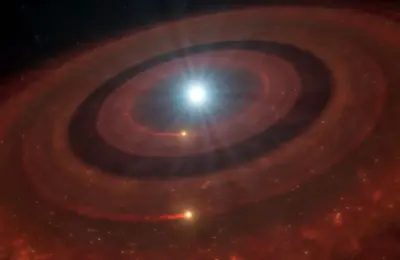
Deep within the silent reaches of the cosmos, a profound astrophysical mystery is unfolding. For years, astronomers have wrestled with a counterintuitive reality: certain galaxies appear to possess all the raw ingredients necessary to forge dazzling stellar nurseries, yet they remain stubbornly barren, producing little to no starlight. These elusive anomalies are known as "dark galaxies"—hypothetical cosmic structures composed primarily of gas and invisible dark matter, largely devoid of the luminous stars that typically define galactic architecture.
The existence of these ghost-like structures strikes at the core of our most successful cosmological framework: the Lambda-Cold Dark Matter (Lambda-CDM) model. This paradigm posits that invisible dark energy drives the accelerating expansion of the universe, while cold dark matter provides the gravitational scaffolding required for normal matter to coalesce. Within this model, gas collects inside massive clumps of dark matter known as haloes, eventually cooling and collapsing under its own weight to ignite nuclear fusion and give birth to stars. Yet, standard theoretical models routinely fail to explain why this process occurs in some haloes while others remain dark, stagnant, or seemingly inert.
Now, a team of researchers at Australia’s Swinburne University of Technology has unearthed a premier candidate that could rewrite our understanding of galactic evolution. Designated AGC 322753, this object contains roughly 2 billion times the mass of our sun in hydrogen gas alone, yet shows virtually no evidence of hosting stars. Published in the Monthly Notices of the Royal Astronomical Society, this groundbreaking discovery challenges prevailing theories of star formation. Uniquely, data indicates that this massive hydrogen reservoir may actually be rotating—a characteristic that current cosmological simulations state should be impossible for a truly dark galaxy.
If confirmed through ongoing observations, AGC 322753 could represent one of the most massive starless or "almost dark" galaxies ever identified, offering a crucial testing ground for modern astrophysics and potentially helping astronomers solve the long-standing mystery of the universe’s missing galaxies.
Detailed Chronology: From Radio Scans to a Cosmic Paradox
The path to discovering AGC 322753 reads like a modern astronomical detective story, bridging data sets across continents and decades of technological advancement in radio astronomy.
The Initial Detection
The journey began when researchers at Swinburne University of Technology cross-referenced archival observations from two premier radio surveys: one conducted by the historic Arecibo Observatory in Puerto Rico, and the other by China’s state-of-the-art Five-Hundred-Meter Aperture Spherical Radio Telescope (FAST). Both instruments, operating independently, had picked up an anomalous, massive cloud of neutral hydrogen gas floating in the cosmos.
Hydrogen is the fundamental building block of the universe, emitting a characteristic spectral line at a wavelength of 21 centimeters. By tuning into this specific radio frequency, astronomers can map the distribution and kinematics of gas clouds that emit no visible light whatsoever. When the Swinburne team analyzed the combined data for AGC 322753, they realized they were looking at an immense hydrogen reservoir containing an estimated 2 billion solar masses of gas.
The Missing Starlight
Naturally, the next step for the research team was to search for any associated starlight. If a gas cloud of this magnitude existed, conventional galaxy formation models dictated that it should have experienced gravitational collapse in its densest regions, sparking widespread star birth.
The researchers turned to deep optical images captured by the DESI Legacy Imaging Surveys, which are specifically designed to scan the sky for faint optical emissions rather than invisible radio waves. To their astonishment, the optical data revealed absolute emptiness. No clusters of young blue stars, no ancient red giants, and no central galactic bulge could be found.
However, the sheer physical scale of AGC 322753 suggested it was too massive to be entirely devoid of stars. Instead, the team concluded that if stars were present, they must be exceptionally faint—rendering AGC 322753 an "almost dark" galaxy. Quantitative estimates derived from the study indicate that the object contains at least 40 times more mass bound up in hydrogen gas than in stellar material.
The Rotation Anomaly
What truly separates AGC 322753 from a crowded field of previous dark galaxy candidates is its motion. Hydrogen gas emits radio waves whose frequencies shift depending on the gas’s velocity relative to Earth: wavelengths shorten when gas moves toward us (blueshift) and stretch when it moves away (redshift).
When researchers examined the radio signal from AGC 322753, they found two distinct peaks. This profile strongly implies that one side of the vast gas cloud is moving toward Earth while the other is receding. In essence, the hydrogen gas appears to have settled into an organized, rotating disc—resembling the kinematic structure of a standard spiral galaxy, despite the complete absence of visible stellar components. This unexpected twist has forced astrophysicists to re-evaluate how galactic disks can form and stabilize without the gravitational feedback typically provided by stars.
Supporting Context & Metrics: The Numbers Behind the Mystery
To fully grasp the significance of AGC 322753, it is helpful to examine the quantitative framework and theoretical models underpinning contemporary galaxy research.
Key Metrics of AGC 322753
- Hydrogen Gas Mass: Approximately $2 times 10^9$ (2 billion) solar masses.
- Gas-to-Stellar Mass Ratio: At least 40:1, indicating a severe suppression of star formation.
- Kinematic Profile: Double-peaked radio emission signature, strongly suggesting organized rotation.
- Optical Visibility: Completely undetectable in deep optical surveys (such as the DESI Legacy Imaging Surveys), confirming a severe lack of luminous stellar populations.
The Lambda-CDM Scaffold and Missing Galaxies
The Lambda-CDM cosmological model relies heavily on dark matter haloes—invisible gravitational traps that pull in gas and dust. Without these haloes, galaxies as we know them could not hold together against the centrifugal forces of rotation. However, cosmological simulations routinely predict a discrepancy: there should be far more small and intermediate-sized dark matter haloes populated with gas than the number of bright, luminous galaxies we actually observe in our local universe.
Astrophysicists refer to this as the "missing satellite" or "missing galaxy" problem. Discovering massive dark or almost-dark galaxies like AGC 322753 provides a vital clue, suggesting that many of these predicted haloes do contain matter, but that the gas within them has failed—for reasons yet unknown—to successfully transition into stars.
Official Statements and Expert Perspectives
The discovery of AGC 322753 has sparked rigorous debate within the astrophysical community, eliciting both excitement and professional caution from leading researchers.
Marco Monaci, a co-author of the study at Swinburne University of Technology, emphasized the theoretical challenge posed by the object’s kinematics:
"The theoretical models and the simulations show us that dark galaxies shouldn’t rotate, so this is extremely interesting." Monaci noted that if AGC 322753 is indeed a rotating disc bereft of stars, astronomers must fundamentally rethink the physical mechanisms that allow gas to organize without stellar assistance.
Robert Minchin, an astronomer at the National Radio Astronomy Observatory, voiced a note of cautious skepticism rooted in historical precedent. Minchin was involved in the controversial discovery of VIRGOHI21, a dark galaxy candidate found in the early 2000s that was eventually reinterpreted not as a true dark galaxy, but as a "tidal tail"—a long stream of hydrogen gas stripped away from a nearby luminous galaxy by gravitational interactions.
"Finding out more about it really is an essential next step at the moment. It’s intriguing, and I want to know more," Minchin stated. He explained that gas torn away during galactic close encounters can retain original momentum, mimicking the rotation curves of independent galaxies. However, he acknowledged a key hurdle for this hypothesis with AGC 322753: there is no obvious, massive parent galaxy nearby from which such a tidal stream could have been stripped.
Rhys Taylor of the Astronomical Institute of the Czech Academy of Sciences in Prague supported this view, arguing against the tidal debris hypothesis:
Reproducing the candidate dark galaxy’s distinctive double-peaked profile through such a process "is technically possible, but it’s fantastically unlikely."
Despite this, Taylor and Minchin share a secondary concern: data from the two original radio surveys placed the hydrogen cloud at slightly different coordinates in the sky. This discrepancy leaves open the possibility that AGC 322753 is not a compact, organized galaxy at all, but rather an extended, diffuse complex of gas clouds.
Elisabeth Adams of the Planetary Science Institute underscored the broader significance of investigating such anomalous objects, regardless of whether they prove to be entirely dark or merely starved of stars:
"Once it’s no longer a dark galaxy, people seem to stop caring, and I actually think that’s not the right approach."
Adams points out that understanding almost-dark galaxies is essential for isolating the mechanisms that halt star formation. Two primary theories dominate current discussions: either a galaxy spins so rapidly that centrifugal forces prevent its gas from cooling and collapsing, or primordial ultraviolet radiation from the universe’s earliest stellar generations heated the gas to temperatures too high for condensation.
Future Outlook: The Road Ahead for Galactic Astronomy
The journey to definitively decoding the nature of AGC 322753 is only just beginning. Because archival radio data yielded conflicting positional markers between the Arecibo and FAST surveys, the astronomical community agrees that high-resolution follow-up imaging is mandatory.
The primary instrument slated to resolve this cosmic standoff is the Very Large Array (VLA), a sprawling network of radio antennas located in New Mexico. By utilizing the VLA’s superior baseline resolution, astronomers hope to map the spatial distribution of the hydrogen gas with pinpoint accuracy, determining once and for all whether AGC 322753 possesses the compact, bound structure of a rotating disc or the diffuse, chaotic nature of a tidal stream.
Furthermore, deeper multi-wavelength campaigns will be required to search for ultra-faint dwarf stars hidden beneath the detection threshold of current optical telescopes. If modern instruments eventually uncover a sparse population of ancient, metal-poor stars, the object will be reclassified as an "ultra-diffuse" or extreme low-surface-brightness galaxy, providing an invaluable laboratory for studying star formation under extreme duress.
Ultimately, whether AGC 322753 stands confirmed as one of the most massive dark galaxies ever discovered or is ultimately reclassified as an exotic tidal artifact, its study marks a critical frontier in astrophysics. By probing these silent, starless realms, science inches ever closer to untangling the grand mechanics of cosmic evolution—revealing how the invisible scaffolding of dark matter dictates the luminous tapestry of the universe we see today.