For centuries, musicians have faced a universal, low-tech annoyance that routinely disrupts the flow of artistic performance: the dreaded page turn. Whether performing a complex Bach partita on the classical guitar or blazing through a Beethoven sonata on the piano, the physical act of turning a sheet of paper demands that a musician momentarily sacrifice a hand from their instrument, breaking both physical momentum and mental immersion. While the digital sheet music revolution introduced tablets, pedals, and timed automated page turners, these solutions often fall short. Bluetooth pedals introduce yet another cognitive load, while rigid, clock-based auto-turners fail to accommodate the natural tempo fluctuations, rubato, and emotional breathing room inherent in live human performance.
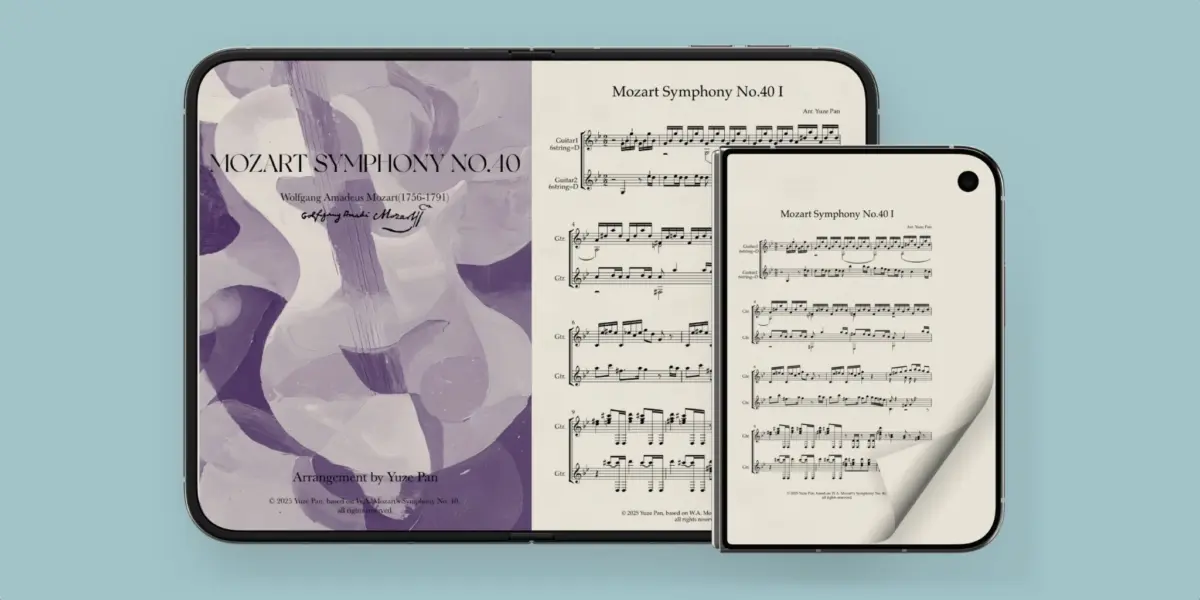
Enter CueFlip, an ingenious new iOS and iPadOS application designed to solve this exact problem through advanced audio alignment and machine learning. Developed by Yuze Pan—a 15-year-old classical guitarist based in Beijing—CueFlip listens to the musician as they play, anticipating and executing page turns dynamically based on a customized rehearsal profile.
Beyond its breakthrough audio-following page-turning capabilities, CueFlip is a comprehensive digital toolkit for musicians. It features a built-in musical dictionary encompassing over 20,000 terms translated across 13 languages, optical character recognition (OCR) capable of pulling definitions straight from scanned scores, and an innovative hands-free navigation system powered by Face ID winks. Available now on the App Store, CueFlip represents a remarkable leap forward in music technology, bridging the gap between traditional musicianship and modern artificial intelligence.
Detailed Chronology: From Garage Band Frustrations to App Store Innovation
The genesis of CueFlip is as fascinating as the software itself, rooted deeply in the real-world trials and tribulations of teenage chamber music practice.
The Breaking Point: 2025
The story begins in the rehearsal rooms of Beijing, where Yuze Pan plays classical guitar as a member of the Primal Guitar Quartet. Like many youth ensembles, the group relied heavily on traditional paper scores or basic tablet PDFs. However, managing page turns during complex multi-part arrangements proved to be a persistent bottleneck.
"Page turns kept breaking up our rehearsals," Pan recalls. "Paper means taking a hand off the strings, a pedal or a wink is one more thing to remember in the middle of a phrase, and timed turns can’t follow a performer who speeds up and slows down."
Driven by a desire to eliminate this friction, Pan embarked on his first attempt to build an intelligent page-turning application in 2025. Armed with youthful ambition but lacking specialized expertise in advanced audio signal processing, that initial prototype ultimately fell short of expectations. The app struggled to accurately map live audio to digital sheet music, frequently misfiring or losing its place during dynamic shifts in volume and tempo.
The Breakthrough: May 2026
Rather than abandoning the project, Pan returned to the drawing board with renewed rigor. In May 2026, he adopted a research-first approach. Instead of writing speculative code, he dove deep into academic literature concerning audio alignment, dynamic time warping, and pattern recognition algorithms.
Armed with theoretical foundations, Pan built a new iteration of the software and subjected it to the ultimate stress test: the daily rehearsals of the Primal Guitar Quartet. Every single day, Pan brought his latest builds to the group, testing the app under real-world performance pressures, refining the audio alignment engine, and tweaking user interface elements based on direct peer feedback. This iterative, boots-on-the-ground development cycle transformed a rudimentary hobby project into a robust, professional-grade utility.
Launch and Reception
By late 2026, CueFlip was officially polished and ready for a global audience. Released on the App Store, the app immediately caught the attention of the indie app development community, earning a coveted spotlight for its sheer utility, technical ingenuity, and the remarkable age of its creator.
Supporting Context & Metrics: Under the Hood of CueFlip
To fully appreciate what CueFlip accomplishes, it is essential to examine its core feature set and the engineering hurdles it overcomes.
1. Intelligent Audio Alignment
Unlike conventional apps that rely on rigid metronomes or pre-set timelines, CueFlip learns your personal interpretation of a piece. The setup process is remarkably intuitive: a musician can either host a live rehearsal within the app or upload a reference recording. During this phase, the user marks the exact moments where page turns should occur.
Once trained, CueFlip listens to the live performance via the device’s microphone. Because it has learned the specific contour of the musician’s playing—including accelerandos, ritardandos, and expressive pauses—it tracks the audio stream in real time and turns the page precisely when intended.
2. The Comprehensive Built-In Music Dictionary
Classical and contemporary sheet music is notoriously littered with Italian, French, and German musical directions (e.g., ritardando, dolce, agitato, espressivo). For students and even seasoned professionals, deciphering obscure composer instructions often requires interrupting practice to consult external texts or online searches.
CueFlip eliminates this friction by integrating a powerful music dictionary that covers over 20,000 professional terms. Crucially, the app includes native translation support across 13 different languages. Even better, CueFlip’s OCR capabilities can scan historical or low-quality paper scores imported as PDFs, instantly pulling foreign musical terms and providing localized definitions on demand. Musicians no longer have to guess what a composer meant by a specific marking; the definition is available at a glance.
3. Multimodal Navigation: Face ID Winks and Bluetooth Support
While CueFlip’s primary selling point is fully automated, listening-based page turns, Pan recognized that musicians require fallback options for unexpected live performance scenarios.
Face ID Winks: Utilizing the front-facing TrueDepth camera on compatible iPhones and iPads, CueFlip introduces an ultra-futuristic hands-free control scheme. A deliberate wink of the right eye manually advances the score forward, while a wink of the left eye turns the page backward. This requires zero physical equipment beyond the device already displaying the music.
Bluetooth Pedal Compatibility: For traditionalists who prefer tactile foot controllers, CueFlip maintains full integration with standard Bluetooth page-turning pedals, ensuring compatibility with existing hardware setups.
Official Statements & Developer Insights
In discussions detailing the design philosophy behind CueFlip, Yuze Pan has emphasized the importance of designing software that gets out of the musician’s way:
"I play in the Primal Guitar Quartet, and page turns kept breaking up our rehearsals. Paper means taking a hand off the strings, a pedal or a wink is one more thing to remember in the middle of a phrase, and timed turns can’t follow a performer who speeds up and slows down. My first attempt, in 2025, didn’t work. In May 2026 I started again, this time by reading the research on audio alignment, and brought every new build to the quartet’s daily rehearsals."
This quote underscores a vital truth in software development: the best tools are born from genuine, firsthand frustration. By designing CueFlip to solve his own chamber music pain points, Pan engineered a solution that resonates universally with instrumentalists across the globe.
Future Outlook and Market Impact
As CueFlip gains traction within the digital sheet music ecosystem, its long-term implications for music education and performance are significant.
Accessibility and Pricing Model
CueFlip is available as a free download on the App Store, compatible with iPhone and iPad users running iOS and iPadOS 16.4 or later.
The Free Tier: Includes PDF viewing, full annotation tools, and automatic page-turning functionality for a single score.
CueFlip Pro: Unlocks unlimited scores, advanced audio-following page-turning, the complete 20,000-term multilingual music dictionary, OCR term-pulling, and Face ID wink navigation. Pro subscriptions are priced accessibly at $4.99 per month or $29.99 annually.
The Rise of Young Indie Developers
Beyond its utility for musicians, CueFlip’s success highlights a broader trend in the Apple developer ecosystem: the democratization of high-level software engineering. With powerful frameworks, accessible machine learning libraries, and robust developer tools, young prodigies like Yuze Pan are able to conceptualize, code, and ship polished applications that rival products from established enterprise software companies.
As artificial intelligence and audio processing continue to evolve, we can expect future updates to CueFlip to incorporate even more sophisticated features—potentially expanding polyphonic recognition for full orchestral scores or offering real-time pitch-correction feedback for students. For now, however, CueFlip stands as an essential companion for any instrumentalist looking to modernize their sheet music workflow and let the music play uninterrupted.