Executive Overview
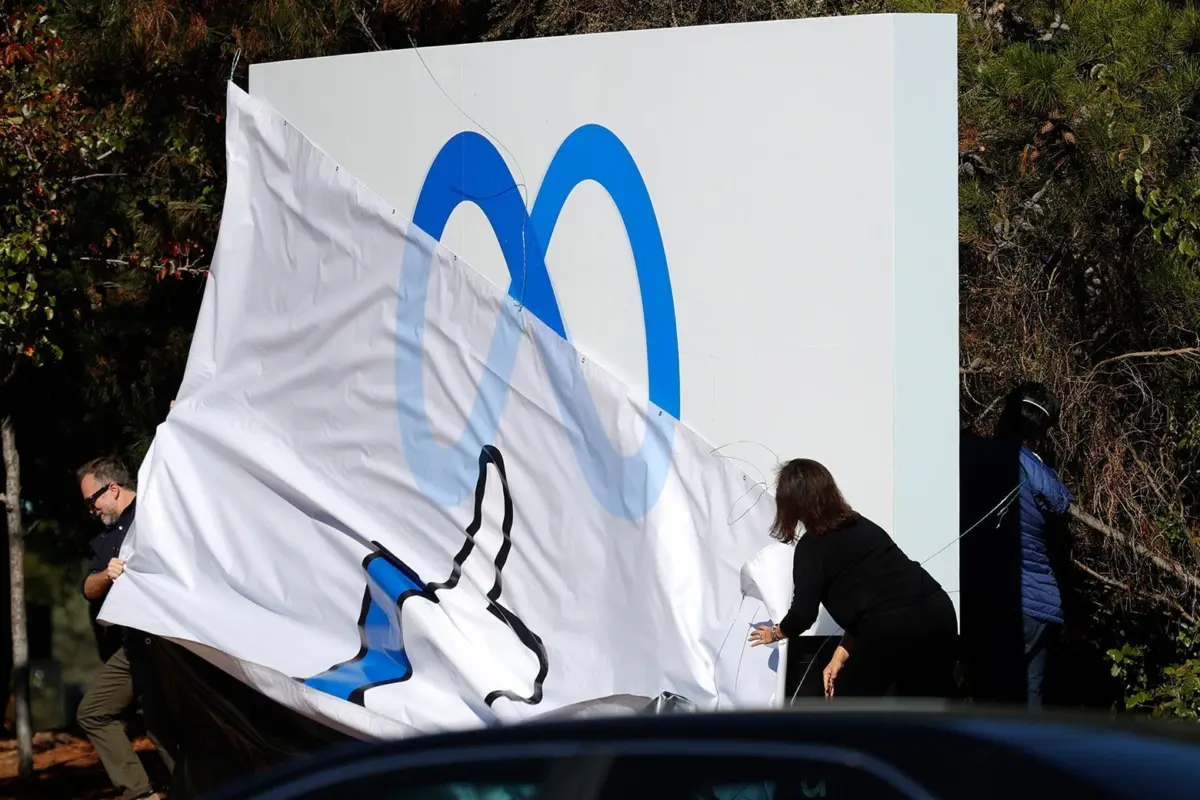
It has been half a decade since Mark Zuckerberg stood before a virtual stage, traded his iconic gray t-shirt for a sleek corporate pivot, and announced that the Facebook Company was officially becoming Meta.
The October 28, 2021, announcement was met with widespread public skepticism and immediate internet ridicule. Arriving in the dark shadow of pandemic lockdowns and devastating internal whistleblower leaks regarding child safety and algorithmic harm, the rebrand was widely dismissed as a desperate PR smoke screen. Critics pointed to the laughable, legless cartoon avatars of Horizon Worlds and declared the "metaverse" a multi-billion-dollar vanity project destined for the technological graveyard.
Yet, five years later, history is offering a more nuanced verdict. While the metaverse in its original, immersive VR-headset incarnation largely failed to capture the public imagination—costing Meta’s Reality Labs division eye-watering operating losses exceeding $12.8 billion in the first nine months of 2026 alone—the underlying strategic logic of the rebrand was profoundly prescient.
By detaching the parent corporation from the toxic legacy of its flagship blue app, the Meta moniker successfully repositioned the company as a hardware and artificial intelligence powerhouse. Today, instead of being hamstrung by a name synonymous with aging social media and data privacy scandals, the company commands 94 percent of the global display-less AI glasses market through its wildly popular Ray-Ban partnership, rapidly scales advanced AI agents like Meta Muse, and continues to print tens of billions of dollars in advertising revenue.
What began as a punchline for late-night comedians has quietly become one of the most consequential corporate transformations of the digital age.
Detailed Chronology: From Social Network to Silicon Valley Leviathan
To understand how Meta arrived at its current dominance, it is necessary to trace the convergence of crises and ambitions that forced Mark Zuckerberg’s hand in late 2021.
2021: The Perfect Storm of Scandal and Strategy
By the fall of 2021, the entity formerly known as Facebook Inc. was navigating an existential crossfire. Externally, former employee Frances Haugen leaked tens of thousands of internal documents—dubbed the "Facebook Files"—to the media and Congress. These documents revealed that executives were acutely aware of how platforms like Instagram harmed teenagers’ mental health and polarized political discourse, yet routinely prioritized user engagement and profit margins over safety.
Internally, however, leadership was grappling with a different kind of identity crisis. The corporate umbrella now encompassed Instagram, WhatsApp, Oculus, and Messenger, alongside ambitious hardware experiments. Longtime staff reported mounting confusion over whether "Facebook" referred to the company, the website, or the mobile app.
On October 28, 2021, Zuckerberg seized the moment. In a manifesto titled "Founder’s Letter," he declared that the company would henceforth be "metaverse-first, not Facebook-first." The goal was clear: pivot away from being merely a social network shadowed by controversy and evolve into the foundational architect of the next computing platform.
2022–2024: The Reality Labs Bloodbath and Apple’s Blow
The immediate aftermath of the rebrand was brutal. Wall Street and consumers alike rejected the clunky, pixelated virtual worlds. Compounding these woes was Apple’s 2021 introduction of App Tracking Transparency (ATT), a privacy update that allowed iOS users to opt out of cross-app tracking. This single policy change dealt a staggering blow to Meta’s targeted advertising engine, costing the company an estimated $10 billion in lost revenue in 2022 alone.
Reality Labs began burning cash at an unprecedented rate. Critics felt vindicated: the metaverse was dead on arrival, and the name change was a monument to corporate hubris.
2025–2026: The Pivot to AI, Smart Glasses, and Pragmatism
Rather than doubling down indefinitely on legless VR avatars, Meta executed a quiet, pragmatic retreat and reallocation of resources. In early 2026, the company briefly considered shutting down its Horizon Worlds VR application entirely before opting to scale back its standalone headset footprint in favor of smartphone accessibility.
Instead of immersive virtual reality, the company poured its capital into ambient artificial intelligence and wearable hardware. The launch of AI-powered Ray-Ban smart glasses shattered sales expectations, shipping millions of units and capturing a commanding 94 percent share of the global display-less AI eyewear market by mid-2026. Simultaneously, the September 2026 rollout of Meta Muse—an advanced AI agent—attracted more than 3 million weekly users within weeks, proving that consumers were willing to embrace AI tools bearing the Meta brand, even if they remained deeply suspicious of Facebook’s historical privacy baggage.
Supporting Context & Metrics
An analysis of Meta’s financial health and market positioning reveals a company operating on two entirely different planes: a legacy cash cow and a bleeding-edge hardware/AI laboratory.
- The Core Cash Engine: Despite the grand visions of the metaverse, Meta remains fundamentally anchored to its family of apps. In the third quarter of 2026, over 99 percent of Meta’s $64.6 billion quarterly revenue originated from advertising targeted at its 3.64 billion daily active users across Facebook, Instagram, WhatsApp, and Messenger.
- The Cost of Innovation: Innovation does not come cheap. Meta’s Reality Labs division recorded an operating loss of $12.8 billion in just the first nine months of 2026, underscoring the immense financial runway required to fund Zuckerberg’s long-term hardware and spatial computing bets.
- Hardware Supremacy: The pivot from software-only social media to consumer hardware yielded historic wins. By the end of 2025, consumers had purchased over 7 million pairs of Meta-branded smart glasses. By the first half of 2026, Meta’s dominance in the AI eyewear sector reached an astonishing 94 percent of worldwide shipments for display-less devices.
- AI Adoption: Meta Muse, the company’s flagship AI agent introduced in September 2026, surged past 3 million weekly active users almost immediately upon release, cementing the brand’s successful transition into artificial intelligence.
Official Statements and Expert Perspectives
Industry analysts, former insiders, and marketing authorities offer diverse perspectives on whether the rebrand was a masterstroke or an expensive irrelevance.
"The critics weren’t wrong, but at the same time, I do think a rebrand was necessary."
— Avi Greengart, Technology Analyst at Techsponential
Greengart notes that the underlying objective of the rebrand was always about platform control—specifically, attempting to control the user experience without having to bow to operating system gatekeepers like Apple and Google.
"They want to be utilities like your water company, like your electricity company, and Facebook wanted to be the operating system of your life."
— David Nieborg, Professor of Platform Economy, University of Toronto
Nieborg argues that the name change was a clear signal to investors that Zuckerberg envisioned an ecosystem far beyond a traditional social media platform—one built on integrated hardware, proprietary devices, and foundational utility.
"It was getting a little complicated internally… Facebook had simply become a bad way to describe the totality of what Zuckerberg wanted to do with the company."
— Katie Harbath, Former Director of Public Policy for Global Elections, Meta
Harbath, who spent a decade at the company, acknowledges that while public perception tied the rebrand to the Haugen whistleblower scandal, the functional reality was that "Facebook" was simply too narrow a descriptor for a corporation branching out into virtual reality, messaging infrastructure, and global commerce.
"I think the performance that we’ve seen by the company in the markets, as well as among users, really has nothing to do with the name."
— Denise Lee Yohn, Brand Leadership Expert and Author of What Great Brands Do
Yohn remains skeptical of the rebrand’s direct influence, suggesting that consumers continue to use Meta’s apps out of utility and habit, regardless of corporate rebranding exercises or lingering trust deficits.
Future Outlook: What Lies Ahead for Meta?
Five years removed from the initial announcement, the Meta brand has transcended its early days as a punchline. It successfully created a psychological and operational firewall between the controversies of yesterday’s social media platforms and the hardware-driven innovations of tomorrow.
By shedding the restrictive confines of the "Facebook" moniker, Zuckerberg secured the institutional permission slip required to pivot aggressively toward smart glasses, spatial computing, and generative AI agents. Users who might have balked at handing over intimate biometric and conversational data to "Facebook" have proven far more receptive to trusting "Meta."
Yet, the ultimate question facing the company is whether the current identity is permanent. As artificial intelligence reshapes human-computer interaction at a blistering pace, and as hardware form factors continue to evolve beyond rectangular screens and frames of glasses, even the Meta name may eventually require an update.
As Katie Harbath astutely observed when reflecting on her former employer: "I have wondered if Mark would try to rename it again. I wouldn’t put it past him."
For now, however, the gamble has paid off. Meta survived its crucible, weathered billions in metaverse losses, and emerged uniquely equipped to lead the next technological revolution—proving that sometimes, a bold leap into the unknown is the only way to outrun your past.