Executive Overview
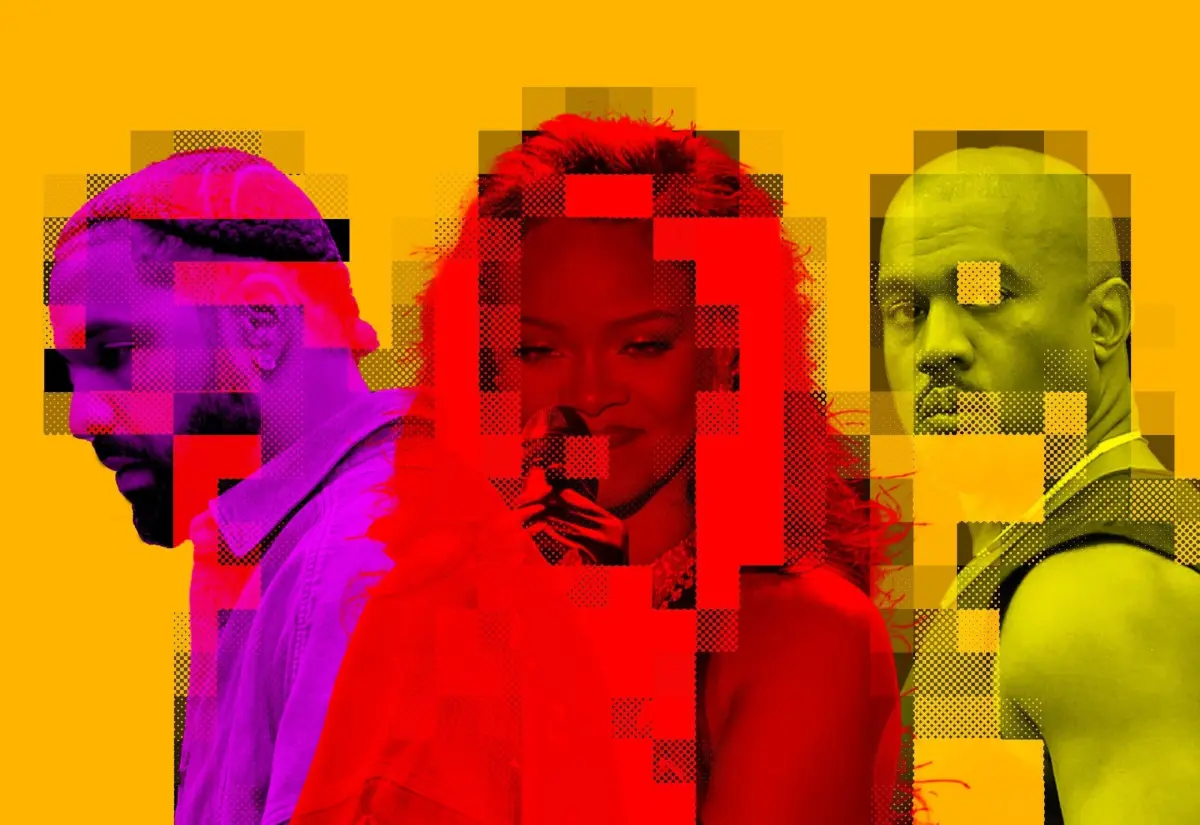
The rapid democratization of generative artificial intelligence has brought the global music industry to a pivotal, high-stakes crossroads. Across digital ecosystems like YouTube, Instagram, and TikTok, millions of listeners are finding themselves increasingly unable to distinguish between genuine human artistry and synthetic vocal cloning. Tracks featuring AI-generated performances by superstars such as Eminem, Jay-Z, Drake, and The Weeknd are no longer isolated technological novelties; they are viral sensations racking up millions of views and streams.
This seismic shift has sparked a fierce debate over copyright law, the ethics of digital likeness, and the future of creative labor. Major record labels, led by Universal Music Group (UMG), are aggressively pushing back against what financial analysts have termed an "existential threat" to the traditional music business. Armed with copyright takedowns and urgent pleas to streaming platforms, the industry is scrambling to contain a technological genie that refuses to go back into its bottle.
Yet, for a burgeoning subculture of tech-savvy hobbyists and bedroom producers, AI voice cloning is the ultimate frontier of fanfiction and audio "modding." Armed with open-source tools and community-trained models, these creators are reshaping pop culture on their own terms. As the legal, ethical, and commercial implications ripple outward, the music world is forced to confront an uncomfortable reality: the boundary between original creation and digital replication has been permanently blurred.
Detailed Chronology: From Novelty to the "Final Straw"
The sudden explosion of AI-generated music is the result of rapid advancements in machine learning, specifically source-separation and voice-conversion software. To understand how the industry arrived at this precarious juncture, it is necessary to trace the rapid escalation of events that brought synthetic vocals from niche developer forums to the forefront of global pop culture.
Early 2023: The Underground Experimentation Phase
The groundwork for the current wave was laid on Discord and Reddit, where fan communities began experimenting with open-source voice-conversion tools, most notably So-Vits-SVC (Soft-Voice-to-Voice Singing Voice Conversion). Originally popular within anime and vocaloid communities, the software quickly caught the attention of hip-hop and pop fan forums.
In early 2023, anonymous creators began training AI models on acapella audio tracks ripped from unreleased studio sessions and live performances. A 22-year-old Oklahoma resident operating under the moniker "YeezyBeaver" utilized a Kanye West voice model to place the rapper’s distinctive delivery over Drake’s track "Jungle." Encouraged by the mild viral success on TikTok, YeezyBeaver expanded his experiments, eventually releasing a surprisingly poignant AI cover of the Plain White T’s hit "Hey There Delilah" performed by a synthetic Kanye West.
Similarly, an American college student known online as "pieawsome" tapped into the "Kanye unreleased community." Recognizing that fans had amassed enough raw vocal material to build a functional voice model, pieawsome chopped up acapella sections, trained the So-Vits-SVC model over several days, and shared the resulting file on Discord. Within weeks, the model was being used to generate audacious crossovers, including a viral track of Kanye covering Ice Spice’s breakout hit "Munch (Feelin’ U)"—a track that even superstar Travis Scott publicly acknowledged with an Instagram "like."
February – March 2023: Crossing into the Mainstream
As the underlying technology grew more accessible, high-profile artists and DJs began incorporating AI-generated vocals into live sets and commercial releases, often bypassing the consent of the artists whose likenesses were being used.
- David Guetta’s Eminem Experiment: In February 2023, superstar DJ and producer David Guetta posted a video clip from a live concert performance featuring a track he constructed using an AI-generated Eminem vocal. The track was created without the Detroit rapper’s permission, serving as an early warning shot for major labels regarding the live-performance implications of generative AI.
- AllttA’s "Savages": French hip-hop act AllttA released the track "Savages," which featured an AI-generated vocal performance modeled after Jay-Z. As New Yorker writer Kyle Chayka noted, the familiar cadence and tone added an ineffably compelling layer to the composition, highlighting how effectively synthetic models could capture the emotional resonance of human performers.
- Anime and Comedy Crossovers: University students like 19-year-old Jered Chavez began utilizing AI to bridge disparate cultural domains. Chavez went viral on Instagram with a video featuring digital avatars and voice clones of Drake, Kanye West, and Kendrick Lamar singing "Fukashigi no Karte," the closing theme to the popular anime series Rascal Does Not Dream of Bunny Girl Senpai. Chavez leaned heavily into comedy as a protective mechanism against the looming legal and ethical controversies.
April 2023: The Turning Point and "Heart on My Sleeve"
The tensions between hobbyist innovation and institutional protectionism boiled over in April 2023 with two major milestones.
First, an anonymous creator posting under the name "ghostwriter977" uploaded "Heart on My Sleeve," a seamless, highly polished collaboration featuring AI-generated vocals of Drake and The Weeknd. The track sounded so authentic that it bypassed traditional detection filters, racking up millions of streams and views across TikTok, YouTube, and Spotify before industry pressure forced its removal. Industry insiders quickly began speculating whether the drop was a calculated guerrilla marketing ploy by an AI audio startup.
Second, the saturation point for the reigning king of hip-hop arrived shortly thereafter. Upon discovering a viral AI-generated cover of himself rapping Ice Spice’s "Munch (Feelin’ U)," Drake took to Instagram to declare it "the final straw." The artist’s public frustration mirrored the growing alarm within corporate boardrooms.
Supporting Context & Metrics: The Scale of the Disruption
The generative AI boom in music is underpinned by powerful technological tools and staggering online engagement metrics that illustrate why the traditional music establishment is panicking.
The Technology: So-Vits-SVC and Open-Source Democratization
The democratization of voice cloning rests on deep learning frameworks that require surprisingly little training data compared to older text-to-speech engines. Software like So-Vits-SVC allows users to input a target artist’s voice model and convert any recorded vocal line—whether sung by an amateur or generated by a text-to-speech synthesizer—into the distinct timbre, vibrato, and cadence of the celebrity.
The viral spread of these tools is measurable. On TikTok, the hashtag #SoVitsSvc has amassed over 2 million organic views, serving as a decentralized tutorial hub where users share model weights, troubleshooting tips, and links to pre-trained celebrity voice banks ranging from Ariana Grande to Freddie Mercury.
The Economics of Scraping and the Streaming Deluge
The threat to major labels is multi-pronged:
- Copyright Infringement via Scraping: Generative AI models are trained by scraping vast libraries of copyrighted audio files from the internet. This uncompensated ingestion of protected intellectual property forms the bedrock of the technology’s capability.
- Market Dilution: Independent platforms are being flooded with thousands of faux covers and original tracks featuring unauthorized celebrity voices. This influx threatens to dilute streaming revenues and drown out human artists who rely on algorithmic discovery.
- The Threat of Synthetic Lookalikes: As demonstrated by projects like BohemianRhapsod.ai—which allows users to conduct a virtual choir of 16 AI-generated Freddie Mercury voices through Queen’s catalog—the technology easily extends to deceased icons who cannot grant or withhold consent.
Official Statements and Industry Response
The music industry’s leadership has moved swiftly from cautious observation to aggressive containment.
Universal Music Group’s Offensive
Universal Music Group (UMG), which represents industry heavyweights including Drake, Rihanna, The Weeknd, and Taylor Swift, has taken a hardline stance. In the wake of the "Heart on My Sleeve" phenomenon, UMG reportedly reached out to major streaming services—including Spotify and Apple Music—demanding that they proactively block AI developers from scraping copyrighted material from their platforms.
This corporate defense strategy was catalyzed by warnings from financial analysts. A prominent analyst report from BNP Paribas Exane labeled generative AI as a "new disruptive threat" with the potential to inflict existential damage on major record labels by breaking traditional monetization and licensing structures.
Legal Limbo and the Question of Identity Theft
Despite the aggressive posture of major labels, the legal framework governing AI-generated music remains a vast, uncharted gray area.
Jonathan Bailey, former chief technology officer of music tech company Soundwide, argues that the practice crosses clear ethical and legal boundaries:
"I think you can make a persuasive argument that using AI to reanimate Jay-Z’s voice to have him rap or sing something he never created is kind of a form of identity theft."
However, traditional legal authorities are hesitant to issue definitive pronouncements. Donald Passman, an eminent entertainment attorney at Gang, Tyre, Ramer, Brown & Passman, Inc. who has represented icons like Adele and Taylor Swift, declined to take a definitive stance on AI imitations. Explaining his reluctance to comment on matters that could conflict with future litigation, Passman remarked simply of the technology: "It’s way too new."
Creator Perspectives: Fanfiction vs. Infringement
The creators behind the viral tracks view their work through a vastly different lens, comparing their activities to time-honored traditions of participatory fan culture.
Comparing his work to video game modding or literary fanfiction, pieawsome noted:
"It’s our version of that. That may be a good thing. It may be a bad thing. I don’t know. But it’s kind of an inevitable thing that was going to happen."
At the same time, creators acknowledge the ethical tightrope they are walking. Jered Chavez points out the profound discomfort surrounding the replication of artists who are no longer alive:
"They’re not around to give their approval, and we don’t truly know what they would want… Obviously, people that make this music and use this AI are taking someone’s likeness and, most of the time without permission, creating something that’s essentially putting words in people’s mouths."
Future Outlook: Navigating Uncharted Territory
As copyright holders begin issuing widespread copyright takedowns across YouTube and independent streaming channels, a collision course between tech hobbyists and corporate legal teams is guaranteed.
Yet, as young creators like Chavez point out, technological suppression may be a losing battle:
"I guess [takedowns are] one way of tackling it. But honestly, now this technology is out there, I don’t think people are ever going to stop using it. The responsibility lies in the judgment of the people that are making [AI-generated music]. I try to use my best judgment. This is kind of new territory for everyone."
Moving forward, the industry faces three likely trajectories:
- Strict Legislative and Judicial Crackdowns: Courts may establish clear precedents treating unauthorized voice cloning as a violation of the right of publicity and copyright infringement, forcing platforms to implement rigid audio-fingerprinting filters.
- Authorized Licensing Frameworks: Major labels may establish legal pathways where artists can license their voice models for a fee, turning synthetic collaboration into a lucrative new revenue stream.
- Underground Decentralization: If institutional crackdowns become too severe, AI music creation may retreat further into encrypted decentralized networks, peer-to-peer sharing, and Web3 platforms where copyright enforcement is structurally impossible.
Ultimately, the phantom voices of generative AI have forced the music industry into a generational reckoning. Whether viewed as an existential threat or the inevitable evolution of participatory fandom, synthetic media has permanently altered the relationship between artist, audience, and the law.