Executive Overview
Late last week, a lone digital dispatch sent shockwaves through the hyper-online ecosystems of modern music fandom. In a viral post on the underground rap subreddit r/ug_music, a disgruntled user posed a provocative question that immediately ignited fierce online debates: “Is the UK Ug… lowkey dying?”
The thesis of the original poster was built on a familiar paradox of the digital age: rapid success. Following an explosive, genre-bending rise between 2023 and 2025, the scene’s premier figureheads—artists like EsDeeKid and fakemink—have successfully graduated from niche Bandlab communities and cryptic Telegram channels to global mainstream prominence. However, the author argued that this ascent left a vacuum in its wake, claiming that “there are literally 0 NEW ug rappers coming up worth listening to.”
This dire pronouncement struck a nerve. Within hours, the underground community mobilized. Dedicated Instagram update pages, Discord servers, and Twitter/X threads erupted in indignation, labeling the post an out-of-touch generalization that willfully ignored a burgeoning class of DIY innovators. While the original Redditor correctly identified that modern internet-era artists blow up faster than ever before, the assumption that the well has run dry is fundamentally flawed.
Far from dying, the UK Underground (UK Ug) is experiencing a chaotic, wildly creative renaissance in 2026. The scene’s trademark distorted aesthetics, terminally online lore, and uncompromisingly genre-diffuse sonics are being pushed into entirely new territories by a fresh wave of talent. To put the naysayers to rest, this report investigates the state of the UK Ug in 2026, breaking down the market dynamics, the cultural anxieties of rapid commercialization, and spotlighting the five standout artists currently redefining the vanguard of British youth culture.
Detailed Chronology: From Bedroom DAWs to the Global Stage
To understand the current panic surrounding the health of the UK Ug, one must examine the meteoric timeline that brought the scene to this cultural crossroads.
Phase 1: The Incubation and Pandemia Era (2020–2022)
The seeds of the contemporary UK Ug were planted during the global lockdowns. Stripped of traditional avenues for live performance and studio access, a generation of teenagers turned to software like FL Studio, Bandlab, and SoundCloud. Influenced equally by American "pluggnb" and "drain gang" aesthetics, as well as the indigenous weight of UK drill and grime, these teenagers began synthesizing a distinctively lo-fi, heavily distorted sonic identity. It was music made in bedrooms, shared via TikTok snippets, and distributed through anonymous Discord servers.
Phase 2: The Breakthrough and Viral Ascendancy (2023–2025)
Between 2023 and 2025, the scene experienced a hyper-accelerated golden age. Artists like EsDeeKid and fakemink emerged from the digital fog to capture the attention of tastemaker publications and major streaming algorithms. EsDeeKid’s critically acclaimed Rebel album, backed by futuristic production from collaborators like Wraith9, proved that underground aesthetics could translate into cohesive, long-form artistic statements. Suddenly, what was once an impenetrable subculture became a lucrative pipeline for the music industry at large. Artists were transitioning from bedroom creators to international touring acts in a matter of months—setting the stage for the identity crisis of 2026.
Phase 3: The 2026 Backlash and Identity Crisis
By early 2026, the industrial machinery of the modern music business had caught up with the underground’s velocity. As pioneers crossed over into mainstream festival lineups and international collaborations (with figures like EsDeeKid relocating to the United States and Saint Barthélemy), casual observers mistook the departure of the old guard for the extinction of the genre itself. This friction culminated in the viral Reddit post that sparked the current debate—proving that while the scene’s heavyweights have leveled up, the underground’s gatekept, highly protective community remains fiercely defensive of its ecosystem.
Supporting Context & Metrics: The Mechanics of the Modern Underground
The panic over the "death" of the UK Ug reveals a fundamental misunderstanding of how subcultural ecosystems operate in the mid-2020s. To contextualize the current landscape, industry analysts point to three core metrics: acceleration, fragmentation, and digital obscurity.
1. The Compression of the Artist Lifecycle
In the pre-internet era, an underground scene required years of local gigging, mixtape drops, and regional buzz before breaking through. Today, algorithms compress that lifecycle. An artist can upload their first track on a Tuesday, go viral on TikTok by Friday, and sign a distribution deal by the following month. This hyper-speed pipeline creates the illusion of a vacuum: as soon as an artist gets good, they are pulled into the mainstream, leaving casual fans feeling as though "no new talent" is arriving, when in reality, the conveyor belt is simply moving at breakneck speed.
2. Sonic Diffuseness and Genre-Agnosticism
Unlike traditional genres that rely on rigid sonic boundaries (such as 140bpm grime or triplet-heavy UK drill), the UK Ug is defined almost entirely by its lack of definition. It is a genre-diffuse soup of emo, screamo, happy hardcore, trance, pluggnb, and hyperpop, tied together by a shared ethos of digital native-hood. This lack of a single, easily digestible sonic trademark makes it harder for casual listeners to categorize new acts, leading to premature declarations that the scene has lost its identity.
3. The Shift in Fan Engagement
The modern underground fan does not consume music passively through radio or curated editorial playlists. They participate in an intricate digital scavenger hunt. Success is measured not just in Spotify monthly listeners, but in the maintenance of cryptic burner accounts, secret Telegram drops, and mask-wearing anonymity.
Spotlight on 2026’s Standout Acts
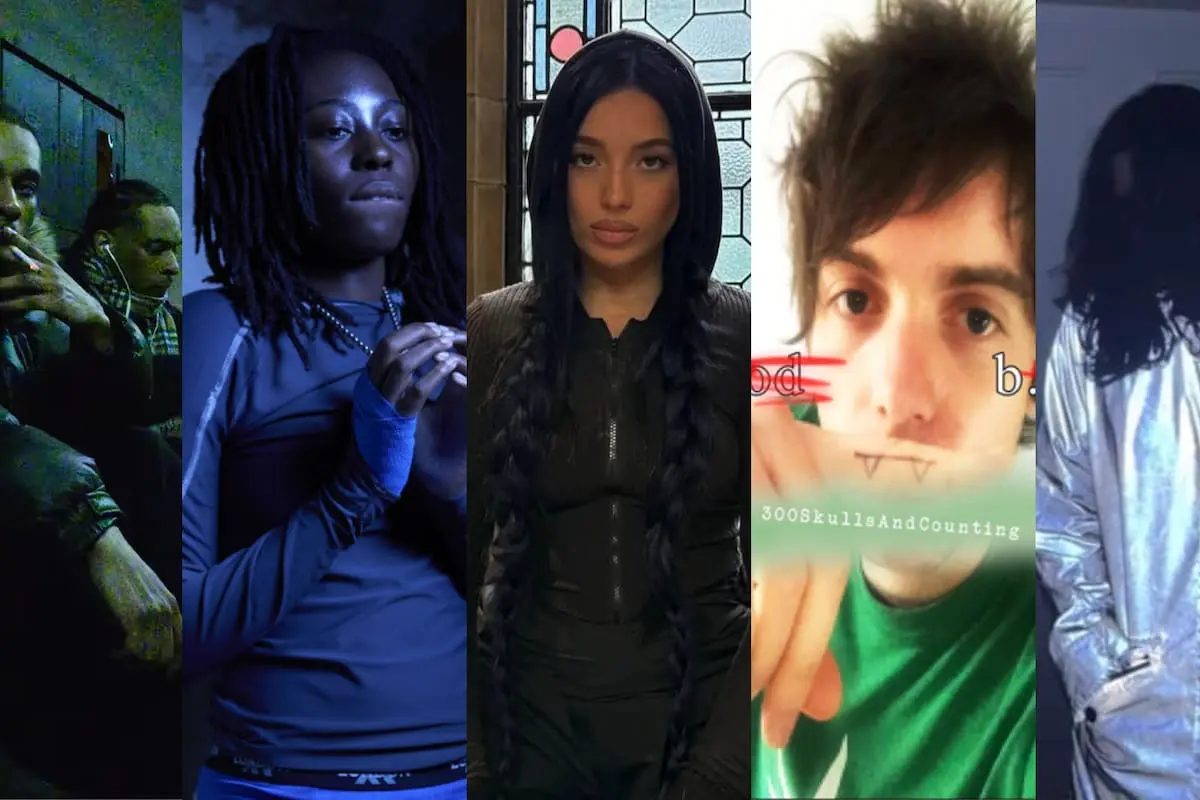
To thoroughly debunk the notion that the UK Ug is running on empty, we examine five defining acts who have risen to prominence in 2026, proving that the scene’s creative health has never been more vibrant.
1. @WAR
For purists looking for the emotional core of the modern UK Ug, the twin duo @WAR (comprising brothers Jonathan and Luke) represents the scene at its absolute zenith.
- The Sound: @WAR encapsulates all the classic hallmarks of the movement—hood popstar hooks reminiscent of Jim Legxacy, time-warping production wrapped in nostalgic, warm distortion, and heart-baring lyricism written by kids who grew up in the shadow of historical disillusionment.
-
Standout Moment: Their single "Child of an Immigrant" features the poignant chorus:
"Mum came to this country to build dreams / Child of an immigrant in my Supreme."
Paired with bittersweet production from rising beatsmith Lez (blood brother to fellow rapper TR Gobrazy), @WAR’s dark, atmospheric soundscapes evoke solitary, hooded walks through the cold streets of South London while pointing toward an expansive future for British music.
2. PIXY
The sheer velocity of modern underground rap is best embodied by Pixy. Despite standing behind "Legacy"—the single most streamed UK rap track of 2026—Pixy can still comfortably claim underground status.
- The Impact: In less than a year since her initial digital upload, Pixy has bypassed traditional promotional channels, securing a major slot on the All Points East festival stage and outperforming legacy releases from national heavyweights like Skepta and Central Cee.
- The Aesthetic: Pixy is a quintessential child of the internet. Her whimsical, effortless delivery echoes the early viral bedroom recordings of Doja Cat. Combined with a penchant for glitched-out, emoji-laden visual media and a prolific yet cryptic digital footprint—managed via fanpage-slash-burner accounts like
@pixyhub—she proves that mystery and massive commercial appeal can successfully coexist.
3. LANCER
With scene pioneer EsDeeKid relocating across the Atlantic, the UK Ug needed a new standard-bearer for masked, enigmatic rap. Enter Lancer.
- The Scale: While modern underground tracks often favor short, punchy runtimes designed for algorithmic consumption, Lancer’s expansive, three-minute-plus compositions function as the rap equivalent of “Bohemian Rhapsody.” His songs seamlessly bridge rock-anthem choruses, rapid-fire rap verses, and unexpected guitar solos.
- The Infrastructure: Managed by Noah Riecansk (creative director of No Fear and rumored brother of Wraith9, the mastermind behind EsDeeKid’s breakout album Rebel), Lancer’s minimal direct social media presence is deceptive. Beneath the mask lies a meticulously calculated rollout orchestrated by some of the sharpest creative minds in contemporary British music.
4. 300SKULLSANDCOUNTING
Is 300SkullsAndCounting strictly "UK Ug"? Purists might debate the classification, but his existence highlights the very definition of the scene: total sonic diffuseness.
- The Fusion: 300Skulls pushes genre-blending to its absolute breaking point. Screamo vocal deliveries, intricate rap verses reminiscent of niche 2010s UK hip-hop acts like Dizraeli and The Four Owls, and happy hardcore production collide to create an artist who, aesthetically, looks like a lost member of You Me At Six.
- The Craft: Hiding beneath a swooshy fringe is a virtuosic songwriter. His single "The Ballad of St. Nick’s Park"—an epic, surreal ode to shopping at a local Spar in his hometown of Leamington Spa—carens wildly between donk, emo, and traditional hip-hop before plunging headfirst into a melodica solo during its climax. It is eccentric, brilliant, and entirely fearless.
5. MORIAH MENSAH
If cultural historians in the year 2000 attempted to envision what rap music would sound like a quarter-century into the future, their imaginations would likely land somewhere very close to Moriah Mensah.
- The Soundscapes: Mensah retains the traditional swagger and technical pocket of classic rap, but transposes it into maximalist, space-age soundscapes. On her breakthrough single "Magazine," grime-era post-2-step kick drums abruptly open up into laser-beam synthesizer lines that would feel equally at home on an underground Berlin trance record.
- The Performance: Oscillating effortlessly between reload-ready sixteen-bar rap verses and soaring, catchy vocal trills, Mensah stretches the structural boundaries of rap music to its absolute limit, signaling a thrilling trajectory for the genre’s next decade.
Official Statements & Industry Perspective
While internet forums indulge in cyclical doom-mongering, industry insiders view the current state of the UK Ug not as a decline, but as a maturation.
Speaking anonymously to cultural trade publications this week, a prominent London-based independent A&R executive noted:
"The panic on Reddit is comical but predictable. When scenes break out of their local echo chambers, the gatekeepers panic because they no longer own the narrative. What we are seeing in 2026 isn’t a lack of talent; it’s a diversification. The kids making music right now grew up with access to every genre in human history simultaneously. They aren’t trying to preserve the underground of 2023—they are actively destroying it to build something stranger and better."
Independent booking agents and festival curators report a surge in demand for boundary-pushing domestic acts, confirming that ticket sales and grassroots community engagement remain exceptionally high across major urban hubs like London, Manchester, Bristol, and Birmingham.
Future Outlook: Where Does the Underground Go From Here?
As the dust settles on the great r/ug_music debate of 2026, the trajectory of the UK Underground points toward continued fragmentation and institutional integration.
- The Professionalization of DIY: As management stables like No Fear and emerging boutique labels begin formalizing the careers of artists like Lancer and @WAR, the boundary between "independent underground" and "signed artist" will continue to blur.
- Sonic Extremism: Rather than retreating to safer, more commercial sounds, the new wave of artists—exemplified by 300SkullsAndCounting and Moriah Mensah—proves that audiences are hungry for greater experimentation. Expect electronic subgenres like donk, speed garage, and hyperpop to bleed even further into the UK rap lexicon.
- The Death of Regionalism: Thanks to platforms like Bandlab and Discord, physical geography matters less than ever. While South London and the Midlands remain cultural incubators, the next wave of UK Ug talent is increasingly decentralized, originating from small towns and rural communities across the British Isles.
Conclusion: The UK Underground is not dying; it is simply growing up, shedding its skin, and mutating into something far too complex for lazy internet commentators to comprehend. For those willing to look past the surface-level churn of viral algorithms, the underground is healthier, weirder, and more vital than it has ever been.