Executive Overview
The web platform is undergoing a profound structural evolution. Over the past few cycles, front-end architecture has moved steadily away from heavy JavaScript-driven abstractions and toward native, declarative primitives built directly into CSS and HTML. The latest edition of What’s !important (#18) highlights a paradigm shift: core layout, micro-interactions, state management, and accessibility are increasingly handled by the browser engine itself.
From the introduction of interest invokers and experimental HTML elements like <geolocation>, to high-performance syntax highlighting powered by the Custom Highlight API and breakthrough CSS architectural proposals like the class prefix selector, developers now possess unprecedented control over the user interface. This report offers a comprehensive breakdown of the most significant web platform updates, technical implementations, and architectural debates shaping the future of front-end development.
Detailed Chronology of Recent Web Platform Advancements
1. Refining Micro-Interactions: Delayed-Then-Instant Tooltips
The humble tooltip is a deceptively tricky UX pattern. If a tooltip appears instantly on hover, moving the mouse across a dense UI creates a chaotic, visually jarring flashing effect. Conversely, introducing a uniform delay across the board makes the interface feel sluggish and unresponsive.
Abhishek Jakhar tackled this UX conundrum by outlining a pattern where tooltips utilize a delayed-then-instant behavior. The initial hover action incurs a calculated delay to prevent accidental triggers. However, once a tooltip is active, moving to subsequent interactive elements triggers subsequent tooltips instantly, preserving UI fluidity.
Building upon Jakhar’s concepts, Chris Coyier demonstrated a modern, declarative implementation using native interest invokers. This approach introduces two critical new CSS properties:
interest-delay-start: Controls the timeout before an element’s interest payload activates.interest-delay-end: Manages how quickly interest dissipates when moving away from the target.
While browser support is currently limited to Chromium-based environments, interest invokers represent a monumental step forward for semantic interaction states, allowing developers to leverage progressive enhancement safely today.
2. Bridging the Gap: The <geolocation> HTML Element
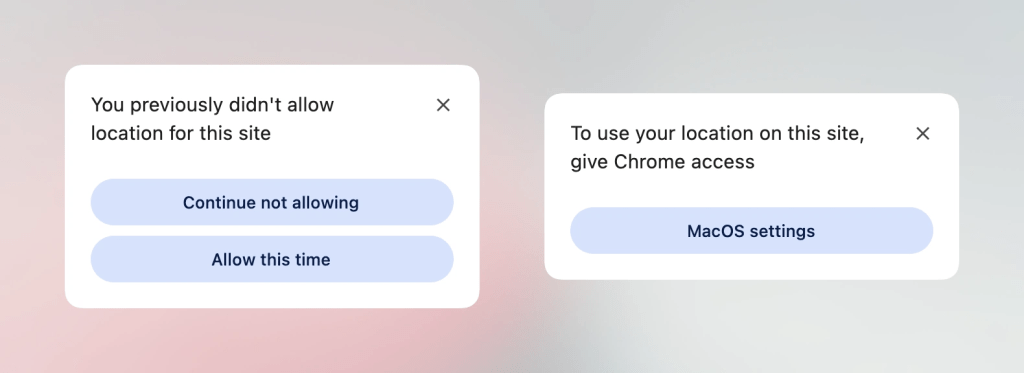
Managing user location data has historically been a friction-heavy endeavor. Developers had to coordinate complex JavaScript APIs, account for fluctuating hardware states (GPS satellites, Wi-Fi triangulation, and cellular tower handshakes), and handle rigid browser permission prompts that were notoriously difficult to reset or restyle.
The proposed <geolocation> HTML element aims to streamline this workflow by codifying location tracking directly into markup. While this native element resolves significant boilerplate hurdles, it introduces distinct layout challenges, notably rigid styling restrictions dictated by user-agent shadow DOM implementations.
Because adoption is currently constrained to Chrome, leading educators like Piccalilli have published integration strategies showing how to blend the native <geolocation> element with the legacy JavaScript Geolocation API. This hybrid fallback pattern allows engineering teams to future-proof their codebases, adopting next-generation declarative elements while maintaining robust cross-browser compatibility today.
3. High-Performance Syntax Highlighting with MicroLighter
Syntax highlighters have traditionally relied on heavy Document Object Model (DOM) manipulation, wrapping individual tokens in custom <span> elements with inline classes. This approach can severely degrade rendering performance on documentation-heavy pages with extensive code blocks.
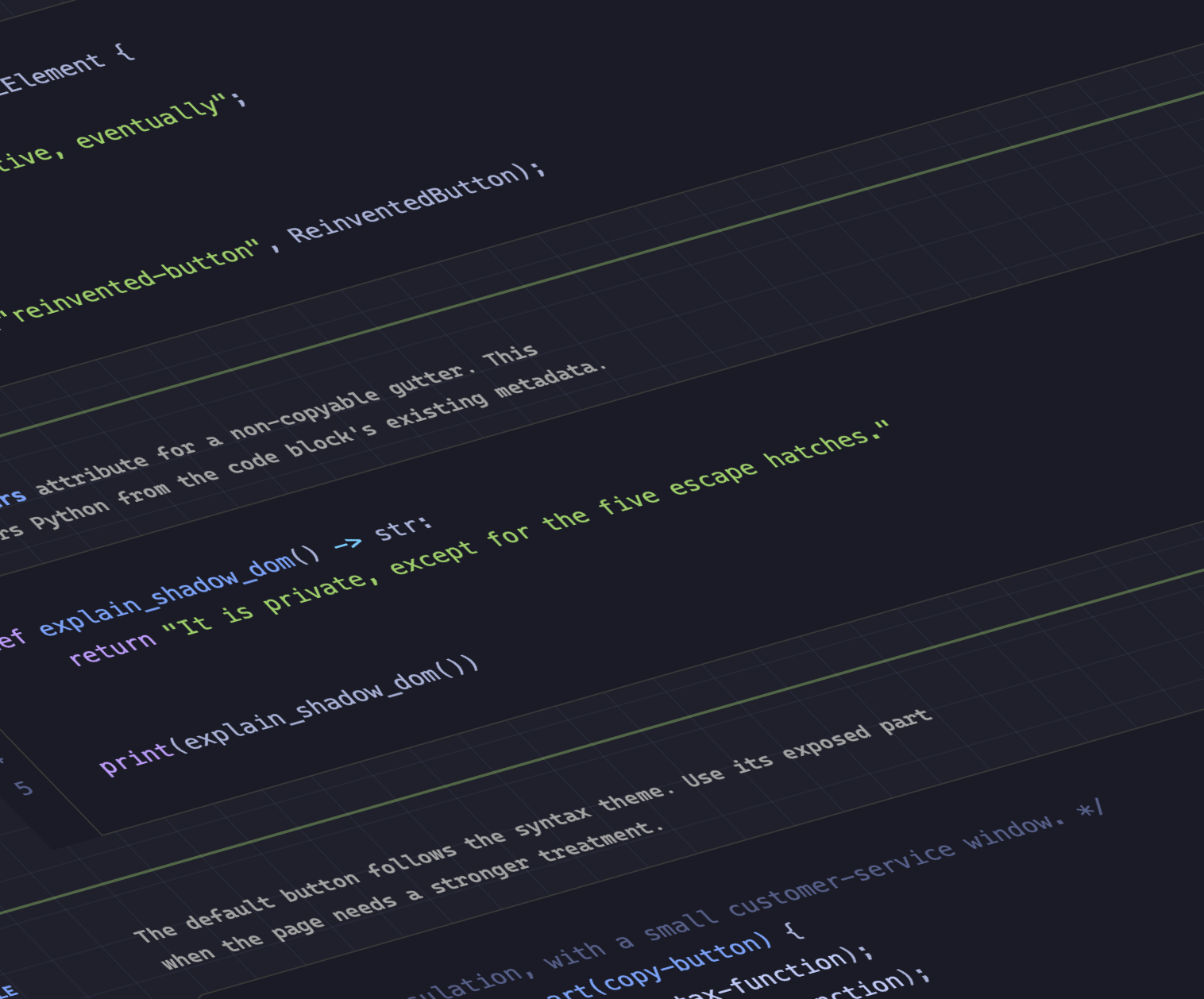
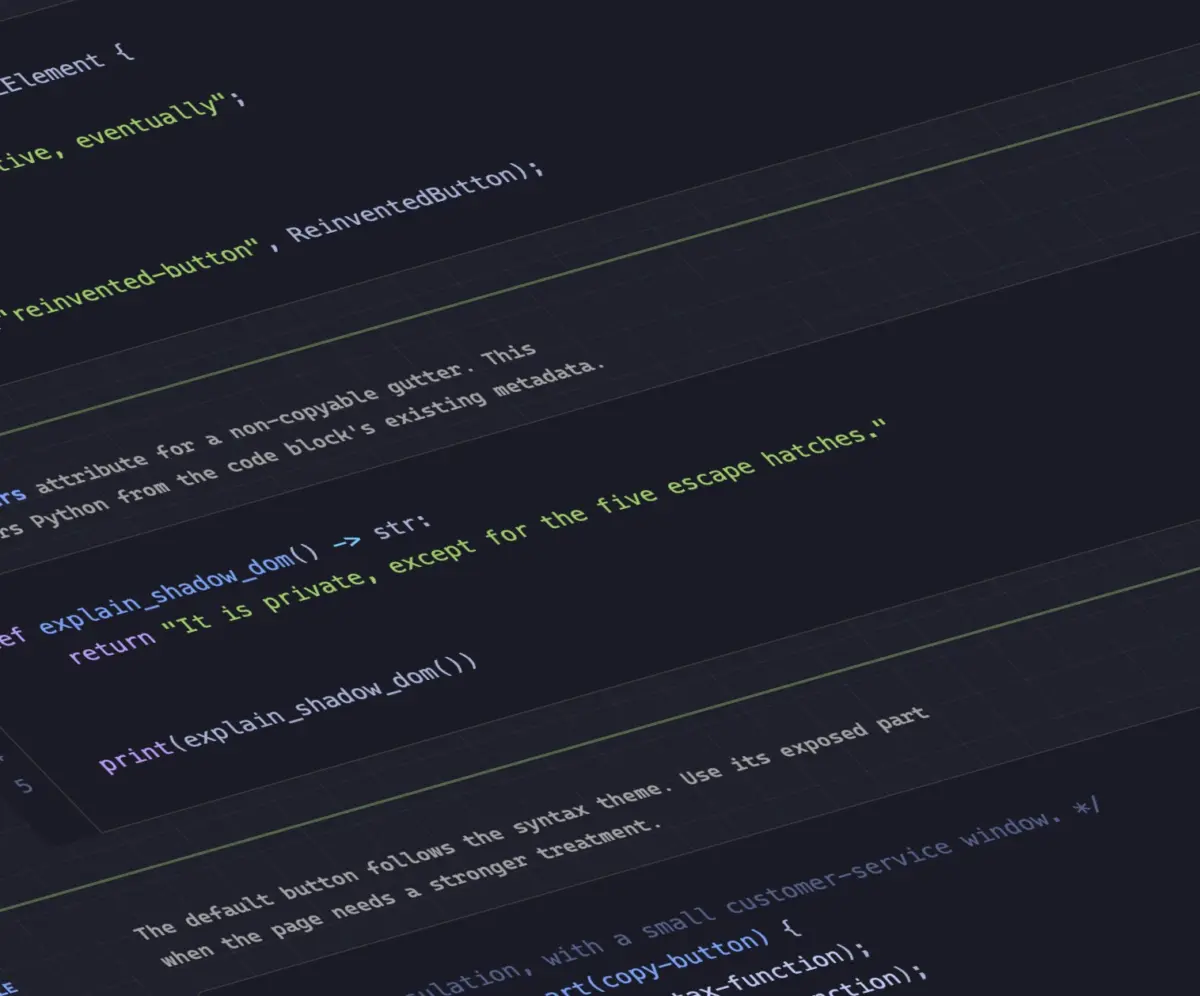
Dave Rupert introduced MicroLighter, an ultra-lightweight syntax highlighter built upon the modern Custom Highlight API and the ::highlight() pseudo-element. Rather than mutating the DOM tree, MicroLighter registers text ranges and applies styles programmatically via CSS. Geoff Graham and Dave Rupert have documented extensive guides on implementing MicroLighter, highlighting its superior rendering performance, clean separation of concerns, and native-level text selection preservation.
4. Unlocking Layout Metadata: CSS Grid to CSS Variables
One of the most persistent limitations of CSS has been the unidirectional flow of data: layout engines calculate metrics (like cell dimensions, row counts, and column tracks), but this information has traditionally been trapped inside the layout box, inaccessible to styling rules or component logic.
Temani Afif dismantled this barrier by demonstrating innovative techniques to extract CSS Grid structural information directly into CSS custom properties. By establishing explicit rules—such as requiring uniform column widths—developers can now dynamically capture row/column indexes and cell coordinates.
Afif demonstrated a breathtaking application of this technique: calculating hover proximity using purely modern CSS. By mapping grid index variables to mathematical calculation functions (calc(), clamp()), interfaces can dynamically adjust scaling, shadowing, or opacity based on how close the user’s cursor is to a specific grid cell, all without a single line of JavaScript tracking mouse coordinates.
5. Architectural Debates: Two-State vs. Tri-State Dark Mode
As dark mode shifts from a bleeding-edge feature to a baseline user expectation, design systems are grappling with state management architectures. A vigorous debate has emerged across the developer community:
- The Two-State Camp: Champions like Lea Verou advocate for a clean, binary toggle (light vs. dark), arguing that it reduces cognitive load and aligns with standard human mental models.
- The Tri-State Camp: Advocates like Bramus argue for a explicit three-state system (light, dark, and system-default), ensuring users can override operating system preferences independently.
- The Hybrid Approach: Popularized by Vale.Rocks, the "auto-until-overridden two-state approach" offers the best of both worlds—respecting the system preference by default, but locking into an explicit user-selected state the moment a manual toggle is engaged.
6. The Class Prefix Selector and named-feature()
Bramus unveiled two game-changing proposals designed to streamline CSS authoring and feature detection:
- The Class Prefix Selector: To target multiple classes sharing a common naming convention (e.g., BEM modifiers or utility classes), developers have historically relied on clumsy attribute selectors like
[class^="something-"]. These attribute selectors carry heavy performance penalties because the browser must scan string values across the DOM. The proposed class prefix selector (.something-*) provides a native, high-performance syntax that is significantly cleaner and optimized for browser rendering engines. - The
@supports named-feature()Function: Feature queries have traditionally been limited to checking property-value pairs. The newnamed-feature()function—currently landing in Chrome—allows developers to query hyper-specific browser capabilities that were previously undetectable, such as whether a rendering engine correctly applies CSS transforms to elements governed by anchor positioning.
7. Balanced Layouts: flex-wrap: balance
Following the massive success of text-wrap: balance in improving typographic layouts, the web platform is expanding the concept of balancing to layout engines. Ahmad Shadeed highlighted the introduction of flex-wrap: balance in Chrome.
This new property automatically distributes items across flex rows or columns to avoid awkward orphan items (where a final wrapping line contains only a single, isolated flex item). By creating visually harmonious, evenly distributed flex containers, developers can eliminate complex manual media queries and JavaScript layout calculations.
Supporting Context & Metrics
The velocity of CSS specification updates has accelerated significantly over the past 24 months. Industry data and developer surveys indicate clear trends regarding the transition to native browser primitives:
| Feature / API | Primary Target Use Case | Current Support Level | Performance Impact |
|---|---|---|---|
Interest Invokers (interest-delay-*) |
Tooltip and popover hover orchestration | Chromium Experimental | High (Eliminates custom JS timers) |
<geolocation> HTML Element |
Native coordinate capture and permission flows | Chromium Experimental | Medium (Reduces JS boilerplate) |
Custom Highlight API (::highlight()) |
High-performance syntax highlighting & search | Widely Supported (Evergreen) | Exceptional (Zero DOM mutation) |
| Grid Custom Properties Integration | Layout-aware styling and hover proximity | Modern CSS Engines | High (Enables layout-driven styles) |
Class Prefix Selector (.selector-*) |
Scoped class-name pattern matching | Proposed / In-Discussion | High (Faster than attribute selectors) |
flex-wrap: balance |
Harmonious item distribution across rows | Chromium (New) | High (Improves aesthetic alignment) |
These metrics underscore a deliberate industry-wide movement toward offloading layout calculations, state management, and UI micro-interactions from user-space JavaScript execution threads to the browser’s optimized native rendering pipeline.
Official Statements and Expert Perspectives
The architectural shift toward native browser features has prompted commentary from leading voices across the web standards community:
"When we shift responsibilities like layout measurements and highlighting into native CSS APIs, we aren’t just writing less JavaScript—we are giving the browser engine the semantic context it needs to optimize paint and layout cycles natively."
— Dave Rupert, Component Architect & Open Source Maintainer
On the debate surrounding design system state architectures, UX theorists emphasize the importance of user agency:
"A dark mode toggle shouldn’t trap the user in an automated loop. Whether you prefer a strict tri-state toggle or an auto-overridden binary model, the golden rule of modern interface design is to honor user intent above system assumption."
— Vale.Rocks, Interface Engineer
Furthermore, the introduction of advanced selectors and feature queries points toward a more expressive, declarative authoring experience. As Bramus noted in recent technical breakdowns:
"We are eliminating the hacks. Features like the class prefix selector and
named-feature()bridge long-standing gaps in CSS authoring, proving that CSS continues to mature into a powerful, highly performant programming language for visual design."
Future Outlook
As the web platform transitions into the cooler autumn months, the roadmap for CSS and HTML development is exceptionally bright. The convergence of layout-aware styling (via CSS grid variable extraction), sophisticated state management (via interest invokers and advanced feature queries), and rendering-optimized micro-APIs (such as the Custom Highlight API) signals the maturation of modern front-end engineering.
Developers are encouraged to adopt these cutting-edge features through progressive enhancement strategies. By utilizing robust fallbacks for non-Chromium environments while leveraging native browser primitives where available, engineering teams can build resilient, high-performance web applications that require significantly less JavaScript overhead.
The future of the web is declarative, performant, and built directly into the browser. Stay tuned to upcoming editions of What’s !important as these specifications graduate from experimental flags to universal web standards.