Date: October 22, 2026
Author: Global Infrastructure & Technology Desk
Estimated Read Time: 6–8 minutes
Executive Overview
The artificial intelligence boom is colliding with a hard physical reality: the electrical grid. As specialized "neocloud" providers scale up to meet an insatiable global appetite for high-performance compute, they are increasingly running up against massive infrastructure bottlenecks.
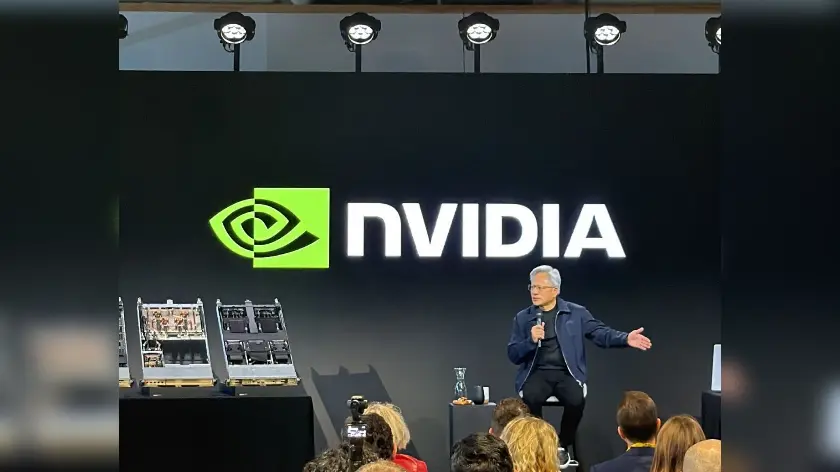
Speaking at GTC Berlin, Nvidia Chief Executive Jensen Huang addressed mounting industry anxiety over the financial pressures facing neocloud operators. Huang firmly rejected the notion that financing strains point to structural weaknesses within the neocloud business model. Instead, he framed the capital and working-capital challenges as a direct byproduct of overwhelming, unprecedented demand. According to Huang, neocloud providers remain entirely "sold out," and their operational hurdles stem from surging customer interest rather than systemic failure.
However, Huang’s vote of confidence arrives at a critical juncture for the sector. Just days prior to his remarks, technology giant Microsoft walked away from a high-profile anchor agreement for Nscale’s flagship data centre project in Loughton, Essex. The withdrawal was triggered by staggering delays in securing local power grid connections—delays that British energy authorities warn could stretch into the early-to-mid 2030s.
This high-stakes collision between rapid AI expansion and legacy grid capabilities highlights a growing divergence: while compute capacity can be manufactured at breakneck speeds, generating and delivering the power required to run it remains mired in red tape, supply chain constraints, and long-term infrastructure planning cycles.
Detailed Chronology: The Loughton Project and the Microsoft Exodus
To understand the severity of the current grid crisis, one must trace the rapid escalation—and subsequent stumbling blocks—of Nscale’s UK operations.
- January 2025: Nscale proudly announced a monumental £2 billion ($2.6 billion) investment plan targeting the UK data centre market. The centerpiece of this strategy was a 50-megawatt (MW) state-of-the-art AI data centre in Loughton, Essex, slated to go live in the fourth quarter of 2026. The site was envisioned as a cornerstone of Britain’s domestic digital infrastructure, designed to anchor hyper-scale AI workloads.
- April 2025: Cracks in the UK’s ambitious timeline began to show when OpenAI abruptly paused its proposed UK "Stargate" project—a joint initiative involving Nvidia and Nscale—citing prohibitively high domestic energy costs.
- Mid-October 2026: Weeks before a planned U.S. initial public offering (IPO) for the neocloud operator, Microsoft abruptly pulled out of its anchor tenancy agreement for the Loughton facility. The catalyst? Utility assessments revealed that local grid power for the site could not be reliably delivered until the early-to-mid 2030s, rendering the original Q4 2026 operational target impossible.
- Late October 2026 (GTC Berlin): Addressing international press, Jensen Huang downplayed the broader implications of the Microsoft exit, offering reassurances regarding Nvidia’s strategic positioning and financial exposure to the neocloud ecosystem. Meanwhile, Nscale confirmed that while the Microsoft Essex partnership had dissolved, its broader contracts remained unaffected, and alternative power sourcing options were actively being explored.
Supporting Context & Metrics: The Anatomy of a Grid Crisis
The plight of the Loughton data centre is far from an isolated incident; it serves as a bellwether for a systemic bottleneck gripping the entire digital infrastructure sector.
The Infrastructure Gap
During a recent Capacity roundtable discussion in London, a striking 70% of infrastructure leaders reported that they expect commercial and industrial grid connections to take more than 18 months to materialize. For AI infrastructure—where technological obsolescence cycles move in months rather than years—an 18-month wait is punishing. When grid timelines stretch past half a decade, as seen in Essex, the financial viability of the project is severely compromised.
The Neocloud Vulnerability Matrix
Neocloud providers occupy a uniquely exposed position in the digital economy:
- High Capital Intensity: Neoclouds require immense upfront capital to acquire tens of thousands of advanced GPUs (such as Nvidia’s Blackwell and successor architectures).
- Concentrated Customer Bases: Relying heavily on a handful of hyperscale anchor tenants (like Microsoft or OpenAI) leaves neoclouds vulnerable if those partners pivot due to external constraints.
- Site-Specific Hardware Commitments: Unlike traditional hyperscalers with globally distributed, diversified portfolios, neoclouds often tie substantial capital expenditure to specific, localized real estate parcels.
When a grid connection slips, a traditional hyperscaler can often absorb the delay or shift workloads to an adjacent availability zone. For a neocloud or a regional AI sovereignty initiative, a missed grid date often translates directly into a lost customer, delayed revenue, and immense pressure on debt servicing.
The Hardware and Power Bottleneck
Even when companies attempt to bypass traditional utility grids via on-site generation, they face severe manufacturing queues. Industry speakers at the recent Capacity Europe conference noted that lead times for industrial-scale back-up and primary power generators have ballooned to two years.
Furthermore, the scale of power required by modern AI factories is unprecedented. Jensen Huang himself characterized the current power demand as "the best opportunity in a century for market-driven investment in sustainable energy." However, bridging the gap between a six-month factory build time and a ten-year grid upgrade cycle remains an unsolved puzzle for developers worldwide.

Official Statements and Industry Response
Addressing the press at GTC Berlin, Jensen Huang was keen to project stability. When asked about Nvidia’s financial exposure to neoclouds facing funding pressures, Huang was unequivocal:
"You can’t solve the absence of demand. The demand for neocloud capacity is incredible, and these operators are completely sold out. We have invested enough because the underlying market dynamics are robust. The need for capital and working capital follows from that extraordinary demand, not from structural weakness."
Nvidia’s commitment to its neocloud partners extends well beyond high-level rhetoric. To mitigate market anxiety, Nvidia has increasingly stepped in to backstop its ecosystem. Notably, the chipmaker has begun agreeing to utilization floors with select neocloud partners—such as Sharon AI—guaranteeing that Nvidia will rent back unused GPU capacity if end-user demand temporarily dips.
Regarding the engineering and logistical hurdles of modern AI deployments, Huang offered perspective on how compressed build timelines have become:
"The work is hard, and there is no substitute for it. Three years used to be an acceptable build time for systems of this scale. Today, customers expect these massive AI factories to be up and running within six months."
Nscale, responding to market scrutiny following Microsoft’s exit from the Loughton project, maintained an optimistic tone. Representatives emphasized that the company’s relationship with Microsoft remains fundamentally strong, and that the Essex grid delay has had zero impact on its separate, ongoing contractual obligations elsewhere. Nscale reiterated its dedication to realizing the Loughton project through alternative energy procurement strategies.
Future Outlook: Navigating the AI Energy Frontier
As the industry looks toward 2027 and beyond, the trajectory of AI infrastructure will be defined less by silicon manufacturing capacity and more by energy procurement and grid engineering.
Nvidia’s Platform Flexibility
To insulate its supply chain against localized infrastructure failures, Nvidia is leaning heavily on architectural standardization. By maintaining a common platform across cloud providers worldwide, Huang noted that Nvidia retains the operational agility to pivot compute allocations. If a specific data centre project experiences debilitating grid delays, Nvidia can redirect silicon shipments to alternative customers, ensuring that aggregate supply reaches active markets as swiftly as possible.
Additionally, Nvidia is pushing forward with containerised AI factory solutions, such as its DSX pod units manufactured directly within the supply chain. Slated for initial deployment late this year, these modular units are designed to streamline planning, deployment, and integration—though Huang readily concedes that accelerated manufacturing cannot magically conjure electrons out of thin air.
The Road Ahead for Sustainable Energy
The friction between data centre operators and national power grids is forcing a rapid evolution in how the tech sector approaches energy. Long-term solutions will likely require heavy private investment into next-generation energy verticals, including:
- Small Modular Nuclear Reactors (SMRs): Tech giants are increasingly exploring dedicated nuclear power purchase agreements (PPAs) to bypass strained municipal grids entirely.
- Grid Management Technology: Advanced AI-driven software is expected to play a critical role in optimizing power distribution and load balancing.
- On-Site Microgrids: Combining solar, wind, and battery energy storage systems (BESS) directly at data centre sites to achieve partial or total energy independence.
Conclusion
Jensen Huang’s defense of neocloud financing underscores a fundamental truth of the current technological epoch: the world wants AI compute faster than the physical world can power it. While neoclouds will continue to navigate turbulent capital markets and frustrating grid delays—as vividly demonstrated by the setbacks in Loughton—the underlying economic drivers remain fiercely intact.
For the UK and international markets alike, the lesson is clear. The winners of the next phase of the AI revolution will not simply be those who can design the fastest chips, but those who can successfully forge resilient, reliable energy pathways to bring them to life.