Executive Overview
Few vehicles in the history of the modern automotive industry have been as intensely polarized, widely unloved, and frequently ridiculed as Elon Musk’s radical attempt to redefine the venerable all-American pickup truck. What began as a dystopian fever dream forged in stainless steel is now marching toward an unceremonious end. According to recent announcements made by CEO Elon Musk, production of the Tesla Cybertruck is slated to wind down permanently by mid-2027.
The rationale behind the termination is driven less by standard product life-cycle mechanics and more by a aggressive strategic pivot within Tesla. The company is desperately clearing manufacturing space at its sprawling Gigafactory in Austin, Texas, to reallocate assembly lines for the Cybercab—a gold-toned, pedal-free, steering-wheel-devoid autonomous robotaxi that represents Musk’s bet on a future defined by AI and transportation-as-a-service rather than human-piloted electric vehicles.
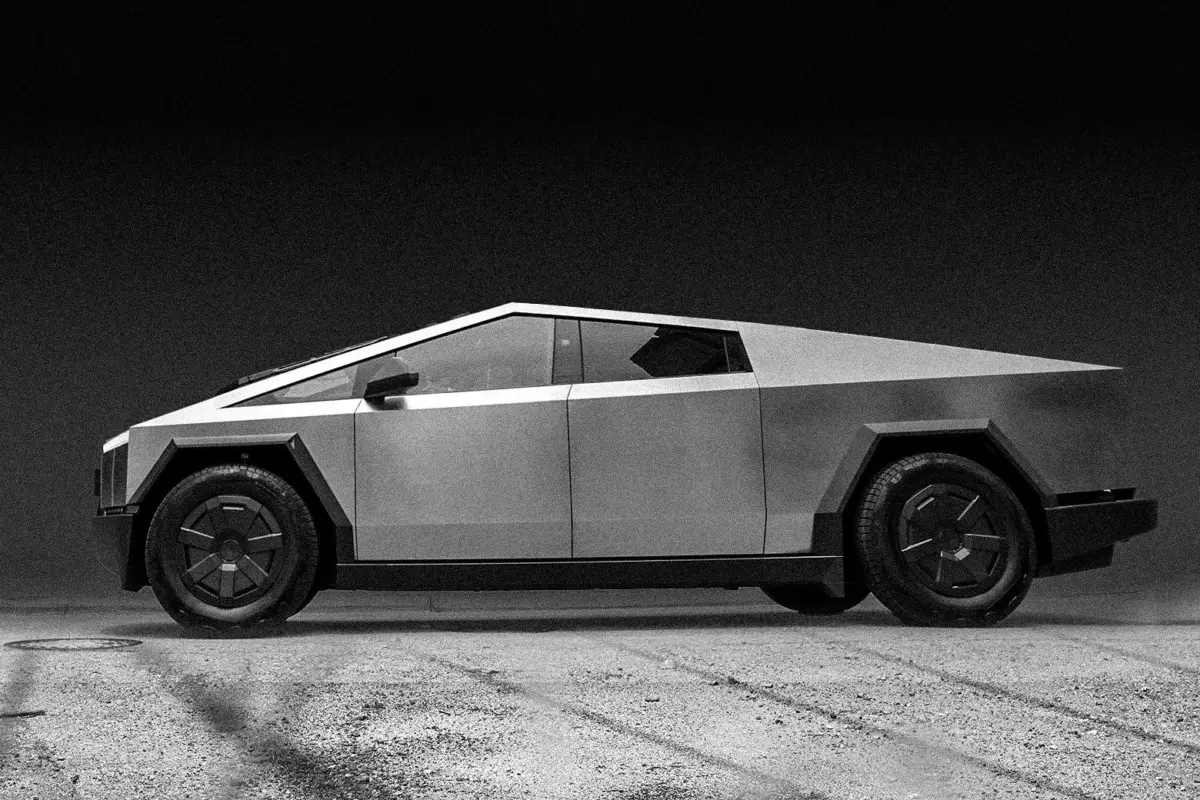
For critics, the impending demise of the Cybertruck will be met with a collective sigh of relief. With its aggressive, wedge-shaped silhouette and polarizing road presence, the vehicle came to visually encapsulate Musk’s transformation over the past decade. Once fêted as a climate-conscious champion of the political left, Musk’s pivot toward right-wing populist politics, provocative public stunts, and aggressive culture-war engagement left the Cybertruck stranded as a rolling monument to political and cultural friction.
Yet, beneath the political commentary lies a sobering business reality: the Cybertruck was a high-risk, high-cost gamble that failed to capture the lucrative core pickup market. Plagued by soaring price tags, delayed deliveries, persistent quality control issues, and a fundamental mismatch between its futuristic aesthetics and the practical needs of actual truck buyers, the Cybertruck is destined to go down in history as one of the most audacious, expensive, and flawed experiments in automotive history.
Detailed Chronology: From Sketchpad to Scrapyard
1. The 2019 Unveiling: Hubris in Hard Angles
When the Cybertruck was officially unveiled in November 2019 at Tesla’s design studio near Los Angeles, it was introduced with an explosive blend of technological audacity and sheer corporate arrogance. The vehicle’s brutally angular, unpainted stainless-steel design was rumored to have sprung directly from the mind of Elon Musk himself. According to industry lore, the Tesla CEO sketchily drew the wedge on a piece of paper with a ruler, handed it to chief designer Franz von Holzhausen, and instructed the engineering team to make it a reality.
The reveal itself was an unmitigated disaster that instantly entered pop-culture infamy. Designed to showcase the truck’s allegedly indestructible "Armor Glass," the demonstration went sideways when lead designer von Holzhausen threw a metal ball at the driver-side window, shattering it completely. A visibly unfazed Musk had to deliver the rest of the presentation standing in front of a shattered glass pane—a prophetic, if embarrassing, metaphor for the cracks that would plague the vehicle’s commercial rollout.
2. Delays and Delivery Disappointments
Originally promised to hit the market by late 2021 with a starting price tag of $40,000, the Cybertruck immediately ran into engineering purgatory. Bending and stamping ultra-hard 30X cold-rolled stainless steel proved vastly more difficult than Tesla’s engineers anticipated. The rigid exoskeleton design created massive manufacturing bottlenecks, forcing repeated delays.
It wasn’t until early 2024—more than four years after its initial debut—that the first production models finally began reaching customer driveways. By that time, the economic and automotive landscape had shifted dramatically.
3. The End of the Line: Mid-2027
The final nail in the coffin arrived on a Friday afternoon, following a tumultuous political cycle in which candidates heavily bankrolled by Musk suffered significant mid-term losses. Taking to X (formerly Twitter), Musk announced that Cybertruck production would be phased out entirely by mid-2027. The primary objective is to liberate critical floor space in Austin to scale up production of the Cybercab. With Model S and Model X production already halted earlier in the year, the Cybertruck joins a growing list of Tesla models being cast aside as the company aggressively transforms into an artificial intelligence and robotics enterprise.
Supporting Context & Metrics: By the Numbers
To understand why the Cybertruck is being ushered out the door, one need only look at the sobering metrics that define its production run.
- Production Capacity vs. Reality: The Tesla Gigafactory in Austin, Texas, was engineered with the ambitious capacity to pump out up to 250,000 Cybertrucks annually.
- Actual Sales Figures: Total cumulative sales of the vehicle have stalled at fewer than 75,000 units globally, a catastrophic undershoot of its production ceiling.
- Price Inflation: The promised $40,000 base price evaporated entirely. When order books were eventually populated, the entry-level rear-wheel-drive model debuted at $82,490, while the mid-tier dual-motor variant climbed to $92,490. The top-trim, aggressively named "Cyberbeast" topped out at a staggering $102,490. (Tesla has quietly cycled through pauses and halts on accepting new reservations for the base variants.)
- The SpaceX Bailout: In an extraordinary display of internal corporate synergy to prop up flagging sales, reports surfaced that Musk’s aerospace firm, SpaceX, purchased tens of millions of dollars worth of surplus Cybertrucks to absorb excess inventory that commercial buyers refused to touch.
- Quality and Recalls: The vehicle has been subjected to a continuous stream of safety and quality recalls. Owners have reported everything from sudden accelerator pedal entrapments to exterior trim pieces literally flying off vehicles at highway speeds.
Official Statements and Industry Analysis
Industry analysts and automotive historians have long pointed out the fundamental identity crisis plaguing the Cybertruck. The U.S. pickup truck market is the single most profitable and fiercely defended segment in the domestic automotive industry. For decades, traditional giants like the Ford F-Series—America’s perennial top seller since the Reagan administration—have maintained their dominance by catering to a very specific set of consumer demands.
The Mismatch of Demands
"It was hard to see who the Cybertruck was actually for," notes a veteran automotive journalist who covered the 2019 debut. "Your average pickup buyer, even if they had the disposable income to afford an eight-figure EV, had little incentive to entertain Musk’s sci-fi vision."
- The Working Class: Contractors, construction workers, and agricultural professionals require durability, payload capacity, and reliable towing. They care little about sprinting from 0 to 60 mph in under five seconds, but they care deeply about a truck bed that isn’t compromised by bizarre geometric styling or motorized covers that easily jam with job-site debris.
- The EV Enthusiast: Buyers seeking a functional electric truck gravitated heavily toward competitors like the Rivian R1T. While Rivian offered a polarizing front fascia, the rest of the vehicle functioned like a conventional, highly capable pickup truck and was available years before Tesla ever delivered its first unit.
- The Luxury Aspirant: Consumers purchasing luxury trucks for lifestyle purposes—such as the Ford F-150 King Ranch, complete with real wood interior accents and high-end 14-speaker audio systems—found little comfort in the Cybertruck’s brutalist, spartan stainless-steel cabin.
The "Exotic" Anomaly
Industry insiders increasingly characterize the Cybertruck not as a truck, but as an "exotic car"—a fever-dream hypertruck engineered exclusively to appeal to cryptocurrency millionaires, tech enthusiasts steeped in video game lore, and devout Tesla loyalists.
"The vehicle was supposed to evoke fleets of rovers rolling off SpaceX Starships on the surface of Mars," explains one mobility analyst. "And to its credit, it succeeded in delighting its core, albeit limited, audience. It put stainless steel back into the automotive conversation for the first time since the DeLorean. But cultural novelty does not translate into sustainable mass-market volume."
Future Outlook: A Misunderstood Collectible or a Corporate Footnote?
As Tesla aggressively phases out the Cybertruck by mid-2027, its legacy on American highways will undoubtedly be complicated.
Despite its commercial underperformance and manufacturing shortfalls, the Cybertruck will not disappear overnight. Instead, automotive historians predict it will undergo a fascinating metamorphosis. It is poised to become a sought-after collector’s item—a swaggering, pre-COVID artifact of a time when Tesla possessed the market dominance and cultural audacity to throw caution to the wind and build whatever crossed its CEO’s mind.
For die-hard aficionados, the vehicle will remain an emblem of a bold, if ultimately doomed, attempt to break the established paradigm of utility vehicle design. It was a massive swing for the fences by a company that changed the global automotive landscape forever—even if its most futuristic creation turned out to be fundamentally impractical.
The Cybertruck proved that while you can command the attention of the world with a ruler and a sheet of stainless steel, forcing the world to buy it is an entirely different matter.