Executive Overview
For generations, the post-Halloween ritual followed a sacred, fiercely guarded taxonomy. Pillowcases dumped onto bedroom floors were ruthlessly sorted into categorical hierarchies: the baseline stalwarts (Smarties, Tootsie Rolls, Dum Dums), the mid-tier nostalgic favorites (Snickers, Reese’s Peanut Butter Cups), and the coveted crown jewels—Skittles, Warheads, Starbursts, and Sour Patch Kids—rationed out across the bleak landscape of November.
This hyper-specific curation of childhood treats was governed by personal taste, sugar content, and textural preference. Today, however, a new, highly politicized sorting metric is muscling its way into the national consciousness: the presence of petroleum-based synthetic dyes.
Spearheaded by Health and Human Services Secretary Robert F. Kennedy Jr. and the broader "Make America Healthy Again" (MAHA) movement, a relentless war on artificial food colorings has evolved from fringe dietary philosophy into a multi-million-dollar corporate headache. Last year, the Department of Health and Human Services and the FDA announced an aggressive initiative to phase out petroleum-based synthetic dyes from the American food supply. Kennedy’s argument is stark and uncompromising: major food corporations "shouldn’t be feeding it to the rest of us," frequently dismissing iconic grocery store staples as "food-like substances" riddled with poisons straight out of a petroleum refinery.
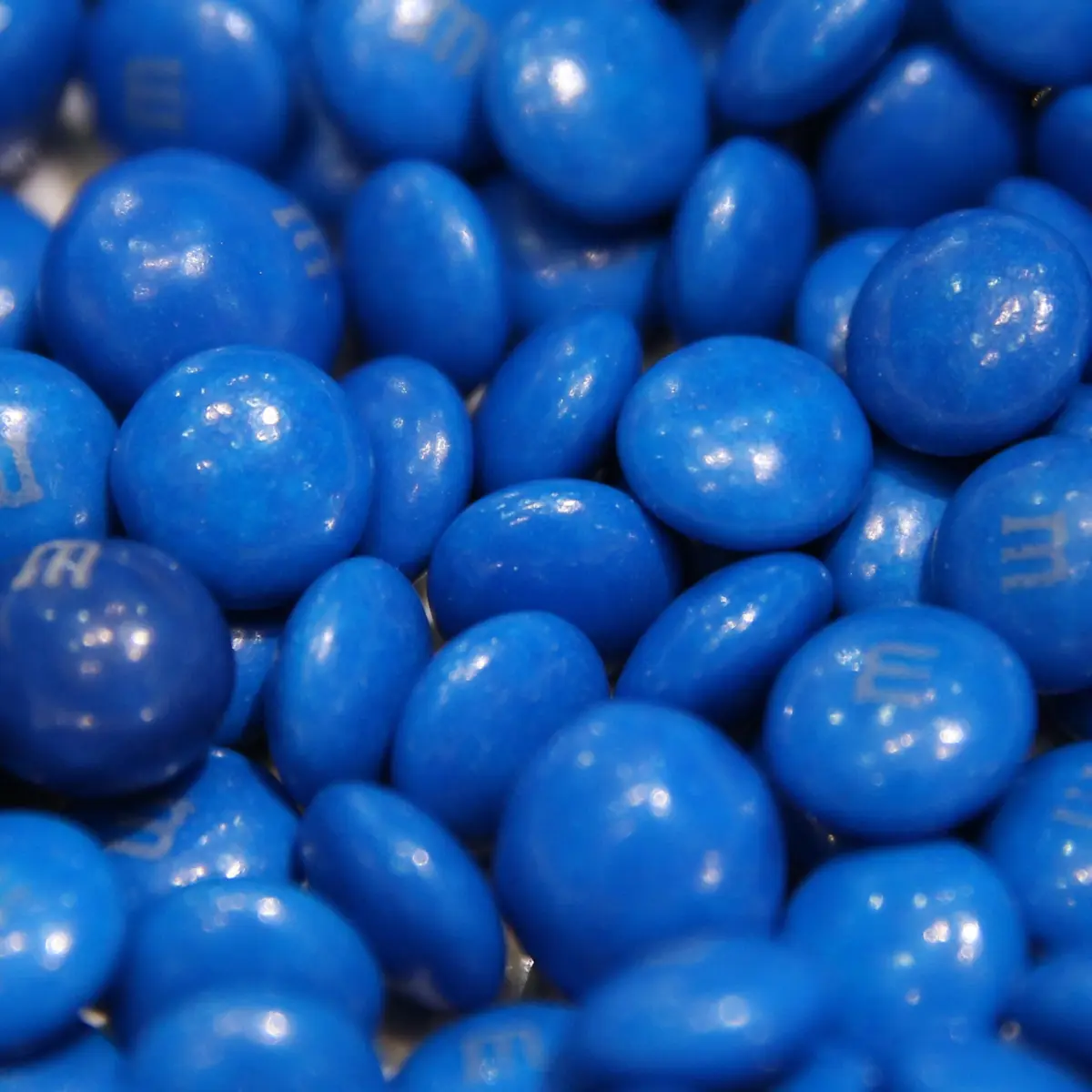
The shockwaves of this administrative and cultural pressure have hit the confectionery sector with devastating financial and logistical force. Consider Mars, the corporate titan behind M&Ms. In a bid to appease shifting consumer demands and regulatory pressures, Mars promised to roll out an all-natural version of its flagship candy. Yet, as investigative reporting by the Wall Street Journal revealed, this "MAHA makeover" hit a glaring, cyan-colored roadblock. The company’s latest natural offering is conspicuously missing one of the most iconic hues in the candy spectrum: the blue M&M.
This article examines the complex intersection of federal health policy, corporate food science, and consumer habits. By exploring the industrial hurdles of replacing synthetic dyes, evaluating the polarized debate over food safety, and detailing the massive logistical pivots required to redesign a legacy brand, we explore what happens when political ideology forces a multi-billion-dollar industry to rethink how it colors our food.
Detailed Chronology: The Road to the "Autumnal" M&M
The friction between Washington’s health crusaders and Big Confectionery did not happen overnight. It is the culmination of years of escalating rhetoric, shifting regulatory stances, and unprecedented corporate capital expenditure.
The Rise of the MAHA Movement and Anti-Dye Rhetoric
Robert F. Kennedy Jr.’s crusade against synthetic food additives spans well over a decade, but it found unprecedented institutional leverage during the recent political realignment. Long before holding a high-ranking federal health post, Kennedy targeted ubiquitous snack foods—including Doritos, Cheez-Its, Cap’n Crunch, and standard gummy bears—arguing that their ingredient lists were laden with dangerous chemical compounds.
On various media platforms, including Fox News and independent digital channels, Kennedy popularized the narrative that American children are routinely fed synthetic chemicals derived directly from petroleum refineries. He has repeatedly linked these ingredients to behavioral disorders, such as childhood hyperactivity, as well as neurological challenges and potential carcinogenic risks.
While the scientific establishment has long maintained a more nuanced view, the political momentum proved impossible for food manufacturers to ignore. Facing mounting public scrutiny, companies that once relied on cheap, stable synthetic chemicals to guarantee vibrant, uniform color profiles found themselves thrust onto the defensive.
Mars and the Quest for Natural Color
In response to the shifting regulatory landscape and consumer preferences, Mars made a high-stakes public commitment to develop all-natural alternatives for its core product lines. The goal was simple in theory, yet extraordinarily complex in practice: replace petroleum-derived synthetic dyes—such as Blue 1, Red 40, and Yellow 5—with plant-based, naturally derived colorings without alienating consumers accustomed to decades of visual consistency.
To understand the sheer scale of this undertaking, food reporter Jesse Newman of the Wall Street Journal went inside a massive Mars manufacturing plant in Topeka, Kansas. The facility operates as an industrial colossus, processing millions of small chocolate orbs—referred to in the industry as "lentils"—on a daily basis.
The standard manufacturing process relies on massive industrial machines known as "pans," which resemble industrial-scale tumble dryers. The chocolate centers tumble endlessly inside these rotating drums while liquid synthetic dyes, suspended in sugary syrups, are precisely sprayed onto the candy shells. The synthetic dyes arrive at the factory as liquids, making them exceptionally easy to handle, mix, and pump through intricate pipeline networks.
The Spirulina Bottleneck
When Mars engineers sought a natural alternative for blue, they turned to spirulina, a blue-green algae prized for its natural pigment profile. However, substituting a chemical dye with an organic algae derivative introduced a cascading series of engineering nightmares:
- State of Matter Discrepancy: Unlike liquid synthetic dyes, spirulina arrives at industrial food plants as a dry powder. Integrating a powder into a wet, high-volume sugar syrup recipe fundamentally altered the viscosity of the mixture.
- Pipeline Clogs and Viscosity Issues: Because spirulina is fundamentally a protein, the resulting dye mixture became significantly thicker than its synthetic predecessor. This heavy mixture routinely clogged plant piping, moving sluggishly and disrupting the smooth, continuous flow required for high-speed manufacturing.
- Food Safety and Bio-Buildup Hazards: The proteinaceous nature of spirulina meant that it tended to coat and adhere to the interior surfaces of the factory machinery. This residual buildup created severe sanitation and food safety hazards, presenting a prime environment for mold growth and bacterial contamination.
The Compromise: Launching the Muted Line
Faced with spirulina’s physical limitations and millions of dollars in retrofitting costs—involving roughly 300 distinct pieces of machinery per plant—Mars realized that a complete, 1:1 replacement of artificial dyes was financially and operationally unfeasible at scale. Furthermore, color theory presented an insurmountable hurdle: basic art class principles dictate that achieving specific secondary and tertiary colors (such as green and brown) requires a reliable blue base.
Because spirulina could not be scaled up economically or technically to handle the required volume, Mars had to compromise. The company successfully formulated a green M&M—containing a low enough concentration of spirulina to avoid catastrophic mechanical failure—but had to completely abandon blue and brown for the natural line.
Earlier this year, Mars debuted its naturally dyed M&M assortment featuring exclusively red, orange, yellow, and green pieces. The visual result is a distinct departure from the neon-bright aesthetic of traditional candy aisles. Reviewers and industry insiders immediately dubbed the new assortment "autumnal"—a more muted, earthy palette that looks, as some critics noted, like "a mature person’s M&M."
Supporting Context & Metrics: The Science and Economics of Food Dyes
To contextualize the multi-million-dollar corporate scramble happening inside facilities like the Topeka plant, it is necessary to examine what regulatory bodies actually say about artificial dyes, how much these corporate overhauls cost, and where synthetic colors rank among global public health concerns.
Regulatory Reality vs. Political Rhetoric
The public debate often frames artificial food dyes as unregulated toxic waste dumped indiscriminately into the food supply. In reality, the regulatory framework is far more conservative, though not without its gray areas.
- The FDA Stance: For decades, the U.S. Food and Drug Administration has approved nine specific artificial dyes for use in food products. The agency maintains that these synthetic colors are safe when consumed in accordance with established safety thresholds—a stance shared by numerous international public health organizations.
- State-Level Findings: Conversely, regional bodies have reached different conclusions. Notably, a California state environmental health agency conducted comprehensive reviews linking certain synthetic food dyes to increased rates of hyperactivity and behavioral issues in susceptible children.
- The Sensitivity Factor: The FDA itself has acknowledged that while the vast majority of children process these dyes without adverse effects, a subset of the pediatric population may experience heightened sensitivity.
Despite these nuances, food safety experts point out a fundamental irony in the current public discourse. While artificial dyes are targets of fierce political outrage, nutritional toxicologists note that they rank relatively low on the list of actual drivers of chronic disease and metabolic health crises in the United States. Obesity, type 2 diabetes, and cardiovascular disease are overwhelmingly driven by excessive consumption of refined sugars, trans fats, and ultra-processed ingredients—factors that remain entirely untouched whether an M&M is colored with petroleum-derived Blue 1 or algae-derived spirulina.
The Financial Toll of the MAHA Makeover
Corporate secrecy shields the exact accounting figures, but food industry analysts estimate that major confectioners are spending tens of millions of dollars to reformulate recipes and overhaul legacy supply chains.
- Machinery Retrofitting: Mars reported modifying roughly 300 distinct machine components per factory to accommodate the physical properties of natural alternatives like spirulina.
- Dual-Track Production Lines: Rather than phasing out artificial dyes entirely—an economic impossibility given consumer price points and global demand—confectioners are effectively running dual-track supply systems. The traditional, brightly colored, synthetically dyed M&Ms remain widely available on store shelves, sitting directly alongside the pricier, muted, naturally dyed alternatives.
Official Statements and Industry Perspectives
The clash between federal oversight and corporate pragmatism has prompted extensive public commentary from regulators, industry representatives, and investigative journalists.
Robert F. Kennedy Jr. on Synthetic Toxins
In various policy announcements and media appearances, HHS Secretary Robert F. Kennedy Jr. has framed the elimination of synthetic dyes as a moral and biological imperative for the nation’s youth:
"We shouldn’t be feeding it to the rest of us… Some of it was made in petroleum refineries."
Kennedy’s platform asserts that synthetic chemicals serve no legitimate biological purpose, functioning solely as cosmetic additives that introduce unnecessary neurobehavioral risks into the developing brains and bodies of children.
Mars Wrigley’s Strategic Realignment
Confectionery executives have walked a careful tightrope, balancing public relations commitments to "cleaner" ingredients with the harsh realities of mass-production economics. In official consumer outreach statements, such as the Mars Wrigley US Extends Consumer Choice initiative, the company emphasized consumer agency rather than a total product ban:
"What Mars said is that they’re going to come out with an option that is naturally dyed… Their artificially dyed M&Ms aren’t going anywhere. They are still on shelves."
Investigative Insights from the Factory Floor
Reflecting on her time inside the Topeka production facility, Wall Street Journal reporter Jesse Newman underscored the chasm between idealistic policy goals and industrial reality during her appearance on the Today, Explained podcast:
"At the end of the day, it all comes down to cost… You’re still eating candy; you’re still eating sugar. It really hasn’t changed very much."
Newman highlighted that the fundamental debate is not about transforming candy into health food, but rather about the cosmetic presentation of an inherently indulgent treat.
Future Outlook: What Next for the Confectionery Industry?
As the dust settles on the initial wave of MAHA-inspired reformulations, the long-term outlook for the American candy aisle remains uncertain. Several key trends will define the trajectory of food coloring over the coming decade:
1. The Limits of Botanical and Algal Dyes
The technical challenges faced by Mars—clogged pipes, protein buildup, and color degradation—are not unique to M&Ms. Extracting stable, vibrant, heat-resistant pigments from natural sources like spirulina, turmeric, beet juice, and butterfly pea flower is a monumental challenge for food scientists. Until biotechnology yields more stable natural pigments that mimic the shelf-life and resilience of synthetic petroleum dyes, vibrant hues like electric blue will remain rare or absent in "natural" product lines.
2. The Rise of Two-Tiered Consumer Choices
Rather than a sweeping, government-mandated eradication of synthetic dyes, the market is moving toward a bifurcated model. Manufacturers are increasingly offering "clean label" or "natural" sub-brands targeted at health-conscious demographics willing to pay a premium for muted colors and plant-based ingredients, while maintaining traditional, cost-effective formulations for mass-market consumers.
3. Regulatory Brinkmanship
With figures like RFK Jr. wielding direct influence within federal health agencies, the regulatory pressure on food manufacturers is unlikely to abate. Confectioners will face continued scrutiny regarding ingredient transparency, marketing practices directed at children, and the cumulative impact of synthetic additives. However, as economic realities and industrial limitations become clear, the transition will likely be characterized by incremental compromise rather than overnight transformation.
Conclusion
Ultimately, the saga of the missing blue M&M serves as a colorful micro-cosm of a broader national debate. It exposes the friction that occurs when sweeping political ideals collide with the unyielding laws of industrial chemistry and mass manufacturing.
Whether consumers are sorting through a pillowcase of Halloween candy under the glow of porch lights or purchasing a bag of "autumnal" chocolates at the local supermarket, the fundamental truth of confectionery remains unchanged. Stripping petroleum-based dyes from a candy shell does not turn sugar into superfood. It simply yields a more expensive, slightly more muted treat—proving that while the colors on the outside may change, the sweet temptation on the inside is here to stay.