Executive Overview
For over a decade, the high-end television market has been locked in a high-stakes duel between two South Korean tech behemoths: LG Electronics and Samsung Electronics. While the broader consumer electronics landscape features a revolving door of competing brands, the OLED (Organic Light-Emitting Diode) TV market remains a duopoly defined by fierce technological innovation, aggressive marketing, and fundamentally different engineering philosophies.
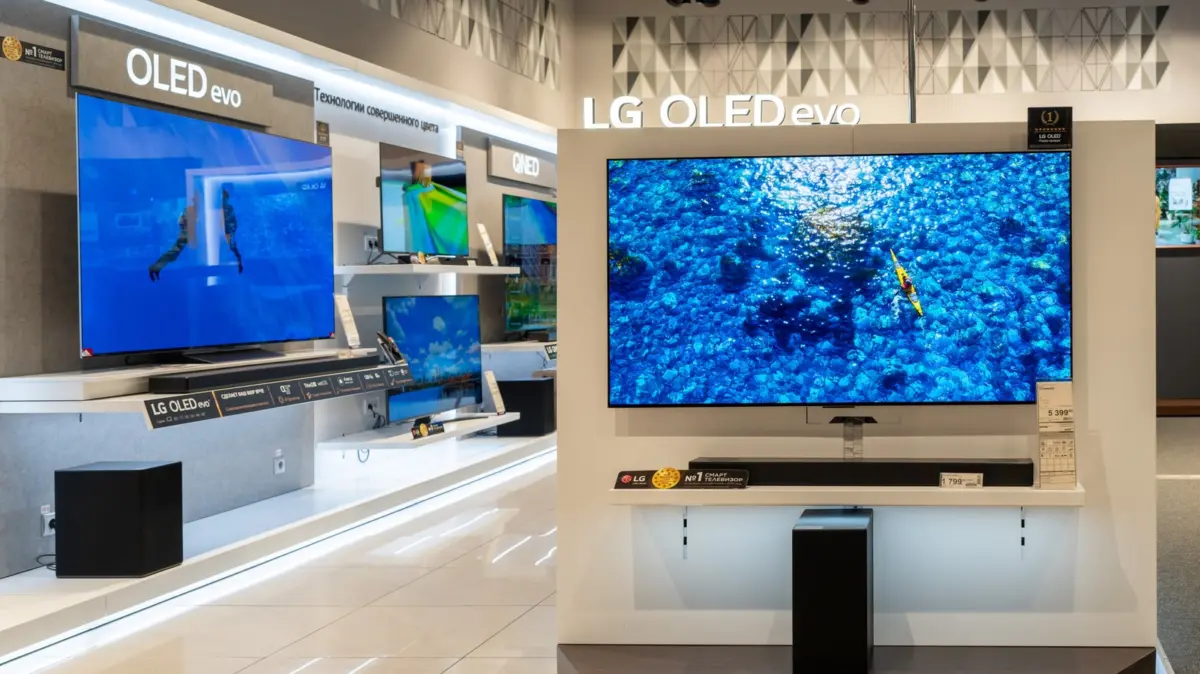
Choosing between a Samsung and an LG OLED TV is no longer as simple as comparing contrast ratios or checking price tags. It requires a nuanced understanding of conflicting panel architectures, competing HDR standards, software ecosystems, and real-world viewing environments. LG, the undisputed pioneer of mass-market OLED technology, relies heavily on WOLED (White OLED) and emerging RGB Tandem architectures to deliver unmatched cinematic punch, crisp color scaling, and reliable software support. Samsung, which dramatically re-entered the OLED space in 2022, has pushed the envelope with its proprietary QD-OLED (Quantum Dot OLED) panels, offering blistering color saturation, wider color gamuts, and superior energy efficiency.
Yet, beneath the glossy marketing campaigns and dazzling showroom displays lies a complex matrix of compromises. Samsung continues to face criticism regarding transparency in its panel specifications and a stubborn refusal to adopt the industry-standard Dolby Vision format. Meanwhile, LG has weathered its own storms, ranging from early manufacturing quality hurdles to severe consumer backlash over data privacy concerns tied to its webOS platform.
This deep dive investigates the technological underpinnings, historical trajectories, and real-world performance metrics that separate Samsung and LG OLED TVs, providing consumers and tech enthusiasts with an authoritative guide to navigating the ultimate display showdown.
Detailed Chronology: The Evolution of OLED Market Dominance
To understand where the market stands today, one must trace the timeline of how both companies shaped organic display technology over the last twenty years.
The Pioneering Decade: LG Establishes the Baseline (2010–2020)
While several electronics manufacturers experimented with organic light-emitting diodes in the late 2000s, it was LG that ultimately took the financial and engineering gamble required to scale the technology.
- 2010: LG introduced its first commercial OLED television, the 15-inch 15EL9500. Though a commercial novelty with a staggering price tag for its diminutive size, it proved that large-scale organic emissive displays were physically possible.
- 2012: LG unveiled the world’s first 55-inch OLED TV, laying the foundation for what would become its signature product line. By utilizing a WOLED structure—where a foundational white light source passes through color filters—LG bypassed the massive manufacturing defect rates that plagued early RGB-stripe OLED designs.
- 2013–2020: Throughout the remainder of the decade, LG methodically expanded its OLED footprint, refining its Picture-on-Glass designs, introducing wallpaper-thin form factors, and establishing webOS as a nimble, user-friendly smart platform. During this era, LG held a near-monopoly on large-format OLED panels, supplying components to rival brands like Sony, Panasonic, and Philips.
Samsung’s Exit, Re-Entry, and QD-OLED Disruption (2013–Present)
Samsung’s relationship with OLED televisions has been far more volatile.
- 2013: Following the introduction of its own curved 55-inch OLED TV (the KN55S9C), Samsung temporarily abandoned the large-format OLED market. Executive leadership deemed production costs too high and lifespans too short, choosing instead to double down on LCD-based "QLED" (Quantum Dot LED) technology. For nearly a decade, Samsung aggressively marketed QLED as superior to OLED, citing peak brightness advantages.
- 2022: In a stunning reversal, Samsung returned to the OLED fray with the introduction of QD-OLED technology. By replacing white subpixels with quantum dot color conversion layers driven by a pure blue OLED light source, Samsung leapfrogged standard WOLED panels in color volume and saturation.
- 2023–Present: Samsung has rapidly iterated on its QD-OLED panels, pushing brightness limits and launching larger screen sizes, while simultaneously adopting standard WOLED panels from LG Display for select lower-tier OLED models—a pragmatic move that blurred the lines of the historic rivalry.
Supporting Context & Metrics: Decoding the Panel Technologies
At the heart of the Samsung vs. LG debate are three distinct display panel architectures. Each comes with a unique set of engineering physics, trade-offs, and ideal use cases.
+------------------------+--------------------------+---------------------------+---------------------------+
| Feature / Metric       | LG WOLED                 | Samsung QD-OLED           | RGB Tandem OLED           |
+------------------------+--------------------------+---------------------------+---------------------------+
| Primary Light Source   | White light + filters    | Blue light + quantum dots | Multi-layer stacked RGB   |
| Peak Color Saturation  | Good                     | Industry-leading (Best)   | Moderate to High          |
| Ambient Light Handling | Excellent (with filters) | Susceptible to magenta glare| Premium, high brightness  |
| Dolby Vision Support   | Yes                      | No (HDR10 / HDR10+ only)  | Yes                       |
| Software Longevity     | Up to 5 years (webOS)    | Up to 7 years (Tizen OS)  | Up to 5 years             |
+------------------------+--------------------------+---------------------------+---------------------------+
1. WOLED (White OLED)
Pioneered and continuously refined by LG, WOLED televisions utilize a stacked white organic light source. The resulting light passes through a four-color subpixel filter array consisting of red, green, blue, and a dedicated white subpixel.
- The Advantage: The inclusion of the white subpixel allows WOLED panels to achieve high overall luminance levels without pushing the colored subpixels to their thermal limits. This makes WOLED displays exceptionally durable and uniquely suited for rooms with moderate to high ambient light.
- The Compromise: Passing white light through color filters inherently dilutes color purity at extreme brightness levels. Furthermore, the four-subpixel layout can occasionally introduce minor text-fringing artifacts when used as a PC monitor.
2. QD-OLED (Quantum Dot OLED)
Introduced by Samsung, QD-OLED technology eliminates the white subpixel and color filters entirely. Instead, every pixel begins as a high-energy blue OLED emitter. That blue light then passes through red and green quantum dot conversion layers.
- The Advantage: Because quantum dots convert light rather than filtering it out, there is virtually zero light loss. This results in breathtaking color volume, vastly superior color saturation in bright scenes, and superior energy efficiency. For mastering HDR cinematic content in controlled lighting environments, QD-OLED is widely considered the gold standard.
- The Compromise: Quantum dots are notoriously sensitive to ambient light. When strong external light hits a QD-OLED panel, it can reflect off the quantum dot layer, creating a distinct purple or magenta glare that compromises black levels.
3. RGB Tandem OLED
Representing the bleeding edge of display engineering, RGB Tandem OLEDs utilize multiple stacked emissive layers combined with a striped subpixel layout.
- The Advantage: By stacking multiple organic layers, these panels can distribute the electrical load, allowing them to shatter brightness ceilings, frequently reaching upwards of 1,000 to 3,000 nits of peak brightness per pixel.
- The Compromise: The complex manufacturing process makes RGB Tandem panels extraordinarily expensive, restricting them to ultra-premium, luxury product tiers. Additionally, without quantum dot enhancement, they occasionally lag behind Samsung’s displays in ultra-vibrant color accuracy.
Official Statements and Industry Controversies
Navigating the corporate landscape of consumer electronics requires examining not just the hardware specs, but the controversies, transparency issues, and policy statements issued by both manufacturers.
Samsung: The Battle for Transparency and Dolby Vision
Samsung has long faced criticism from reviewers and industry insiders regarding transparency in its panel specifications. On multiple occasions, the company has obfuscated whether a specific television model utilizes its in-house QD-OLED technology or an outsourced WOLED panel, leading to consumer confusion at retail.
Furthermore, Samsung’s stubborn refusal to license and support Dolby Vision—the industry-leading dynamic metadata HDR format utilized by major streaming services like Netflix, Disney+, and Apple TV+—remains a polarizing consumer issue. Samsung relies instead on its proprietary HDR10+ format and standard HDR10. While HDR10+ is an open standard with similar technical capabilities, the lack of Dolby Vision support means users miss out on native mastering for a vast library of premium streaming content.
LG: Quality Milestones and Data Privacy Backlash
LG’s historical track record in display manufacturing has generally been praised for consistency, yet the company is not immune to controversy. The launch of certain historical generations (such as the G6 series) sparked debate over panel uniformity and quality control hiccups.
More recently, LG faced a massive public relations crisis regarding user data privacy. Investigations revealed that default settings within LG’s webOS smart TV platform allowed the company to track user viewing habits, capture conversational audio data via voice-remote features, and monetize that information through targeted advertising networks.
In response to immediate public backlash and regulatory scrutiny, LG released an official corporate statement clarifying its privacy policies, updating opt-out mechanisms, and scaling back data harvesting parameters. However, the controversy left a lasting stain on consumer trust, prompting many privacy-conscious buyers to disconnect their smart TVs from the internet entirely or rely on external streaming boxes like Apple TV or Nvidia Shield.
Software, Ecosystems, and User Experience
A television panel is only as good as the operating system driving it. When comparing Samsung and LG, the software experience is a critical differentiating factor.
- Operating System Support: Samsung has taken the lead in long-term software support, promising up to seven years of Tizen OS updates for its latest high-end displays. LG’s webOS typically guarantees up to five years of support, which remains robust by industry standards but trails Samsung’s commitment.
- Interface and Usability: LG’s webOS utilizes a pointer-based "Magic Remote" interface that mimics a desktop mouse, making navigation snappy and intuitive. Samsung’s Tizen OS leans toward a content-first dashboard layout that heavily integrates streaming app promotions, cloud gaming hubs (such as Xbox Cloud Gaming and GeForce NOW), and smart home device management via Samsung SmartThings.
Future Outlook: Where the OLED Market Is Headed
As we look toward the horizon of home entertainment technology, the rivalry between Samsung and LG is only accelerating.
- The War on Reflection: Both manufacturers are heavily investing in next-generation anti-reflective coatings. Samsung is engineering improved polarizing layers to neutralize the magenta glare inherent to QD-OLEDs in bright rooms, while LG continues to refine micro-lens array (MLA) technology to boost panel efficiency without sacrificing dark-room performance.
- Micro-LED on the Horizon: While OLED remains the undisputed king of consumer-grade emissive displays, both companies are pouring billions into Micro-LED research. However, due to prohibitive manufacturing costs, Micro-LED will remain restricted to ultra-luxury commercial installations for the foreseeable future, leaving OLED firmly at the apex of home theater consumer tech.
- Convergence of Panel Tech: As Samsung continues to source select WOLED panels from LG Display, the sharp boundaries dividing the two brands are beginning to blur. Ultimately, the future of the market will not be decided by which brand builds a better pixel, but by how effectively each company integrates software, AI-driven upscaling, and user-centric privacy practices into their hardware lineups.
Conclusion: Which OLED Should You Buy?
Choosing between a Samsung and an LG OLED TV ultimately boils down to your specific viewing environment and personal priorities:
- Choose Samsung QD-OLED if: You have a dedicated, dim home theater room, demand the absolute highest level of color saturation and quantum dot vibrancy, and prioritize a longer software update lifecycle (7 years).
- Choose LG OLED if: Your television will live in a brightly lit living room with abundant ambient light, you value the widespread industry support of Dolby Vision, and you prefer the intuitive, mouse-like navigation of webOS.