Executive Overview
In a decisive move targeting the financial lifeblood of international cybercrime and Russian sanctions evasion, the United Kingdom has levied sweeping economic sanctions against Cryptomus, a notoriously adaptable cryptocurrency payment platform. For years, Cryptomus has operated as a primary financial conduit for ransomware gangs, illicit darknet markets, narcotics rings, fraud syndicates, and sophisticated cybercrime service providers. By funneling billions of dollars through a shifting web of corporate aliases and digital assets, the platform has played a pivotal role in helping Russia circumvent international financial restrictions.
Announced on October 8, the U.K. Treasury’s sanctions freeze any assets held by Cryptomus within British financial institutions and legally bar UK-based companies and citizens from conducting any business operations with the platform—whether virtual or physical. Alongside Cryptomus, the U.K. government targeted several associated virtual payment infrastructure providers, including VexPay, TokenSpot, and the Tsunami Payments service.
This regulatory crackdown represents a watershed moment in global anti-money laundering (AML) and counter-proliferation financing enforcement. Unlike previous monetary penalties issued by allied nations—which proved largely unenforceable and easy to bypass—the U.K. sanctions strike directly at the infrastructure of the organization. Furthermore, legal and intelligence experts note that this marks the first known instance of a "Five Eyes" intelligence-sharing nation (comprising Australia, Canada, New Zealand, the United Kingdom, and the United States) officially sanctioning a cryptocurrency entity incorporated within another Five Eyes jurisdiction.
Detailed Chronology of an Illicit Empire
The Genesis and Evolution of Certa Payments
Cryptomus emerged onto the decentralized finance landscape in 2022. Originally incorporated under corporate names such as Certa Payments and Xeltox Enterprises, the platform initially maintained a veneer of legitimacy by registering a physical office address in Vancouver, Canada. However, investigative reporting later revealed that this address was merely a shell location, shared with dozens of other foreign currency dealers and money-transfer businesses that maintained no physical footprint at the site.
From its inception, Cryptomus operated as a high-risk payment processor. It catered specifically to Russian cryptocurrency exchanges and underground websites hawking malicious infrastructure, ranging from stolen credentials to automated exploitation tools. Despite facilitating illicit transactions on a massive scale, the platform operated with relative impunity, leveraging the anonymity afforded by the nascent global crypto market.
The Canadian Fine and the Pivot to "Heleket"
By late 2025, the mounting volume of illicit transactions caught the attention of Canadian financial regulators. Following an exhaustive probe into systemic anti-money laundering failures, Canada slapped Cryptomus with a historic CAD $176 million fine—the largest of its kind in the nation’s history.
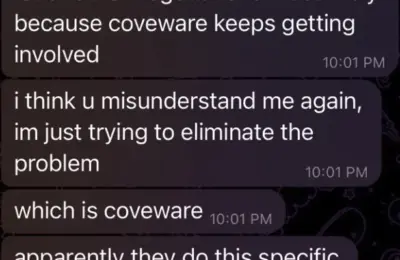
Rather than complying with regulatory mandates or halting operations, the platform’s leadership engaged in evasive corporate maneuvers. Cryptomus appealed the penalty, launched a parallel shadow service known as Heleket to bypass newly instituted Know Your Customer (KYC) requirements, and continued to process billions of dollars in high-risk transactions. Support staff on encrypted messaging channels like Telegram actively denied any corporate affiliation with Heleket, even as blockchain analytics confirmed the new service was a direct continuation of the original Cryptomus infrastructure.
The U.K. Interventions and Operational Paralysis
As the platform’s transaction metrics ballooned into the tens of billions, international intelligence agencies and blockchain analytics firms accelerated their tracking of the network. The culmination of these efforts arrived on October 8, when the United Kingdom formally designated Cryptomus, VexPay, TokenSpot, and Tsunami Payments under its Russia sanctions regime.
The impact was immediate. Within hours of the U.K. sanctions announcement, users attempting to route funds through Cryptomus-affiliated Telegram bots encountered sudden processing failures. Automated customer support interfaces confirmed that the platform was entirely unable to process transactions, signaling that the coordinated international pressure had successfully severed the platform’s access to vital fiat on-ramps and liquidity pools.

Supporting Context & Metrics: Tracing the Flow of Illicit Capital
To understand the true scale of Cryptomus, one must look to the blockchain telemetry compiled by leading digital asset intelligence firms.
Transaction Volume and Illicit Exposure
In April 2026, blockchain analysis firm TRM Labs published a comprehensive threat intelligence profile revealing that Cryptomus had processed more than $7 billion in cumulative transactions since its founding in 2022. While a portion of this volume represented legitimate e-commerce, a staggering percentage was tied to severe criminal enterprises. TRM Labs’ analysis linked Cryptomus wallets to vendors of child sexual abuse material (CSAM), international terrorist financing networks, and human trafficking operations.
The Chainalysis Assessment
Further reinforcing these findings, blockchain data-crunching firm Chainalysis detailed the systemic threat posed by the platform in an October 8 advisory. Chainalysis reported that Cryptomus and its spin-off, Heleket, had evolved into the preeminent payment hubs for underground digital economies.
According to Chainalysis datasets:
- Outpacing Mixers: Cryptomus received more illicit funds across tracked categories than traditional cryptocurrency mixing services combined.
- Surging Counterparties: The number of unique illicit counterparties interacting with the platform surged dramatically, peaking at more than 900 malicious entities in a single month in late 2025.
- Wartime Economy Support: The platform’s transaction flows directly bolstered Russia’s wartime economy, providing a critical pipeline for entities seeking to bypass Western financial blockades.
Official Statements and Industry Analysis
The international enforcement community has universally praised the U.K.’s decisive intervention, contrasting it sharply with previous administrative penalties that failed to curb illicit activity.
The Limitations of Monetary Fines
Richard Sanders, an esteemed blockchain analyst and investigator who spent months mapping out the complex payment infrastructure of Cryptomus and interacting directly with its clientele, emphasized the critical legal distinction between financial fines and economic sanctions.
"A fine doesn’t stop a cryptocurrency payment processor from processing payments," Sanders wrote in a public analysis. "Sanctions kill the operation. The distinction matters."
Sanders pointed out that while Canada’s CAD $176 million penalty was historically significant, it ultimately proved unenforceable and uncollectible due to the decentralized and cross-border nature of the corporate entities involved. Cryptomus simply absorbed the regulatory threat as a cost of doing business, pivoting its operations to evade collection while maintaining its core illicit revenue streams. By contrast, asset freezes and jurisdictional bans imposed by the U.K. create an untenable operational environment, effectively cutting off the processor from global banking channels.
The Five Eyes Precedent
Industry experts have also highlighted the geopolitical significance of the U.K. action. For a "Five Eyes" nation to sanction a platform incorporated within another member state’s jurisdiction underscores a growing frustration among Western allies regarding regulatory loopholes exploited by cybercrime-friendly cryptocurrency enterprises. It signals a shift toward more aggressive, unilateral extraterritorial enforcement when domestic regulators fail to neutralize transnational threats.

The Illusion of Legitimacy: Phony Regulators and Sovereign Shells
One of the most bizarre and revealing aspects of the Cryptomus investigation is the origin of its regulatory authority. How did entities like Cryptomus and Heleket derive the legal legitimacy required to offer international financial services?
The answer exposes an elaborate shell game involving fictitious financial institutions overseen by a phony regulatory body positioned within a disputed geopolitical region.
The Western Sahara Connection
An investigative deep-dive conducted by security researcher Brian Krebs revealed that the sole shareholder of Certa Payments (Cryptomus’s parent company) was a 25-year-old Ukrainian woman. Alongside her role at Certa Payments, she also managed several other corporate entities, including the WS Management and Advisory Corporation.
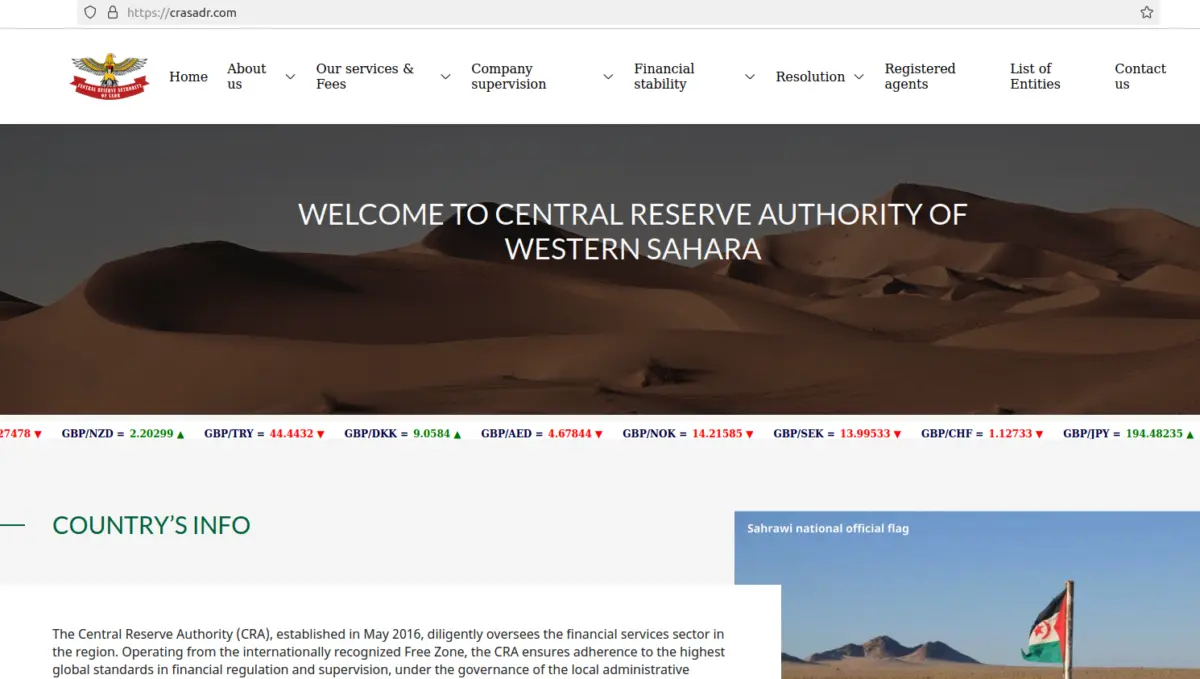
This corporation aggressively marketed itself as an exclusive, official regulatory body tasked with issuing licenses for cryptocurrency exchanges, foreign exchange brokers, and online gaming businesses incorporated within the Western Sahara—a disputed territory in northwest Africa that is not widely recognized as a sovereign nation by the United Nations or the international community.
Digital Infrastructure and Phony Oversight
The operational footprint of this fake regulatory scheme was laid bare through domain and server analysis:
- The Regulator’s Portal: The licensing body operated through the website
crasadr.com, purporting to be the official portal of the Central Reserve Authority of the Western Sahara. This site offered compliance guidance, banking setup assistance, and regulatory approval for high-risk financial ventures. - Shared Server Infrastructure: Technical analysis of Certa Payments’ former corporate website (
certa.website) revealed that it shared a physical web server with 12 distinct domains. Among these wasrasd-state.ws, a digital asset explicitly linked to the Central Reserve Authority of the Western Sahara.
This fabricated regulatory framework allowed Cryptomus to present a veneer of institutional compliance to unsuspecting merchant partners, while operating entirely outside the purview of legitimate international financial watchdogs.
Future Outlook: The Crackdown on Shadow Payment Rails
The U.K.’s decisive sanctions against Cryptomus, Heleket, VexPay, TokenSpot, and Tsunami Payments mark a turning point in the global war against cybercrime-as-a-service. As Western governments tighten the noose around traditional cryptocurrency mixers and centralized exchanges, illicit actors have increasingly relied on "chameleonic" payment processors that masquerade as legitimate e-commerce gateways while quietly liquidating ransomware proceeds and sanctions-evasion capital.
However, the takedown of Cryptomus proves that even the most adaptable illicit payment networks are vulnerable to coordinated international pressure. By targeting the underlying infrastructure, freezing assets, and dismantling the web of shell companies and fake regulatory bodies, allied nations are signaling that the era of regulatory arbitrage in the crypto sector is drawing to a close.
As blockchain intelligence firms continue to map out secondary and tertiary spin-off networks, enforcement agencies are expected to maintain relentless pressure on alternative payment rails. For platforms that choose to profit from the dark underbelly of the global digital economy, the message from international regulators is unequivocal: evasion tactics will no longer guarantee operational survival.