Executive Overview
The AMC+ and Crave psychological thriller-horror series Yaga has officially crossed the threshold from an atmospheric slow-burn into a full-blown descent into the occult. With the release of Season 1, Episode 3, creators and showrunners are shedding the ambiguity of the premiere episodes, replacing soft-spoken dread with visceral shocks, ancient folklore, and deeply disturbing criminal evidence.
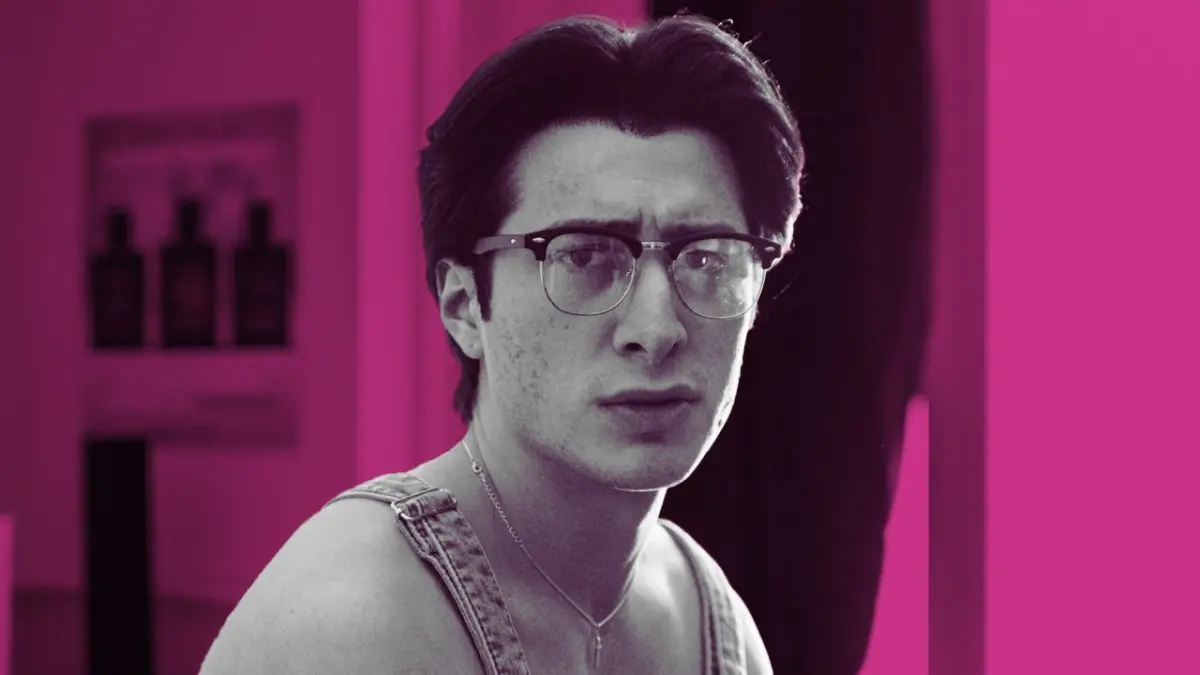
Picking up directly in the wake of Episode 2’s grim cliffhanger, the narrative wastes no time dragging viewers onto the frigid, wind-swept beach where Logan’s lifeless body is discovered. However, what begins as a standard procedural investigation quickly metastasizes into a hallucinogenic nightmare of ritualistic murder, identity appropriation, and ancient Slavic paganism. Anchored by standout performances from Clark Backo as Carson and Noah Reid as Rapp, Episode 3 masterfully blends the classic tropes of a buddy-cop drama with the unyielding dread of folk horror.
As the mystery surrounding Henry and the deceased Logan deepens, the series introduces harrowing new elements—ranging from Aztec sacrificial blades to bloody Triskelion symbols etched beneath floorboards. This review and breakdown analyze the critical pivot points, structural pacing, character trajectories, and lingering mythology that make Episode 3 a watershed moment for the freshman season of Yaga.
Detailed Chronology: Step-by-Step Breakdown of Episode 3
The Beach, the Body, and the Blue Eyes
The episode plunges the audience back into the harrowing aftermath of Henry’s ill-fated party. On the shoreline, authorities confirm the worst-case scenario: the lifeless body recovered from the surf belongs to Logan, not Henry. The crime scene immediately establishes an aura of unnatural wrongness. Investigators discover fresh blood pooling near an open second-story bedroom window, implying a violent exit or extraction.
For Rapp, the trauma of the night manifests in increasingly severe visual and psychological distortions. As he observes the authorities, Rapp catches a fleeting, disquieting glimpse of Logan’s eyes snapping open—revealing an eerie, piercing ice-blue hue identical to Henry’s. Whether these hallucinations stem from the lingering chemical effects of the drugs ingested the night prior, or represent a supernatural contagion creeping into Rapp’s psyche, remains a potent and unsettling ambiguity.
Distorted Timelines and the 3:33 Phenomenon
A recurring motif throughout Yaga is the malleability and manipulation of time. This thematic thread tightens when Carson recounts the timeline of events from the previous evening at Henry’s house. Crucially, a mysterious gap of "a few hours" is revealed between the moment Logan vanished upstairs into his quarters and when Carson eventually encountered Rapp down on the beach.
This temporal distortion is punctuated by an unsettling sequence in Carson’s hotel room. Rapp attempts a romantic advance, which Carson firmly rejects. He collapses onto the bed, falling into an unnaturally deep, chemically induced slumber almost instantaneously. As Carson kneels beside him, the digital clock chillingly snaps to 3:33—a numeric sequence with persistent narrative weight.
Amidst intense, whispering auditory hallucinations, Carson leans in as if to kiss him. Rapp’s eyes flutter open to a grotesque vision: Pam, Henry’s enigmatic ex-girlfriend, seductively pulling a pristine white feather directly from Rapp’s mouth. Rapp jolts awake into reality, hours having seemingly vanished. Before they head toward forensics, a lingering camera angle purposefully highlights a small, circular tattoo on Carson’s wrist—a breadcrumb planted securely for future scrutiny.
The Mortuary Horror: Autopsy and Artifacts
At the local mortuary, the investigation pivots from tragedy to sheer brutality. The physical examination of Logan’s corpse yields a sequence-defining "WTF" moment: Logan has been surgically and brutally castrated.
Furthermore, forensic analysis reveals the murder weapon: an ancient, ceremonial knife fashioned from obsidian and human bone. Katherine, the local forensic expert, later classifies the implement as an Aztec sacrificial midwife knife, traditionally linked to deities representing fertility, sexual desire, and blood sacrifice. With all physical evidence pointing definitively to homicide, Carson and the local police force scramble to connect these ritualistic mutilations back to the elusive Henry.
The Cemetery Encounter with Alice
Seeking human context behind the tragedy, Carson visits a austere local church to speak with Logan’s grieving mother, Alice (portrayed with devastating emotional weight by Sarah Strange). Set against moody, overcast cinematography and heavy, melancholic strings, the two women sit on a cemetery bench to discuss the young man Logan was before his death.
Alice’s testimony casts a deeply disturbing light on her son’s final months. She reveals that Logan had begun obsessively altering his physical appearance—working out relentlessly and changing his hairstyle—in what appeared to be an escalating psychological bid to physically mirror Henry.
Alice’s monologue curdles into pure dread when she discusses the Park family and a bizarre rumor regarding Pam’s farm. According to Alice, Logan and Henry purchased a lame hen from Pam with the explicit, dark joke of sacrificing it. Describing her son’s downward spiral, Alice delivers a chilling diagnosis:
"Every day, I’d see that thing growing in him. That thing getting bigger and thicker and darker and pulling him further and further away from God, and closer and closer to the Devil."
Rapp’s Beachside Break
While Carson speaks with Alice, Rapp jogs along the coastline, only to find himself trailing Pam. As he pushes to catch up, Pam’s physical form suddenly fractures into three distinct, distorted duplicates. She calls out his name, causing Rapp to stumble violently over a driftwood log.
As he looks up from the sand, visions of a sinister, pagan mask flash before his eyes, immediately juxtaposed by Pam standing nonchalantly beside him, dropping a breezy, casual remark. The boundary between subjective hallucination and active supernatural harassment continues to dissolve.
Decoding the Triskelion and the Secret Room
Returning to Henry’s estate, Carson and Rapp begin a methodical sweep of Logan’s bedroom. The environmental storytelling is dense: bloodied sheets lie discarded near the window, and a single chicken foot dangles precariously from a lampshade—linking back to the rumored livestock sacrifice.
The breakthrough comes when Rapp discovers that a seemingly standard wooden bookshelf serves as a concealed pivot door, opening into a clandestine chamber bathed in aggressive red light, despite the rest of the house suffering from a power outage. Inside sits an archive: a desk outfitted with a tape recorder and shelves stacked high with dozens of labeled cassette tapes.
Auditing the audio logs reveals a recording captured in Henry’s bedroom the previous night. The audio features Logan engaged in a passionate tryst with a woman wearing angel wings, during which Logan frantically demands to be addressed as "Henry." This revelation throws the entire timeline into chaos: Was Henry even physically present at the party, or has Logan been systematically stealing his identity?
The Blood on the Floor
Further investigation bears dark fruit. Rapp uncovers a hidden, wired audio bug on Henry’s nightstand, rigged to broadcast live directly into Logan’s red-lit archive room whenever speech occurred. Cross-referencing the voices confirms that Pam was the woman sharing the bed with Logan mere hours before his violent demise, cementing her status as a prime murder suspect.
The episode reaches its zenith of dread when Rapp spots a stray drop of blood on the floorboards. Dragging the heavy bed frame away, the duo uncovers a horrifying sight: a massive Triskelion symbol painted across the floor in fresh human blood, flanked by three pristine white chicken feathers positioned meticulously at each vertex of the triad.
As the musical score swells into a suffocating, hypnotic crescendo, the camera lingers on the blood-soaked rune, right as the folkloric voice of Baba Yaga assumes narration to close out the chapter.
Supporting Context & Metrics: Folklore, Symbolism, and Themes
To fully appreciate the narrative engineering of Yaga Episode 3, one must examine the dense web of cultural and mythological symbolism woven into the mise-en-scène.
- The Triskelion (The Triple Spiral): Found both in the canister of drug powder and painted in blood beneath the bed, the Triskelion is an ancient Celtic symbol traditionally associated with the concept of the Triple Goddess—The Maiden, the Mother, and the Crone.
- The Baba Yaga Connection: In Slavic folklore, the ultimate embodiment of "The Crone" is Baba Yaga, a mercurial, cannibalistic witch living deep in the forest. By invoking this archetype, the series bridges Celtic and Slavic mythological frameworks, hinting that the characters are playing unwitting pawns in an ancient pagan cycle of sacrifice and rebirth.
- Ritualistic Mutilation Data: The use of an Aztec sacrificial midwife knife connects the modern Pacific Northwest setting to transnational motifs of fertility worship, castration as an absolute severing of lineage, and blood debt.
| Mythological Element | In-Universe Manifestation | Cultural Origin / Folklore Association |
|---|---|---|
| The Triskelion | Painted in blood, drug canister stamp | Celtic / Triple Goddess (Maiden, Mother, Crone) |
| Baba Yaga | Epilogue narration, thematic tone | Slavic Folklore / The Crone Archetype |
| Obsidian/Bone Blade | Murder weapon used on Logan | Mesoamerican / Aztec Sacrificial Tradition |
| Chicken Foot/Feathers | Lampshade ornament, curse arrangement | Folk Magic / Hoodoo / Traditional Curses |
Character Development & Performance Analysis
Season 1, Episode 3 serves as a masterclass in character evolution, specifically highlighting the contrasting yet complementary trajectories of its two lead investigators.
- Clark Backo as Carson: Backo steps firmly into her authority in this episode. Carson walks a precarious tightrope between professional detachment and obsessive, personal entanglement. Her inquiry regarding the nature of Henry and Logan’s relationship not only advances the plot but weaponizes psychological tension between her and Rapp, testing the boundaries of their partnership.
- Noah Reid as Rapp: Reid sheds any remaining vestiges of comedic or lighthearted relief, embracing a hardened, grit-laden intensity. Rapp’s deteriorating mental state—manifesting as debilitating hallucinations, paranoia, and memory loss—transforms him from a standard noir detective into an unreliable narrator whose very grip on reality is actively fracturing.
- Sarah Strange as Alice: In a brief yet pivotal guest performance, Strange grounds the supernatural stakes in genuine, agonizing maternal grief. Her absolute condemnation of the Park family elevates the script above standard genre fare, injecting genuine emotional stakes into the unfolding tragedy.
Future Outlook: Burning Questions for Episode 4
As the dust settles on the blood-soaked floorboards of Henry’s estate, Yaga leaves audiences with a barrage of tantalizing, unanswered questions as we barrel toward Episode 4:
- The Paternity Question: Do Henry and Logan share a biological father, and is this familial rot the root cause of Alice’s vitriolic hatred toward the Park family?
- The Identity of Pam: Is Pam merely a local resident caught up in a toxic web of obsession, or is she an active practitioner of the occult—or perhaps Baba Yaga incarnate walking among mortals?
- The Author of the Curse: Did Logan execute the bloody Triskelion ritual beneath Henry’s bed himself as a protective or offensive measure, or was a third, unseen party pulling the strings from the shadows of the red-lit archive room?
Verdict
Yaga Season 1, Episode 3 is a triumph of pacing, atmospheric world-building, and high-stakes mystery writing. By fusing gritty buddy-cop procedural tropes with unyielding folk horror, the series continues to defy expectations. With stunning performances, jaw-dropping narrative reveals, and a mythology that grows richer and darker by the minute, this episode leaves viewers hooked, unsettled, and eagerly strapping in for the horrors that await in Episode 4.