Executive Overview
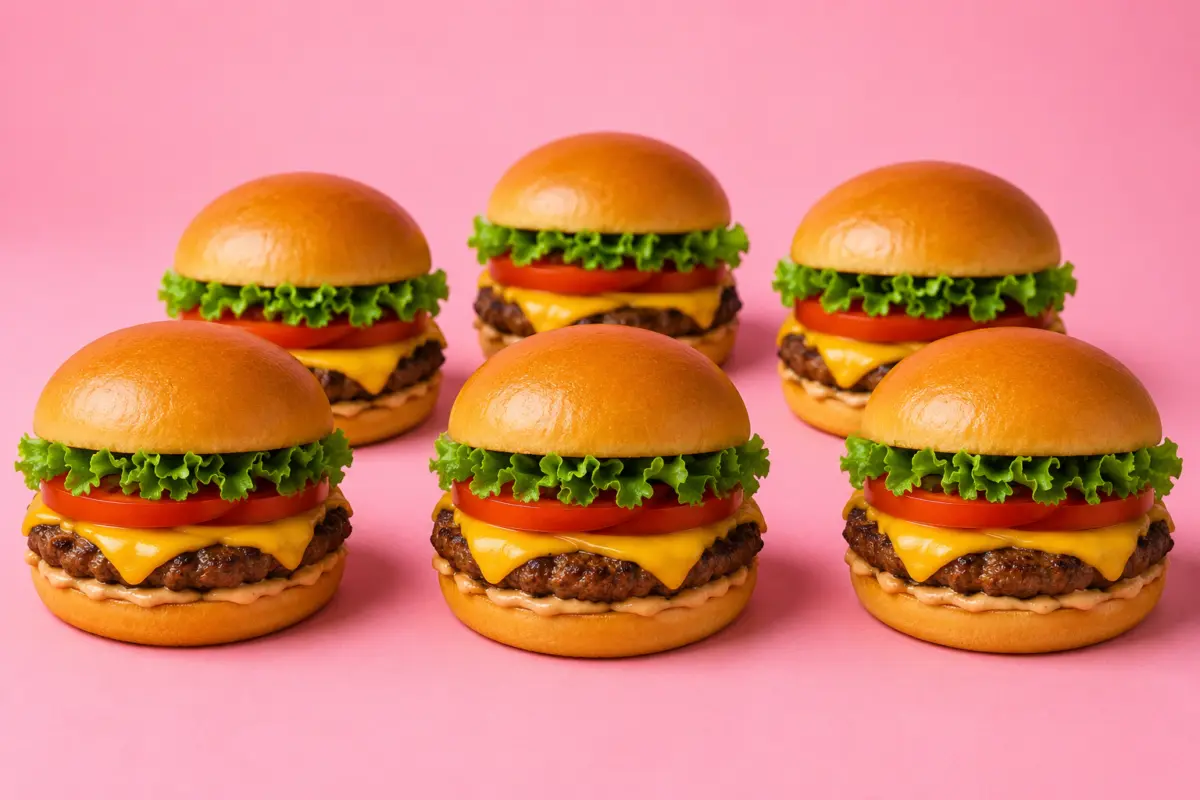
Step into a neighborhood cafe or scroll through a third-party delivery application, and you may encounter a menu that feels subtly unsettling. The bagel sandwiches display unnatural symmetry; the sesame seeds are arranged in mathematically precise lattices; the cheese on a breakfast burrito exhibits an improbable, glass-like sheen. While these images do not immediately register as overt fabrications, they provoke a distinct sensation of visceral unease.
This phenomenon is the result of generative artificial intelligence entering the food service industry. In an effort to cut marketing overhead and eliminate expensive commercial photography, restaurant operators are increasingly turning to generative AI models—such as Midjourney, DALL-E, and OpenAI’s ChatGPT image tools—to produce visual menus. However, what was intended as a cost-effective operational shortcut has instead exposed fundamental limitations in how AI models construct visual reality.
Driven by training datasets optimized for hyper-pleasing, non-offensive aesthetics, these synthetic food illustrations systematically erase natural imperfections. Rather than whetting consumer appetites, the resulting imagery often triggers a deep-seated psychological rejection known as the "uncanny valley." As restaurants navigate public backlash over these homogenized visuals, experts warn that the underlying mechanics—model convergence, data degradation, and the flattening of visual culture—foreshadow a broader systemic challenge: the total erosion of visual evidence in an increasingly synthetic world.
Detailed Chronology: The Emergence and Escalation of Synthetic Food Imagery
[Phase 1: Cost Optimization] ──> [Phase 2: Viral Exposure] ──> [Phase 3: Iterative Degradation]
Small business AI adoption        "Lovecraftian food horrors"     100-edit feedback loops
Phase 1: The Push for Low-Cost Marketing Assets
The widespread adoption of generative AI menus began as a practical response to the high costs of commercial food styling. Traditionally, featured menu items required professional photography, prop styling, and post-production editing—a process costing independent restaurants thousands of dollars.
When text-to-image diffusion models became widely available, operators realized they could instantly generate dish illustrations using simple text prompts. Ghost kitchens and digital-only restaurant concepts were among the earliest adopters, populating online delivery storefronts with hyper-realistic, AI-generated images of burgers, pizzas, and sushi rolls.
Phase 2: Public Spotting and Social Media Backlash
By late 2024 and through 2026, consumers began noticing bizarre visual anomalies on digital ordering kiosks and physical menu boards. What started as minor curiosities quickly evolved into viral social media commentary as users documented egregiously surreal AI errors:
- Shrimp curving unnaturally into closed loops, appearing to devour their own tails—a phenomenon dubbed by internet users as "Lovecraftian food horrors."
- Burritos with molten, bubbling cheese textures resembling abstract artwork rather than edible food.
- Pizzas rendered with structural impossibilities, such as toppings floating mid-air or crusts blending seamlessly into serving boards.
Even when the imagery avoided blatant structural errors, users reported a persistent sense of unnaturalness—smooth, sterile textures and uncanny symmetry that made everyday meals look deeply unappetizing.
Phase 3: The Iterative Editing Loop
The phenomenon worsened as restaurant staff attempted to maintain and update their AI-generated menus over time. Rather than generating fresh images from scratch, operators frequently used built-in image editing tools within platforms like ChatGPT to apply minor adjustments—updating prices, swapping ingredients, or altering background colors.
Original Prompt ──> Minor Edit (e.g., change price) ──> Re-generation ──> Repeat (x100) ──> "Visual Slop"Social media researchers and technology analysts documented what happens when these generative images undergo repeated revisions. In an experiment conducted by an X user named Labtec—and subsequently replicated by industry investigators—a restaurant menu generated in ChatGPT was edited 100 times consecutively. With each iteration, the AI subtly altered the visual geometry, smoothing out textures, removing natural variations, and exaggerating colors. By the end of the loop, the food items had devolved into unnerving, plasticized masses. As Labtec noted, "The end result actually makes me uncomfortable."
Supporting Context & Technical Metrics
Model Convergence vs. Model Collapse
To understand why AI-generated food looks unsettling, one must examine how generative models process and output visual information. Diffusion models and Large Language Models (LLMs) are trained on vast datasets scraped from the public internet.
+-----------------------------------------------------------------------+
|                         TRAINING DATASET                              |
|   (Historical promotional materials, chain menus, corporate art)      |
+-----------------------------------------------------------------------+
                                   │
                                   ▼
+-----------------------------------------------------------------------+
|                          GENERATIVE AI MODEL                          |
|    Optimized for "pleasingness", non-offensiveness, & smoothness       |
+-----------------------------------------------------------------------+
                                   │
                                   ▼
+-----------------------------------------------------------------------+
|                           SYNTHETIC OUTPUT                            |
|        Homogenized, edge-shaved imagery ("Chili's Menu 2015")         |
+-----------------------------------------------------------------------+
When an operator prompts a model to generate a fast-food hamburger, the algorithm queries its parameters for patterns associated with that concept. The baseline visual training data for fast food is overwhelmingly composed of commercial marketing campaigns from major national chains produced during the 2010s.
"A lot of this stuff looks like a Chili’s menu from 2015, and there’s a reason for that," explained Alex Lisle, Chief Technology Officer at Reality Defender, a platform specializing in AI detection and content verification. "That was the corpus of work from which [the models] drew their function."
This dependency creates two distinct technical phenomena:
| Concept | Definition | Manifestation in Food AI |
|---|---|---|
| Model Convergence | The tendency of AI outputs to narrow toward a single, homogenized style due to underlying similarities in training data. | Generative food items adopt a uniform, generic look where every burger bun, ice cream scoop, and pizza slice shares identical lighting, symmetry, and color values. |
| Model Collapse | A degenerative process where a model is repeatedly trained on synthetic data produced by previous AI generations, leading to irreversible degradation. | Termed metaphorically as "mad cow disease for AI," recursive training on synthetic imagery causes functional breakdown, producing severe artifacts and grotesque shapes. |
While model collapse represents catastrophic failure, model convergence represents a subtle erosion of visual quality—degrading realism while keeping the image structurally recognizable.
The Psychology of Disgust: The Gastronomic Uncanny Valley
The human reaction to AI menus is rooted in evolutionary psychology. While traditional food advertising has long utilized prop styling—such as using motor oil instead of syrup or cardboard separators in pancakes—these physical setups still captured real textures, organic asymmetries, and natural light behavior.
Generative AI, by contrast, removes organic imperfection entirely. Researchers at the University of Duisburg-Essen in Germany investigated this psychological response in a peer-reviewed study on synthetic food imagery. Their findings confirmed that AI food images frequently trigger an uncanny valley effect:

- Hypothesis Tested: Whether hyper-realistic synthetic food increases consumer appetite compared to natural or stylized photography.
- Key Finding: Images of food that looked almost real, yet possessed micro-level visual inaccuracies, elicited significantly higher levels of disgust, unease, and rejection than images that were obviously stylized or stylized artwork.
- Biological Driver: Humans possess highly sensitive perceptual mechanisms designed to evaluate food safety. Unnatural smoothness, strange color gradients, or hyper-symmetrical features trigger subterranean instinctual warnings associated with spoilage, toxins, or inedible materials.
Official Statements and Expert Perspectives
The trend has raised concerns among technology researchers, consumer behavioral analysts, and digital forensics experts regarding the implications of automated aesthetic smoothing.
On Dataset Homogenization and Aesthetic Smoothing
Lee Rainie, Director of the Imagining the Digital Future Center at Elon University, emphasized that generative tools actively strip away human character in favor of statistical middle-grounds:
"The optimization of the datasets is for pleasingness, or you know, not being offensive, and so there’s a way that turns into homogenization. What AI is known to do both in images and language is to shave off the edges."
— Lee Rainie, Director, Imagining the Digital Future Center at Elon University
Rainie highlighted that consumer intuition remains surprisingly resilient when confronted with synthetic visuals, even if individuals struggle to name the specific technical flaws:
"People have an almost unexplainable sense about when they’re looking at something that’s AI-generated, compared with something that was real in the first place. There’s just a sensibility that people sometimes find hard to articulate, but they kind of know it when they see it—and I think that’s one of the reasons why some of the early stories about the backlash against restaurants using AI menus is so pronounced."
On the Technical Mechanics of Model Degradation
Alex Lisle, CTO of Reality Defender, outlined the critical distinction between aesthetic convergence and total model breakdown, pointing out how AI data pipelines risk degrading over time:
"Model collapse is almost like a mad cow disease… when you feed the outputs from one model back into itself, eventually the inbreeding becomes too much, and the whole thing collapses. What we see here [with menu images] is convergence, which isn’t necessarily model collapse."
— Alex Lisle, CTO, Reality Defender
Lisle noted that while uncanny food pictures might seem like a minor inconvenience for diners, they represent an early warning sign of a much larger, systemic challenge facing society:
"Seeing and hearing has always been believing, to the point where even our court systems are entirely tuned to the idea that the gold standard in evidence is taped confessions and videotaped evidence. That’s no longer the case. The world has fundamentally shifted, for good or for ill."
Future Outlook: Commercial Risks and the Broader Erosion of Visual Trust
The controversy over generative AI menus serves as a case study in the unintended consequences of automated visual production. As the technology matures, both the food service industry and the digital landscape at large face significant strategic turning points.
                            ┌──> Consumer Rejection (Loss of Trust/Appetite)
                            │
AI Menu Adoption ───────────┼──> Aesthetic Homogenization (Loss of Brand Identity)
                            │
                            └──> Forensic Ambiguity (Erosion of Visual Evidence)
Commercial Imperatives for the Restaurant Industry
For restaurant operators, the financial convenience of generative imagery is increasingly offset by commercial risks:
- Brand Degradation: As diners develop heightened sensitivity to synthetic imagery, restaurants using AI menus risk signaling poor quality, lack of authenticity, or operational laziness.
- Conversion Drops: Given that near-real AI food triggers psychological revulsion, delivery applications that use synthetic menus may suffer lower conversion rates compared to platforms showcasing authentic, imperfect food photography.
- Regulatory and Disclosural Pressures: Consumer protection agencies and digital advocacy groups are beginning to scrutinize synthetic food representations, considering whether unlabelled AI menu items constitute deceptive advertising if the delivered meal bears no resemblance to the generated image.
The Broader Crisis of Visual Authenticity
Beyond commercial dining room tables, the prevalence of "smoothing" algorithms highlights an urgent epistemological issue. Synthetic images are flooding public datasets at a time when technology firms are going to extreme lengths to acquire authentic human data—including documented cases where major technology firms scraped and subsequently destroyed rare physical books to expand their models’ proprietary training corpora.
As AI outputs continuously re-enter public data streams, isolating human-made content from synthetic content becomes progressively harder. The uncanny bagel menu is ultimately a benign symptom of a deeper transformation: as generative models blur the line between real and synthetic assets, society’s reliance on visual media as a source of truth is rapidly deteriorating.