Executive Overview
In the vast landscape of 1990s television, few programs captured the cultural zeitgeist quite like The X-Files. Created by Chris Carter and broadcast on the Fox network, the sci-fi phenomenon blended procedural detective work with deep-seated paranoia, extraterrestrial conspiracies, and government corruption. At the heart of its complex mythology were two iconic, diametrically opposed figures who operated in the murky margins of the narrative: the Cigarette Smoking Man and the mysterious informant known only as "Deep Throat."
While the Cigarette Smoking Man evolved organically from a silent, non-speaking background extra into the series’ overarching primary antagonist, Deep Throat was intentionally engineered from the show’s infancy to serve as a bridge between FBI Special Agent Fox Mulder’s radical fringe theories and the clandestine machinations of the United States government. Introduced in the series’ second episode, Deep Throat set a gold standard for television informants.
This retrospective examines the accidental birth of the Cigarette Smoking Man, the deliberate creation and cultural resonance of Deep Throat, the cinematic influences that shaped Jerry Hardin’s iconic performance, and the bittersweet legacy of a character whose premature departure left an indelible mark on television history.
Detailed Chronology: From Pilot Smoke to Park Bench Revelations
The Accidental Icon: The Cigarette Smoking Man’s Inception
The architecture of The X-Files mythology was largely built on happy accidents and iterative writing decisions. When the pilot episode aired in 1993, the primary objective was establishing the dynamic between newly partnered FBI agents Fox Mulder (David Duchovny) and Dana Scully (Gillian Anderson). Scully, a medical doctor and skeptic, is assigned to the newly minted "X-Files" unit to debunk Mulder’s obsession with paranormal phenomena and report back to FBI superiors.
In a pivotal scene within FBI Division Chief Scott Blevins’s office, Scully is briefed on her new assignment. Alongside Blevins and another questioning official, a silent, gaunt man stands quietly in the corner, continuously puffing on a cigarette. Played by William B. Davis, this character was originally nothing more than set dressing—a non-speaking extra included to populate a high-level government briefing.

However, Davis’s piercing, steely gaze and impassive demeanor registered strongly with the show’s creative team. Realizing the potent atmospheric tension the character added, the writers brought him back repeatedly. Over the course of the series, the Cigarette Smoking Man—later identified by various aliases—transformed from a background fixture into the central puppet master of a global UFO cover-up, proving that television history is frequently shaped in the editing bay and during initial casting choices.
The Arrival of Deep Throat
By stark contrast, the series’ second episode, appropriately titled "Deep Throat," was engineered to introduce a major, recurring narrative catalyst. Following Mulder and Scully as they investigate the mysterious disappearance of an Air Force pilot in Utah—part of a wider pattern of vanishing servicemen stationed at the same base—the episode immediately establishes a high-stakes atmosphere of institutional paranoia.
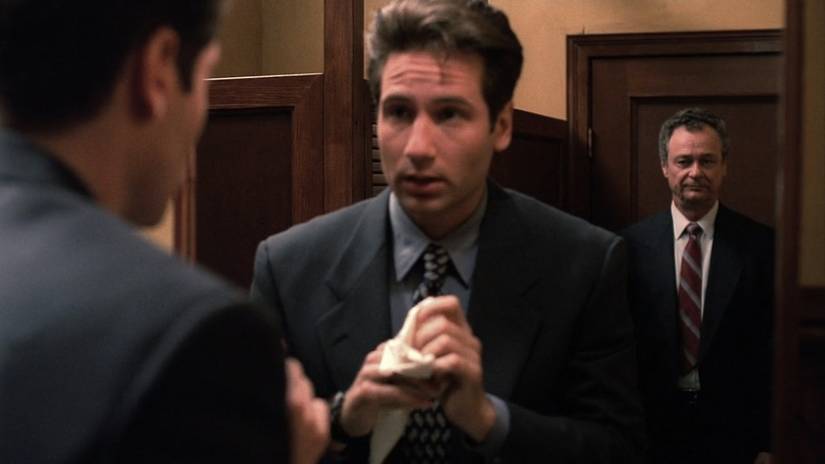
Sensing that FBI headquarters is monitoring his movements, Mulder briefs Scully in a crowded, noisy Washington, D.C., bar. When Mulder steps away to use the restroom, he is intercepted by a polished, middle-aged man in a suit (played by Jerry Hardin). This shadowy figure issues a stark warning: "The military will not tolerate an FBI investigation." He cryptically hints that he may be of future assistance before disappearing into the crowd.
Despite the caution, Mulder pursues the lead. Upon arriving in Utah, Mulder and Scully uncover evidence that military personnel are testing experimental aircraft reverse-engineered from recovered extraterrestrial technology. The climax of Mulder’s independent investigation culminates when he sights an otherworldly, triangular craft before being forcibly apprehended by military servicemen and subjected to temporary memory erasure.
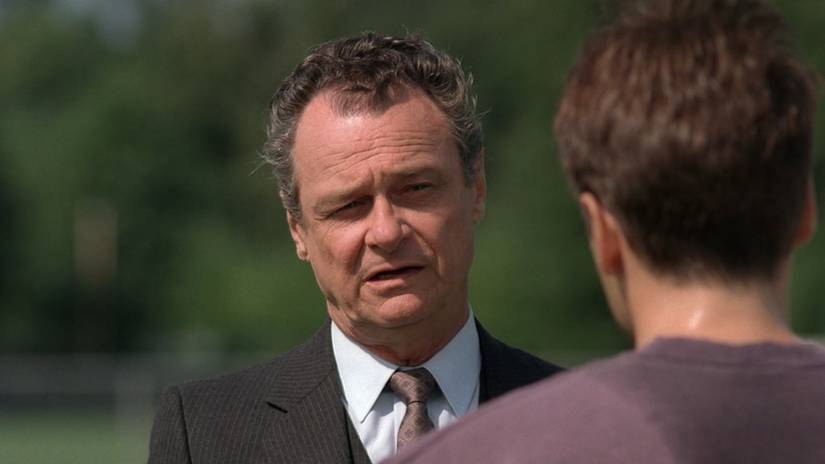
Reeling from the setback and with their memories compromised, Mulder and Scully momentarily drop the inquiry. It is then that the mysterious man reappears, approaching Mulder while he jogs on a track in a D.C. park. When Mulder admits that he witnessed something extraordinary but had it wiped from his consciousness, the man reiterates his offer of alliance.
"I can provide you with information, but only so long as it’s in my best interest to do so," the man states.
When Mulder presses, "What is your interest?", the man delivers a definitive, chilling reply: "The truth."
The scene concludes with one of the most memorable exchanges in television history. As the informant walks away, Mulder calls out, "They’re here, aren’t they?"
The man stops, turns slowly, and says with haunting certainty, "Mr. Mulder, they’ve been here for a long, long time."
Supporting Context & Metrics: The Real-World Parallels and Cinematic Influences
The Watergate Connection
The moniker "Deep Throat" was an explicit homage to the high-stakes political journalism of the 1970s. During the Watergate scandal, Washington Post reporters Bob Woodward and Carl Bernstein relied on a high-level confidential source known as "Deep Throat" to guide their investigation into the Nixon administration’s illegal break-in and subsequent cover-up. Decades later, the informant was publicly revealed to be former Associate FBI Director Mark Felt.
By borrowing this name, The X-Files creators immediately grounded their fictional sci-fi narrative in the gritty, realistic tradition of American political thrillers. It signaled to the audience that Mulder’s extraterrestrial investigations were not merely monster-of-the-week fairy tales, but part of a sprawling, institutional conspiracy involving the highest tiers of government—echoing real-world distrust of authority in the post-Watergate era.
Crafting the Performance: Hardin, Holbrook, and Sutherland
Jerry Hardin’s portrayal of Deep Throat did not emerge in a vacuum; it was heavily informed by cinematic depictions of whistleblowers and government insiders. Hardin drew direct inspiration from two landmark performances:
- Hal Holbrook as "Deep Throat" in the 1976 cinematic adaptation of All the President’s Men.
- Donald Sutherland as "Mr. X" in Oliver Stone’s 1991 political thriller JFK.
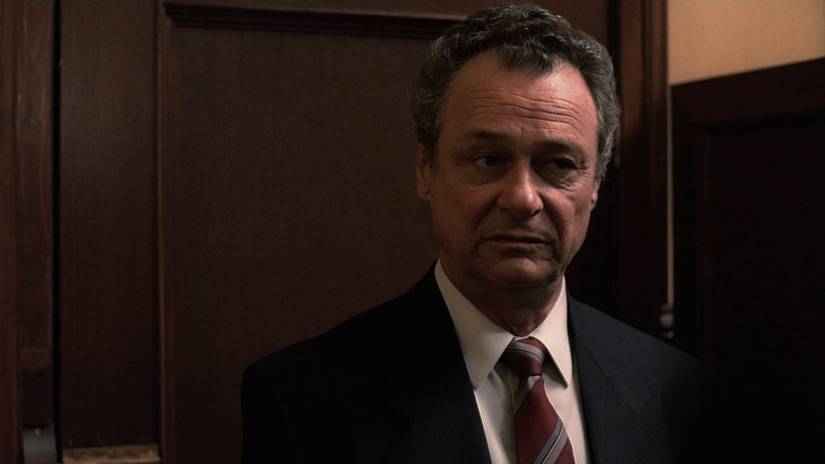
In his early 60s during the filming of The X-Files, Hardin brought a weathered, world-weary gravity to the role. He infused Deep Throat with an intricate blend of moral guilt, profound wisdom, and chilling ambiguity. Viewers were perpetually left guessing: Is this man an altruistic patriot trying to save humanity, or is he a manipulative chess piece leading Mulder down a controlled opposition path? This moral gray area became a foundational pillar of the show’s early mythology.
Key Narrative Milestones
Deep Throat’s involvement throughout the first season was strategically paced. He appeared selectively—sometimes offering cautionary advice, occasionally providing unsolicited insights, and frequently dropping breadcrumbs that launched Mulder and Scully into their next investigation.
His narrative high-water mark arrived in the landmark Season 1 episode "E.B.E." (Extraterrestrial Biological Entity). In this installment, Deep Throat deepens the series lore by revealing that following the infamous 1947 UFO crash in Roswell, New Mexico, an international consortium of world governments established a strict mandate: any living alien encountered on Earth must be ruthlessly exterminated. Deep Throat chillingly confesses to Mulder that he is one of only three living individuals who has personally been forced to carry out this gruesome directive.
Official Statements and Creative Reflections
While network executives initially worried that an overarching alien conspiracy would alienate casual viewers who preferred standalone monster hunts, creators and writers championed the serialized mythology as the emotional core of the series.
Looking back on the evolution of the show’s first season, the writers noted that Deep Throat’s ultimate fate was structurally inevitable. By the conclusion of Season 1, the character had revealed too much sensitive information to Mulder, crossing a threshold that made his continued survival within the syndicate impossible. In the harrowing Season 1 finale, Deep Throat is executed by government conspirators to silence his leaks and punish Mulder’s relentless pursuit.
Although the character’s death made logical narrative sense within the bounds of a high-stakes conspiracy thriller, retrospective evaluations from the production team and fandom suggest he was written out prematurely. The void left by Jerry Hardin’s departure was profound. While subsequent seasons introduced substitute informants—such as "Mr. X" (Steven Williams) and "The Well-Manicured Man" (John Neville)—none could entirely replicate the unique gravitas, fatherly warmth, and weary cynicism that Hardin brought to the original Deep Throat.
Future Outlook: The Enduring Legacy of Season 1’s Mythos
Decades after its premiere, The X-Files remains a masterclass in atmospheric television world-building. Within the fandom, a recurring critical consensus has emerged: while later seasons of the show frequently suffered from convoluted mythological bloat—piling on layer after layer of alien colonization lore without delivering satisfying resolutions—the first season stands as a pristine example of serialized mystery.
In Season 1, the government conspiracy was fresh, focused, and terrifyingly plausible. At the center of that engrossing puzzle was Deep Throat. He represented the eternal tension between institutional secrecy and the individual’s right to know the truth. Even though his time on screen was agonizingly brief, Deep Throat permanently shaped the DNA of modern television conspiracy thrillers, proving that a whispered warning on a park bench can echo through pop culture for generations.