By Catie Owen | Regional Content & Insights Lead
Published: September 21, 2026
Executive Overview
In a landmark development reshaping the global artificial intelligence infrastructure landscape, Crusoe announced on Thursday that it has successfully secured a massive US$3.9 billion in a Series F funding round. This latest capital injection propels the AI infrastructure pioneer to a staggering US$30.9 billion valuation, cementing its status as one of the most critical backbones of the generative AI boom.
The funding round was co-led by a powerhouse consortium comprising Atreides Management, Mubadala Capital, and Valor Equity Partners. It also drew strategic investments and renewed commitments from a blend of new and legacy backers, including Founders Fund, Nvidia, and the Qatar Investment Authority (QIA).
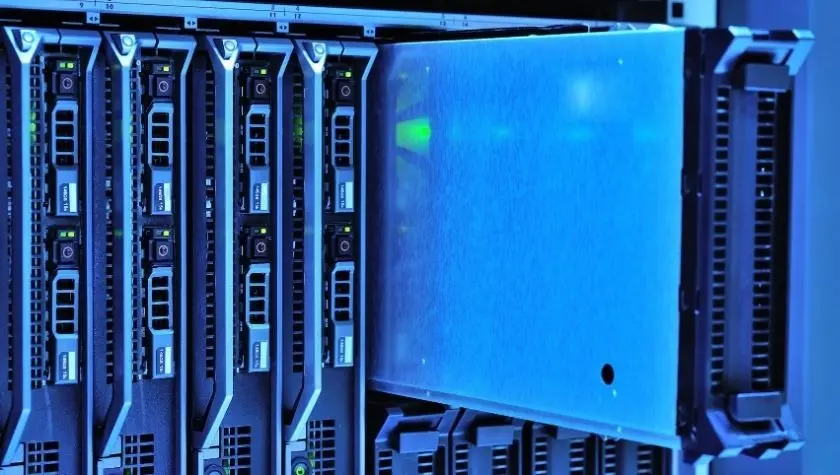
However, the real headline is not merely the size of the check, but how Crusoe intends to spend it. In a strategic pivot that defies conventional industry wisdom, the company is shifting away from its historically successful blueprint of constructing massive, vertically integrated data centre campuses. Instead, Crusoe is aggressively pivoting toward the development of "modular Crusoe Spark units"—portable, factory-built computing modules designed to dramatically accelerate deployment and alleviate the crippling power and planning bottlenecks plaguing the modern tech sector.
Detailed Chronology: From Abilene to Modular Innovation
To understand the weight of Crusoe’s latest strategic pivot, one must examine the company’s trajectory over recent years. Historically, Crusoe carved out a reputation as an unorthodox disruptor in the green tech and compute spaces, eventually transitioning into a heavyweight developer of multi-gigawatt AI data centres.
The Abilene Blueprint and Mega-Campus Roots
Crusoe’s credibility in the high-stakes AI infrastructure market was solidified through high-profile projects, most notably Oracle’s massive Abilene data-centre campus. Initially conceptualized to rent computing capacity directly to OpenAI, the Abilene site became a testament to Crusoe’s capacity-building prowess.
When OpenAI and Oracle ultimately shifted toward other developers for certain phases, Crusoe demonstrated remarkable agility. The company leased the newly built infrastructure to Microsoft instead. Under the leadership of CEO Chase Lochmiller, the Abilene site evolved into an infrastructure behemoth boasting an estimated 2.1 GW of planned power capacity—which includes a dedicated 900 MW on-site natural gas plant tailored to power Microsoft’s soaring computational demands.
The Traditional Playbook vs. The New Reality
Until now, Crusoe’s business model rested on three pillars:
- Developing and leasing massive data centre real estate.
- Renting out high-performance GPUs.
- Executing customers’ complex AI models while billing on a token-consumption basis.
While this model successfully financed the physical infrastructure of the AI revolution, it exposed the company—and the broader industry—to severe logistical friction. Constructing multi-gigawatt campuses requires years of regulatory approvals, complex electrical grid interconnections, intense labour pools, and billions in upfront capital expenditure.
Recognizing that the speed of the AI market far outpaces traditional commercial construction timelines, Crusoe is fundamentally reinventing its operational strategy.
Supporting Context & Metrics: Enter the "Crusoe Spark"
The core recipient of the newly secured $3.9 billion Series F capital will be the scaling and deployment of Crusoe Spark units. This modular technology represents a radical departure from the hyper-scale campus model that defined the first wave of the generative AI buildout.
Engineering Speed and Mobility
Unlike traditional data centres that require years of site-prep, zoning negotiations, and on-site civil engineering, Spark units are engineered for mass production. Crusoe’s dedicated manufacturing facility in Colorado possesses the production capacity to build up to 1 GW of Spark capacity per year.

Once manufactured, these modular units can be loaded onto heavy-duty transport vehicles and shipped directly to remote or localized areas where stranded or underutilized power already exists. According to CEO Chase Lochmiller, this streamlined supply chain slashes construction and deployment timelines from years down to mere weeks.
Training vs. Inference: Right-Sizing the Compute
The technological rationale behind the Spark unit stems from a changing industry requirement: the growing division between AI training and AI inference.
- AI Training: Demands massive, centralized supercomputing clusters housing tens of thousands of specialized chips (such as Nvidia GPUs) connected via ultra-low-latency networks, justifying multi-gigawatt mega-campuses like Abilene.
- AI Inference: The deployment phase where trained models execute tasks for end-users. Inference does not require massive multi-site chip clusters to operate effectively.
Addressing this distinction, Lochmiller noted in an interview with The Wall Street Journal:
"You don’t actually need an Abilene to do that… running inference on the same scale as training can be a bit of overkill."
By deploying Spark units—which are already operational in Nevada—Crusoe can meet the hyper-localized, rapid-fire demands of inference workloads without the astronomical overhead or construction delays associated with traditional data centres.
Official Statements and Industry Implications
The pivot toward modular infrastructure arrives at a critical inflection point for the global energy and digital infrastructure markets. Large-scale AI data centres have increasingly drawn public scrutiny and regulatory pushback over their voracious appetite for electricity and water, alongside grid stability concerns.
By decentralizing compute and matching it directly with available power sources, Crusoe’s Spark units aim to neutralize several systemic industry pain points:
- Power Access & Grid Bottlenecks: Modular units can be sited near local, micro-grid, or off-grid energy sources (including flare gas or renewable micro-installations), bypassing jammed transmission line queues.
- Regulatory & Planning Hurdles: Smaller, transportable footprints sidestep many of the protracted zoning battles and insurance hold-ups that routinely stall multi-billion-dollar campus developments.
- Environmental and Labour Pressures: Factory-built modularity minimizes on-site construction waste and dramatically lowers on-site labour requirements.
Crusoe is not entirely alone in recognizing the potential of modularity. The firm joins an elite tier of global enterprises—including tech and electrical giants like Huawei, Schneider Electric, and ABB—that are heavily investing in modular data centre architecture. However, with $30.9 billion in valuation backing and direct alignment with hyperscalers and chipmakers like Nvidia, Crusoe is uniquely positioned to scale this approach globally.
Future Outlook
As the generative AI ecosystem matures, the race is no longer simply about who can build the largest warehouse of chips; it is about efficiency, agility, and the ability to deploy compute precisely where the demand—and the power—lives.
With its war chest expanded by $3.9 billion, Crusoe has secured the financial runway necessary to prove that modular infrastructure can rival the economic power of legacy mega-campuses. If the Colorado manufacturing plant hits its 1 GW annual target and Spark units successfully proliferate across domestic and international markets, Crusoe may well author the operational playbook for the next decade of digital infrastructure development.
Upcoming Industry Events
For industry stakeholders tracking the intersection of digital infrastructure, energy supply, and global connectivity, discussions surrounding modular compute and AI scaling will take centre stage at upcoming industry gatherings, including the upcoming Capacity Europe conference, which brings together over 3,500 decision-makers to map the future of the digital backbone.