Executive Overview
To understand the cultural footprint of The X-Files, one must divide the landmark science fiction series into two distinct storytelling traditions. On one side stand the serialized "Mythology" arcs—sprawling, multi-season epics concerning extraterrestrial colonization, clandestine government cabals, and the enduring search for Mulder’s missing sister. These episodes routinely commanded season premieres and finales, driving the macro-narrative of the FBI’s fringe division.
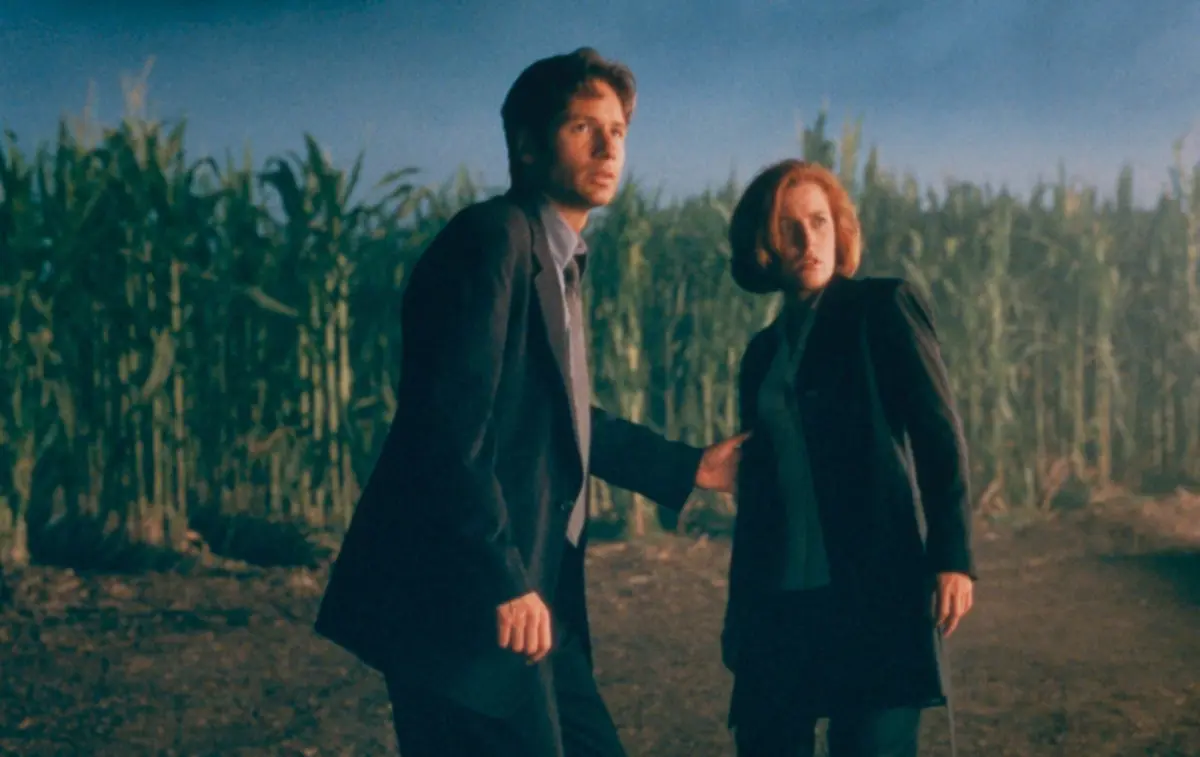
Conversely, the backbone of the series rested within its procedural "Monster of the Week" (MOTW) entries. Comprising roughly 75 percent of the show’s entire 202-episode run, these standalone installments dispatched Special Agents Fox Mulder (David Duchovny) and Dana Scully (Gillian Anderson) to the farthest corners of America to investigate paranormal oddities, urban legends, and genetic aberrations completely untethered from the alien conspiracy.
While terrifying entities populated this rotation—ranging from the immortal, liver-eating mutant Eugene Victor Tooms to the deeply unsettling, inbred Peacock family—none achieved the iconic, enduring status of the creature introduced in season 2, episode 2: "The Host."
Featuring a haunting design that evoked classic creature features while remaining entirely distinct, the man-sized parasitic organism known colloquially as the "Flukeman" transcended its single-episode appearance. More than three decades after its television debut, the Flukeman remains the unofficial mascot of The X-Files’ monster catalog, cementing its place in television history through brilliant practical effects, tight writing by series creator Chris Carter, and a lingering cultural footprint that recently manifested in official merchandise like Lego sets.
Detailed Chronology: The Anatomy of "The Host"
Airing on September 23, 1994, "The Host" arrived during a precarious narrative juncture for the series. Following the structural shakeups of the early second season—a period when the X-Files division had been temporarily shuttered by their bureaucratic superiors—Fox Mulder finds himself relegated to menial investigative grunt work. Sent to Newark, New Jersey, to examine a waterlogged corpse pulled from the municipal sewer system, Mulder treats the assignment as a punitive measure intended to demoralize him.

However, the autopsy performed by Dr. Dana Scully quickly shatters the illusion of a mundane homicide. Tucked inside the victim’s liver is an anomalous, parasitic flukeworm—an organism entirely foreign to normal medical examination. The investigation intensifies when a city sanitation worker is violently attacked deep within the subterranean labyrinth of the Newark sewers. While the victim initially suspects a runaway python, the immense, jagged bite marks carved into his back dwarf any known reptile, closely matching the structural dimensions of a giant trematode mouth.
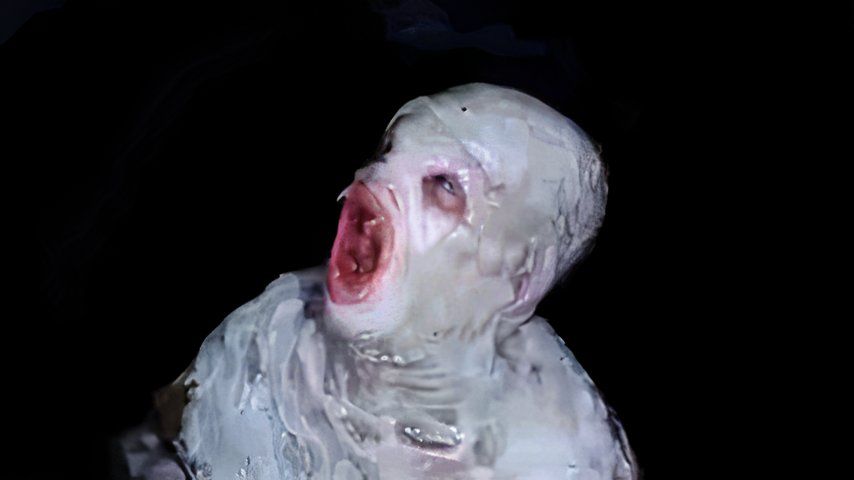
Following the sanitation worker’s gruesome death, Mulder intercepts a bizarre capture at a local sewage treatment facility. Plant workers have inadvertently trapped a humanoid entity possessing the torso, limbs, and stature of a grown man, but crowned with the pale skin, bulbous black eyes, and horrific, circular-toothed maw of a flukeworm.
Referred to in production notes and by fans simply as the "Flukeman," the creature engages in a desperate, violent bid for survival, navigating the city’s water infrastructure and attacking municipal workers. The narrative reaches its tense climax as Mulder and Scully track the parasite into a floating sludge barge, culminating in a harrowing confrontation that exposes the creature’s remarkable regenerative abilities before it seemingly vanishes back into the watery depths.
Supporting Context & Metrics: The Anatomy of a Masterpiece
What elevated "The Host" above standard creature-feature television of the mid-1990s was a convergence of high-level craftsmanship, timely real-world anxieties, and structural television writing.
Practical Effects and Visual Design
At a time when television budgets rarely afforded cinematic monster creation, The X-Files production team invested heavily in practical creature effects. Conceived as a modern-day evolution of Universal’s classic Creature from the Black Lagoon, the Flukeman was brought to life largely through actor Darin Morgan—who would later become an acclaimed writer for the series—suited up in a full-body latex prosthesis. The design relied on stark, ghastly imagery: milky-white skin devoid of pigmentation due to a subterranean existence, combined with a glistening, oversized circular mouth filled with concentric rows of needle-sharp teeth.

Timely Socio-Political Undertones
Written by series creator Chris Carter, the script grounded its supernatural elements in very real, late-20th-century ecological dread. The episode heavily implies that the Flukeman was a mutated byproduct of the 1986 Chernobyl nuclear disaster in Ukraine—an event fresh in the global consciousness less than a decade prior. By tying an American urban horror story directly to a Soviet atomic catastrophe, the episode tapped into post-Cold War anxieties regarding nuclear fallout, genetic mutation, and unseen environmental contamination.
Narrative Accessibility
Furthermore, "The Host" aired precisely as The X-Files was crossing over into a genuine pop-culture phenomenon. Because the episode required zero prior knowledge of the overarching alien conspiracy mythos, it served as a perfect gateway for millions of new viewers tuning in during season 2. Fans did not need to untangle years of Syndicate plotting or digital black-oil conspiracies; they merely had to witness two brilliant FBI agents outsmarting a mutated parasitic nightmare in the dark.
Official Statements & Industry Perspective
In retrospective interviews examining the cultural legacy of The X-Files, creators and crew members have frequently pointed to "The Host" as a high-water mark for the series’ monster-of-the-week formula.
Chris Carter has often reflected on the unique challenges of constructing standalone horror episodes that could rival the cinematic scope of contemporary features. In past retrospectives, Carter noted that the creation of monsters like the Flukeman relied entirely on taking mundane, microscopic realities of nature—in this case, human parasites—and scaling them up to mythological proportions to trigger primal human fears of the dark and the unknown.
Special effects artists from the era similarly highlighted the Flukeman suit as a landmark achievement for television creature design. Constructing a prosthesis that could withstand the damp, punishing environment of real-world sewer sets and water tanks required innovative material engineering, pushing the boundaries of what television production schedules could accomplish in the mid-1990s.
Future Outlook: The Enduring Mascot of the Paranormal
Decades after its single televised appearance, the cultural footprint of the Flukeman continues to expand in unexpected ways, cementing its status as an enduring pop-culture artifact.
While numerous monsters haunted Mulder and Scully over nine original seasons and subsequent revival runs, none have achieved the merchandising longevity of the Newark sewer parasite. Outside of Mulder, Scully, and the iconic "The Truth Is Out There" poster, the Flukeman remains the single most recognizable non-human entity associated with the franchise.
This sustained legacy was underscored recently when toymakers and entertainment manufacturers released official collector merchandise, including landmark toy lines and construction block sets. When Lego officially released its long-awaited The X-Files collector set, the curation of figures told a definitive story: alongside Mulder, Scully, the Cigarette-Smoking Man, and a standard Grey Alien, the sole creature chosen to represent the vast pantheon of X-Files horrors was none of the series’ human serial killers or shape-shifters, but the Flukeman.
As long as audiences look back at the golden age of 1990s speculative fiction, "The Host" will remain a masterclass in atmospheric television horror. It stands as a testament to practical artistry, environmental storytelling, and the terrifying notion that the most dangerous monsters are often lurking just beneath the concrete, waiting in the dark.