By Cecilia Ciocchetti
Updated: November 14, 2026
Executive Overview
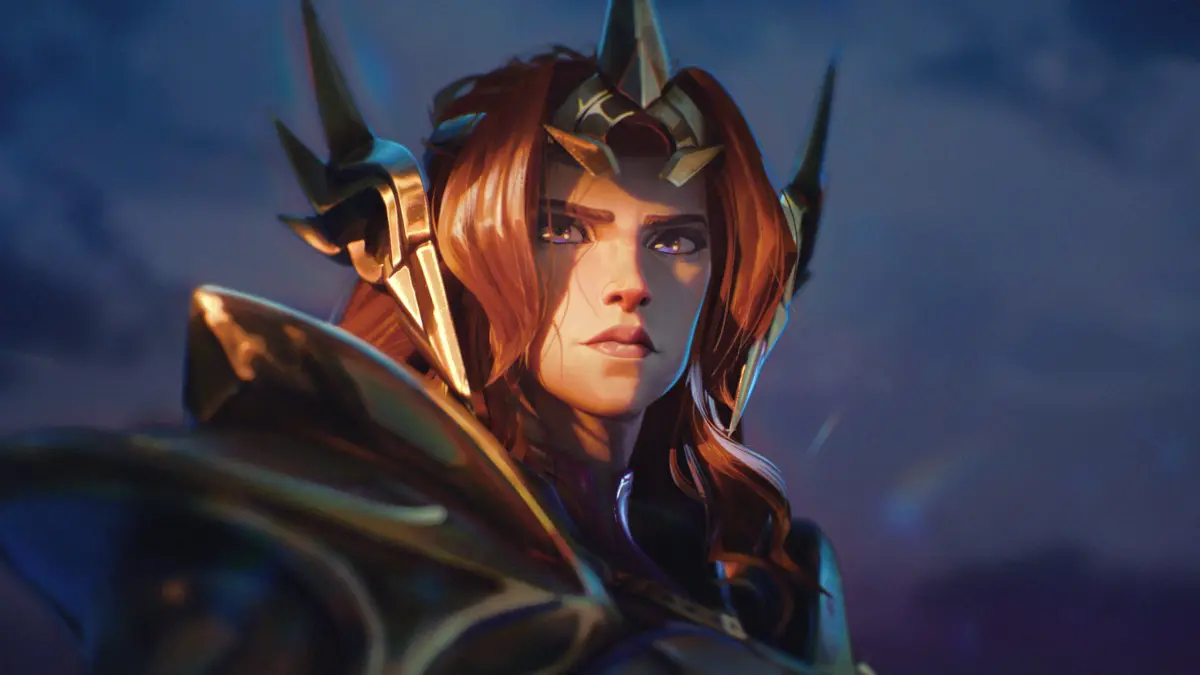
At the grand stage of the 2026 League of Legends World Championship Finals, Riot Games pulled back the curtain on the most ambitious project in the game’s nearly two-decade history. Titled League of Legends: New Dawn, this sweeping, all-encompassing update is slated for a full release in 2027. It promises to reshape nearly every foundational pillar of the world’s most enduring multiplayer online battle arena (MOBA) title.
Spanning an overhauled client interface, a heavily reimagined Summoner’s Rift, completely revamped visuals, and deep systemic gameplay adjustments, New Dawn aims to redefine what it means to play League of Legends. As executive producer Paul Bellezza declared in the official worldwide reveal trailer, "This is the start of a new era for League, a new journey."
While Riot Games has kept a tight lid on the granular specifics of the update, the initial teaser trailer offered a staggering glimpse into the future—showcasing modernized champion select screens, upgraded epic monsters, and profound structural modifications to map terrain that promise to upend meta-strategies. Coming off the heels of the bittersweet experiment that was League Classic, New Dawn signals a definitive, forward-looking march into the game’s next decade of live-service dominance. Full, in-depth breakdowns of the update are scheduled to be revealed by Riot Games in January 2027.
Detailed Chronology: From 2009 Origins to the 2027 Horizon
To understand the monumental weight of League of Legends: New Dawn, one must look back at the evolutionary timeline of a game that fundamentally changed the landscape of modern PC gaming and global esports.
The Foundation Years (2009–2013)
When League of Legends officially launched in October 2009 under the development and stewardship of founders Brandon Beck and Marc Merrill, it was a modest spiritual successor to the Defense of the Ancients (DotA) mod. Built on relatively rudimentary technology, the early game featured blocky character models, a clunky Adobe AIR-based client, and a much darker, gritty aesthetic on Summoner’s Rift. Despite its technical limitations, the game resonated deeply with players, sparking an explosive grassroots community that quickly outgrew its initial infrastructure.
The First Great Modernization (2014–2017)
As League cemented its status as a global phenomenon, the cracks in its aging framework began to show. In 2014, Riot Games deployed its first major visual and structural overhaul of Summoner’s Rift, dramatically cleaning up readability, modernizing textures, and introducing dynamic environmental elements (such as dynamic monster animations and updated jungle camps). Shortly thereafter, Riot tackled the infamous legacy client, rolling out a complete rewrite designed to improve stability, responsiveness, and aesthetic flow.
The Era of Systemic Iteration (2018–2025)
Throughout the late 2010s and early 2020s, League leaned heavily into continuous, incremental updates. The game saw sweeping changes to the Runes Reforged system, the introduction of Elemental Drakes and Drake Souls, periodic item system overhauls (such as the 2021 Mythic item era, which was later reversed), and map adjustments like the addition of alcoves and modified brush placements. However, these changes were largely piecemeal—adjusting individual cogs within an aging machine rather than rebuilding the engine itself.
The Nostalgia Trap and League Classic (2026)
In a surprising move earlier in 2026, Riot Games sought to appease a vocal segment of the veteran player base by launching League Classic—a temporary, retro-focused game mode that allowed players to experience older, unpolished patches, legacy champion kits, and vintage iterations of Summoner’s Rift.
While the mode initially sparked a wave of intense nostalgia, its luster quickly faded. The experiment proved that raw nostalgia alone was insufficient to sustain active, modern engagement. Just weeks after its debut, Riot announced that League Classic would sunset its current run in January 2027, serving as a stark reminder that while the past is worth remembering, League of Legends could not afford to look backward if it hoped to survive.
The Announcement of New Dawn (November 2026)
Culminating at the 2026 World Championship Finals, Riot officially announced New Dawn. Marking 18 years since the game’s inception, this update represents the single largest developmental undertaking in the history of the franchise—dwarfing even the 2014 map overhaul in scope and ambition.
Supporting Context & Metrics: Why New Dawn Now?
The decision by Riot Games to invest massive engineering and design resources into a generational overhaul of League of Legends is underpinned by shifting industry standards, rising player expectations, and the longevity of the game’s code architecture.

The Technical Debt of an 18-Year-Old Titan
Maintaining a live-service game for nearly two decades inevitably accumulates massive technical debt. Features built in 2009 often conflict with modern programming pipelines, making the implementation of new modes, champions, and cross-platform integrations increasingly difficult. New Dawn serves as a modernizing bridge, likely migrating core infrastructural elements to more stable, flexible frameworks—much like what Riot achieved when optimizing Wild Rift for mobile and console platforms.
Bridging PC and Mobile Design Philosophies
One of the most striking takeaways from the New Dawn reveal trailer was the stark resemblance between the new PC champion select screen and the slick, highly responsive UI found in Wild Rift. Over the years, Riot’s mobile spin-off has pioneered various quality-of-life interface designs, clean aesthetics, and streamlined UX choices. New Dawn appears to signal a unification of the League ecosystem’s design language, bringing a more modern, frictionless experience to PC veterans.
Deepening Tactical Complexity
Beyond surface-level graphics, the footage showcased profound alterations to map terrain on Summoner’s Rift. Modern competitive games live and die by their strategic depth. By opening up new topographical pathways and altering foundational choke points, Riot is directly targeting stale meta-play. These changes are designed to force top-tier professional esports teams and casual solo-queue players alike to entirely rethink macro-strategy, vision control, and cross-map rotations.
Official Statements and Industry Reactions
The reveal of League of Legends: New Dawn sent immediate shockwaves through the global gaming and esports communities.
Executive Producer Paul Bellezza framed the update as an essential milestone for the community:
"This is the start of a new era for League, a new journey. For nearly eighteen years, this game has been shaped as much by the passion, creativity, and feedback of our incredible community as it has been by our developers. With New Dawn, we aren’t just updating graphics; we are laying the foundational bedrock that will allow League to thrive for another decade and beyond."
Prominent figures within the League of Legends esports ecosystem—including team owners, long-standing content creators, and veteran analysts—have expressed both awe and cautious optimism. While the visual fidelity of the updated champions, minions, and epic objectives like Baron Nashor and the redesigned dragons has been universally praised, the sheer magnitude of the systemic changes has sparked lively debate across social media channels like X (formerly Twitter).
Industry analysts note that undertaking a redesign of this scale carries inherent risks. Alienating purists who have spent over a decade mastering pixel-perfect interactions on the legacy Summoner’s Rift is a delicate tightrope walk for any development team. However, failure to innovate risks alienating a younger generation of gamers accustomed to modern UI/UX standards set by contemporary titles.
Future Outlook: What Lies Ahead in 2027
As the dust settles on the 2026 World Championship Finals, all eyes turn toward the horizon. Riot Games has confirmed that the rollout of League of Legends: New Dawn will be a multi-phased event, beginning with a comprehensive, deep-dive presentation scheduled for January 2027.
Key milestones to watch in the coming months include:
- The January 2027 Full Reveal: A dedicated developer broadcast breaking down the exact nature of the reworked rune system, map terrain shifts, and client-side changes.
- PBE Testing Phases: Anticipated Public Beta Environment (PBE) cycles in early-to-mid 2027, allowing the player base to stress-test the new mechanics, provide feedback, and help iron out technical bugs.
- Esports Integration: Questions remain regarding how and when professional leagues (such as the LCK, LPL, LEC, and LCS) will transition to the New Dawn patch environment, a shift that will inevitably redefine competitive team compositions and coaching strategies.
Ultimately, League of Legends: New Dawn is more than a patch or an expansion—it is a philosophical statement. It asks whether a digital colosseum built in 2009 can successfully reinvent itself for the gaming landscape of the late 2020s and beyond. Whether the global player base enthusiastically embraces this new frontier or pushes back against the tides of change, one thing is certain: the Summoner’s Rift will never be the same again.