By Polygon Editorial Desk
Published November 14, 2026, 5:03 PM EST
Executive Overview
During a tense break in the action at the 2026 League of Legends World Championship, Riot Games delivered a seismic announcement that sent shockwaves through the sold-out crowd at the Barclays Center in Brooklyn: the venerable multiplayer online battle arena (MOBA) is preparing for its most radical transformation to date. Titled "New Dawn," this all-encompassing, large-scale update is slated to officially launch in 2027, marking the 17-year-old franchise’s entry into a brand-new evolutionary era.
While the initial reveal leaned heavily on cinematic spectacle rather than granular patch notes, the implications of the presentation are vast. Riot Games has confirmed that League of Legends will receive a completely rebuilt game client—replacing the architecture that has served the game since 2016—alongside a modernized version of Summoner’s Rift, evolved core gameplay systems, and an ambitious multi-generational roadmap.
Designed not only to retain the game’s fiercely loyal, decades-old player base but also to capture a new wave of fans drawn in by media expansions like Arcane and the Riftbound Trading Card Game (TCG), New Dawn represents an existential pivot. Riot’s stated vision is as bold as it is unprecedented in the live-service gaming space: building a game engineered to endure for a century. Full details, deep gameplay dives, and developer roadmaps are scheduled to be revealed in an expansive broadcast in January 2027.
Detailed Chronology: The Road to New Dawn
The path toward New Dawn has been paved by years of iterative updates, transmedia storytelling, and a growing realization within Riot Games that the foundational infrastructure of League of Legends required a modern foundation to support the next decade of gaming.
The Tease at Worlds 2026
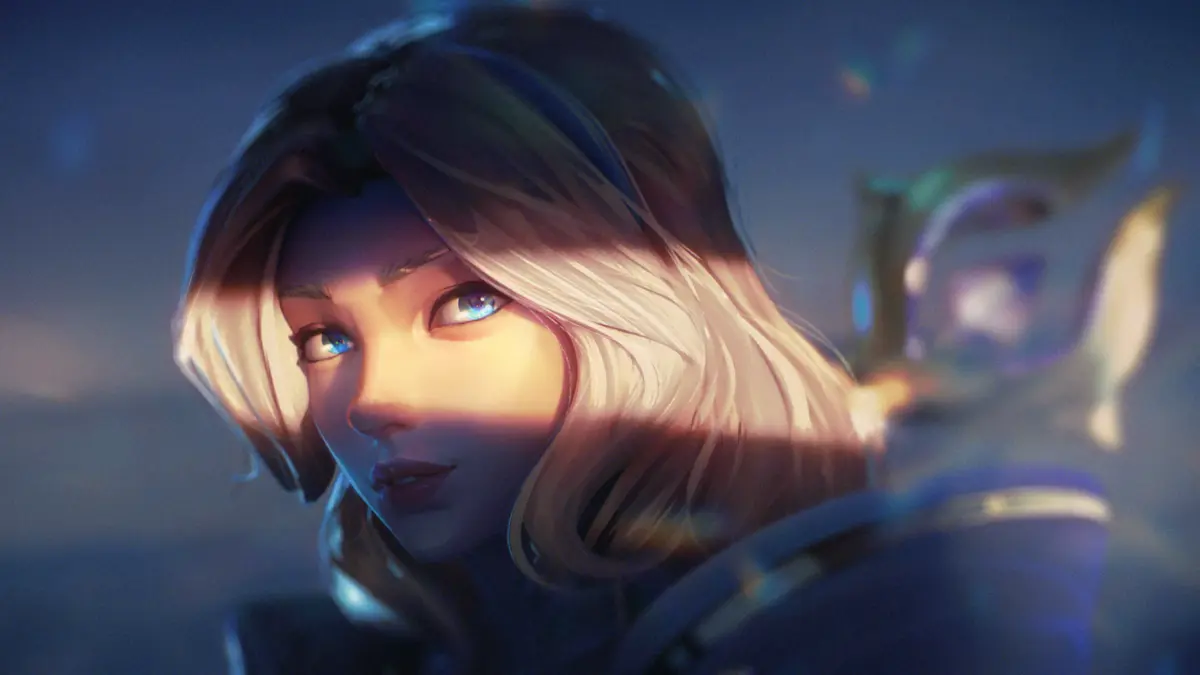
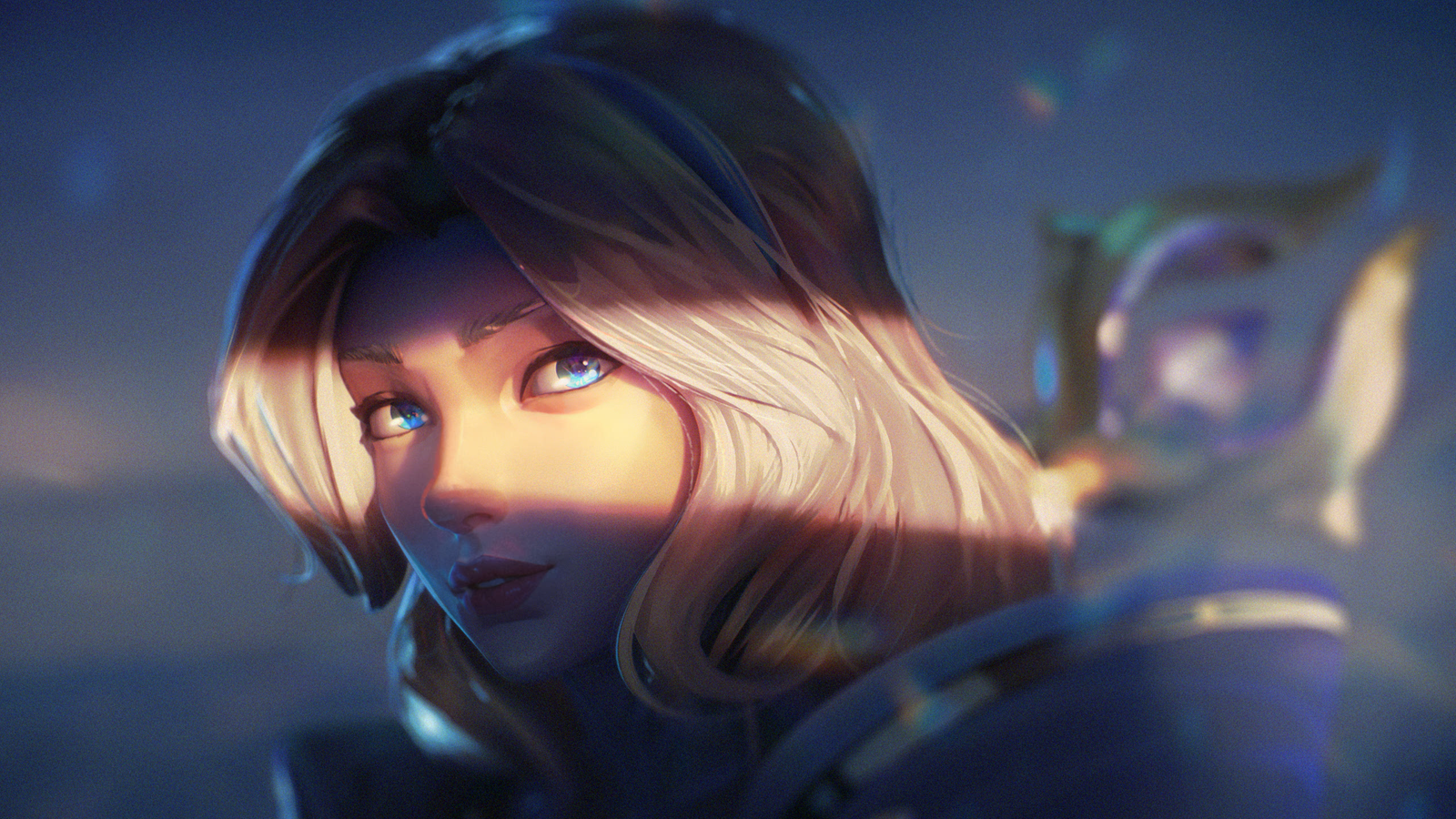
The atmosphere inside the Barclays Center was already electric as the world’s elite teams battled for supremacy at the 2026 World Championship. However, the energy shifted palpably when the arena lights dimmed and a high-fidelity cinematic trailer broadcast across the massive stage monitors. The teaser offered sweeping, photorealistic renders of iconic champions, immediately stirring the crowd. Fans caught breathtaking glimpses of Blitzcrank, Lux, Leona, Sett, Poppy, Volibear, Riven, Jhin, and Ahri, followed by rapid-fire snippets of ingame action featuring modernized iterations of Master Yi and Morgana.
The 2016 Client Legacy and the 2027 Overhaul
Behind the cinematic flash lies a technical necessity. Riot Games last overhauled the architecture of the League of Legends game client a decade prior, in 2016. Over the years, the aging client has faced persistent criticism from the community regarding performance bottlenecks, memory leaks, and feature bloat.
By confirming a brand-new game client for 2027, Riot is signaling that New Dawn is not merely a content patch or a seasonal event, but a foundational rebuilding of the software ecosystem that houses the game. This technical overhaul aims to streamline matchmaking, improve client responsiveness, and establish a stable baseline for future feature integration.
The Summoner’s Rift Facelift
Complementing the client architecture overhaul is a promised visual and structural refresh of Summoner’s Rift. While details remain heavily guarded, the sizzle reel hinted at updated map aesthetics, cleaner visual readability during chaotic team fights, and modernized environmental fidelity. Riot has described the update as encompassing "evolved gameplay, and new ways to experience players’ favorite champions," suggesting that familiar tactical loops and jungle paths may be subtly or drastically reimagined to fit a modern competitive landscape.
Supporting Context & Metrics: Sustaining a Century-Long Franchise
To understand the weight of New Dawn, one must examine the unique longevity of League of Legends and the shifting pressures of the live-service market in the late 2020s.
The Multi-Generational Mandate
During a pre-Finals press event, League of Legends Executive Producer Paul Bellezza laid out an extraordinarily ambitious philosophical framework for the property. According to Bellezza, Riot Games views League of Legends as a "multi-generational" intellectual property with a long-term goal of running for "100 years."
Sustaining a video game for a century requires navigating the inevitable generational churn of players. A teenager discovering League today experiences a radically different digital landscape than a player who logged into Summoner’s Rift during its 2009 beta. To bridge this generational divide, Riot must balance the intricate, high-skill ceiling expected by veteran esports enthusiasts with the approachability required to onboard casual players whose primary entry point may be Netflix’s Arcane or the Riftbound TCG.
The Live-Service Arms Race
Riot’s strategic pivot with League of Legends does not happen in a vacuum. The broader gaming ecosystem in 2026 is defined by legacy live-service flagships fighting vigorously for audience retention and attention economy dominance.
Industry peers are making similarly massive bets on longevity and accessibility—such as Blizzard Entertainment’s ongoing structural pushes with World of Warcraft: Forever, aimed at making the storied MMORPG more approachable to casual and modern players. In this competitive climate, standing still is equivalent to moving backward. For Riot Games, New Dawn is the definitive answer to the question of how a 17-year-old MOBA remains culturally and commercially dominant in an era of rapid technological and consumer shifts.
Official Statements & Strategic Vision
While Riot Games has kept the lid tightly sealed on specific balance changes, rework lists, and mechanical overhauls until the formal January reveal, executives have made it clear that New Dawn is designed to future-proof the game across multiple fronts.
Paul Bellezza’s framing of the game as a multi-generational entity underscores a shift in how developers conceptualize live-service games. Rather than treating games as finite products with a 5-to-10-year shelf life, industry leaders are increasingly looking at titles like League of Legends, Counter-Strike, and World of Warcraft as permanent digital infrastructure—cultural institutions that require generational renovations just like physical stadiums or cities.
Furthermore, Riot is carefully intertwining its game development strategy with its esports ecosystem. The company is actively ensuring that competitive integrity remains at the forefront, even as monumental changes to the game’s client, map, and champion kits loom on the horizon. The message from Riot’s leadership is unified: New Dawn will honor the competitive legacy of the past while aggressively innovating for the future.
Future Outlook: The 2027 Esports Calendar and Beyond
Riot Games cleverly bundled its announcements regarding the gameplay revolution of New Dawn with a comprehensive roadmap for the 2027 competitive esports calendar, demonstrating that the professional scene will evolve in tandem with the game itself.
Global Tournament Restructuring
The 2027 professional season will introduce significant geographical and structural shifts designed to expand the global footprint of League of Legends esports:
- The First Stand Tournament: The 2027 season will kick off in China with an expanded First Stand tournament, highlighting early-season meta developments and cross-region rivalries.
- Mid-Season Invitational (MSI): The action will then shift to Valencia, Spain, for the Mid-Season Invitational, bringing elite international competition to the Iberian Peninsula.
- The World Championship (Worlds 2027): The pinnacle event of the competitive year will span two major esports powerhouses: Japan and South Korea. In a historic milestone, Nagoya will host Japan’s very first-ever World Championship matches before the tournament migrates to South Korea for the knockout stages and grand finals in Seoul.
Structural Esports Innovations
In addition to venue shifts, Riot is actively exploring fundamental changes to the tournament pipeline. Most notably, the studio is considering replacing the traditional Worlds Play-In Stage with the Demacia Cup. This structural adjustment could potentially open the door for a wider variety of teams to compete on the international stage, injecting fresh blood and unpredictability into the global tournament circuit.
What Lies Ahead
As the gaming community counts down the days to January 2027, speculation will inevitably reach a fever pitch. Will the new client finally eradicate legacy technical debt? How dramatically will Summoner’s Rift change? And how will legendary champions adapt to the new era of gameplay?
One thing is certain: the horizon of League of Legends is shifting. With New Dawn, Riot Games is preparing to write the next chapter of an unprecedented gaming legacy—one designed to capture the imaginations of players today, tomorrow, and perhaps for decades to come.