Executive Overview
A decade after the collapse of Theranos—the multi-billion-dollar blood-testing startup that promised a medical revolution through a single drop of blood—the media introspection continues. In the mid-2010s, Silicon Valley was operating at the peak of its techno-utopian power. Fueled by the dizzying ascents of Apple, Tesla, Airbnb, and Twitter, the tech sector enjoyed an almost unchallenged aura of inevitability. Innovation was worshipped as a universal solvent, capable of disrupting every entrenched institution, including medicine.
Into this fertile, credulous landscape stepped Elizabeth Holmes. Sporting a Steve Jobs-esque black turtleneck and speaking in a deliberate, baritone cadence, Holmes captivated the national press, venture capitalists, and political heavyweights alike. She presented herself as an iconoclastic visionary, a college dropout poised to democratize healthcare through proprietary microfluidics.
Yet, as investigative reporting later exposed, the foundational technology did not work. The rapid, comprehensive blood diagnostics performed on miniature "Edison" devices were largely a mirage, propped up by secret reliance on commercially available machinery and fabricated data.
For prominent technology publications, including WIRED, where editors and writers initially championed Holmes, the post-mortem has been long and uncomfortable. This retrospective is not merely an examination of a single corporate fraud; it is a deep dive into how systemic biases, cultural pressures to champion disruptors, and the foundational venture-capital ethos of "fake it till you make it" created a blind spot broad enough to harbor one of the most brazen deceptions in modern corporate history.
Detailed Chronology: From the Editorial Page to the Fall
The trajectory of the Theranos myth can be tracked through a sequence of defining media milestones that transformed a fraudulent enterprise into an undisputed darling of the tech and venture capital ecosystems.
2013: The National Press Debut
Theranos made its formal introduction to the national stage not via a scientific journal or a business trade publication, but through The Wall Street Journal’s Opinion section. Written by editorial board member Joseph Rago—who would later win a Pulitzer Prize for critiques of the Affordable Care Act—the piece titled "A Drop of Blood, an Instant Diagnosis" framed Holmes not through the lens of empirical validation, but as a libertarian healthcare visionary. Rago highlighted the promise of consumer autonomy in medical testing, heavily influenced by former Secretary of State George Shultz, a Theranos board member who assured Rago that Holmes was the spiritual successor to Steve Jobs and Bill Gates.
2014: The Billionaire Milestone and Media Validation
By 2014, Elizabeth Holmes had been crowned the youngest self-made female billionaire in history. Eager to capture the prevailing zeitgeist of technological democratization, WIRED entered the fray. Caitlin Roper, then an editor at the magazine, was assigned to profile Holmes. Eschewing a traditional feature due to a lack of verifiable technical data, Roper published a long-form Q&A in the March 2014 issue titled "One Drop, Infinite Data: How Elizabeth Holmes Built a Better Blood Test."
While Roper asked rigorous questions, the answers provided by Holmes were calculated falsehoods. The magazine’s meticulously styled portrait of Holmes further cemented her iconic, visionary aesthetic.
2014–2015: The Peak of the Hype Cycle
Following WIRED’s coverage, the floodgates opened. Major publications rushed to validate the narrative:
- Fortune featured Holmes on its cover.
- The New Yorker published an admiring profile.
- Inc. named her "the next Steve Jobs" on its October 2015 cover.
During this period, warning signs—such as a complete lack of peer-reviewed scientific literature and an unusually opaque board of directors composed of military and political figures rather than medical experts—were consistently minimized or overlooked by an ecosystem desperate for a healthcare success story.
Fall 2015: The Crack in the Façade
The illusion began to fracture in October 2015, when The Wall Street Journal published a second, seismic investigation by reporter John Carreyrou. Under the deceptively mild headline "Theranos Has Struggled with Blood Tests," Carreyrou revealed that the company’s proprietary technology was unreliable, that it secretly relied on standard commercial analyzers for the vast majority of its tests, and that internal whistleblowers had been ruthlessly suppressed.
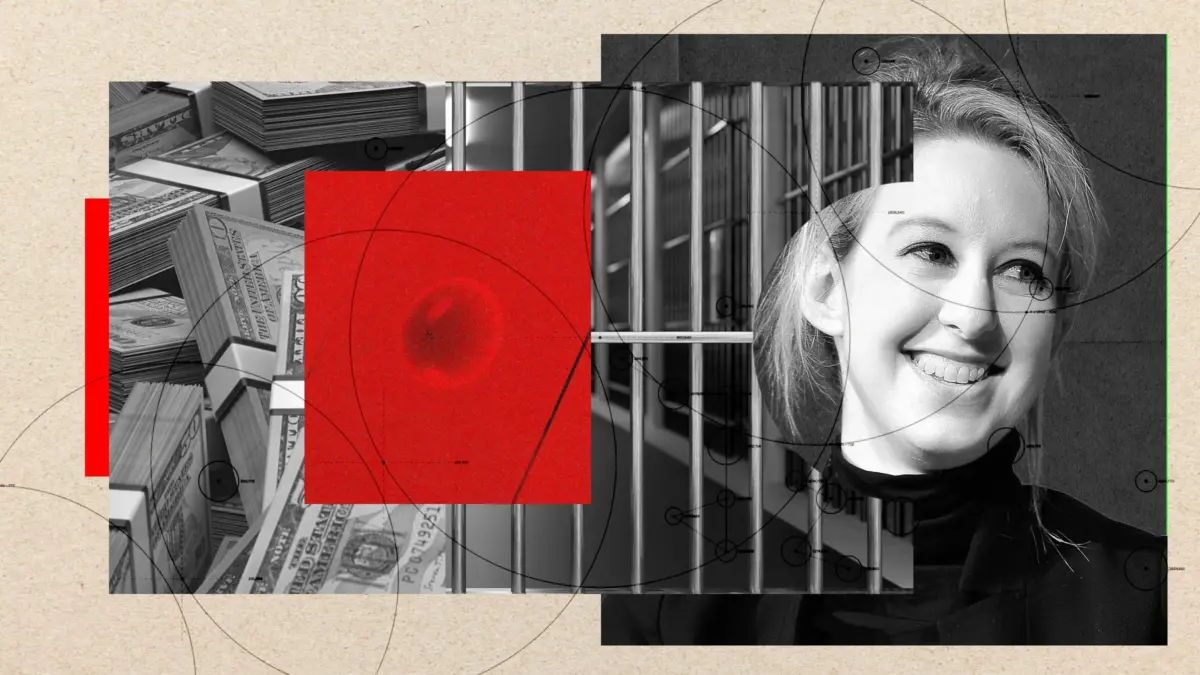
The ensuing fallout was swift: partnerships—most notably with pharmacy giant Walgreens—unraveled, regulatory investigations commenced, and the multi-billion-dollar valuation evaporated, culminating in criminal indictments, Holmes’s conviction on federal fraud charges, and her subsequent incarceration.
Supporting Context & Metrics: The Mechanics of Credulity
The institutional failure to unmask Theranos earlier raises persistent questions about the structural vulnerabilities of tech journalism and venture capital.
The Gender Dynamic in Venture Capital
Interviews with editors involved in the early coverage reveal a complex interplay of well-intentioned representation and systemic bias. At a time when female founders faced staggering hurdles in securing venture capital, Holmes offered a compelling counter-narrative.
Just weeks after WIRED published its 2014 Q&A, researchers at Harvard Business School and the MIT Sloan School published a landmark study in the Proceedings of the National Academy of Sciences (PNAS). The study demonstrated that investors were significantly more likely to fund an identical pitch if presented by a man rather than a woman, with conventionally attractive men enjoying a pronounced advantage.
Editors and journalists striving to amplify female leadership in a male-dominated Silicon Valley found themselves uniquely susceptible to rooting for a charismatic female founder who appeared to be successfully navigating the tech "boys’ club." As academic and media critic Dave Karpf notes, while this desire for representation was well-motivated, it intersected dangerously with an ecosystem that consistently prioritizes compelling narratives over rigorous scientific peer review.
The Limits of Fact-Checking
Standard journalistic fact-checking protocols of the era were designed to verify statements made by sources, not to independently validate uninvented scientific breakthroughs. When reporters visited Theranos headquarters or observed sample collection procedures, they encountered carefully stage-managed environments. Fact-checking departments were unequipped to perform forensic audits of proprietary microfluidic engineering, leaving them reliant on the social proof provided by prominent investors, blue-chip board members, and high-net-worth backers who themselves had failed to conduct adequate technical due diligence.
Official Statements & Reflections
Reflecting on the era, key participants and observers have offered candid assessments of how the media ecosystem contributed to the amplification of the fraud:
"The conversation I remember… was looking at the board of directors, her board, which was just completely batshit. It had military figures and government officials, and just seemed very odd. You said there was something weird about that. It raised your suspicious hackles."
— Caitlin Roper, Executive Producer for Scripted Film and TV, The New York Times (formerly WIRED editor)"That story and the way we photographed her was absolutely fuel to lauding her and drawing attention. I do feel partially responsible for that."
— Caitlin Roper, on the impact of early magazine profiles"It wasn’t a new, untested claim. It was an active fraud… But it’s the people promoting it who, I think, have a bunch of answering to do."
— Dave Karpf, Associate Professor, George Washington University"Dead-eyed misbehavior in pursuit of profit would kill tech’s magical status… The Valley and its toys would end up a punch line—a hallucination of a future that no one believes in anymore."
— Bill Wasik, Science Editor, The New York Times (writing in WIRED, February 2014)
Future Outlook: A New Paradigm for Tech Journalism
The Theranos scandal permanently altered the relationship between technology journalism, venture capital, and the public. Out of the wreckage of the mid-2010s hype cycle, responsible media outlets have instituted rigorous new heuristics to inoculate themselves against charismatic hucksterism:
- Physical and Empirical Proof: Architectural and hardware claims now require physical existence in the real world—renderings and slide decks are no longer sufficient. Flying cars must fly; prototypes must be demonstrated under independent observation.
- Medical Rigor: In life sciences and health tech, the baseline standard has shifted definitively. As contemporary newsrooms demand: Phase 3 clinical trials or get out. Peer-reviewed data published in independent journals is treated as a mandatory prerequisite, not an optional postscript.
- Skepticism of Founder Cults: The romanticization of the messianic college dropout—the archetype popularized by Steve Jobs and weaponized by Elizabeth Holmes—has given way to sober institutional scrutiny. Extraordinary claims regarding proprietary technologies are met with rigorous forensic interrogation rather than automatic suspension of disbelief.
Ultimately, the cautionary tale of Elizabeth Holmes and Theranos serves as an enduring reminder that the future of science and technology is too critical, and the human stakes are too high, for journalism to function as an echo chamber for investor ambition. The ultimate tragedy of the Theranos fraud is not merely financial; it is measured in the erosion of public trust, the subversion of medical ethics, and the poignant reality that ordinary people—such as Pulitzer-winning journalist Joseph Rago, whose own health indicators went undiagnosed before his untimely death at age 34—trusted an ecosystem that prioritized the myth of disruption over the reality of truth.