Executive Overview
The intersection of national security, geopolitics, and digital media has rarely produced a spectacle as intense as the ongoing regulatory assault on TikTok. On the morning of March 16, a single email delivered to an investigative journalist laid bare the desperation—and the procedural shortcuts—characterizing Washington’s crusade against the ubiquitous social media platform. A staff member working for the House Committee on Energy and Commerce reached out, requesting confidential, leaked internal documents in advance of a high-stakes, live-streamed congressional grilling of TikTok CEO Shou Zi Chew.
The request was flatly refused. The rationale was rooted in traditional journalistic ethics: protecting a confidential source and mitigating the distinct risk that sensitive, unvetted corporate documents could be intentionally misconstrued or weaponized by politicians lacking the technical literacy to contextualize them. However, the incident serves as a glaring symptom of a much larger, systemic issue. For years, Western lawmakers have chased the phantom of direct Chinese state control over TikTok, building an edifice of political certainty on top of shifting sands.
Despite years of relentless investigative reporting by some of the industry’s sharpest minds—uncovering everything from workplace harassment and covert data-sharing practices to the clandestine "heating" of specific viral videos—a definitive "smoking gun" linking TikTok’s operations directly to the Chinese Communist Party has yet to be found.
As Washington prepares for bipartisan crackdowns, platform bans, and high-profile legislative hearings, this report explores the anatomy of the congressional leak request, the complex reality of TikTok’s corporate behavior, the manufactured political myths driving the narrative, and what the future holds for the 150 million Americans who rely on the platform daily.
Detailed Chronology: The Morning Email and the Congressional Inquiry
The sequence of events leading up to the March congressional hearing offers an unprecedented look into how legislative bodies gather intelligence—and how they occasionally circumvent formal discovery processes by appealing directly to the press.
The 6 A.M. Revelation
At precisely 6:12 a.m. on March 16, the recipient, a seasoned investigative reporter specializing in TikTok’s corporate machinations, opened an email bearing the subject line: "TikTok Master Messaging Document." Given the sender’s domain, the email was immediately recognizable as originating from an official staffer on the House Committee on Energy and Commerce. At the time, the committee was actively preparing for a grueling, high-profile televised hearing featuring TikTok CEO Shou Zi Chew.
In the days leading up to this correspondence, committee investigators had consulted with various technology and geopolitical experts. During these briefings, several experts pointed directly to a previously published investigative report detailing internal TikTok documents. These leaked files revealed how the platform systematically downplayed its corporate and structural links to its Chinese parent company, ByteDance.
The Request and the Refusal
Seizing on this public reporting, the congressional staffer posed a direct question: Would the journalist be willing to turn over a complete, unredacted copy of the leaked document? The staffer offered the usual assurances of discretion, adding the caveat that the exchange would be "strictly confidential."
The response was a swift and uncompromising refusal.
"Needless to say, I didn’t send them the document — nor would I ever. A journalist always protects their sources, no matter who comes calling."
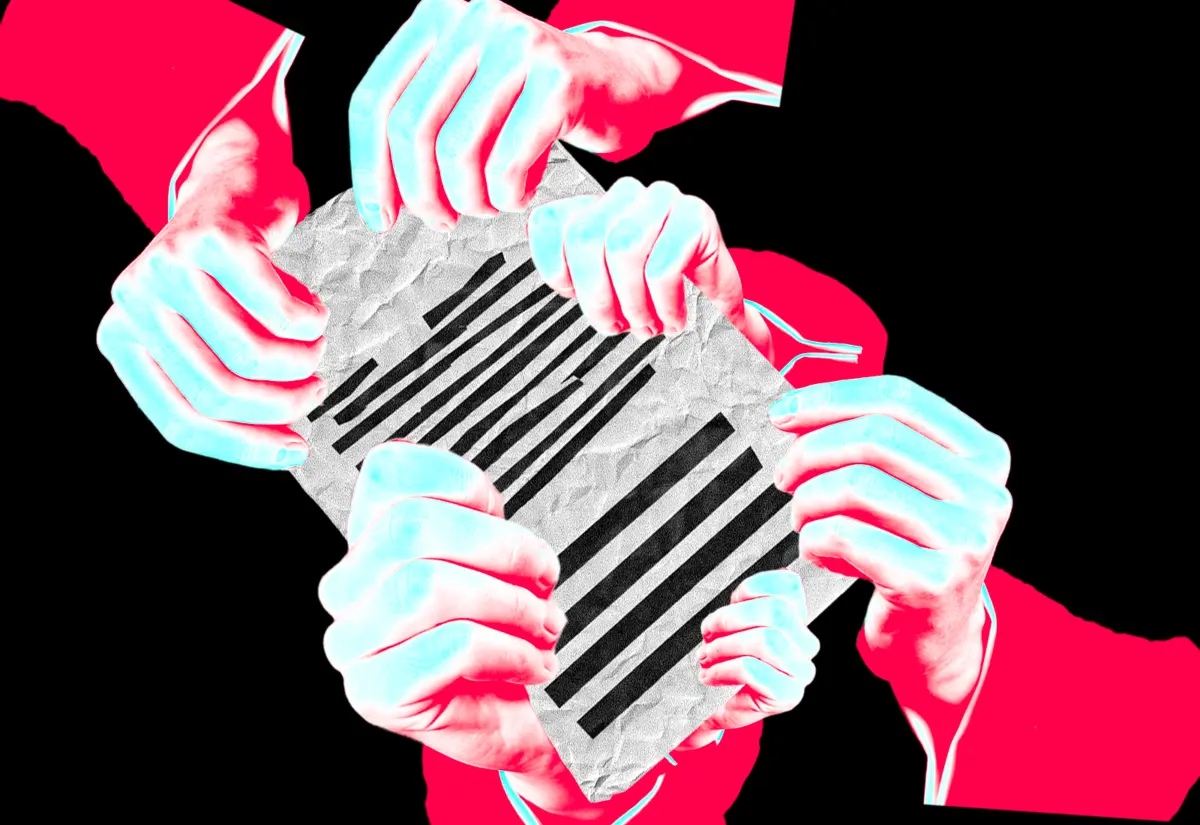
Beyond the ethical imperative of source protection, a secondary pragmatic concern drove the refusal: the high probability of misconstruction. Complex internal corporate memos, draft strategies, and public relations playbooks are routinely written to account for worst-case scenarios, corporate positioning, and risk mitigation. Placed in the hands of politically motivated legislators looking for a quick soundbite, such documents risk being intentionally stripped of nuance to serve a predetermined narrative.
Following the refusal, a counter-offer was extended to interview the committee chair ahead of the hearing to ensure public accountability on both sides. That request was met with silence, and the staffer vanished from the inbox.
Supporting Context & Metrics: A History of Leaks, Data, and Corporate Misbehavior
To understand why the House Committee was so eager to acquire leaked materials from an independent journalist, one must examine the extensive paper trail that reporters have uncovered over the years. Far from being a defense of TikTok’s corporate ethics, the journalistic record is damning—yet it consistently points away from the specific narrative that US politicians are trying to construct.
Uncovering the Inner Workings of ByteDance and TikTok
Over the course of several years, investigative reporting has exposed numerous corporate practices that TikTok would have preferred to keep hidden behind closed doors:
- Data Transmissions to China: Early investigations revealed that TikTok quietly routed data belonging to US job applicants directly to servers in China without adequately informing the individuals concerned.
- Algorithm Monetization: Reporting exposed how ByteDance’s commercial divisions, such as BytePlus, attempted to package and sell TikTok’s underlying recommendation algorithm as a white-label business-to-business product.
- Confidential Diplomatic Leaks: In the United Kingdom, government officials formally reprimanded TikTok after discovering the platform had been briefed on the "strictly confidential" identity of the incoming Chinese ambassador to the UK.
- Targeted "Heating" of Content: Years before mainstream outlets such as Forbes reported on the capability, investigative books on TikTok uncovered the existence of a "heating" button. This administrative feature allowed internal employees to manually push specific videos into users’ feeds, bypassing the standard algorithmic discovery engine.
- Porous Data Storage: Investigative work demonstrated that ByteDance had left massive buckets of user data belonging to Douyin (TikTok’s domestic Chinese sister app) completely exposed and unencrypted on the open internet.
- Lavish Creator Spending: Financial disclosures revealed that the platform poured hundreds of thousands of dollars into high-profile influencer partnerships, paying celebrities like Cardi B massive sums to jumpstart engagement on the app.
The Reaction from Corporate PR
Public relations representatives for TikTok have long regarded specific investigative journalists with a mixture of professional respect and deep dread. According to industry peers, TikTok PR reps often open emails from these reporters with trepidation, knowing that the inquiry will almost certainly involve an unannounced policy shift, a newly unearthed leaked document, or the discovery of a proprietary feature that executive leadership attempted to keep under wraps.
Yet, despite this adversarial relationship and the steady stream of leaks regarding corporate governance, workplace harassment, and financial maneuvering, a striking consensus emerges among those who cover the beat: the smoking gun does not exist.
"I haven’t found any evidence of [data being handed over to Chinese authorities or security risks associated with the Chinese state]. I do want to find that connection, because like any journalist, I am egotistical and want to be the one to break a story like that. I’ve been trying for years… But I haven’t discovered it."
Official Statements and Political Realities: The Manufacturing of a Threat
While independent investigators continue to chase leads with rigorous skepticism, the political class in Washington operates under a fundamentally different set of rules—rules that rely less on verifiable evidence and more on inherited political lore.
The Legacy of the Trump Era
The modern political crusade against TikTok cannot be separated from the ideological framework established during the Trump administration. In 2020, the Trump campaign launched aggressive digital ad blitzes featuring slogans such as "TikTok is spying on you."
This rhetorical framing laid the groundwork for a bipartisan article of faith: the unshakeable belief that TikTok is inherently a foreign intelligence asset, a Trojan horse awaiting a signal from Beijing to disrupt Western democratic institutions. Lawmakers from across the political spectrum—ranging from populist conservatives like Senator Josh Hawley to progressive hawks—have amplified this rhetoric, transforming a corporate data governance and privacy debate into an existential civilizational threat.
Hypocrisy in Regulatory Approaches
The irony of the current US legislative posture is difficult to ignore. In their zeal to neutralize a perceived foreign influence operation, American politicians have frequently embraced authoritarian tactics reminiscent of the very governance models they condemn. Rather than allowing the free market to operate—holding companies accountable through existing antitrust, consumer protection, and privacy laws—lawmakers have opted for heavy-handed crackdowns, sweeping bans, and compulsory asset divestitures.
This approach persists despite TikTok making extensive, good-faith efforts to address regulatory concerns. Initiatives like "Project Texas"—a multi-billion-dollar effort to wall off US user data within domestic servers monitored by American cybersecurity firm Oracle—demonstrate a willingness to bend over backward to appease regulators. Yet, these structural concessions are routinely dismissed out of hand by politicians who treat the app’s guilt as a foregone conclusion.
Future Outlook: Hearings, Banning Prospects, and the Fate of 150 Million Users
As congressional hearings proceed, media analysts and tech policy experts warn that the proceedings are destined to generate more heat than light.
What to Expect from Future Legislative Showdowns
The dynamic of these hearings has become predictable:
- Corporate Defense: Executives will issue standard, legally vetted protestations regarding corporate independence, data localization, and the firewall separating TikTok from ByteDance.
- Political Grandstanding: Lawmakers will repeat unverified talking points, wave printed social media posts or out-of-context documents, and reject corporate answers as evasive, regardless of their factual accuracy.
- The Legislative Stalemate: The gap between technical reality and political theater will widen, leaving regulators no closer to a verifiable security solution, but moving them steadily closer to legislative bans or forced sales.
The Stakes for the American Public
Beneath the political posturing lies a stark demographic reality: over 150 million Americans actively use TikTok for commerce, education, community building, and creative expression. For these users, the app is not a geopolitical abstraction; it is an economic lifeline and a primary digital town square.
If Washington’s legislative bodies proceed with a total ban or an unworkable forced divestiture based on unproven fears rather than empirical evidence, the fallout will extend far beyond Silicon Valley and Beijing. It will set a chilling precedent for state-sanctioned censorship in the Western world—proving that when political narratives are repeated often enough, they can easily usurp the truth.
Until a genuine, verifiable link to state-sponsored espionage is uncovered, the crusade against TikTok remains an exercise in political theater—one where investigative journalism continues to separate hard facts from convenient fictions.