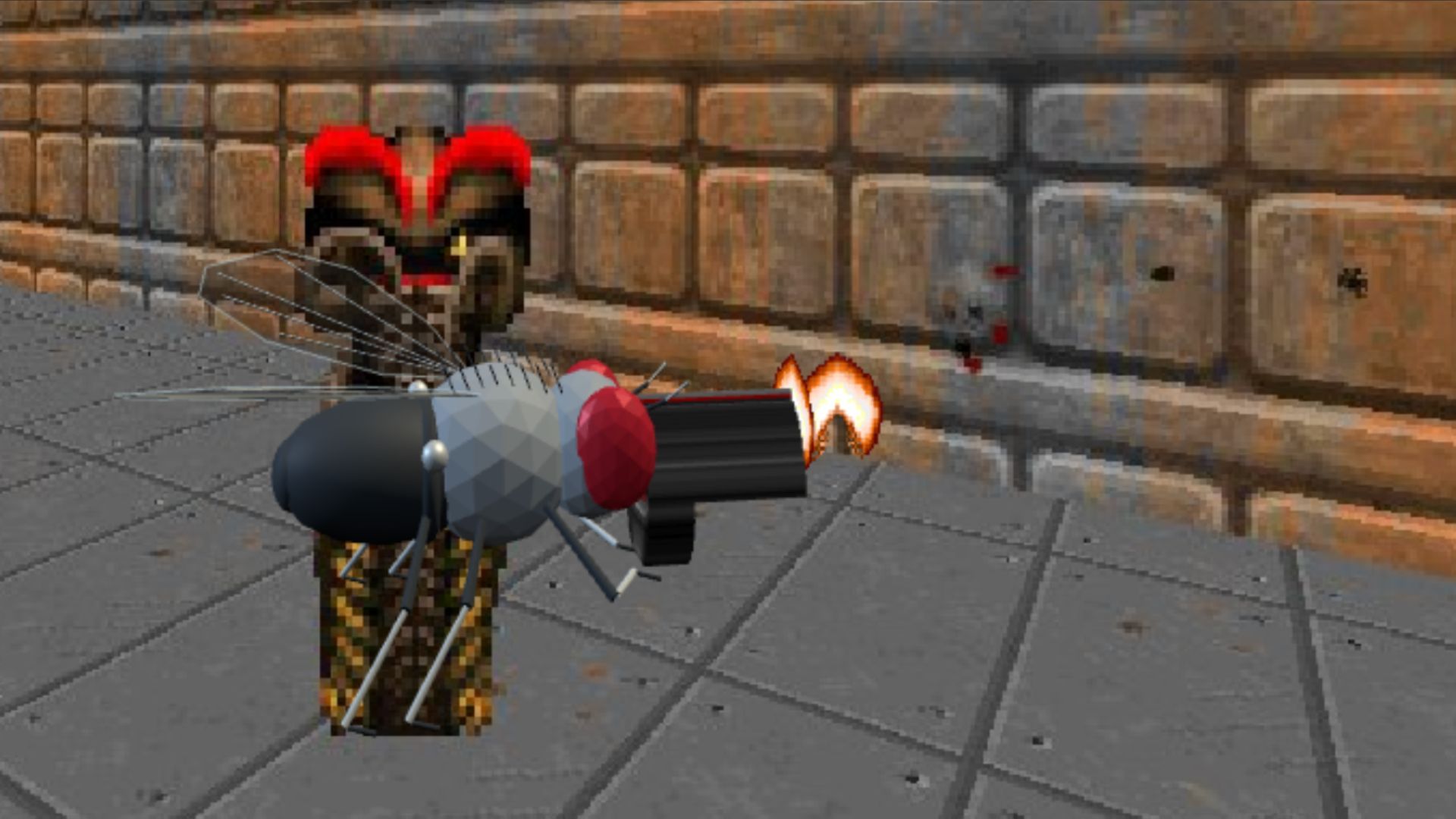
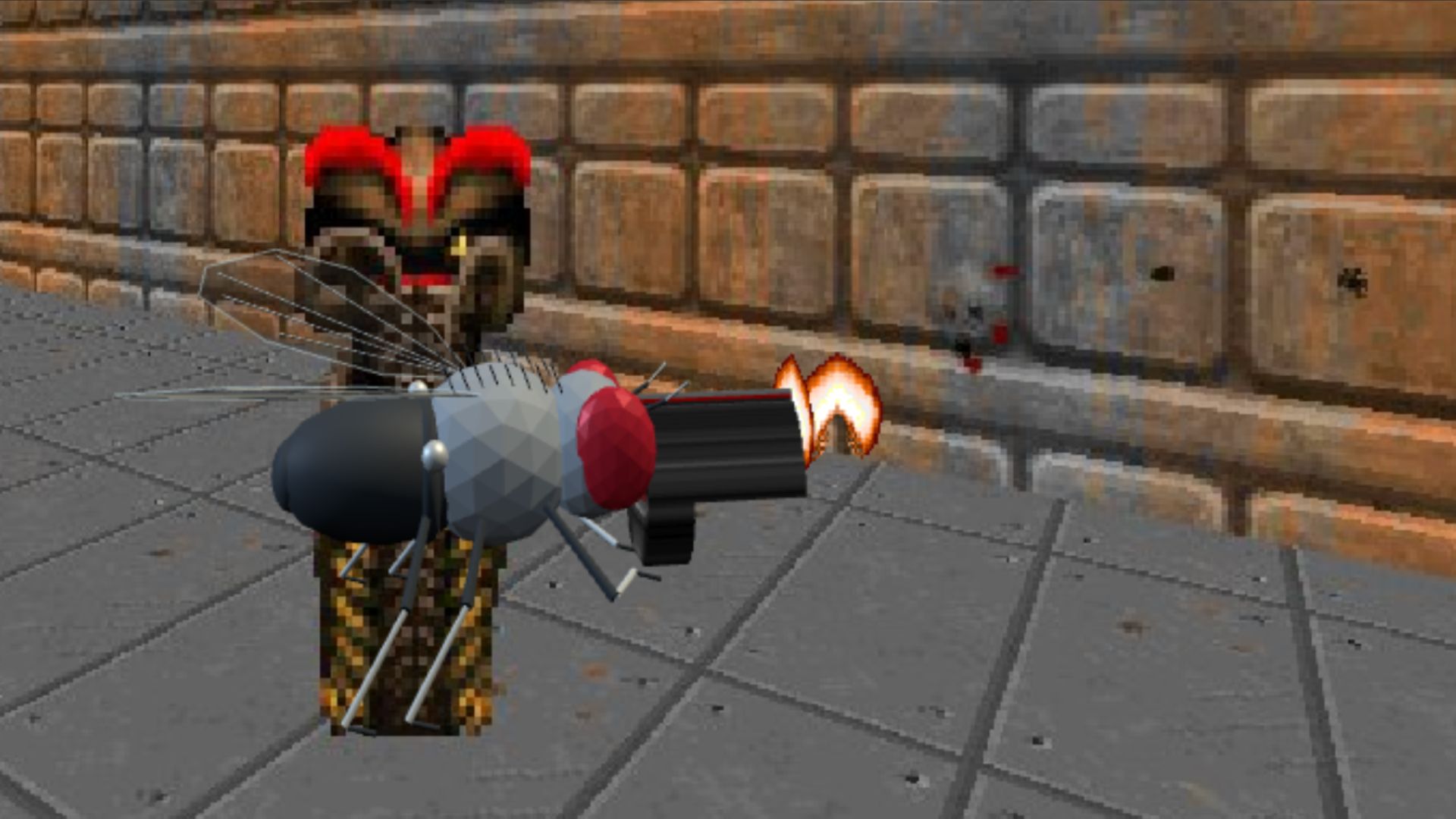
In a milestone achievement that bridges the worlds of advanced neuroscience and classic internet culture, researchers and software engineers have successfully converted a digital replica of an adult fruit fly’s central nervous system into an interactive gaming controller. Following Google’s groundbreaking release of a comprehensive, AI-mapped 3D connectome of a male fruit fly’s brain—reconstructing over 166,000 neurons—tech enthusiasts needed less than seventy-two hours to achieve the ultimate internet rite of passage: getting the biological blueprint to run Doom.
What began as a monumental leap forward in computational biology has quickly evolved into a viral engineering phenomenon. Software engineers, modders, and AI researchers have begun deploying the digital brain across a surprising array of video games, including Beat Saber, Super Mario 64, and Minecraft. By feeding visual frames from these virtual environments into the simulated sensory neurons of the fly connectome and translating the resulting neural activity into in-game controls, innovators are exploring the frontiers of reinforcement learning, artificial intelligence, and neuroinformatics.
While the virtual insect’s early attempts at fragging demons in Doom or slicing blocks in rhythm games are predictably clumsy—evidenced by thousands of deaths and low scores—the implications of these experiments stretch far beyond mere novelty. They represent an unprecedented intersection of open-source science, computational neuroscience, and human ingenuity, sparking urgent conversations about the future of cognitive modeling, neural mapping, and the ultimate horizon of mapping more complex biological minds.
Detailed Chronology: From Google’s Breakthrough to Viral Modding
The Catalyst: Google’s Male Fruit Fly Connectome
The story began when Google, in collaboration with advanced scientific institutions, officially published a revolutionary dataset detailing the complete brain and central nervous system of an adult male fruit fly (Drosophila melanogaster). Utilizing state-of-the-art artificial intelligence tools to stitch together millions of microscopic 2D images, researchers reconstructed over 166,000 individual neurons and their intricate synaptic connections into a fully navigable 3D neural map, widely referred to as the MaleCNS v1.0 connectome.
Described by Google as a foundational blueprint to accelerate humanity’s understanding of neurological networks, the dataset stands as a monumental achievement in neuroscience. However, the tech community’s response demonstrated a longstanding, humorous internet axiom: if a system has processing power and a display, someone will inevitably attempt to run id Software’s legendary 1993 first-person shooter, Doom, on it.
September 6: The Doom Experiment Goes Live
By September 6—just three days after Google’s public announcement—Coinbase software engineer Alex Wormuth altered the trajectory of the connectome’s public life by introducing it to Doom.
Wormuth engineered a specialized translation pipeline utilizing the MaleCNS v1.0 fruit fly connectome. In this makeshift digital habitat, every rendered frame of Doom acts as an environmental stimulus, translating visual data into activations of the digital fly’s sensory neurons. The resulting neural activity is then parsed and mapped directly to game controls like movement and firing. To simulate biological survival instincts, in-game damage triggers an artificial stimulus sent to two PPL101 dopamine cells, acting as a rudimentary form of reinforcement learning.
The experiment was made accessible to the public via a dedicated web portal, allowing spectators to watch the digital organism navigate classic Doom maps in real-time through both first-person perspectives and third-party tracking cameras. While the virtual insect racked up thousands of unsuccessful rounds—clumsily bumping into walls and falling to enemy fire—the system proved that biological connectomes could successfully interface with external, real-time software environments.
Expansion into Rhythm, Platformers, and Sandbox Worlds
Buoyed by the momentum of the Doom experiment, the tech and modding community quickly expanded the digital fruit fly’s gaming repertoire across multiple distinct genres:
Beat Saber: Developer Lyra Bubbles utilized reinforcement learning to train the fruit fly brain to participate in the virtual reality rhythm game Beat Saber. By pairing neural responses with song replays, the system taught the fly when and where to swing its virtual sabers in response to incoming notes, paving the way for fully reactive, autonomous play without external input crutches.
Super Mario 64: Continuing the trend of running classic titles on unconventional hardware simulations, Jessica Paquette adapted the digital brain to navigate the iconic 3D platformer Super Mario 64, testing how spatial awareness and directional stimuli translate within a complex physics engine.
Minecraft: Venturing into sandbox survival, YouTuber Ro0oney integrated a female fruit fly brain dataset—sourced from Flywire.AI, a parallel mapping project developed in partnership with Princeton University containing 139,255 mapped neurons—into Minecraft, illustrating the adaptability of different connectome architectures.
Supporting Context & Metrics: Comparing the Connectomes
To fully understand the weight of these engineering feats, it is helpful to examine the scale and methodology behind the biological datasets powering them.
Metric / Feature
Google Male Fruit Fly Connectome (MaleCNS v1.0)
Flywire.AI / Princeton Female Connectome
Target Organism
Adult Male Drosophila melanogaster
Adult Female Drosophila melanogaster
Total Reconstructed Neurons
Over 166,000
139,255
Imaging Technology
AI-assisted Serial Section Electron Microscopy
High-resolution electron microscopy & automated segmentation
Primary Gaming Integrations
Doom, Beat Saber, Super Mario 64
Minecraft
Primary Interface Method
Sensory pixel stimulation mapped to neural inputs
Automated connectome routing with behavioral wrappers
While fruit flies possess tiny brains relative to mammals, their nervous systems are remarkably sophisticated, handling complex navigational, visual, and behavioral tasks with fewer than 200,000 neurons. By comparison, the human brain boasts approximately 86 billion neurons, making direct whole-brain replication an astronomical computational challenge. Nevertheless, mapping the complete connectome of Drosophila serves as an indispensable "Hello World" exercise for computational neuroscientists.
Official Statements and Industry Perspectives
The convergence of cutting-edge neuroscience and meme-driven software engineering has drawn commentary from researchers, technologists, and observers alike.
In its official research publication regarding the male fruit fly brain map, Google emphasized the profound utility of the dataset:
"This foundational map of the adult male fruit fly brain can help accelerate our understanding of the brain, and is a major milestone in neuroscience. By making these reconstructions accessible, we enable researchers worldwide to probe the fundamental mechanics of neural computation, behavior, and cognitive architecture."
Meanwhile, the engineers behind the gaming adaptations have highlighted the experimental nature of their work. Discussing the challenges of training the connectome in Beat Saber, Lyra Bubbles noted the ultimate goal of moving beyond scripted reinforcement:
"Further training is designed to reduce reliance on external signals and allow the neural network to play fully reactively, processing incoming environmental data organically with zero pre-fed input data."
Industry analysts point out that while feeding video game frames into a simulated insect brain is largely an exercise in creative technical bravado, it provides invaluable stress-testing for neural simulation frameworks. These fun, unorthodox projects validate the fidelity of the software pipelines required to process massive, graph-based neural networks in real time.
Future Outlook: What Lies Beyond the Fly?
As software engineers continue to refine how simulated biological nervous systems interact with complex digital environments, the broader scientific community is forced to look toward the horizon. The rapid transition from static electron microscopy scans to dynamic, interactive entities playing video games within days of release highlights a cultural shift in how open-source scientific data is consumed and tested.
Several key questions define the future trajectory of this field:
Scaling Up Neural Simulations: As mapping techniques improve, researchers will soon target more complex organisms, such as zebrafish, mice, and eventually non-human primates. Each step upward multiplies the computational requirements exponentially.
Advancements in Reinforcement Learning: Transitioning from supervised training loops—where inputs are heavily guided—to truly autonomous, biologically inspired artificial general intelligence (AGI) remains the holy grail of neuro-AI research.
Ethical Considerations: As digital models of biological brains grow more sophisticated, questions surrounding digital sentience, simulation ethics, and the moral status of artificial neural constructs will inevitably move from science fiction into mainstream scientific discourse.
For now, the digital fruit fly may continue to struggle against cyberdemons in Doom and miss blocks in Beat Saber, but it has firmly established itself as a pioneer in the unexpected crossover between advanced connectomics and digital entertainment. As developers push the boundaries of what these neural maps can achieve, one thing remains certain: wherever science unlocks a new biological frontier, humanity will find a way to make it run Doom.