Executive Overview
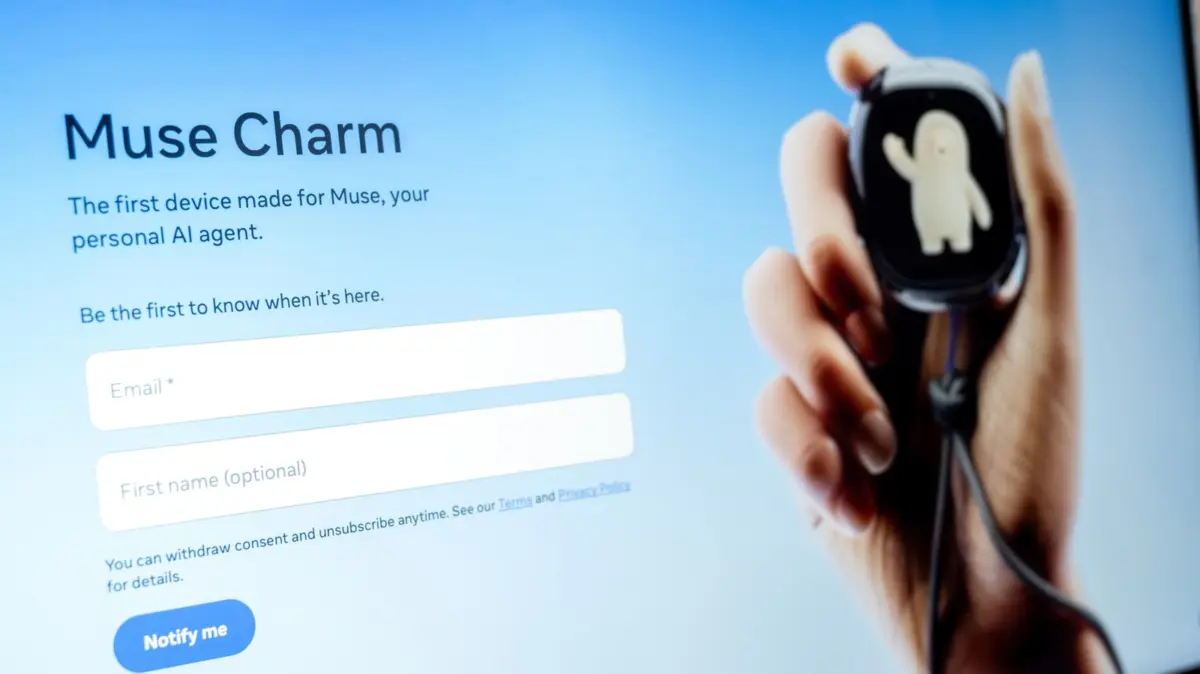
Meta is aggressively expanding its footprint in consumer artificial intelligence hardware with its upcoming standalone wearable device, the Muse Charm. Initially teased during the Meta Connect conference in September, the keychain-sized gadget is designed to serve as a physical vessel for Meta’s rapidly growing AI agent, Muse. According to recent industry reports from The Information, the Muse Charm is slated for a $300 price tag and will feature a bundled incentive that includes up to 12 months of complimentary 5G cellular data courtesy of Verizon.
Designed with a whimsical, nostalgic aesthetic reminiscent of a modern Tamagotchi, the Muse Charm represents a calculated effort by Meta to bypass the traditional smartphone duopoly maintained by Apple and Google. By packing its real-time voice and avatar computing stack into a pocketable form factor that requires no tethering to a smartphone for basic operation, Meta is attempting to establish a direct, uninterrupted hardware-to-consumer pipeline.
With Muse having already surpassed 10 million active users, Meta is betting that hardware innovation—coupled with open-source developer toolkits, wearable application expansions, and long-term transactional commerce monetization—will shift user behavior away from app-centric ecosystems. If successful, the Muse Charm will not merely be a novelty gadget; it could serve as the foundational vanguard for a post-smartphone era where ambient, voice-driven AI agents intermediate commerce, communication, and daily digital interaction.
Detailed Chronology: From Concept to Commercialization
The trajectory of Meta’s Muse ecosystem and its hardware integration highlights a rapid, highly calculated corporate pivot toward ambient computing and standalone AI delivery mechanisms.
September: The Meta Connect Unveiling
During the annual Meta Connect keynote presentation, CEO Mark Zuckerberg took the stage to introduce the world to the Muse Charm. Positioned as a radical departure from traditional screen-based hardware, the device was unveiled as a standalone companion capable of processing complex, real-time voice conversations and projecting expressive digital avatars. Zuckerberg emphasized the device’s frictionless utility, noting that it packs the entire Muse experience into an ultra-portable keychain form factor designed to be "always available to talk to." Industry analysts immediately drew comparisons to the classic 1990s Tamagotchi digital pets, noting the device’s heavy reliance on emotional engagement, personalization, and playful avatars to foster user retention. Meta confirmed at the time that the hardware would launch ahead of the holiday shopping season.
October: Empowering the Developer Community
In an effort to bootstrap third-party innovation and accelerate the cultural footprint of its AI agent, Meta released comprehensive open-source guides in October. These resources enabled hardware developers and enthusiasts to construct their own customized "Muse Gadgets." By inviting the maker community to experiment with the underlying architecture, Meta mirrored successful open-source strategies it previously deployed with its Llama large language models, ensuring a broad baseline of community-driven experimentation and peripheral development.
Expansion into Wrist-Worn Devices and Roadmap Delays
Further cementing its cross-platform ambitions, Meta released a dedicated Muse application tailored for both Wear OS and watchOS ecosystems, ensuring that smart-watch users could interface with the agent without needing a Meta-branded wearable. However, hardware development is rarely linear. Reports surfaced indicating that Meta’s internal development of a native, highly anticipated smartwatch-like device has hit internal friction, pushing its expected launch timeline back to 2027. This delay places an even heavier strategic burden on the upcoming Muse Charm and its ability to capture early consumer mindshare in the dedicated AI hardware sector.
Current Status: Pricing, Connectivity, and the Verizon Partnership
As the launch window approaches, The Information reported key commercial details regarding the device’s rollout: a $300 retail price point paired with an aggressive incentive package providing up to a full year of complimentary 5G cellular data via Verizon. This move ensures that users can interact with the Muse Charm seamlessly in outdoor and mobile environments without relying on local Wi-Fi networks, reducing friction to near-zero. As of publication, Meta has yet to formally confirm or deny these pricing and connectivity metrics, maintaining typical pre-launch secrecy while public anticipation builds.
Supporting Context & Metrics: The Mechanics of the Muse Ecosystem
To fully understand the strategic weight of the $300 Muse Charm, one must examine the rapid growth metrics underpinning the Muse ecosystem and the broader macroeconomic drivers fueling Meta’s hardware pivot.
Scaling Up: The 10 Million User Milestone
The urgency behind Meta’s hardware push is directly tied to the explosive organic growth of its flagship AI agent. Shortly after its rollout, Muse crossed the milestone of 10 million active users, signaling that consumers are rapidly warming up to conversational, personality-driven AI interfaces. Meta is capitalizing on this momentum by lowering the barrier to entry, ensuring that users can interact with the agent across an expanding matrix of touchpoints, including mobile operating systems, smartwatches, and now, dedicated standalone hardware.
Overcoming the Smartphone Duopoly
At present, the vast majority of consumer engagements with Meta’s vast suite of products—ranging from Instagram and WhatsApp to standalone AI chatbots—occur through mobile applications downloaded from Apple’s App Store and Google’s Play Store. This dynamic places Meta in a precarious position of subjugation to platform-level rules, commission fees, and policy shifts (such as Apple’s App Tracking Transparency framework).
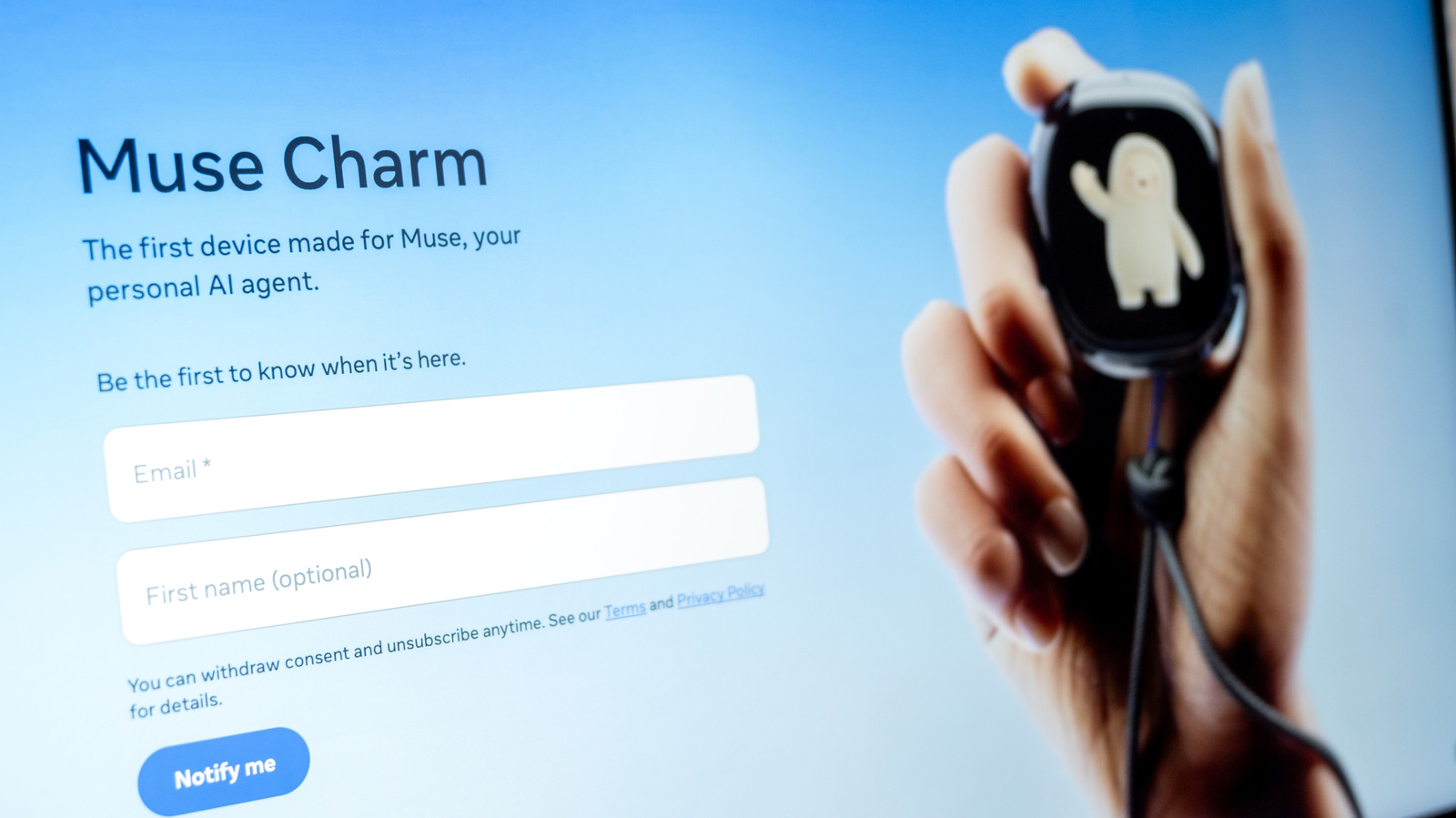
By introducing independent hardware like the Muse Charm, Meta is laying the groundwork for true platform independence. A dedicated device that handles queries, voice commands, and digital tasks without requiring a host smartphone effectively decouples Meta from Apple and Google. In this hypothetical future, the AI agent replaces the traditional app grid entirely, giving Meta unimpeded ownership of the user relationship, interaction telemetry, and data streams.
The Economics of Conversational Commerce
Beyond hardware sales, Meta’s long-term financial modeling for Muse is anchored in transactional monetization. The company is actively developing robust commerce tools designed to integrate directly into the Muse agent experience. Under this upcoming framework, when a user uses Muse to purchase goods, book reservations, or execute commercial transactions, Meta will extract a transaction fee from participating businesses.
During internal discussions and investor updates, Mark Zuckerberg has expressed profound optimism regarding this revenue model. He noted his belief that an ambient, deeply integrated AI agent like Muse could eventually generate significantly higher revenue per user (ARPU) than Meta’s legacy social media and messaging applications. By capturing high-intent commercial queries right at the point of conversational inspiration, Meta can effectively bypass traditional digital advertising funnels and monetize the point of sale directly.
Official Statements and Industry Response
Meta’s official communications regarding the Muse initiative have consistently emphasized the paradigm shift from reactive screen tapping to proactive, conversational assistance.
During his keynote address at Meta Connect, Mark Zuckerberg framed the evolution of the company’s hardware strategy around human-centric design:
"We are entering a brand new phase with Muse. The goal is to take the entire Muse experience—including our real-time voice and advanced avatar stack—and distill it into something that fits naturally on a keychain, ensuring it is always available to talk, assist, and accompany you wherever you go."
Industry analysts have responded to the reported $300 price point and Verizon partnership with a mixture of cautious optimism and intense scrutiny. While bundling 12 months of free 5G data drastically enhances the value proposition of a standalone hardware device, the $300 price tag places the Muse Charm in direct competition with budget smartphones, entry-level smartwatches, and established audio wearables.
Competitors in the AI hardware space—such as Humane with the AI Pin and Rabbit with the R1—pioneered the market for standalone AI gadgets, though both faced severe consumer skepticism and usability hurdles regarding battery life, processing latency, and practical utility. Industry observers note that Meta holds distinct advantages over these startup predecessors: a multi-billion-dollar R&D budget, an established AI agent with over 10 million users, robust global supply chain relationships, and massive marketing reach. However, the market remains unforgiving for single-purpose hardware devices that fail to demonstrate clear superiority over a user’s existing pocket computer.
Future Outlook: The Road Ahead for Meta Hardware
As Meta prepares for the official commercial rollout of the Muse Charm, the company stands at a pivotal crossroads in its corporate evolution. The success or failure of the $300 gadget will likely set the tone for consumer appetite regarding dedicated, single-purpose AI hardware for the remainder of the decade.
Several critical milestones will define the near-term future of the initiative:
- Consumer Reception and Adoption Rates: Will consumers accustomed to multi-functional smartphones be willing to carry a dedicated keychain charm exclusively for conversational AI? The initial holiday sales figures for the Muse Charm will provide a definitive market signal.
- Ecosystem Maturation: With developers already building custom variants via Meta’s open-source guides, the cultivation of a vibrant third-party app and accessory ecosystem will be vital for maintaining long-term engagement.
- The 2027 Roadmap: With Meta’s proprietary smartwatch-class hardware pushed back to 2027, the Muse Charm must carry the weight of Meta’s standalone ambient hardware ambitions in the interim.
- Regulatory and Privacy Scrutiny: As an always-available voice and avatar device equipped with a biometric fingerprint reader for identity verification, the Muse Charm will undoubtedly face intense regulatory scrutiny regarding data privacy, continuous audio monitoring, and user consent protocols.
Ultimately, Meta’s ultimate ambition extends far beyond selling a $300 gadget with a year of free Verizon 5G. The Muse Charm is a beachhead in a much larger strategic war for digital sovereignty. By forging a direct, unmediated bond between its AI agent and the consumer, Meta is attempting to engineer a future where it dictates the rules of engagement, reshapes digital commerce, and secures its financial empire for the post-smartphone era.