Executive Overview
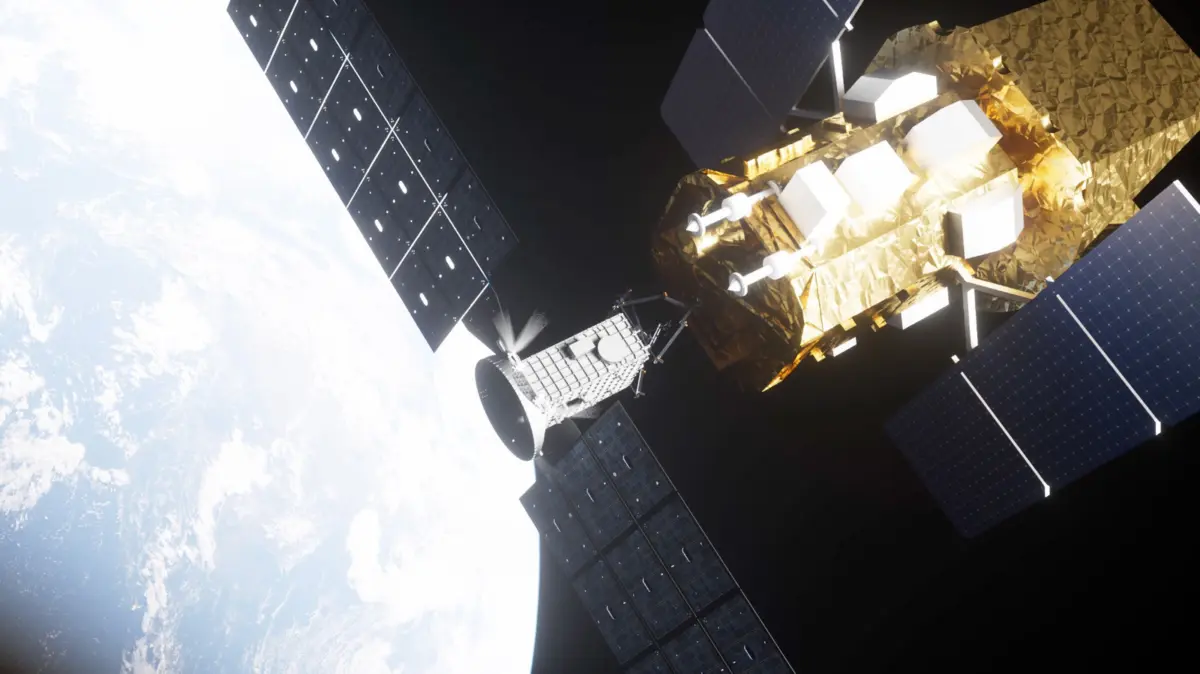
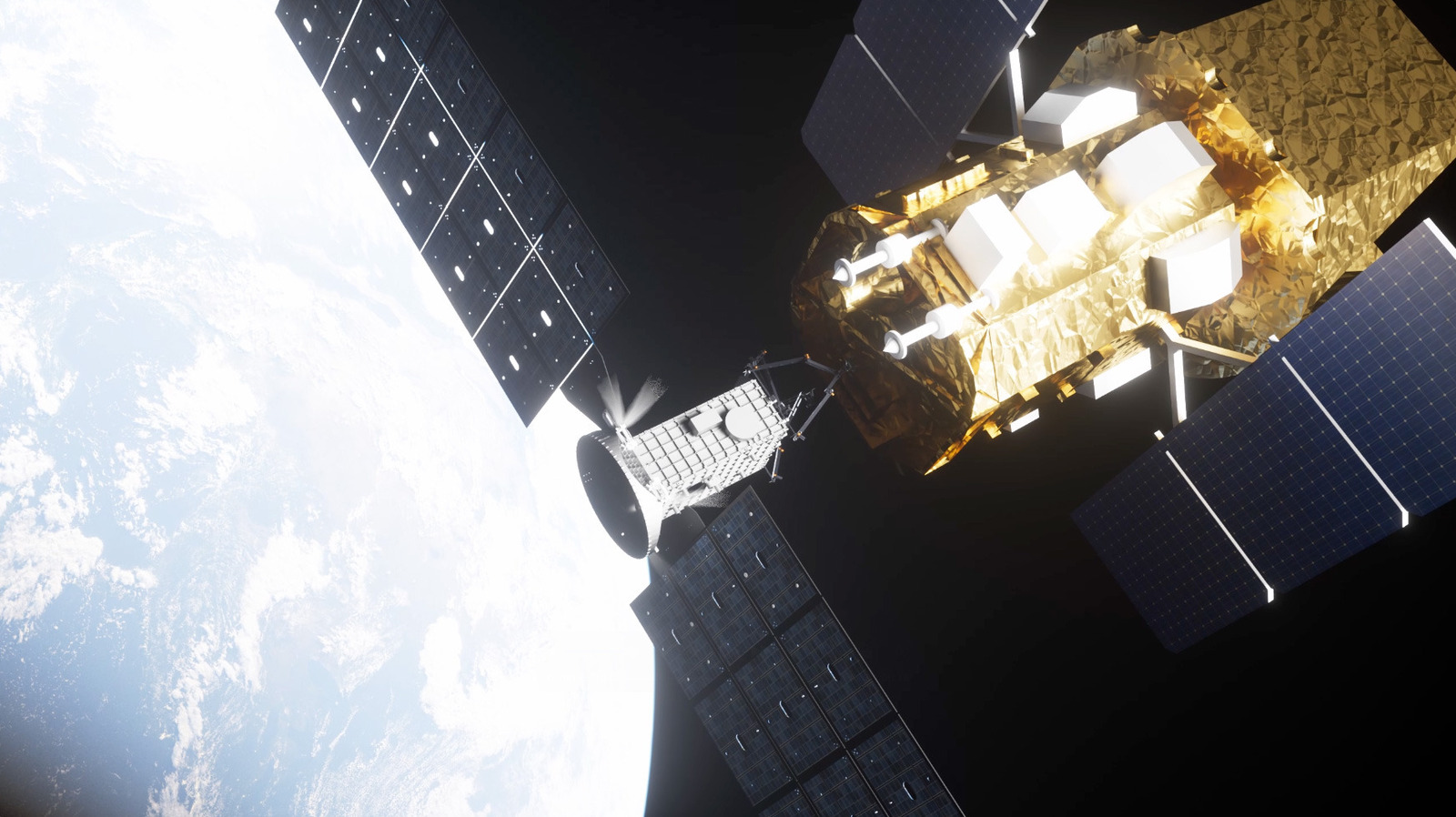
In a decisive shift that marks the conclusion of a daring, high-stakes orbital salvage operation, NASA has officially called off its mission to rescue the decaying Neil Gehrels Swift Observatory. The space agency announced that Katalyst Space’s LINK spacecraft will no longer dock with or push the aging telescope to a higher orbit. This decision comes in the wake of severe, persistent attitude control malfunctions that began plaguing the LINK spacecraft shortly after its rapid-fire deployment in July.
Originally launched under an exceptionally aggressive timeline—giving engineers less than a year to design, build, and deploy a custom orbital tug—the Swift Boost mission was celebrated from its inception as a pioneering gamble. Designed to combat the rapid orbital decay of the 2004 gamma-ray astronomy satellite, the mission aimed to leverage commercial space agility to extend Swift’s scientific lifespan by roughly a decade. However, complex hardware constraints, compounded by unpredictable space weather and aggressive solar activity, have forced mission managers to pull the plug on the orbital reboost phase.
Despite the cancellation of the primary rescue maneuver, the mission is not a total loss. NASA and Katalyst Space have confirmed that the LINK spacecraft will still attempt a controlled rendezvous with the Swift observatory. This pivot will allow engineers to harvest invaluable engineering data regarding proximity operations—insights that are expected to lay the critical groundwork for the burgeoning in-space satellite servicing industry. As Swift prepares to re-enter Earth’s atmosphere and burn up later this year, the international astronomical community prepares to lose one of its most agile assets for detecting sudden cosmic events, prompting NASA to accelerate alternative strategies for transient space observation.
Detailed Chronology of the Swift Rescue Effort
A Rapid-Response Conception
The narrative of the Swift Boost mission is one of unprecedented urgency. The Neil Gehrels Swift Observatory, operational since its launch in November 2004, had seen its orbit deteriorate at an alarming rate. Increased solar activity over recent solar cycles significantly heated Earth’s upper atmosphere, causing it to expand. This expansion increased atmospheric drag on low-Earth-orbit satellites, dragging Swift downward much faster than originally projected.
Recognizing the immense value of Swift’s rapid-slewing capabilities for multi-messenger astronomy, NASA turned to the commercial sector for a nimble, innovative solution. Enter Katalyst Space and its experimental LINK spacecraft. Tasked with a design-to-launch cycle of under twelve months, the engineering teams faced a monumental hurdle. The mission was consciously categorized by NASA leadership as a "high-risk, high-reward" endeavor—an audacious experiment in rapid commercial procurement and orbital intervention.
Liftoff and the Onset of Anomalies
The mission successfully lifted off in early July, briefly capturing the imagination of the aerospace industry as a potential watershed moment for commercial debris mitigation and satellite life-extension. However, jubilation quickly turned to anxiety when, late in July, telemetry indicated that the LINK spacecraft was experiencing critical orientation difficulties.
The spacecraft began spinning helplessly due to a failure in managing its attitude control in orbit. This stabilization crisis precipitated sporadic and unreliable communications links between ground control and the probe. Furthermore, diagnostic evaluations revealed partial functionality losses within LINK’s vital thruster systems.
Throughout August and early September, engineers at Katalyst and NASA worked around the clock, implementing software patches and attempting workaround procedures in a desperate bid to regain full authority over the spacecraft. While early September reports maintained a cautious optimism that the probe could recover enough capability to execute the orbital push, the compounding degradation of the attitude control systems ultimately proved insurmountable.
The Final Decision
Realizing that attempting a high-precision dock with an uncooperative, spinning tug and a passive target satellite posed catastrophic collision risks, NASA and Katalyst made the pragmatic choice to abort the reboost. The announcement formally ends any hope of elevating Swift, cementing its trajectory toward an inevitable atmospheric re-entry and destruction in the coming months.
Supporting Context & Metrics: The Legacy of Swift and the Future of Servicing
The Scientific Footprint of Swift
To fully understand the weight of NASA’s decision, one must examine the extraordinary scientific footprint of the Neil Gehrels Swift Observatory. Originally designed primarily to detect and study gamma-ray bursts (GRBs)—the most luminous electromagnetic events in the universe since the Big Bang—Swift quickly evolved into a multi-purpose workhorse for time-domain astronomy.
Equipped with three primary instruments—the Burst Alert Telescope (BAT), the X-Ray Telescope (XRT), and the Ultraviolet/Optical Telescope (UVOT)—Swift possessed a unique superpower: autonomy and speed. Within seconds of detecting a gamma-ray burst, the spacecraft could automatically rotate itself to point its high-resolution telescopes at the source, capturing the elusive afterglows that fade away rapidly.
Over its two-decade career, Swift contributed to several monumental astronomical milestones:
- Gravitational Wave Counterparts: Swift played a pivotal role in observing the electromagnetic counterpart to GW170817, the historic neutron star merger detected by LIGO and Virgo in 2017.
- Tidal Disruption Events: The observatory has mapped dozens of instances where supermassive black holes shredded wandering stars, providing unprecedented data on accretion physics.
- Cometary and Stellar Monitoring: Beyond deep space transients, Swift has routinely monitored comets, active galactic nuclei, and flaring stars, serving as an on-call sentinel for the global astrophysics community.
The Economics of In-Space Servicing
While the inability to save Swift is a scientific blow, the mission itself serves as an unprecedented stress test for the commercial in-space servicing, assembly, and manufacturing (ISAM) market. Historically, satellites in low-Earth orbit were treated as disposable assets once their propellant was exhausted or their orbits decayed.
The push toward commercial life-extension is driven by skyrocketing launch costs and the desire to maximize return on investment for multi-million-dollar space science payloads. However, the LINK spacecraft’s struggles highlight the immense technical hurdles inherent to orbital rendezvous and docking (RVD) operations, particularly when applied to legacy spacecraft not originally designed with grappling fixtures or standardized docking interfaces.
By pivoting the mission to focus strictly on rendezvous data collection, NASA and Katalyst are salvaging the economic and engineering value of the flight. The telemetry, sensor logs, and proximity navigation data gathered as LINK approaches Swift will directly inform the safety protocols, guidance algorithms, and hardware iterations required for future commercial servicing architectures.
Official Statements and Leadership Perspectives
The cancellation of the rescue mission has elicited thoughtful commentary from top space agency officials, emphasizing the philosophy of calculated risk in modern space exploration.
NASA Administrator Jared Isaacman addressed the outcome with a focus on institutional learning and the validation of aggressive innovation:
"This is not the outcome we were working toward, but it does not change why this mission was worth attempting," Isaacman stated. "The team moved with extraordinary speed to give Swift a chance to carry out more science while advancing capabilities America will need for satellite servicing in the future. We are going to learn everything we can from LINK’s rendezvous attempt and put those lessons to work on the missions that follow."
Echoing these sentiments, Shawn Domagal-Goldman, Astrophysics Division director at NASA Headquarters in Washington, contextualized the project within the broader framework of space agency risk management. He underscored that the mission was explicitly framed as a high-risk gamble from day one, dictated by the ticking clock of solar activity and atmospheric drag.
Industry analysts have similarly weighed in, noting that while the failure is a setback for Katalyst Space, the willingness of NASA to embrace rapid, agile, and experimental commercial partnerships represents a cultural shift that is essential for maintaining U.S. leadership in orbital logistics.
Future Outlook: Bridging the Observational Gap
With the impending demise of the Swift observatory, the astrophysical community faces a distinct void in its capacity to respond instantaneously to unpredictable cosmic transients. Gamma-ray bursts, fast radio bursts, and stellar flares do not operate on scheduled timelines; they require instruments that are perpetually vigilant and capable of immediate slewing.
Immediate Gap-Filling Strategies
NASA has outlined a two-pronged approach to mitigate the loss of Swift:
- Leveraging Existing Fleets: The agency will increasingly rely on a distributed network of active space- and ground-based observatories—including the Fermi Gamma-ray Space Telescope, the James Webb Space Telescope, and various ground facilities—to share the burden of transient follow-up observations. Cross-calibration and rapid-alert sharing protocols are being optimized to reduce latency.
- Accelerating Next-Generation Missions: Priority is being heavily shifted toward funding and accelerating next-generation transient hunters. These future concepts emphasize modularity, standard docking capabilities, and resilient architectures that can be serviced, refueled, or upgraded directly in orbit, bypassing the limitations that ultimately doomed the Swift observatory.
The Legacy of the Swift Boost Mission
As the LINK spacecraft executes its final rendezvous maneuvers without a physical tether, the legacy of the Swift Boost mission will be written not in an extended orbital lifespan, but in the hard-won data of its failure. In the unforgiving domain of orbital mechanics, pushing the envelope inevitably invites setbacks.
The insights gained from LINK’s attitude control anomaly will be dissected by aerospace engineers for years to come, refining the algorithms that will one day make orbital salvage, debris removal, and commercial satellite maintenance a routine pillar of the space economy. Meanwhile, the Neil Gehrels Swift Observatory enters its twilight months, having far exceeded its original design life and forever altering our understanding of the dynamic, violent universe.