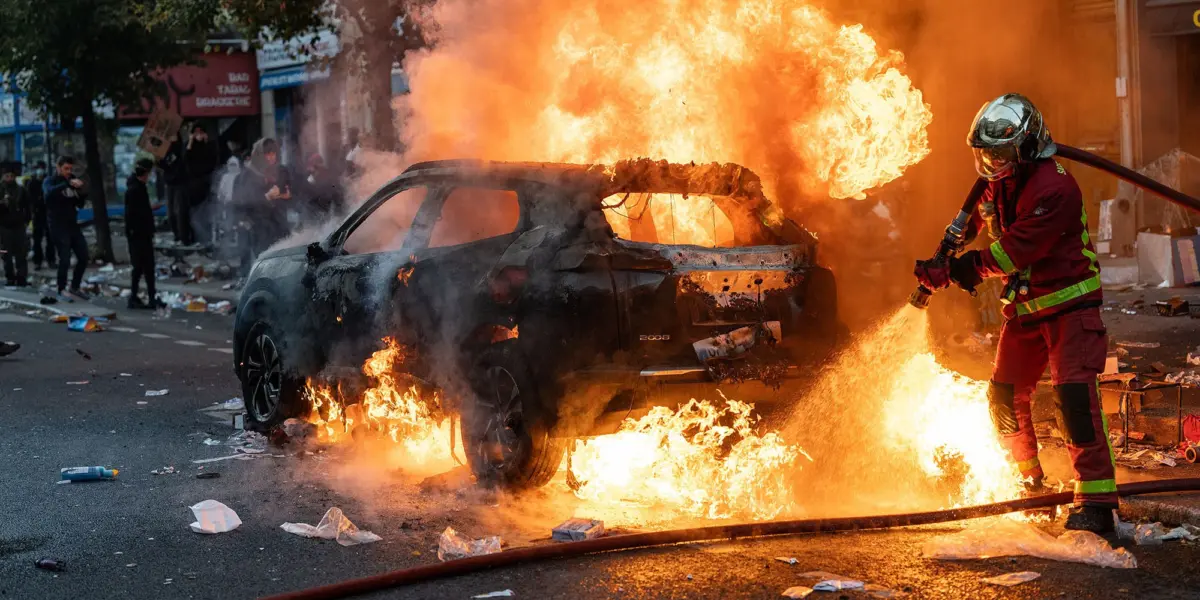
PARIS — Widespread civil unrest has gripped multiple major urban centers across France, plunging the nation into a severe domestic crisis. What began as peaceful, localized demonstrations organized to protest chronic understaffing and severe overcrowding in public schools quickly metastasized into violent clashes, widespread property destruction, and opportunistic looting.
As municipal buildings burned and transit networks ground to a halt, high-end commercial districts in cities such as Bordeaux, Lille, and Marseille bore the brunt of the chaos. High-profile international luxury flagships—most notably Apple Stores alongside high-fashion houses like Louis Vuitton and Hermès—were systematically targeted, ransacked, and stripped of inventory.
While the civil unrest highlights deep-seated socio-economic frustrations within the French public, the accompanying visual documentation of individuals walking out of flagship storefronts with heavy electronics has underscored the rapid descent of civic demonstrations into unchecked criminality.
Executive Overview
The current wave of public unrest represents one of the most volatile security challenges faced by the French government in recent years. Triggered initially by widespread educator and parent dissatisfaction over deteriorating conditions in public educational institutions, the protests rapidly expanded in scope. They drew in diverse factions, including radicalized political elements and opportunistic criminal networks looking to exploit stretched law enforcement resources.
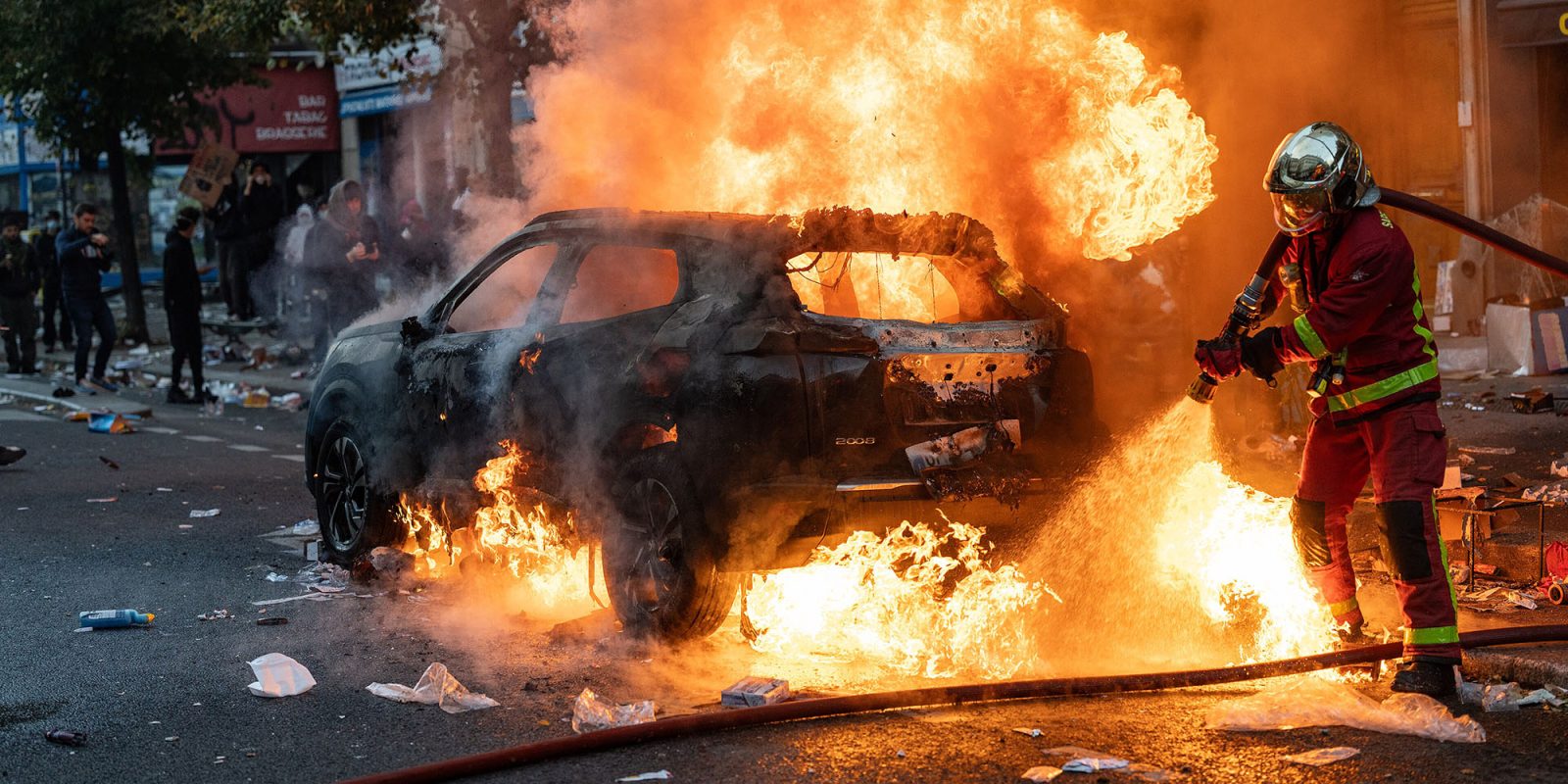
Estimates from the French Ministry of the Interior place total nationwide turnout between 550,000 and 800,000 demonstrators. However, as daylight faded, peaceful marches in cities like Paris, Bordeaux, and Marseille dissolved into guerrilla-style skirmishes. Masked groups hurled projectiles at police officers, constructed makeshift street barricades, set fire to hundreds of municipal vehicles, and targeted commercial real estate.
Amid the heavy smoke of burning cars and tear gas canisters, luxury commercial hubs became primary battlegrounds. Security footage and viral social media clips captured chaotic scenes of storefront glass being shattered. Looters flooded into high-end boutiques and technology stores, carting off luxury leather goods, designer garments, and high-end consumer electronics.
The socioeconomic flashpoint has prompted urgent security reviews across the country, sharp political condemnations from the highest levels of government, and fresh questions regarding the vulnerability of urban retail infrastructure during civil emergencies.
Detailed Chronology of Events
The Spark: Educational Grievances
The sequence of events began quietly weeks prior, catalyzed by mounting anger within the public school system. Teachers’ unions and parent-teacher associations warned of an impending breaking point, citing chronically overcrowded classrooms, frozen hiring budgets, and inadequate support staff. Calls for nationwide walkouts resonated deeply across working-class and middle-class communities alike, garnering initial sympathy from a broad cross-section of French society.
By the time the designated day of action arrived, the demonstrations had drawn hundreds of thousands into the streets. Protesters marched through civic centers, demanding immediate structural investment in education and addressing administrative neglect.
Escalation and the Shift to Urban Warfare
As police forces mobilized to secure government installations and maintain perimeter controls around traditional protest routes, splinter groups began breaking away from the main columns. Moving through commercial corridors, these agitators initiated coordinated attacks on public infrastructure.
Municipal buildings, tax offices, and public transit kiosks were vandalized or set ablaze. In metropolitan areas like Marseille and Bordeaux, emergency dispatchers were overwhelmed by simultaneous calls reporting burning vehicles, shattered storefront windows, and roving bands of masked individuals.
The Targeting of Luxury and Tech Retailers
Capitalizing on the chaos, criminal elements shifted their focus to high-value retail targets. In Bordeaux, an Apple Store was breached by individuals using heavy objects to shatter security glass, leading to systematic looting of the sales floor. A parallel raid occurred at an Apple location in Lille, where crowds poured into the showroom, grabbing display models and accessories.
Simultaneously, luxury fashion houses experienced coordinated invasions. A Louis Vuitton boutique in Bordeaux and an iconic Hermès store in Marseille were ransacked, with high-value merchandise looted within minutes before police reinforcements could break through surrounding blockades. Visual evidence posted across digital platforms—including a widely shared Instagram carousel by Complex—showed looters hauling away bulky items, such as Apple iMac desktop computers, through crowded, smoky streets.
Supporting Context, Statistics, and Operational Metrics
The sheer scale of the civil disruption has overwhelmed local and regional law enforcement agencies, requiring an unprecedented mobilization of national security apparatuses.
Key Metrics of the Unrest:
- Nationwide Turnout: Estimated between 550,000 and 800,000 participants across various regional demonstrations.
- Arrest Figures: Law enforcement agencies confirmed roughly 1,200 arrests nationwide following direct interventions, overnight sweeps, and post-riot identification operations.
- Property Damage: Hundreds of municipal offices, police vehicles, public transit stops, and private retail storefronts sustained severe structural damage or were completely destroyed by arson.
- Geographic Spread: While Paris remained a focal point for large-scale political demonstrations, significant rioting and retail looting were heavily concentrated in Bordeaux, Lille, and Marseille.
The Apple Store Security Reality: A Futile Theft
For the individuals who risked arrest and physical injury to steal display hardware from Apple’s flagship locations, the physical spoils of their crimes will ultimately prove worthless.
Apple’s retail security infrastructure incorporates specialized anti-theft software and hardware measures. Display products—including iPhones, iPads, MacBooks, and iMacs—operate on dedicated, secure store Wi-Fi networks running specialized demo software.
Once a stolen device crosses the geographical perimeter of the store and loses connection to the local network infrastructure, an automated kill switch is triggered. The device is instantly "bricked," disabling its core operating system and rendering it entirely unusable as a personal computer or phone. From that point onward, the hardware serves no functional purpose other than to broadcast its real-time location via Apple’s Find My network, effectively turning the stolen items into tracking beacons for law enforcement and corporate security teams.
Official Responses and Political Condemnation
The breadth of the violence and the blatant targeting of commercial property have triggered swift, uncompromising reactions from the French political establishment.

President Emmanuel Macron’s Address
French President Emmanuel Macron delivered a stern, unequivocal condemnation of the violence during an emergency security briefing. Addressing the nation, Macron made it clear that legitimate social grievances do not grant license for criminal anarchy.
"There is no room for violence in our Republic," Macron stated firmly, emphasizing that the right to protest is a fundamental democratic pillar that must be strictly separated from acts of vandalism, arson, and looting.
The President pledged the full backing of the state to ensure that every individual identified participating in the destruction of property and theft will be swiftly prosecuted and subjected to the maximum penalties allowed under French law. He also commended the resilience and bravery of firefighters and police officers, many of whom sustained injuries while battling blazes and attempting to restore public order in volatile urban zones.
Law Enforcement and Judicial Measures
Interior Ministry officials confirmed that specialized investigative units have been established to comb through high-definition security footage, user-generated video content, and social media posts to identify looters and rioters. Prosecutors have signaled that expedited court hearings will be utilized to process the roughly 1,200 detainees, sending a clear deterrent message regarding opportunistic crime during periods of civil unrest.
Future Outlook: Security Challenges and Economic Fallout
As the smoke clears from the streets of Paris, Bordeaux, Lille, and Marseille, France faces a profound period of introspection and recovery. The convergence of legitimate public sector grievances with high-intensity urban violence has exposed vulnerabilities in both civic management and emergency retail protection.
Rebuilding Trust and Addressing Root Causes
Labor unions representing public school educators have distanced themselves from the violent fringe elements that hijacked their demonstrations, reiterating that their core demands regarding staffing, funding, and infrastructure remain unaddressed. The government now faces the delicate political challenge of reopening constructive dialogue with educational representatives without appearing to capitulate to the destructive tactics employed by rioters.
Commercial Fallout and Insurance Impacts
For the retail sector, the events serve as a stark warning regarding the changing security landscape of European metropolitan areas. Luxury conglomerates and technology giants are undertaking comprehensive reviews of their physical security postures. Discussions are already underway regarding the deployment of reinforced security shutters, enhanced private security details, and accelerated asset-locking protocols during periods of civil unrest.
Furthermore, insurers are bracing for a massive wave of claims covering property damage, inventory loss, and business interruption from the affected boutiques and tech flagships. The cumulative financial toll—coupled with the cost of repairing municipal infrastructure and deploying national security forces—will weigh heavily on local and national budgets in the quarters ahead.
Ultimately, the events in France highlight a volatile intersection of social discontent and modern civil disobedience. While the immediate priority remains the restoration of public order, the underlying societal pressures that pushed thousands into the streets—and allowed criminal opportunists to hollow out flagship retail stores—will require sustained, systemic attention from policymakers to prevent future recurrences.