In the vast pantheon of cinematic history, few filmmakers have left as indelible a footprint as Steven Spielberg. While creators count themselves lucky to stumble upon one culturally seismic project in a lifetime, Spielberg has engineered at least half a dozen. From redefining the monster movie genre with 1975’s Jaws to establishing the relentless, faux-serial adventure pacing of Indiana Jones, and later shattering the traditional war film mold with Saving Private Ryan, his filmography reads like the foundational bedrock of modern visual storytelling.
Yet, as pop culture looks toward the upcoming semicentennial anniversary of his seminal 1977 science fiction masterwork, Close Encounters of the Third Kind, film historians are recognizing a glaring oversight in how we categorize his legacy. We often overlook Spielberg’s pioneering role in birthing the modern alien-conspiracy thriller. Long before Fox Mulder scoured the dark corridors of the FBI for extraterrestrial truth in The X-Files, or before cinematic universes were built on government cover-ups, Close Encounters established the cinematic grammar for first contact, psychological obsession, and bureaucratic obfuscation.
For audiences eager to reexamine this landmark feature ahead of its 50th anniversary, the cinematic landscape offers an unexpected treat. The definitive, Spielberg-endorsed 1998 Director’s Cut—which systematically strips away the studio-mandated interior spaceship scenes of the 1980 Special Edition—is currently available to stream for free, with ads, on YouTube. It is an opportune moment to revisit a film that remains simultaneously one of Spielberg’s most deeply personal and wildly misunderstood projects.
Detailed Chronology: From Hynek’s Files to the Silver Screen
To fully grasp the genesis of Close Encounters, one must look outside the Hollywood writer’s room and into the annals of ufological history. The film’s idiosyncratic title is not a random marketing invention; it is directly pulled from the 1972 scientific inquiry The UFO Experience: A Scientific Inquiry by astronomer and ufologist J. Allen Hynek.
Hynek, who famously served as a scientific consultant for the United States Air Force’s official UFO investigations (Project Sign, Project Grudge, and Project Blue Book), devised a revolutionary classification system for anomalous aerial phenomena. His scale ranged from nocturnal lights (the first kind) and physical trace evidence (the second kind) up to close encounters with animated entities (the third kind). Hynek even made a subtle, winking cameo in Spielberg’s film—viewers can spot him smoking a pipe near the iconic Devils Tower monument during the climax.
Production on the film was notoriously grueling, fraught with massive budgetary overruns, technical hurdles involving early motion-control camera setups, and the notoriously unpredictable behavior of mechanical and practical special effects. Released in theaters in November 1977—just months after a little indie space opera called Star Wars took the world by storm—Close Encounters proved that audiences were ravenous for high-concept science fiction, though Spielberg’s approach was radically different from George Lucas’s mythic space fantasy.
While Star Wars offered escapist swashbuckling among the stars, Close Encounters anchored its cosmic wonder firmly in the mundane, anxious American heartland. It told a story not of intergalactic war, but of a quiet, terrifying spiritual awakening experienced by ordinary citizens facing the incomprehensible.
Supporting Context & Metrics: Decoding the Mythos of Roy Neary
The narrative unfolds across a fractured geopolitical canvas. The film opens in the unforgiving expanse of the Sonora Desert, where long-lost World War II-era T-3AV Avenger torpedo bombers suddenly materialize intact, setting off global alarms. Concurrently, a wave of unexplained electromagnetic anomalies and UFO sightings sweeps the globe.
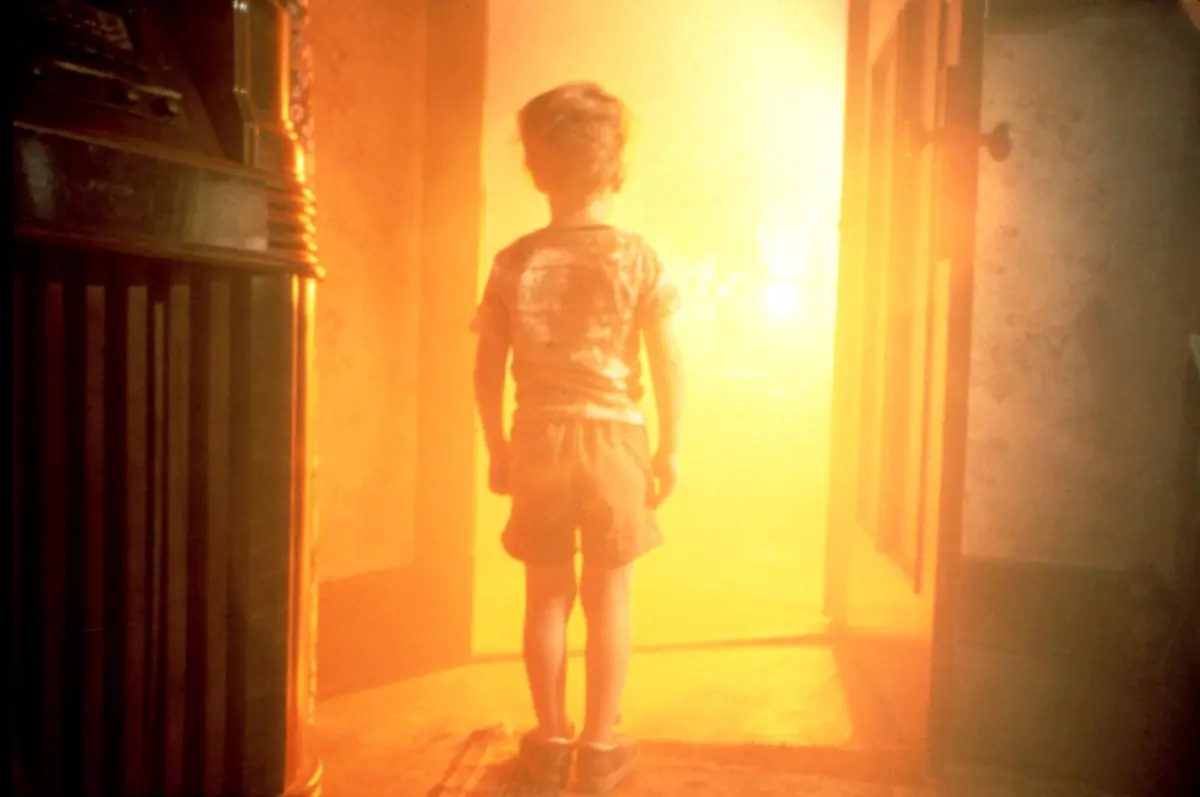
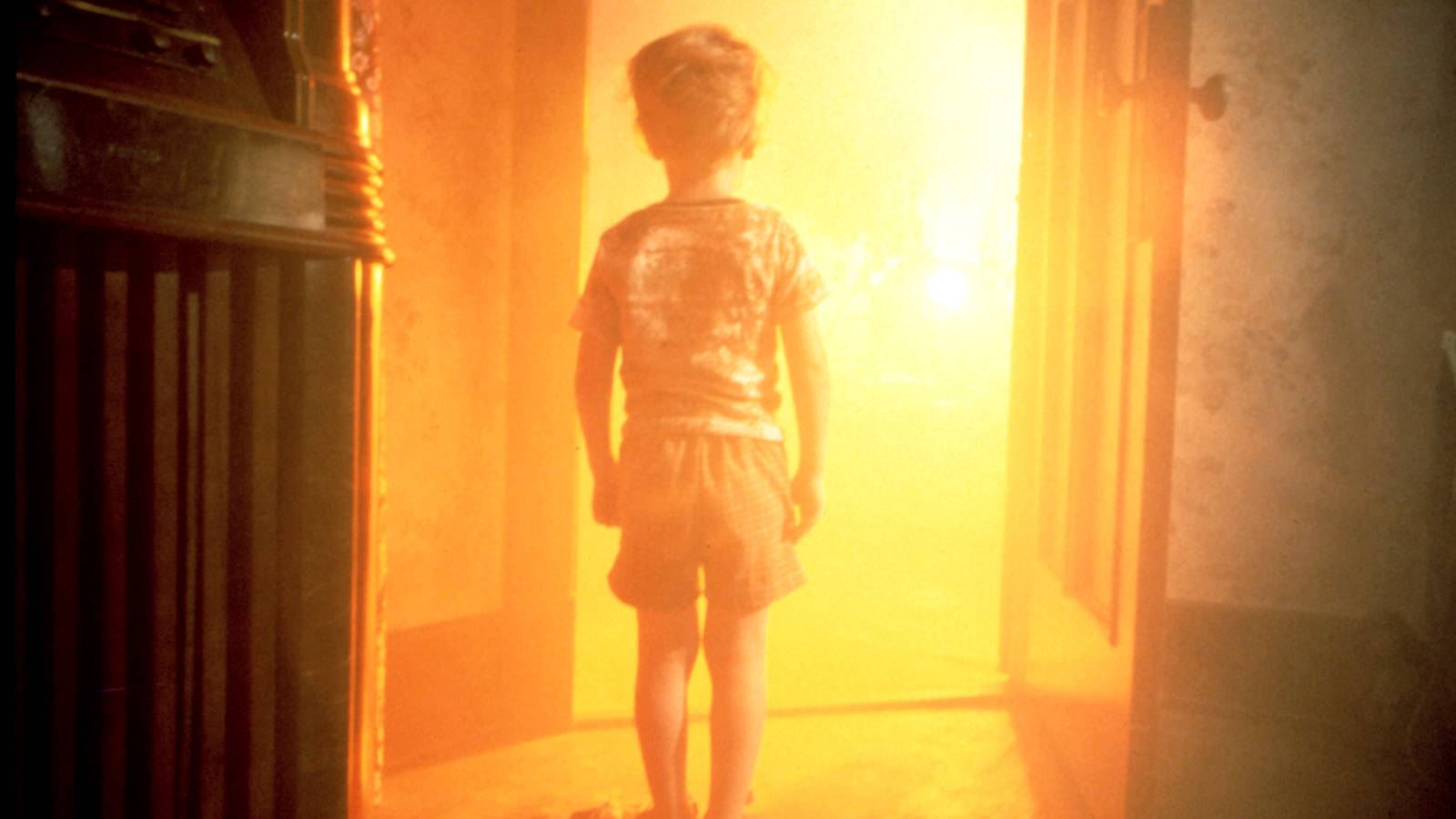
In Muncie, Indiana, everyday electrical lineman Roy Neary, brilliantly portrayed by Richard Dreyfuss, is dispatched to troubleshoot a localized blackout. During the call, his truck is bathed in a blinding, unearthly amber illumination. A near-miss encounter with a silent, dazzling spacecraft leaves Roy with severe, sunburn-like radiation burns across half of his face.
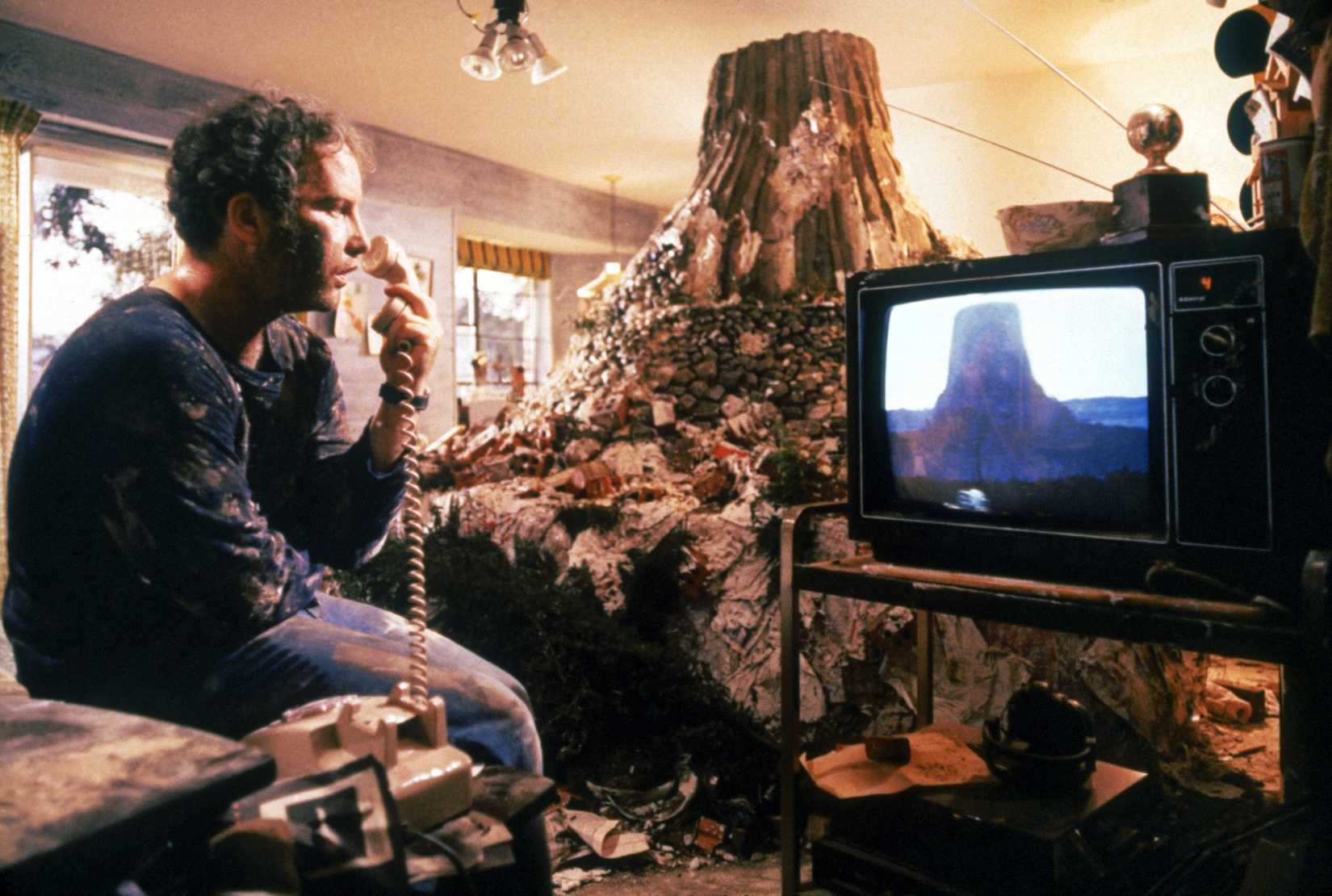
What follows is not an action-packed cosmic showdown, but a harrowing, slow-burn psychological descent. Roy becomes possessed by a localized, semiotic compulsion. He is plagued by a subconscious, vivid image of a strange, flat-topped mountain—a geological formation he has never consciously seen. His obsession explodes outward, fracturing his domestic life and alienating his wife, Ronnie (Teri Garr), and their children. In one of cinema’s most famous sequences, Roy is found alone in his living room, completely unmoored from reality, surrounded by frenzied news clippings, frantic sketches, and a giant, grotesque model of Devils Tower constructed out of dirt, chicken wire, and mashed potatoes.
The Prototype of the Modern Conspiracy Theorist
In retrospect, Roy Neary is the undeniable cinematic grandfather of the modern conspiracy-obsessed archetype. Long before Charlie Day’s frantic red-string whiteboard became a ubiquitous internet meme, or before cable television was saturated with late-night docuseries about government cover-ups, Roy was tracing patterns that nobody else could see.
This specific narrative choice is precisely why Close Encounters occupies a complex space in popular culture today. It is a science fiction film that actively rejects traditional blockbuster spectacles for long stretches, opting instead to examine the isolating, maddening toll of profound revelation.
Box Office and Critical Legacy
Upon its initial theatrical run, Close Encounters was a colossal commercial triumph for Columbia Pictures, grossing over $300 million worldwide against a production budget that ballooned to roughly $20 million. The film earned eight Academy Award nominations, including a Best Director nod for Spielberg and a Best Supporting Actress nomination for Melinda Dillon. It took home Oscars for Vilmos Zsigmond’s breathtaking cinematography and Frank E. Warner’s pioneering sound effects editing—most notably the iconic five-tone musical motif composed by John Williams, which serves as the universal language bridging humanity and the visitors.
Official Statements and Archival Reflections
The evolution of Close Encounters across its three distinct cuts—the 1977 Original Theatrical Release, the 1980 Special Edition, and the 1998 Director’s Cut—remains one of the most fascinating case studies in auteur revisionism.
When Columbia Pictures rushed Spielberg to finish the film for a 1977 holiday release, the director always felt the ending was compromised by studio pressure. Specifically, studio executives demanded that the film reveal the interior of the massive alien mothership—a sequence Spielberg later grew to deeply regret, viewing it as a betrayal of the film’s eerie, atmospheric ambiguity.
In a retrospective interview concerning the different versions of the film, Spielberg reflected candidly on the compromises of his youth:
"I was so pressured to get the film out for Christmas of ’77 that I compromised. I let them talk me into going inside the ship. When I had the chance to do the Director’s Cut in 1998, I knew instantly what had to be done. I removed the interior spaceship scenes entirely. The mystery should always remain a mystery; what we imagine in the dark is infinitely more powerful than anything we can physically build on a soundstage."
This sentiment underscores the philosophical core of Close Encounters. By refusing to demystify the extraterrestrials through conventional monster tropes or explicit exposition, Spielberg preserved the awe and existential dread of true first contact.
Future Outlook: The Enduring Legacy of First Contact
As Close Encounters of the Third Kind approaches its milestone 50th anniversary, its influence on contemporary media is both vast and invisible. It paved the way for television masterworks like The X-Files, modern cinematic emotional touchstones like Denis Villeneuve’s Arrival, and countless narratives exploring human obsession in the face of the unknown.
Yet, despite its monumental historical importance, the film often sits in the shadow of Spielberg’s own subsequent 1982 phenomenon, E.T. the Extra-Terrestrial. While E.T. captured the whimsical, heartbreaking magic of childhood friendship and became a permanent fixture of global pop culture, Close Encounters remains the darker, more challenging elder sibling—a film about adult psychological fractures, government paranoia, and the profound, terrifying beauty of leaving everything you know behind for the unknown.
For modern viewers accustomed to high-octane CGI blockbusters, sitting down with a batch of mashed potatoes to watch Close Encounters requires a shift in gear. It demands patience, empathy for a deeply flawed protagonist, and a willingness to sit in the quiet spaces between John Williams’ celestial notes.
Nearly half a century later, the true conspiracy isn’t what the government is hiding out in the Nevada desert—it’s how a film of such staggering artistic ambition, psychological depth, and visual poetry could ever be considered anything less than an absolute masterclass of American cinema. With the definitive Director’s Cut currently accessible for free on YouTube, there has never been a better time to step back under the amber light and make contact all over again.